
1. The growing relevance of taditional medicine
GS PAPER II: Health & Education
Context :Traditional medicine is now recognized globally as an essential part of healthcare, with 88% of WHO member states practicing it.
- India’s AYUSH sector blends ancient wisdom with modern research, making India a leader in sustainable, preventive, and inclusive health.
Why is Traditional Medicine in the News?
- The WHO Global Traditional Medicine Centre was established in India, anchoring global research efforts.
- AYUSH industry grew eight-fold in a decade; exports reached $1.54 billion, covering 150 countries.
- Theme for 2025, “Ayurveda for People & Planet,” highlights Ayurveda’s role in wellness, conservation, and climate action.
Global Presence and Impact
- 170 of 194 countries use traditional medicine; a vital first-line system in low- and middle-income nations.
- Global market set to be $583 billion by 2025, growing at 10–20% yearly.
- Other country data: China’s TCM ($122.4B), Australia’s herbal market ($3.97B), India’s AYUSH ($43.4B).
Transformation of AYUSH in India
- Over 92,000 MSMEs and startups power the AYUSH sector.
- Revenue expanded rapidly; services generated ₹1.67 lakh crore.
- Exports of herbal products and medicines surged; Ayurveda formally recognized in several nations.
- NSSO survey: 95% rural, 96% urban awareness; widespread use across population.
Science, Research, and Outreach
- Institutes like AIIMS Ayurveda, National Institute of Ayurveda, and CCRAS driving research and clinical validation.
- International ties: 25 bilateral agreements, 52 partnerships, AYUSH cells in 39 countries, and 15 academic chairs abroad.
- WHO Centre promotes integration of AI, big data, and digital platforms with traditional practices.
- AI and digital tools enhance predictive analysis and scientific validation.
Relevance to Global Challenges
- Ayurveda’s philosophy promotes balance: mind-body, human-nature, consumption-conservation.
- Prevents and counters lifestyle diseases, addresses biodiversity loss, and advocates climate-friendly lifestyles.
- Extends benefits beyond humans, covering plants and animals.
- “Ayurveda for People & Planet” (2025 theme) frames it as a planetary health system.
Conclusion
- Traditional medicine, especially Ayurveda, is now a driving force in modern health and sustainable development.
- India’s AYUSH sector, through research, global exports, and international cooperation, is shaping a new global health paradigm.
- As lifestyle and environmental challenges rise, Ayurveda offers long-term, integrative solutions for society and the environment.
2. Jaishankar meets Rubio to fix ties strained by tariffs ,visa fees
GS Paper II : International Relations
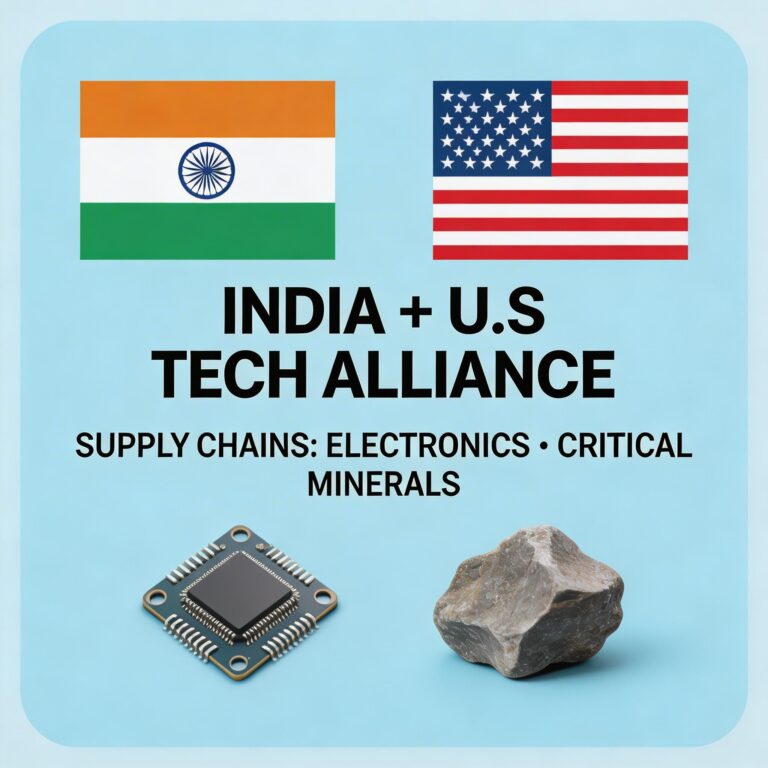
Context: Jaishankar met US Secretary of State Rubio at UNGA to tackle ongoing strains in the relationship caused by tariff hikes and drastic increases in H-1B visa fees.
- Talks aimed to repair recent ruptures, maintain sustained engagement, and prioritize progress amid growing bilateral challenges.
Causes of Strain in India–US Ties
Trade Disputes
- US imposed up to 50% tariffs on Indian goods, notably as a punitive response to India’s purchase of Russian oil.
- Indian exports negatively impacted, triggering India’s counter-warnings about strategic trust and causing losses in Indian markets.
Visa & Immigration Issues
- H-1B visa fee for new applicants raised from ~$1,700 to $100,000, directly targeting Indian tech professionals (India holds >70% of H-1B visas annually).
- Fee hike has sparked panic and potential humanitarian consequences for Indian families working in the US.
- US justified these actions to protect American jobs and address “systemic abuse”; India views movement of professionals as trade, not mere immigration.
Geopolitical Moves
- US wary of India’s ties with Russia and China, especially regarding oil imports.
- Regional cooperation (Quad, Indo-Pacific) remains a focus, but domestic US moves (Bagram airbase, Middle East alignments) complicate strategic alignment.
Highlights of Jaishankar–Rubio Meeting
- Emphasis on continued engagement for progress in priority areas: trade, defense, energy, critical minerals.
- Mutual reaffirmation that India–US partnership is “critical” despite disputes.
- Joint intent to sustain dialogue on Indo-Pacific cooperation and Quad activities.
India–US relation & Bilateral Context
| Area | Convergence (Alignment) | Divergence (Conflict) |
| Defense & Security | Indo-Pacific, Quad, counter-China | US Pakistan–Saudi ties, Bagram base |
| Trade | Bilateral engagement ongoing | Tariffs, stalled talks, digital tax |
| Immigration/Labor | Mutual benefit of tech workforce | H-1B fee hike, new restrictions |
| Energy & Minerals | Critical minerals cooperation | US sanctions on Russian oil purchases |
3. Death of nine bonnet macaques in kerala capital raises poisoning fears
GS Paper III : Environment, Biodiversity, and Ecology
Context: Nine bonnet macaques were found dead near Palode, Kerala, on September 22, 2025, with signs of possible poisoning (foam around the mouth).
- Preliminary post-mortems were inconclusive; samples sent to NIHSAD Bhopal for tests on toxins and tick-borne viral diseases (e.g., Kyasanur Forest Disease).
- Incident highlights an upsurge in similar retaliation cases against “monkey menace” across southern India, reflecting human-wildlife tensions in rapidly urbanizing areas.
Habitat, Ecology, and Behaviour
- Habitat: Bonnet macaques (Macaca radiata) inhabit peninsular India’s Western Ghats—evergreen forests, deciduous woods, scrublands, and urban-agricultural edges; thrive up to 1,500 meters elevation.
- Ecology: Omnivorous foragers aiding seed dispersal and insect control; resilient to dry spells but vulnerable to fragmentation and isolated subpopulations.
- Behaviour: Social troops of 10-60, hierarchically organized, diurnal, and both arboreal-terrestrial. Known for intelligent communication, tool use for food, vigorous grooming, and vocalizations for territory.
Diet
- Main Foods: Fruits (figs, berries), foliage, seeds/nuts (60-70%).
- Proteins: Insects, spiders, small vertebrates, eggs, and soil minerals (20-30%).
- Other Sources: Cereals, roots, human waste/crops near settlements; lactating females prioritize protein-rich foods.
Human–Wildlife Conflict
Problem Causes
- Habitat Loss: Deforestation and urban/agri expansion shrink wild foraging zones, pushing macaques towards settlements.
- Food Availability: Easy access to garbage/crops intensifies raids; high troop densities near humans due to food subsidies.
- Socio-Economic Factors: Farmers face up to 30% crop losses, leading to frustration and declining cultural tolerance.
Problem Solutions
- Habitat/ Waste Management: Secure waste bins, restore forest corridors, promote covered landfills. Kerala’s draft monkey policy emphasizes these steps.
- Population Control: Mission Bonnet Macaque (Kerala, August 2025)—sterilization, translocation; avoids mass culling to protect ecological balance.
- Community Engagement & Technology: Education drives, bio-fencing, ultrasonic deterrents, improved veterinary oversight for disease outbreaks.
- Policy & Research: Enforce anti-poisoning laws, fund studies on ecology, discourage quick-fix poisoning, and encourage long-term coexistence approaches.
Conservation and Protection Status
- IUCN Red List: Listed as “Vulnerable”
- threatened by 30-50% range decline, conflicts, and hunting; population estimated at 50,000–100,000.
- Legal Status: Wildlife Protection Act, 1972, Schedule II
- moderate protection; hunting/trade prohibited but allows conflict mitigation via regulated control.
- Efforts: Included under the National Wildlife Action Plan; protected in reserves like Silent Valley, Agasthyamalai; NGOs like Wildlife SOS advocate rescue, policy reforms, and research.
4. India and morocco sign defence cooperation MoU to boost strategic alliance
General Studies Paper II :International Relations
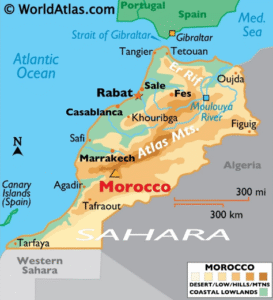
Context: India and Morocco signed a Defence Cooperation MoU in Rabat on September 22, 2025, alongside opening a new Defence Wing at the Indian Embassy.
- The pact enhances military ties during a period of North African instability and Indo-Atlantic security challenges.
- Signals a strategic outreach aligned with India’s Act East/West policies and G20-driven Global South partnerships.
Features of the MoU
Institutional Framework
- Sets up regular high-level defence dialogues and joint working groups.
- Institutionalizes annual consultations and formal exchange programs.
- Integrates liaison officers, shared intelligence for better coordination.
Areas of Cooperation
- Targets counter-terrorism, maritime domain awareness, and cyber defence.
- Involves joint military exercises, peacekeeping, and HADR drills.
- Includes academic-military exchanges on strategic studies.
Defence and Industry Cooperation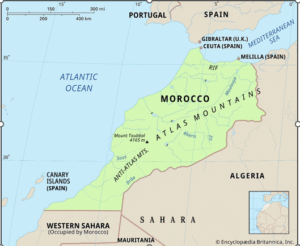
- Supports co-development of unmanned aerial systems and counter-drone tech.
- Opens tenders for Indian firms in Morocco’s defence market.
- Encourages technology transfer and joint production ventures.
Capacity Building
- Provides Moroccan forces training in special operations at Indian institutions.
- Scholarships and workshops to upgrade military skills and expertise.
- Indian experts advise on Morocco’s institutional reforms.
Multilateral Cooperation
- Aligns with trilateral formats for joint naval patrols in Atlantic-Indian Ocean corridors.
- Boosts coordination in forums like UN and GCTF.
- Paves way for joint initiatives in African Union peacekeeping.
Strategic Importance
for India
- Expands India’s strategic depth in North Africa, balancing China’s influence and securing critical resources.
- Strengthens maritime surveillance over chokepoints—supports SAGAR doctrine.
- Enables Indian defence exports to new markets, aiding Atmanirbhar Bharat.
- Leverages Indian diaspora and soft power through defence outreach.
for Morocco
- Gains affordable, modern Indian defence technologies, aiding military modernization.
- Diversifies procurement sources beyond traditional western suppliers.
- Stimulates economy via joint ventures and tech hubs.
- Bolsters maritime and regional stability against extremism and migration.
| Morocco
Location and Geography
Rivers
Climate
Mountains
Political System
Economy
Language and Culture
|
for Global Security
- Enhances intelligence sharing to counter terror networks (Al-Qaeda/ISIS).
- Promotes safe sea lanes from Atlantic to Indian Ocean, addressing piracy/trafficking.
- Improves interoperability and peacekeeping effectiveness in conflict zones.
- Contributes to multilateral norms for cyber and disaster response.
Conclusion: The MoU is a milestone in India-Morocco defence ties, paving way for strategic partnership growth out to 2030.
5. 54 Vessels are being built for Navy;10 to join fleet this year
General Studies (GS) Paper III: Security and Defence
Context: India is building 54 naval vessels, with 10 set to join the fleet this year—marking the Navy’s largest shipbuilding programme to date.
- Major push aligns with expanding overall naval strength to over 200 warships and submarines by 2035.
Key Highlights
Scale of Construction
- 54 vessels in progress across Indian shipyards, with 10 set to join by late 2025.
- Includes frigates, ASW corvettes, destroyers, and submarines, scheduled through 2030.
- Marks the largest peacetime naval expansion, exceeding the 2010s’ 40-vessel effort.
Strategic Goal
- Aims for over 200 warships and submarines by 2035 to counter dual threats in the IOR.
- Focuses on integrated surface, subsurface, and aerial operations under SAGAR.
- Prioritizes capacity-building and regional cooperation through exercises like Malabar.
Transition Point
- Shifts from a “Buyer’s Navy” reliant on imports (e.g., Russian Talwars) to a “Builder’s Navy” by 2027.
- December 2025 to see peak induction of 10 vessels, including INS Androth ASW series.
- INS Tamal (July 2025), last major Russian build, paves way for indigenous ASW-SWC crafts.
INS Androth ASW Series
INS Tamal
|
Indigenous Momentum
- Achieves over 90% local content in projects like ASW-SWC by GRSE, Kolkata.
- Drives self-reliance from design to steel, e.g., Mazagon Dock’s Project 17A frigates.
- Reduces foreign dependency from 70% (2010s) to under 30%, building on Nilgiri-class success.
Economic and Industrial Impact
- Creates thousands of jobs in shipyards like GRSE and CSL, plus ancillary MSMEs.
- Boosts steel, electronics, and propulsion sectors, saving $20-30B in import costs.
- Fosters innovation with private players like L&T, enhancing export potential.
Significance
- Strengthens strategic autonomy as an IOR security provider, countering China’s string-of-pearls.
- Fuels a $100B economic ecosystem by 2035, including green shipbuilding innovations.
- Enhances regional stability via QUAD/QUINT and HADR operations post-Cyclone Chhaya.
Challenges
- Faces delays in stealth tech and AI sensors; struggles with high-end radar imports.
- Encounters shipyard capacity limits and a 5M skilled labor shortage.
- Grapples with ₹2.5 lakh crore budget strain and forex risks in hybrid projects.
- Risks supply chain disruptions and sabotage amid geopolitical tensions.
Conclusion: Signals a robust, home-grown Navy crucial for India’s 2047 developed-nation goal, merging military might with diplomacy. By 2030, a 175+ vessel fleet could reshape IOR dynamics, promoting a cooperative maritime framework.
6. Why is India not importing corn from the U.S.?
GS Paper 3 (Mains) – Economy, Agriculture, and Science & Technology
Context: Surge in maize demand from 20% ethanol blending target by 2025 has spotlighted India’s maize sector and import strategy.
- Imports have risen sharply (0.2 MT in 2022 to 6 MT in 2024), but US corn is excluded, raising policy and trade questions.
Key Demand Drivers
- Ethanol Blending Push: 20% target needs ~10 MT maize for fuel; significant shift toward ethanol use.
- Domestic Use: Maize is essential for food, feed, starch, brewing; ethanol alone could use up ~5 MT annually.
- Production Shortfall: Output (~37 MT in 2024) lags rising demand due to ethanol diversion.
Self-Sufficiency & Yield Gap
- India produces ~37 MT maize yearly, self-reliant for food/feed but faces a 5 MT deficit when ethanol demand is included.
- Yield: India (~3 t/ha) trails US (~11 t/ha) due to small farm sizes, less mechanization, and seed limitations.
Import Trends
- 2022: 0.2 MT imports, mainly Ukraine/Myanmar; 2024: 6 MT (Ukraine 60%, Myanmar 20%).
- Imports focus remains on non-GM sources as per Indian policy.
Why No US Corn Imports?
- GM Crop Issue: Over 90% of US corn is genetically modified; India bans GM maize cultivation/imports for food/feed, requiring GEAC approval (pending since 2010).
Worries about contamination and loss of farmer seed rights.
- Food Security: US imports could depress Indian maize prices, hurt small farmers, and challenge buffer stock norms and MSP.
Policy aims to avoid dependency amid external shocks.
- Farmer Issues: US corn is far cheaper thanks to subsidies, risking price crashes for local growers (many are smallholders).
Government supports yield and infrastructure upgrades to offset need for imports.
- Mexico Example: Mexico banned US corn in 2023 over GM/irrigation worries; led to trade friction but improved domestic output and protected farmers.
India draws parallels to safeguard indigenous varieties and rural livelihoods.
- Import Substitution Logic: Atmanirbhar Bharat prefers domestic output; uses tariffs/NTBs on corn, sources imports from Ukraine/Myanmar, and boosts yields through investment.
US Perspective & Stakes
US View
- US exporters see India’s ethanol-led growth as a $2B market opportunity and lobby against Indian restrictions.
- Political and trade friction rise as India’s import choices impact US farm exports.
Stakes for India
- Saves ~$1B/year in forex on ~5 MT imports; builds rural jobs via ethanol investment.
- Supports environmental and food security goals; faces higher costs and WTO scrutiny for restrictive policy.
- If domestic yields improve or GM is okayed, import strategy may shift.
US vs. Indian Farming—Quick Comparison (2024)
| Factor | US | India |
| Scale/Yield | Large, 11 t/ha | Smallhold, 3 t/ha |
| Focus | Export/Ethanol | Food/feed/Ethanol |
| Policy | Subsidy export | MSP/protection |
Conclusion: India’s limited US corn imports reflect a conscious policy balance between yield, self-sufficiency, food/farmer security, and global supply risks;
Additional information
Maize Status in India
Season of Cultivation
Climate and Soil Needs
Production and Productivity
Major Producing States
Uses and Economic Importance
Maize Uses
Challenges
Government Initiatives
|
7. Number of polluted river sites shows slight reduction: CPCB
GS PAPER III: Environment and Ecology -Conservation, Environmental Pollution & Degradation.
Context: The Central Pollution Control Board (CPCB) released its 2022–23 assessment of Indian river health, highlighting critical pollution issues.
About CPCB
- Statutory body set up in September 1974 under the Water (Prevention and Control of Pollution) Act, 1974.
- Expanded mandate: Now acts under both Water and Air Acts, plus Environment (Protection) Act, 1986.
- Technical arm: Implements MoEFCC policies and standards across India.
Principal Functions
- Water pollution control: Cleans streams and wells, implements the National Water Quality Monitoring Program.
- Air pollution control: Improves air quality, operates the National Air Monitoring Programme (NAMP).
- Data Management: Collects and disseminates air and water pollution statistics nationwide.
Key Initiatives
- NAMP: Monitors air quality at hundreds of stations.
- NAQI: Provides real-time air quality updates.
- GRAP: Offers phased pollution responses.
- Clean Air Campaign: Pushes awareness and enforcement.
River Pollution Assessment Parameters
- Biological Oxygen Demand (BOD): Measures oxygen needed to decompose organic matter.
- Healthy: BOD <3 mg/L
- Unfit for bathing: BOD >3 mg/L
- Polluted River Stretch (PRS): Sections where BOD exceeds bathing criteria at multiple consecutive sites.
Priority Classification for BOD
- Priority 1: BOD >30 mg/L (most polluted)
- Priority 2: 20–30 mg/L
- Priority 3: 10–20 mg/L
- Priority 4: 6–10 mg/L
- Priority 5: 3–6 mg/L
Key Findings (2022–23 Report)
- Unfit bathing locations: 807 (2023) vs 815 (2022); slight improvement.
- Polluted River Stretches: 296 stretches in 271 rivers (2023) vs 311 stretches in 279 rivers (2022).
- Worst affected states (PRS, 2023): Maharashtra (54), Kerala (31), Madhya Pradesh (18), Manipur (18), Karnataka (14).
- Most polluted stretches (Priority 1, 2023): Tamil Nadu, Uttar Pradesh, Uttarakhand (5 each).
- Top Priority 1 states (2022): Gujarat, Uttar Pradesh (6 each).
The CPCB report is a major reference for understanding river pollution priorities, state-wise trends, and the impact of regulatory action in India.