
1. PRAHAAR document
GS Paper III: Internal Security, Cyber Security.
Context :The MHA released the 8-page PRAHAAR document on February 23, 2026.
- It marks the first time India has formalised its anti-terror doctrine into a single public policy.
- The policy was launched to address evolving threats like drones and cyber-terrorism.
What is PRAHAAR?
- PRAHAAR is an acronym for the seven pillars of India’s anti-terror strategy.
- It serves as a unified guidebook for all state and central agencies to fight terror.
- The name means “strike,” signifying a proactive rather than reactive stance.
- It emphasizes a “Zero Tolerance” approach toward any form of violence.
Nature of Terror Threats Highlighted
- Cross-border Terrorism: Persistent threats from sponsored outfits and global groups like Al-Qaeda/ISIS.
- Technological Threats: Growing misuse of drones, robotics, and encrypted communication platforms.
- Cyber-Enabled Terror: Use of the dark web, crypto wallets, and social media for funding and recruitment.
- CBRNED Risks: Challenges in intercepting Chemical, Biological, Radiological, Nuclear, and Explosive materials.
- Hybrid Warfare: Integration of organized crime networks with terrorist modules for logistics.
Protection of Critical Infrastructure
- The policy mandates enhanced security for key economic sectors like Power, Railways, and Aviation.
- It focuses on shielding Space and Atomic Energy establishments from state and non-state actors.
- Border guarding forces are being equipped with CIBMS (sensors/cameras) for land and maritime safety.
Key Principle: Terrorism is Not Linked to Any Agency
- India firmly rejects linking terrorism to any specific religion, ethnicity, or nationality.
- The policy states that no ideology or grievance can justify acts of terror.
- It focuses on the act of terror itself rather than the background of the perpetrator.
Role of Agencies
- Multi-Agency Centre (MAC): Acts as the nodal platform for real-time intelligence sharing.
- National Investigation Agency (NIA): Leads investigations to ensure high conviction rates and deterrence.
- National Security Guard (NSG): Functions as the elite force for major urban counter-terror operations.
- Local Police: Designated as the “First Responders” to any immediate terror incident.
Emerging Trends in Terrorism
- Digital Recruitment: Terrorists use “instant messaging” and “Jihadi glorification” to radicalize youth.
- Terror-Crime Nexus: Increasing collaboration between terrorists and illegal arms syndicates.
- Anonymous Funding: Shift toward cryptocurrency to bypass traditional financial monitoring.
Global Terror Context & Strategic Importance for India
- Global Leadership: Positions India as a lead voice for a UN-led framework on international terrorism.
- Transnational Action: Focuses on extradition and designating terrorists at the global level.
- National Synergy: Moves India from fragmented state-level efforts to a uniform national doctrine.
- Resilience: Promotes a “whole-of-society” approach involving NGOs and community leaders for recovery.
2. Doctors suspect neurotoxin to be reason for seafood poisoning
GS paper II- Governance & Social Justice (Issues relating to Health).
General Studies Paper III – Science and Technology.
Context :Doctors suspect Tetrodotoxin (TTX) caused recent seafood poisoning at a hotel in Vizhinjam, Kerala.
- A family of six fell seriously ill after consuming fish; two members died within hours of ingestion.
- Food safety officials are investigating fish roe (eggs) as the specific source of the potent toxin.
What is Tetrodotoxin (TTX)?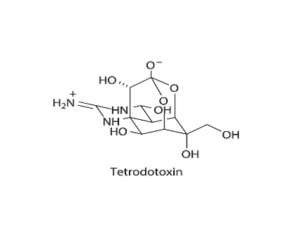
- It is one of the most powerful and deadly neurotoxins known to science.
- The toxin causes severe paralysis and often leads to death shortly after consumption.
- It primarily targets the nervous system, leading to rapid-onset neurological symptoms.
Source of Toxin
- It is a naturally occurring toxin found in certain marine life, most famously pufferfish.
- In this case, doctors pinpoint fish roe (eggs) as the likely contaminated seafood delicacy.
- It has also been recently detected in samples of red snapper (chempalli) from the Tamil Nadu coast.
Key Scientific Features of Tetrodotoxin
- Heat Stability: The toxin is very heat-stable and is not destroyed by normal cooking processes.
- No Antidote: There is currently no known antidote for TTX poisoning.
- Potency: Ingestion leads to clinically consistent neurological failure and death within a few hours.
Why Not Bacterial Food Poisoning?
- Onset Speed: The extremely short duration between eating and falling acutely ill points away from bacteria.
- Neurological Symptoms: The predominantly neurological symptoms are characteristic of TTX rather than bacteria.
- High Fatality: Bacterial spoilage rarely causes multiple deaths within such a narrow window of time.
3. AI for all
GS paper III-S&T
CONTEXT :India hosted the landmark AI Impact Summit 2026, the first global AI event led by a Global South nation, uniting 20+ heads of state and 500+ leaders to advance ethical AI governance and infrastructure.
Civilisational Roots
- Draws from ancient Indian knowledge systems like Panini’s grammar and Nalanda’s scholarship for structured, sovereign AI.
- Offers Global South alternative to Western tech-centric models, prioritising inclusivity.
MANAV AI Framework
- Moral and Ethical Systems: Ensures responsible AI with human oversight.
- Accountable Governance: Democratic checks and transparency.
- National Sovereignty: Protects data from exploitation.
- Accessible and Inclusive: Benefits for all citizens.
- Valid and Legitimate: Legally sound deployment.
Delhi Declaration Highlights
- Development-focused governance over commercial priorities; flexible regulations.
- People Pillar: Universal AI access.
- Planet Pillar: Sustainable tech practices.
- Progress Pillar: Innovation-driven growth.
- Initiatives: BharatGen (22 languages), global GPU bank, anti-data extractivism.
DPI as AI Backbone
- UPI: 228B transactions ($3.4T) in 2025; JAM trinity saved ₹3.48 lakh crore.
- Enables scalable AI for welfare, identity, payments.
Infrastructure Push
- Gap: 20% global data generated, only 3% data centres hosted.
- Investments: Microsoft ($17.5B India), Google ($15B), Adani ($100B by 2035).
- IndiaAI Mission: 38K+ GPUs at 1/3rd cost, targeting $200B in 2 years.
Budget and Policy Boost
- Tax holidays till 2047 for data centres; $1.1B VC fund.
- Critical Mineral Mission for AI/semiconductor supply chains.
AI Democratisation Efforts
- 5 lakh students for ethical AI; 30 AI labs (target 570).
- AIKosh: 7,500+ datasets, 273 models publicly shared.
- IITs expanded from 16 to 23.
Sovereign AI Advances
- Indigenous LLMs: Sarvam AI, BharatGen Param2.
- Shift from consumer to producer status.
Strategic Global Ties
- Tata-OpenAI: 1GW data centres; Pax Silica for supply chains.
- India-US/France pacts for co-development, skilling.
Key Challenges Ahead
- Infrastructure lag, foreign tech reliance, skill shortages.
- Solutions: DPI-AI integration, indigenous chips, expanded training, balanced regulations.
India’s summit positions it as a global AI leader, blending sovereignty, ethics, and partnerships for an equitable tech future.
4. HOYASALA
GS PAPER I-Art &Culture
Context: Architectural focus shifts to overlooked rural Hoysala sites like Koravangala and Doddagaddavalli temples following 2023 UNESCO inscription of Belur, Halebidu, and Somanathapura, highlighted in “The Splendour of the Hoysalas” feature.
Hoysala Empire Overview
- Ruled 11th-13th century in Karnataka, using soft soapstone (chloritic schist) for ornate carvings rivaling woodwork.
- Evolved from austere predecessors to intricate high-relief sculptures, blending devotion and artistry.
Major Temples
Halebidu Hoysaleshwara
- Built 1121 CE by King Vishnuvardhana’s official; capital Dorasamudra’s highlight.
- Dvikuta layout with twin Shiva shrines; friezes of elephants, lions, floral scrolls.
- Monolithic Nandi pavilions; pillars with mirror-like polish.
Belur Chennakeshava
- Commissioned 1117 CE post-Chola victory at Talakadu.
- 42 Madanika bracket figures as celestial dancers; star-shaped jagati platform.
- 42-ft gravity pillar; rotatable Narasimha pillar via stone ball-bearings.
Lesser-Known Sites
- Doddagaddavalli Lakshmidevi: Earliest (1114 CE) chatuskuta (four-shrine) temple; Mahakali guarded by skeletal Betalas.
- Koravangala Bucheshwara: Dvikuta showcasing peak style evolution.
- Hulikere Kalyani: Stepwell with 12 zodiac shrines (towered) and 14 lunar ones.
Architectural Hallmarks
- Star-shaped stellate plans on jagati for expanded carving surfaces.
- Multi-layered friezes: elephants (strength), lions (courage), horses (speed), florals.
- Lathe-turned, reflective pillars; perforated jalis for light and air.
- Soapstone enabling 3D details like jewelry and lace on statues.
Cultural Importance
- Artistic peak of medieval sculpture with religious harmony (Shiva-Vishnu-Jain).
- Advanced hydraulics in stepwells for water management.
- Inscriptions reveal merchant, women, artisan roles in society.
Hoysala rural shrines extend beyond famous trios, preserving a civilisation’s stone narratives—vital for India’s architectural heritage.
5. Indias energy shift through the green ammonia route
GS PAPER III-S&T
Context :At India Energy Week (IEW) 2026, PM Modi highlighted $500 billion investment opportunities in clean energy.
- Solar Energy Corporation of India (SECI) recently concluded a major tender for cost-competitive green ammonia.
- India’s green ammonia auction model is being recognized for its potential to redefine global clean energy standards.
What is Green Ammonia?
- It is produced by combining nitrogen with green hydrogen (hydrogen created using renewable electricity).
- Unlike traditional ammonia, its production process emits zero carbon dioxide into the atmosphere.
- It serves as a sustainable chemical feedstock and a high-density carrier for hydrogen energy.
Importance in Energy Transition: Wider Applications
- Fertilizer Production: Acts as a carbon-free raw material for manufacturing essential agricultural nutrients.
- Marine Fuel: Emerging as a viable clean fuel for decarbonizing the global shipping industry.
- Hydrogen Carrier: Simplifies the transport of green hydrogen due to its higher energy density and easier storage.
Strategic Advantage
- Energy Independence: Reduces reliance on imported fossil fuels by leveraging domestic renewable energy.
- Economic Insulation: Protects against volatile global gas prices and currency fluctuations.
- Long-term Competitiveness: Ensures the sustainability of energy-intensive industries in a decarbonizing world.
India’s Green Ammonia Auction
- Conducted By: The Solar Energy Corporation of India (SECI) under the SIGHT programme.
- Key Features: Features a 10-year, fixed-price offtake agreement to provide market certainty to producers.
- Price Discovery: Achieved prices ranging from ₹49.75 to ₹64.74/kg ($572–$744 per tonne).
- Cost Competitiveness: Discovered prices are significantly lower than H2Global auction prices, narrowing the gap with grey ammonia.
Logistics and Transport
- Strategic Locations: Production and delivery points are pre-identified near coastal areas for easier shipping.
- Proximity to Use: Many fertilizer plants receiving the ammonia are located near major maritime ports.
- Domestic Volume: Contracted volumes will satisfy roughly 30% of India’s current ammonia import requirements.
Global Comparison
- Broader Participation: India’s SECI auction attracted 15 bidders, surpassing participation in EU and Korean tenders.
- Cost Benchmarks: India’s procurement prices were nearly 40%-50% lower than the H2Global auction prices in the EU.
- Scale-up Speed: India’s successful auction model is being viewed as a blueprint for accelerated global adoption.
Role in India’s Energy Transition
- Decarbonizing Heavy Industry: Provides a practical pathway for greening sectors like power and transport.
- National Mission Support: Acts as a cornerstone of the Strategic Interventions for Green Hydrogen Transition (SIGHT).
- Grid Resilience: Integrates hybrid renewable systems with storage to ensure stable, long-term operational viability.
Why India Can Become a Global Leader
- Low Production Costs: Driven by some of the world’s lowest renewable energy generation costs.
- Policy Innovation: Successful implementation of aggregated procurement and robust contract designs.
- Financial Confidence: Blended finance facilities and risk-mitigation instruments are attracting massive private capital.
6. The quiet crisis of adolescent mental health in India
GS Paper II :Social Justice.
Context :Three adolescent girls’ deaths in Ghaziabad spotlight India’s child mental health crisis, revealing structural failures beyond isolated incidents amid rising adolescent suicides linked to academic stress, digital addiction, and unmet psychological needs.
Early Psychological Vulnerabilities
- Emotional disorders like anxiety and depression emerge as young as age 4-5, often misread as “naughty behaviour.”
- Unaddressed childhood trauma accumulates, intensifying into adolescent crises with comorbidities (e.g., ADHD + anxiety).
- Chronic stress disrupts brain development, turning early warning signs—withdrawal or impulsivity—into severe risks.
Gaps in Data and Care Infrastructure
- 7-10% of teens and 5-7% of schoolchildren show mental health issues, yet India has under 10,000 psychiatrists for 1.4B people.
- Shortage of child specialists forces fragmented care, delaying diagnosis until emergencies.
- This reflects systemic public health neglect, not just individual cases.
Digital Overexposure Risks
- Smartphones expose millions daily, blurring education/entertainment and fueling internet addiction.
- Screen time harms sleep, attention, and emotional regulation during key neuroplasticity phases.
- It amplifies vulnerabilities without causing disorders outright, reducing real-world social bonds.
Failures in Family and School Support
- Families need trauma-aware parenting and peer groups, but stigma blocks early help-seeking.
- Schools chase exam ranks over wellbeing; untrained teachers miss signs like behavioural shifts.
- Routine check-ups ignore mental health, prioritising physical metrics.
Policy and Cultural Barriers
- Emerging rules target teen social media, but focus must shift to prevention via school screenings and tele-health.
- Cultural fears of “labelling” deter care; normalising mental health talks is urgent.
- Competitive childhood metrics (grades over resilience) fuel long-term societal costs like lost productivity.
India’s youth mental health emergency demands collective action—early screening, teacher training, digital guidelines, and stigma busting—to safeguard future stability
7. India seeks to join IEA: Why its request for membership is not a straightforward process
GS paper II-IR
Context :The IEA ministerial meeting in Paris advanced India’s full membership bid to final stages, recognising its role as the world’s third-largest energy consumer amid global supply challenges.
IEA Overview
- Intergovernmental body founded 1974 post-1973 oil crisis for energy security, data, and sustainable policies.
- HQ: Paris; serves as key platform for analysis and crisis coordination.
Membership Details
- Full members: 33 countries (Colombia joined Feb 2026); traditionally requires OECD membership.
- Associates: 13 nations including India, China, Brazil; participate but no voting rights.
- Criteria: 90 days’ net oil import reserves; charter amendment needed for non-OECD like India.
Core Functions
- Energy security via strategic petroleum reserves.
- Publishes World Energy Outlook, Monthly Oil Market Report.
- Guides clean energy transition (Net Zero by 2050); critical minerals supply chains.
India-IEA Ties
- Associate since 2017; Strategic Partnership 2021.
- Formal full membership request Oct 2023 to influence global decisions.
- Hurdle: Non-OECD status requires IEA charter update, now supported by leadership.
- Core mandate ensures energy security via 90-day oil reserves and crisis response mechanisms.