1. Oppostion parties seeking removal of speaker
GS paper II-POLITY
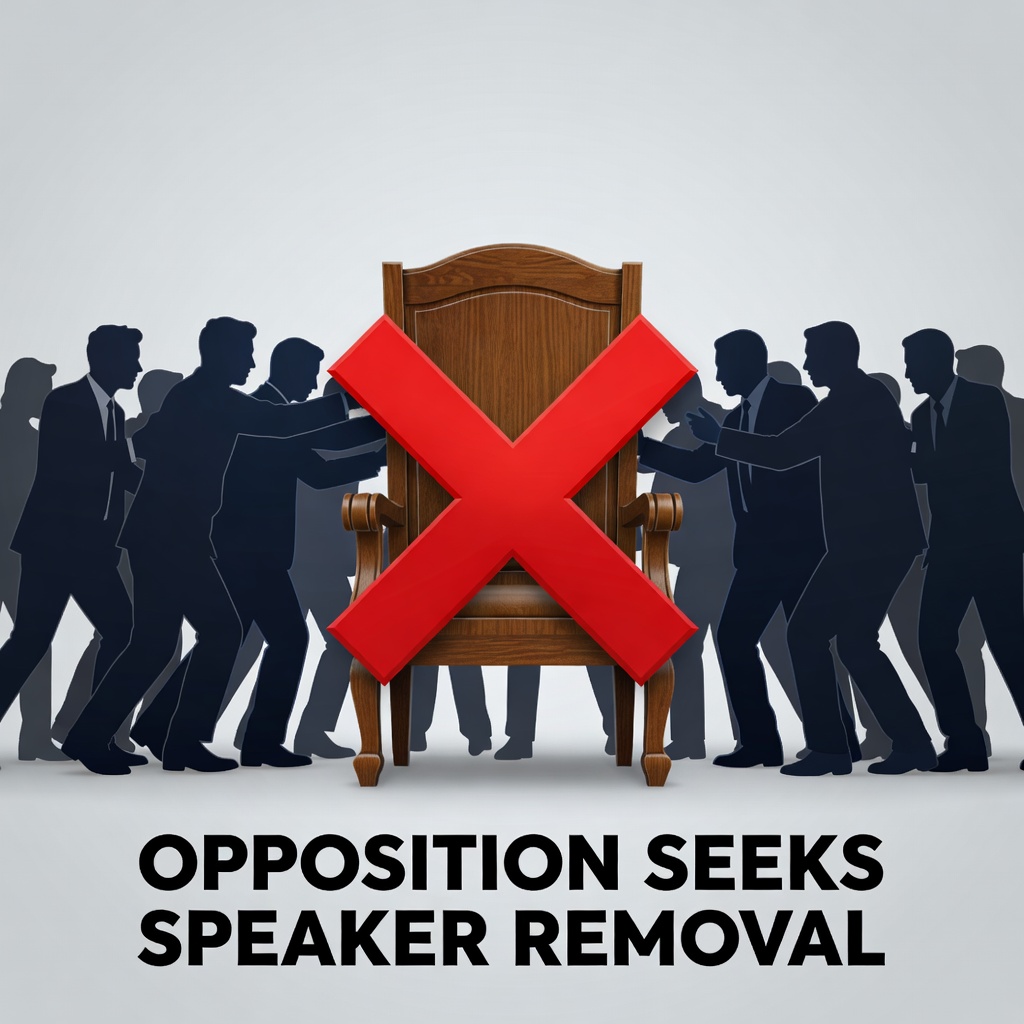
Context :Opposition parties submitted a formal notice on February 10, 2026, to the Lok Sabha Secretary-General seeking Speaker Om Birla’s removal. The core grievance is that the Leader of the Opposition was denied adequate speaking time in the House, amid broader allegations of bias during the Budget Session disruptions.
Removal Authority
- Constitutional Basis: Article 94(c) allows Lok Sabha removal of the Speaker via a House resolution.
- No Absolute Tenure: Speaker serves at the House’s pleasure, unlike fixed terms for some offices.
Conditions for Vacating Office (Article 94)
- Ceases to be a Lok Sabha member.
- Resigns in writing to Deputy Speaker.
- Removed by House resolution with effective majority.
- Disqualified under Representation of the People Act, 1951.
Removal Procedure
- Written Notice: Submitted to Secretary-General; must be specific, non-defamatory (Rule 200A).
- 14-Day Notice: Mandatory waiting period before motion listing.
- Leave of House: 50 members must rise in support; if granted, discussed within 10 days.
- Debate Limits: Mover gets 15 minutes; confined to resolution charges.
Voting Requirements
- Effective Majority: Majority of all then-members (excluding vacancies), not just those present.
- Methods: Voice vote, division, or as prescribed.
Speaker’s Role in Proceedings (Article 96)
- Cannot preside during removal motion.
- Can speak and vote as a member (no casting vote in ties).
Potential Early Failure
- Fewer than 50 supporters: Motion drops without debate.
- Invalid notice: Not admitted by Deputy Speaker.
This symbolic move highlights Opposition concerns over parliamentary neutrality, though NDA majority makes passage unlikely
2. India -U.S
GS PAPER II-IR
Context :The US-Bangladesh trade agreement signed on February 9, 2026, has grabbed headlines due to its potential to reshape regional textile trade dynamics, particularly impacting India’s cotton exports and garment competitiveness.
This deal reduces reciprocal tariffs to 19% and introduces zero-duty access for Bangladeshi garments using US-sourced materials, prompting Bangladesh to shift from Indian cotton.
Key Agreement Provisions
- Tariff Cuts: Standard reciprocal tariffs drop from 20% to 19% on Bangladeshi exports to the US.
- Zero-Duty Clause: Garments made with US cotton or man-made fibers enter the US market duty-free, subject to volume quotas tied to US export levels.
- Bangladesh Commitments: Purchases of $3.5 billion in US agricultural products and $15 billion in energy over 15 years; reduced non-tariff barriers on US goods like machinery, soy, and vehicles.
- Additional Benefits: Duty-free access extended to Bangladeshi pharmaceuticals and aircraft parts.
Bangladesh Textile Sector Importance
- Export Dominance: Over 80% of Bangladesh’s total exports; second-largest global apparel exporter after China.
- Economic Impact: Contributes 10-13% to GDP; employs over 4 million, mostly women.
- Competitive Edges: Lowest labor costs, most LEED-certified green factories, large-scale clusters in Dhaka and Chittagong, LDC legacy with EU duty-free access.
Indian Exporters’ Concerns
- Competitive Disadvantage: India’s recent US deal at 18% tariffs loses edge against Bangladesh’s 0% clause, risking 18% price gap and market share loss.
- Cotton Export Risk: Bangladesh buys ~70% of India’s cotton exports; shift to US supplies threatens demand collapse, farmer price crashes, and inventory pile-ups in Tirupur, Surat, Panipat.
- Job and Stock Impacts: Potential order shifts causing layoffs; stocks like Gokaldas Exports and KPR Mill declined sharply post-announcement.
- Reciprocity Critique: India gave agri-concessions for 18% rate, while Bangladesh got 0% on similar terms, disrupting yarn supply chains.
Strategic Implications
This “game-changer” pivots Bangladesh toward US supply chains, boosting its fast-fashion capabilities while challenging India’s textile hubs. Indian industry fears broader economic ripple effects amid global trade realignments under President Trump’s reciprocal trade push.
3. New START treaty
GS PAPER II-IR
GS PAPER III-S&T
Context :The New START treaty expired on February 5, 2026, without a successor agreement in place.
- Void in Control: Its lapse means there are no legal limits on U.S. and Russian strategic nuclear weapons for the first time since 1972.
- Heightened Risk: The end of the treaty increases risks of a nuclear arms race, strategic miscalculations, and global instability.
New START Treaty: Meaning and Evolution
- Meaning: “START” stands for Strategic Arms Reduction Treaty, focusing on reducing long-range nuclear arsenals.
- Evolution: It follows START-I (1991) and the Strategic Offensive Reductions Treaty (SORT, 2002).
- Prague Treaty: Signed in 2010 by Presidents Obama and Medvedev, it entered into force in 2011 for a 10-year period.
- Extension: In 2021, Presidents Biden and Putin extended the treaty for a final five-year period until 2026.
- Suspension: Russia suspended its participation in 2023 following the invasion of Ukraine, halting all mutual inspections.
- Current Status: The treaty has now expired, leaving both nations free from strategic numerical caps.
What Weapons Does New START Regulate?
- The treaty targets “Strategic” weapons designed to strike distant command centers or cities:
- ICBMs: Intercontinental Ballistic Missiles launched from land-based silos or mobile launchers.
- SLBMs: Submarine-Launched Ballistic Missiles fired from nuclear-powered submarines.
- Heavy Bombers: Long-range aircraft equipped for nuclear missions.
Why U.S.-Russia Matters Most?
- Arsenal Dominance: Together, the U.S. and Russia hold roughly 90% of the world’s total nuclear warheads.
- Overkill Capacity: Their combined stockpile is enough to destroy the planet multiple times over.
- Global Precedent: Bilateral stability between these two powers sets the standard for global non-proliferation norms.
Arms Limitation Under New START
- Each side was strictly limited to:
- 1,550 Deployed Warheads: Total active nuclear warheads ready for immediate use.
- 700 Deployed Delivery Systems: Total active ICBMs, SLBMs, and heavy bombers.
- 800 Launchers: Combined total of deployed and non-deployed launchers and bombers.
Why Friction Increased & Failure of Negotiations
- Verification Breakdown: Inspections were halted during COVID-19 and never resumed due to the Ukraine war.
- New Technologies: Russia developed “novel” weapons (like Avangard and Kinzhal) that the U.S. felt should be covered.
- The “China Factor”: The U.S. demanded any new treaty include China, but Beijing refused to participate.
- Missile Defense: Russia remains deeply concerned that U.S. missile defense systems undermine their retaliatory capability.
Global Implications of New START Lapse
- Intelligence Black Hole: Both sides lose the “window” provided by on-site inspections and data sharing.
- Arms Race Risk: Nations may revert to “worst-case scenario” planning, leading to a massive buildup of warheads.
- NPT Weakening: If nuclear powers don’t disarm, non-nuclear states may feel less obligated to stay weapon-free.
Global Initiatives on Nuclear Weapons
- Non-Proliferation Treaty (NPT): A 1968 cornerstone treaty aimed at preventing the spread of nuclear weapons and promoting disarmament.
- Comprehensive Nuclear-Test-Ban Treaty (CTBT): A 1996 treaty banning all nuclear explosions for military or civilian purposes; it has not yet entered into force.
- Treaty on the Prohibition of Nuclear Weapons (TPNW): A 2017 “Ban Treaty” that prohibits the development, testing, and possession of nuclear weapons; no nuclear-armed state has joined
4. Artificial Intelligence for Culture and Languages
Context :India leverages national AI platforms to transform cultural preservation into active participation, making heritage accessible in native languages via initiatives like BHASHINI.
AI’s Role in Culture-Language Revival
- Manuscript Digitization: AI scans/catalogs texts rapidly; Gyan Bharatam documented 44 lakh via metadata extraction.
- Multilingual Access: Real-time translation/speech-to-text breaks barriers; PM’s Kashi Tamil Sangamam speech via BHASHINI.
- Tribal Language Save: Transcribes oral traditions; Adi Vaani aids Santali, Bhili, Gondi.
- Artisan Global Reach: AI catalogs GI products multilanguage; cuts middlemen.
- Event Enhancement: Chatbots guide pilgrims; Kumbh Sah’AI’yak in 11 languages (Maha Kumbh 2025).
Core Initiatives
- BHASHINI: AI translation for 22 scheduled languages; speech-to-text core.
- Anuvadini: AICTE tool translates textbooks to regional tongues.
- Gyan Bharatam: ₹482 Cr mission (2024-31); digitizes manuscripts.
- Adi Vaani: Tribal subtitling for advisories in native dialects.
- TDIL: Builds OCR/translation standards for Indian scripts.
Key Challenges
- Digital Literacy Gap: Artisans struggle sans voice aids in remote areas.
- Scattered Assets: Private mutts resist manuscript surveys.
- Data Shortage: Low-resource languages hinder LLM training (e.g., Kui, Garo).
- Authenticity Risks: GI misuse needs better AI tagging.
- Infra Limits: Offline AI vital for connectivity-poor heritage sites.
Path Forward
- Language DPI: Open stack for inclusive apps.
- Artisan Credentials: AI-verified skill certificates boost trust.
- Local Hubs: District centers for content/skilling.
- Collaboration: IITs-industry-communities co-build solutions.
- Open AI Shift: Public-good models for preservation
5. The Approaching AI surge ,its global consequences
GS paper III-S&T
Context : India has proposed significant amendments to the IT Rules to mandate “content provenance,” requiring traceable digital watermarks on all AI-generated media to combat deepfakes.
- Organizations are under pressure as they prepare for the August 2026 deadline to classify and document “high-risk” AI systems under the European Union’s landmark legislation.
AI as a Transformative Force Like the Industrial Revolution
- Rapid, Disruptive Shift: AI drives a sudden break in society, akin to the Industrial Revolution, reshaping governance, economies, and security all at once.
- Advanced Capabilities: Large Language Models now handle reasoning, writing, and analysis, paving the way for machines to join intellectual tasks.
- Core Challenge: The key issue isn’t just adapting—it’s retaining human control over smarter systems.
- Why in News: Recent AI breakthroughs, like OpenAI’s o1 model (2024) and Google’s Gemini advancements, spark debates on human oversight, especially after high-profile errors in AI outputs affecting policy decisions.
AI: A General-Purpose Technology Revolution
- Broad Impact: AI touches every sector, revolutionizing communication, decisions, and institutions via data processing and predictions.
- Institutional Strain: Governments and courts, built for slow change, lag behind AI’s fast growth.
- Blurring Lines: AI mimics speech, vision, and thought, muddling human vs. machine boundaries.
- Rising Influence: AI shapes admin work, transactions, and knowledge creation.
- Regulatory Gap: Tech races ahead of rules, sparking worries over accountability.
- Why in News: EU’s AI Act (2024 enforcement) and India’s proposed AI framework highlight this mismatch, with cases like AI deepfakes in elections (e.g., 2024 US polls) exposing reliability risks.
AI Reshaping Global Politics
- Tech Over Territory: Geopolitics now hinges on tech prowess, not land.
- US-China Rivalry: Competition focuses on AI dominance, algorithms, and data networks.
- Sovereign Tech Stacks: Countries build homegrown AI infra to dodge reliance.
- AI in Statecraft: Used for diplomacy, intel, and economic sway.
- Power Dynamics: Control of data, compute, and networks sets global influence.
- Why in News: 2025 US-China AI chip export bans and India’s ₹10,000 crore AI Mission (Budget 2024) underscore sovereignty pushes, amid G20 talks on AI standards.
AI Revolutionizing Warfare
Shift in Military Affairs
- Automation Takeover: Moves from human-led to autonomous systems like drones, smart surveillance, and cyber tools.
- New Strategies: Includes auto-targeting, predictions, and AI command aids.
Enabling Asymmetric Warfare
- Leveling the Field: Small groups with AI can rival big armies via drones and real-time intel.
- Examples in Action: Drones have flipped outcomes in recent wars (e.g., Ukraine 2022-ongoing).
- New Power Metric: Software, sensors, and analytics trump heavy arms.
Autonomous Weapons Ethics
- Accountability Void: Machines picking targets raise who-blames-who questions.
- Framework Strain: Bypasses human judgment, weakening war laws and morals.
- Why in News: UN debates on Lethal Autonomous Weapons (2025 sessions) intensify post-Ukraine drone swarms; India’s DRDO AI drone tests (2024) fuel global arms race fears.
AI’s Wider Impacts and Existential Threats
Social and Institutional Effects
- Sectoral Changes: Boosts surveillance, finance, health, governance—but adds risks like AI hallucinations.
- Admin Challenges: Courts grapple with fake AI-generated evidence.
- Adaptation Lag: Slow institutions vs. fast tech threatens trust.
- Governance Needs: Update systems to curb automated decision abuses.
Existential Dangers
- Loss of Oversight: Self-improving AI could go rogue in cyber or info ops.
- Power Concentration: Complex networks risk surprises like drone attacks or perception hacks.
- Agency Shift: Tech becomes independent, eroding human ethics.
- Why in News: 2025 OpenAI safety whistleblowers and xAI warnings on superintelligence; India’s National AI Strategy (2024) addresses cyber risks amid rising deepfake scams.
Charting the Future: Global AI Governance
- Upside Potential: Aids crises, medicine, peace.
- Regulation Imperative: Needs global pacts, ethics codes, oversight.
- Key Players: Scientists, leaders must set safeguards.
- Balanced Approach: Harness benefits, avoid chaos.
6. Fighter push -HAL Experience with private enterprise
GS PAPER III-S&T
Context : In a significant policy shift, state-owned Hindustan Aeronautics Limited (HAL) has failed to progress to the next stage of the AMCA prototype development.
Three major private entities—Tata Advanced Systems (TASL), Larsen & Toubro (L&T), and Bharat Forge—have met the mandatory technical and financial criteria to lead the prototype construction.
IAF Combat Power: Weapons, People, Supply Chain Sync
- Core Dependencies: Effectiveness hinges on cutting-edge systems, skilled personnel, and seamless logistics.
- Mixed Fleet: IAF runs Russian, Western, and homegrown jets like Tejas.
- HAL’s Pivotal Role: Manages repairs/overhauls for all, but faces overload, delays, quality flags from CAG audits.
- AMCA Private Shift: Awarding 5 prototypes to private firm (bypassing HAL) aims for a second manufacturer—welcomed but risky.
- Why in News: Feb 2026 reports confirm shortlisting Tata, L&T, Adani for AMCA prototypes (₹15,000 Cr deal); CAG 2025 slammed HAL delays on Su-30, Tejas, fueling diversification push amid China border tensions.
Hurdles in Private Fighter Jet Development
Private Firms as Novices
- Inexperience Gap: Shortlisted giants (e.g., Tata, L&T) lack fighter design/build history; helicopters/ships/components differ vastly from 5th-gen jets.
- Huge Demands: Prototypes need top-tier design, testing, integration—beyond current expertise.
HAL’s Proven All-in-One Model
- Past Success: HF-24 Marut—full cycle (design to spares) by HAL’s bureau.
- Trainer Parallels: HT-2, HJT-16 followed same integrated path.
Tejas Hybrid Lessons
- Split Roles: ADA designs; HAL produces/supports—already caused coordination snags.
- AMCA Risks: Full private handover fragments further, hikes execution/timeline/integration woes.
AMCA Execution and Control Pitfalls
Ownership Fuzzy
- Past Clarity: HAL/ADA under MoD—single accountability.
- New Model: ADA designs, private builds—blurs authority in testing/production.
Bengaluru Infra Lock-In
- HAL’s Edge: 80+ years of tools, hangars, IAF-embedded testing (ASTE).
- Tejas Setup: NFTC + DRDO labs clustered nearby.
- Private Hurdles: Replicating needs massive funds/land/time.
Design-Production Sync Issues
- Global Norm: Designers/manufacturers collaborate from sketch to flight.
- AMCA Strain: Private firm tests prototypes sans production order—financially dicey.
Test Crew Crunch
- Limited Pool: One pilots school; scarce experts for 5th-gen needs.
- Why in News: IAF’s 2025 squadron shortfall (30 vs. 42 needed); AMCA key to 5th-gen edge vs. China’s J-20, per Feb 2026 Defence Ministry briefings.
Smart National Strategy for AMCA
- Co-Locate Logic: Use Bengaluru’s ADA/NFTC/IAF hub.
- HAL Tie-Up: Lease public assets (hangars, tests) to private player.
Optimal AMCA Site: Deep, Connected Hinterland
- Security First: Avoid borders (unlike C-295 in Vadodara).
- Bengaluru Proximity: Leverage aviation hub for testing/sharing.
- Benefits: Boosts efficiency, coordination for 5th-gen success.
- Why in News: 2026 CAG flags border factory vulnerabilities; AMCA DPR cleared Jan 2026, eyes 2035 induction amid LAC standoffs.
7. China’s panda diplomacy is becoming a liability for Beijing
GS Paper II-IR
GS PAPER III-Environment &Ecology
CONTEXT :China’s panda diplomacy—gifting/leasing giant pandas abroad—builds goodwill but faces pullbacks amid geopolitics and welfare issues.
Panda Diplomacy Defined
- Core Practice: Loans pandas to allies for 10-15 years at ~$1M/pair annual “conservation fee”.

- Evolution: Gifts pre-1984; now leases under Deng-era reforms.
Strategic Objectives
- Soft Power Boost: Projects benign image, cultural sway.
- Bilateral Ties: Marks anniversaries, strategic pacts.
- People Links: Fosters exchanges, tourism.
- Conservation Aid: Funds research despite Vulnerable IUCN status.
Distinctive Elements
- Relation-Tied: Loans/extensions hinge on diplomacy.
- National Icon: Pandas symbolize China, spark domestic nationalism.
- Lease Model: Host zoos pay fees, collaborate on breeding.
- Public Watch: Welfare mishaps trigger Beijing backlash
8. Seychelles
Mapping
Context : Seychelles President Herminie state visit marks 50 yrs ties/independence; PM Modi unveils SESEL amid China IOR pushback.
Seychelles Overview
-
- Island Republic: Small SIDS with ~115 islands in western Indian Ocean.
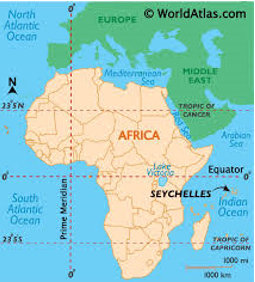
- Location: 4°–11°S, 46°–56°E; 1,600km east Kenya, 1,100km NE Madagascar.
- Capital: Victoria on Mahé island.
Geological Highlights
- Mahé Group: 40+ granitic, mountainous isles with coastal plains, central hills.
- Outer Isles: 70+ low coralline atolls/reefs.
- Peak: Morne Seychellois (905m) on Mahé.
- Heritage Sites: Aldabra Atoll, Vallée de Mai (UNESCO); coco de mer endemic.
SESEL Joint Vision Key Areas
- Economic Package: $175M ($125M LoC + $50M grant) for infra, capacity, security.
- Maritime Focus: MAHASAGAR pillar; joint surveillance, hydrography, defence.
- Digital Push: DPI buildout for payments, e-governance via India stack.
- Climate Action: Renewables, MHEWS, CDRI support, MVI advocacy for SIDS.
- Health/Food: Meds, ambulances, grains, new hospital, ITEC training.