1. Oil imports from Russia hit low
GS paper II-IR
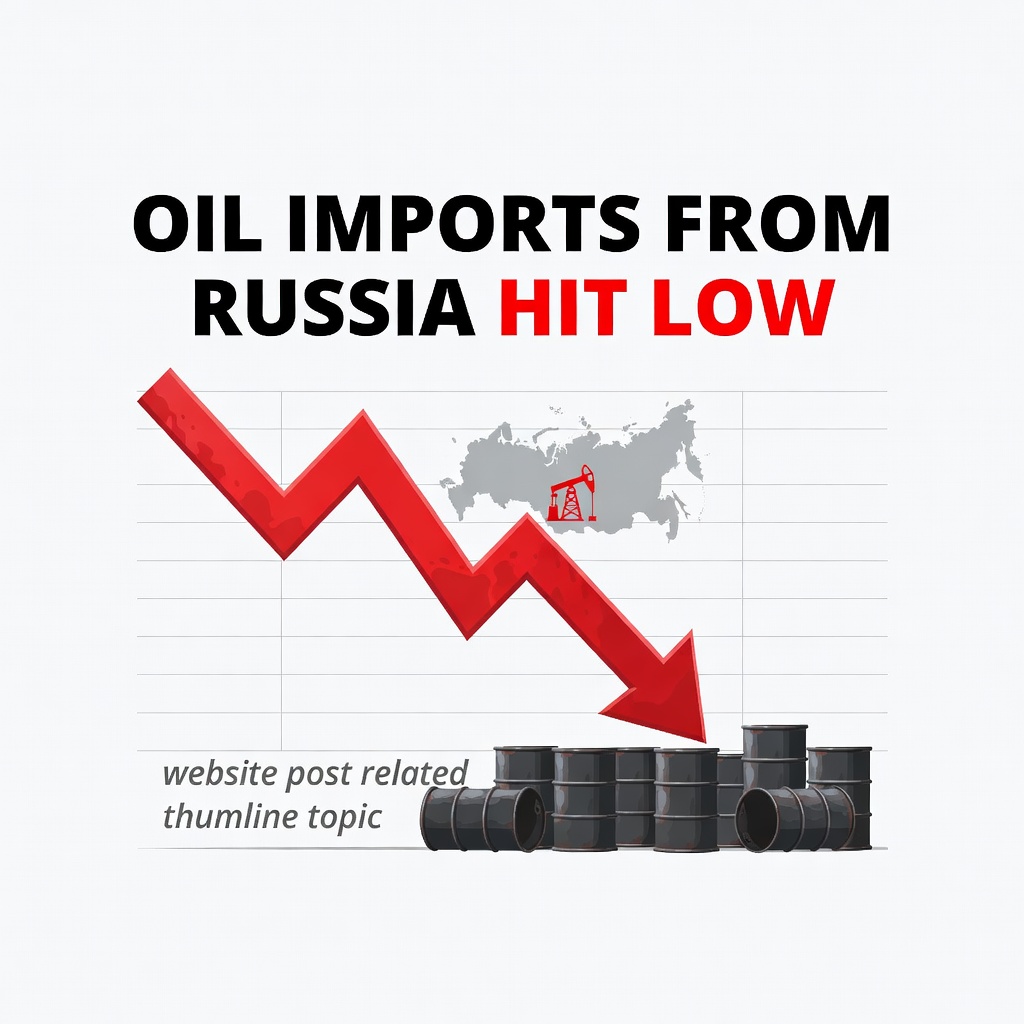
Context :India faces shifting energy dynamics with Russia amid U.S. trade incentives and sanctions. A new tariff cut on Indian exports coincides with declining Russian oil imports, sparking claims of a broader geopolitical bargain under President Trump to pressure Moscow over Ukraine.
Key Developments
- U.S.-India pact: Tariffs on select Indian goods drop from 50% to 18%, boosting bilateral trade.
- Trump’s assertion: President Trump states PM Modi committed to ending Russian oil purchases to aid Ukraine peace efforts.
- Import decline: Russian crude imports reached a 38-month low in December 2025 per latest figures.
Past Reliance Reasons
- Price advantage: Russia sold at $15–20 per barrel discounts post-2022 Ukraine invasion.
- Supply needs: With 85% import dependency, India secured cheap fuel for 1.4 billion citizens.
- Legal access: Bought discounted oil via neutral channels as Western buyers avoided it.
- Refining gains: Converted cheap crude into exportable diesel sold to Europe and G7 markets.
Current Downturn Factors
- Fading discounts: Price gaps now under $3 per barrel, eroding economic appeal.
- Sanction impacts: U.S. measures hit Rosneft and Lukoil from November 2025, hitting supplies.
- Diplomatic shifts: Response to Trump administration pressures on energy sourcing.
- Risk reduction: Push to diversify away from single-supplier dependence.
Government Stance
- Core focus: Energy security tops national priorities for affordable supply.
- Policy freedom: Purchases guided by commercial value and strategic needs.
- Measured reply: No direct confirmation of full halt; stress on balanced diversification.
- Other options: Willing to restart Venezuela imports if prices suit and sanctions allow.
Price Snapshot (2026 Est.)
| Source | Cost Edge | Share Trend |
| Russia | Narrowing discount | Peaking then falling |
| U.S. | Rising competitiveness | Up to 8.1% by late 2025 |
Geopolitical Angles
- Trade leverage: Tariff relief trades for reduced Russian energy ties.
- U.S. gains: Boosts American oil exports while curbing Russia’s war funding.
- Supply pivot: India eyes stable sources like U.S. and Venezuela for de-risking.
- Global pattern: Energy flows align with West vs. Russia/China blocs.
2. Chabahar port
GS PAPER II-IR
CONTEXT :Payment Completion: India recently announced it has fully paid its $120 million commitment for the port’s development.
- Budget 2026 Shift: The Union Budget for 2026-27 made no fresh allocation for the project for the first time.
- Sanctions Deadline: The current U.S. sanctions waiver for the port is set to expire on April 26, 2026.
- Diplomatic Friction: Opposition leaders have questioned if India is “quietly exiting” the project due to U.S. pressure.
Why Chabahar Port Matters for India
- Strategic Connectivity
- Bypassing Pakistan: It provides a direct sea-land route to Afghanistan, completely circumventing Pakistan’s land restrictions.
- Gateway to Central Asia: Serves as the entry point for the International North-South Transport Corridor (INSTC) reaching Russia and Europe.
- Geopolitical Connectivity
- Countering China: It is a direct strategic response to China’s investment in the Gwadar Port in Pakistan (just 140 km away).
- Regional Influence: Maintains India’s presence in the Indian Ocean and strengthens ties with the Persian Gulf.
- Humanitarian & Trade Use
- Aid to Afghanistan: Used extensively to ship wheat, medicines, and pesticides to Kabul during crises.
- Trade Efficiency: Reduces transit time by 40% and costs by 30% compared to traditional routes through the Suez Canal.
What Exactly Did India Pay For?
- Equipment Procurement: The $120 million was specifically for heavy port machinery like Mobile Harbour Cranes.
- Terminal Development: Funding was directed toward the Shahid Beheshti Terminal to make it fully operational.
- Liability Liquidation: By paying now, India has “cleared its books” so no future funds are “stuck” if sanctions tighten.
The Sanctions Problem: What is the Risk?
- Secondary Sanctions: Indian entities (like IPGL) risk being blacklisted from the U.S. financial system if they trade with Iran.
- Tariff Threats: The U.S. has threatened a 25% additional tariff on any country doing business with Iran.
- Financial Isolation: Major Indian banks and shipping firms are hesitant to engage, fearing the loss of the massive U.S. market.
U.S. Pressure & India’s Caution: The Approach
- Tactical De-risking: India has replaced many Indian managers with Iranian manpower to reduce direct “sanctionable” exposure.
- Zero-Allocation Strategy: Removing the port from the 2026 budget signals to the U.S. that no new money is flowing to Iran.
- Negotiation Window: India is using the time until April 2026 to lobby Washington for a “humanitarian” or “strategic” extension.
- Balanced Autonomy: India maintains the infrastructure is “ready,” allowing it to resume full control if global tensions ease.
3. Tripartite Agreement for the Frontier Nagaland Territorial Authority
Context :The Tripartite Agreement for the Frontier Nagaland Territorial Authority (FNTA) marks a key step in India’s federal approach to address regional grievances in Nagaland. Signed between the Government of India, Nagaland government, and Eastern Nagaland People’s Organisation (ENPO), it creates an autonomous body for six eastern districts.
- This responds to decades of demands for better development and self-governance, building on Naga peace talks while upholding Article 371A protections.
- It promotes inclusive federalism amid North-East stability efforts, as per the February 2026 PIB release.
Core Details of the FNTA Agreement
- Purpose of the pact: Establishes FNTA as a self-governing entity for eastern Nagaland’s six districts, devolving powers for local administration and growth without separating from Nagaland state.
- Signatories: Involves Government of India, Nagaland state government, and ENPO (representing eight Naga tribes from the region).
- Affected areas: Covers Tuensang, Mon, Kiphire, Longleng, Noklak, and Shamator districts.
- Main objectives: Tackles persistent political, economic, and infrastructure gaps; fosters fair progress, community-led choices, and fiscal independence; bolsters regional peace.
Main Provisions
- FNTA setup: Forms a dedicated territorial council with broad control over local affairs.
- Power transfer: Hands over authority on 46 subjects, enabling swift decision-making.
- Funding model:
- Proportional sharing of development funds based on population and land size.
- Guaranteed yearly central grants.
- Startup costs covered by Union Home Ministry.
- Governance framework: Includes a compact secretariat led by an Additional Chief Secretary or Principal Secretary-rank official.
- Legal protection: Fully respects Article 371A, safeguarding Naga customs, land rights, and resources.
- Background process: Emerges from multi-year talks and trust-building since 2021-22.
Broader Impact
- Federal flexibility: Shows adaptive autonomy models under the Constitution.
- Stability gains: Curbs radicalization risks and separatist pulls.
- Growth boost: Speeds up roads, utilities, resource use, and welfare programs tailored to locals.
4. Armenia
Mapping
Context :Armenia, a landlocked nation in the South Caucasus at the Europe-Asia crossroads, draws strategic interest from India amid regional tensions. Chief of Defence Staff General Anil Chauhan’s recent visit highlights growing bilateral defence ties, especially with Armenia’s disputes over Nagorno-Karabakh against Azerbaijan.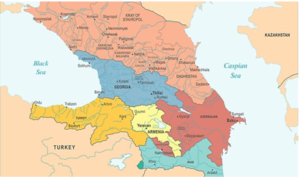
Basic Profile
- Nation type: Republic in the Armenian Highlands of West Asia, part of the Transcaucasus between Black Sea and Caspian Sea.
- Main city: Yerevan, serving as capital, economic hub, and cultural centre.
Bordering Areas
- Adjacent states: Georgia (north), Azerbaijan (east), Iran (south), Turkey (west).
- Special border: Nakhchivan exclave of Azerbaijan (southwest).
Land and Elevation
- Plateau base: Armenian Plateau with average height of 1,800 metres; peaks at Mount Aragats (4,090 m).
- Mountain systems: Lesser Caucasus chains like Bazum, Pambak, Vardenis; volcanic plateaus and deep valleys.
- Soil traits: Mineral-rich from ancient lava, but rocky and less fertile outside river basins.
Water Features
- Major lake: Lake Sevan, a high-altitude freshwater body vital for irrigation, power, and moderating climate.
- River systems: Fast-flowing rivers draining into Aras valley; limited forests.
Climate Patterns
- Type: Highland continental with hot, dry summers and cold winters; varies sharply by elevation.
- Risk factors: High seismic activity, as in the 1988 Spitak quake; vulnerable to earthquakes.
Strategic Role
- Geopolitical spot: Links Russia, Turkey, Iran; influences regional security.
- Security drivers: Nagorno-Karabakh conflict shapes alliances and military needs.
5. India, GCC ink terms of reference to formally launch trade talks
GS paper II-IR
CONTEXT : India and the GCC signed the ToR in New Delhi on February 2026. This act formally initiates negotiations for a comprehensive Free Trade Agreement.
Who are the GCC Countries?
The Gulf Cooperation Council is a political and economic union consisting of six Middle Eastern nations:
What are “Terms of Reference” (ToR)?
- The Rulebook: ToRs are the guiding documents that define the scope and modalities of the talks.
- The Roadmap: They outline which sectors (goods, services, investment) will be discussed.
- Clarity: They ensure both sides agree on the “ground rules” before specific bargaining begins.
Background: A Long Road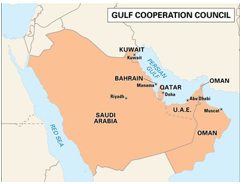
- Early Starts: Talks originally began in 2004 with rounds in 2006 and 2008.
- The Long Pause: Negotiations stalled in 2011 when the GCC deferred talks with all global partners.
- Incremental Steps: India recently signed individual deals with the UAE (2022) and Oman (2025).
Why is this a Big Deal?
- Massive Trade Volume: Bilateral trade already stands at a staggering $178.56 billion (FY25).
- Major Trading Bloc: The GCC is collectively India’s largest trading partner.
- Economic Clout: The GCC has a combined GDP of $2.3 trillion and 61 million people.
Why is the FTA being revived now?
- Post-Pandemic Resilience: Both sides want to secure and diversify their supply chains.
- Momentum: Success with the UAE and Oman created a “thaw” and proof of concept.
- Global Uncertainty: The GCC sees India as a stable, fast-growing partner amid global volatility.
What India Gains from an India-GCC FTA
- Export Growth: Better market access for engineering goods, rice, textiles, and chemicals.
- Service Sector Boost: Easier movement for IT professionals, nurses, and engineers.
- Investment Inflow: Attracting more of the $31 billion+ GCC sovereign wealth into Indian infra.
- Lower Tariffs: Removal of duties on Indian jewelry, machinery, and manufactured products.
What GCC Countries Gain
- Food Security: Reliable access to India’s massive agricultural and food grain production.
- Energy Market: Long-term, stable buyers for their crude oil, LNG, and petrochemicals.
- Diversification: Alignment with “Vision 2030” plans to move beyond just oil income.
Strategic Importance (Beyond Trade)
- Energy Security: GCC provides over 35% of India’s oil and 70% of its gas imports.
- The “Living Bridge”: Nearly 10 million Indians live and work in the GCC region.
- Geopolitics: Strengthens India’s “Link West” policy and presence in the Arabian Sea.
- Digital Integration: Potential for linking India’s UPI/RuPay systems across the entire Gulf.
6. The International Space Station era ends: ISS set to return to earth, closing a landmark saga of international unity.
GS paper III-S&T
Context :The International Space Station (ISS) represents a landmark in human space exploration, marking over 25 years of continuous habitation in low Earth orbit since 2000. Amid plans for its controlled de-orbiting post-2030, recent coverage highlights its role in microgravity research and international unity, paving the way for commercial stations and deeper space missions.
Core Definition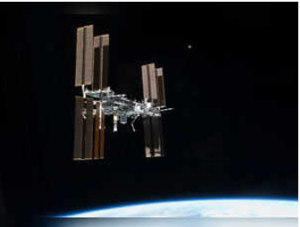
- Facility type: Modular space laboratory orbiting at low Earth altitude, hosting crew for extended research on microgravity effects, tech prototypes, and human physiology.
- Crew continuity: Uninterrupted human presence since Expedition 1 arrived in November 2000.
Launch Timeline
- Initial module: Zarya functional cargo block lifted off on November 20, 1998, starting orbital assembly.
- Full operations: Began with first permanent crew in late 2000.
Partner Organizations
- Key players: NASA (United States), Roscosmos (Russia), ESA (Europe), JAXA (Japan), and CSA (Canada).
- Collaboration model: Joint operation where each agency supplies and oversees its modules and systems.
Primary Goals
- Scientific focus: Conduct experiments impossible on Earth, like fluid dynamics and biology in weightlessness.
- Exploration prep: Validate life support, propulsion, and habitat tech for lunar and Mars voyages.
- Economic role: Foster a budding space economy via private partnerships and tech transfer.
Structural Highlights
- Design approach: Assembled from agency-donated pressurized modules, trusses, and solar arrays over a decade.
- Operational reliance: Interdependent systems demand cross-agency coordination for power, life support, and resupply.
- Retirement plan: U.S.-built deorbit vehicle to guide safe re-entry into Pacific Ocean after mission end beyond 2030.
Lasting Value
- Research outcomes: Yielded breakthroughs in medicine, materials science, and climate monitoring from orbit.
- Diplomatic symbol: Endured geopolitical tensions, exemplifying sustained global teamwork in space endeavors.
7. The state of Climate Governance
GS paper III-Environment &Ecology
Context :Global climate governance under UNFCCC frameworks like Kyoto and Paris promises action against warming but delivers rising emissions and missed 1.5°C goals. Structural flaws—consensus-based decisions, national politics, economic priorities—create progress in rhetoric but inaction on ground, as seen at recent COPs.
Framework Weaknesses
- UN process runs via annual COPs with voluntary buy-in, lacking binding enforcement.
- Consensus rule gives every nation veto power, yielding vague declarations over firm steps.
- Result: Diplomatic wins mask environmental drift, with endless talks but no cuts.
Political Barriers
- Leaders face short election cycles, dodging costly green shifts for voter appeal.
- Nations balance global image with domestic gains, offloading blame elsewhere.
- Conferences hailed as breakthroughs despite flat emission paths.
Economic Pressures
- Markets chase quick profits; climate fixes demand long-term spending curbs.
- Growth fuels jobs and power—fossil curbs risk backlash.
- Future generations unrepresented, so short gains trump sustainability.
Societal Factors
- People focus daily survival; climate feels distant till disasters strike.
- Low public push lets leaders delay tough reforms.
- Citizens react to harm, rarely drive prevention.
Science Misuse
- Data clear on risks; uncertainty exploited to stall.
- Knowledge gap closed—now it’s political math.
- Evidence twisted into debate tool, not policy driver.
COP30 Shortfalls
- Pledges grew, but no hard cuts or timely funds.
- Developing world needs trillions yearly; flows stay tiny.
- Loss-damage fund operational but small; tech transfer stays talk.
Systemic Value
- UNFCCC flawed but vital—no rival matches its reach.
- Coalitions too narrow; quitting worsens chaos.
- Keeps dialogue alive amid gridlock.
8. India -EU trade deal
GS paper II-IR
Context :India-EU Free Trade Agreement breakthrough after 25 years signals strategic alignment amid global rivalry and economic shifts. Beyond tariffs, it fosters resilience in security, energy, tech, and mobility, positioning both as stabilizers in multipolar order.
Negotiation History
- Talks spanned nearly 25 years with repeated deadlocks over regulations.
- Progress reflects policy shifts beyond economics to geopolitics.
- Marks turning point from stalled ties to deeper partnership.
Leadership Impact
- High-level summits built trust, easing domestic pushback.
- India framed EU as reliable diversification partner.
- EU leaders pushed bureaucracy past rigid stances.
Strategic Motivations
- Major power competition drives need for diversified alliances.
- Reduces economic coercion risks for both sides.
- Builds resilience against global uncertainties.
Trade Agreement Highlights
- Covers tariffs plus investment, services, and rules of origin.
- Aims to boost bilateral trade beyond $100 billion target.
- Includes sustainable development and dispute mechanisms.
Defence Ties Expansion
- Focus on Indo-Pacific maritime security cooperation.
- Joint exercises and intel sharing planned.
- Elevates economic pact to strategic level.
Energy and Climate Link
- EU green tech aids India’s affordable transition.
- Targets renewables, green hydrogen projects.
- Aligns decarbonisation with development needs.
Tech Innovation Push
- Joint work on AI, semiconductors, data rules.
- Builds digital sovereignty for both.
- Shapes global standards democratically.
Mobility Enhancements
- Eases visas for students, professionals, researchers.
- Boosts knowledge exchange and people ties.
- Sustains bonds beyond government level.
Global Order Role
- Flexible partnership counters rigid blocs.
- Promotes growth, democracy in multipolar world.
- Moderates rivalries via coordinated policies.