1. President rule ends in manipur
GS paper II-polity
Context : President’s Rule was recently revoked on February 4, 2026, after being in place for nearly a year.
- New Government: A new elected government led by Yumnam Khemchand Singh was sworn in on the same day.
Why Imposed in Manipur?
- CM Resignation: Former CM N. Biren Singh resigned on February 9, 2025, amid political instability and unrest.
- Constitutional Breakdown: The Governor reported that the state government could not function as per constitutional provisions.
- Lack of Consensus: The ruling BJP could not immediately find a successor, leading to a failure to convene the assembly.
- Ethnic Violence: Prolonged conflict between Meitei and Kuki-Zo communities since May 2023 disrupted the administrative system.
Introduction to President’s Rule
- Definition: It is the suspension of state government and imposition of direct Union government rule in a state.
- Mechanism: The President assumes the functions of the State Government and powers of the Governor.
Constitutional Provisions
- Article 356: Empowers the President to issue a proclamation if the state machinery fails to function constitutionally.
- Article 355: Imposes a duty on the Union to protect states against internal disturbances and ensure constitutional governance.
- Article 365: Allows President’s Rule if a state fails to comply with specific directions from the Union.
Other Situations Leading to President’s Rule
- Hung Assembly: When no party or coalition secures a majority after elections.
- Defection/Minority: If a ruling party loses its majority due to defections and no alternative government is viable.
- Disregarding Directions: Persistent failure of a state to implement constitutional mandates from the Centre.
- Internal Subversion: When a government deliberately acts against the law or fosters violent revolt.
Parliamentary Approval
- Timeline: The proclamation must be approved by both Houses of Parliament within two months of issuance.
- Majority: It requires a simple majority (majority of members present and voting) in both Houses.
- Duration: Once approved, it lasts for six months and can be extended up to a maximum of three years.
Impact of President’s Rule
- Executive Shift: The Governor, assisted by advisors, runs the state administration on behalf of the President.
- Legislative Shift: The State Legislative Assembly is either suspended or dissolved, and Parliament makes state laws.
- Budgetary Power: The power to authorize expenditure from the state’s consolidated fund shifts to the Parliament or President.
Landmark Supreme Court Judgments
- S.R. Bommai Case (1994): Ruled that the power is subject to judicial review and recommended a floor test to prove majority.
- Rameshwar Prasad Case (2006): Emphasized that recommendations must be based on objective criteria, not subjective opinion.
Criticism of President’s Rule
- Misuse of Power: Historically used by the Centre to dismiss state governments run by political opponents.
- Federal Threat: Critics view it as a tool that undermines the federal structure and autonomy of states.
- Vague Grounds: The phrase “failure of constitutional machinery” is often interpreted broadly for political convenience.
2. Denotified tribes seek constitutional recognition
Gs paper II-polity
Context :India is home to over 1,500 Denotified, Nomadic, and Semi-Nomadic communities, comprising roughly 10% of the population. Despite their numbers, they remain “invisible” in official statistics, leading to their exclusion from mainstream development.
Why in News?
- Census Demand: Tribes are pushing for a “separate column” in the upcoming 2027 Census to end political misclassification.
- Ministry Support: The Social Justice Ministry recommended their inclusion to the Registrar General of India in January 2026.
- Budget 2026: The government allocated ₹39.40 Crore for the SEED scheme (Economic Empowerment) for 2025-26.
Who are Denotified, Nomadic, & Semi-Nomadic Tribes?
- Denotified Tribes (DNTs): Communities once branded “born criminals” under colonial law, later “denotified” in 1952.
- Nomadic Tribes (NTs): Groups that maintain constant physical movement as a livelihood strategy.
- Semi-Nomadic Tribes (SNTs): Nomadic groups with fixed habitations for part of the year.
Historical Background
- Criminal Tribes Act (1871): A colonial law that notified entire communities as “criminal by birth”.
- Surveillance: These groups were subjected to mandatory registration, movement restrictions, and social stigma.
- Repeal (1952): Independent India repealed the Act, but replaced it with the Habitual Offenders Act, prolonging the stigma.
Why is this a Problem?
- Social Stigma: They are still frequently treated as “habitual criminals” by local police and society.
- Loss of Traditional Livelihood: Colonial forest laws ended their access to traditional grazing and forest resources.
- Administrative Invisibility: Many are not classified under SC, ST, or OBC, leaving them without any reservation benefits.
Why a Separate Census Column 2027?
- Data Vacuum: The last official enumeration of “criminal tribes” was conducted in 1911.
- Statistically Invisible: Accurate population data is needed to design targeted welfare and sub-classification.
- Proper Coding: A separate code prevents them from being lost within broader SC/ST/OBC categories.
Demand for Constitutional Recognition
- Third Schedule: Demand for a “Third Schedule” (after SC and ST) specifically for DNTs/NTs/SNTs.
- Legal Protection: Seeking extension of the Atrocities Act to cover these communities specifically.
Legal Boost: Supreme Court Judgment (Aug 2024)
- Sub-classification: The SC ruled that states can sub-classify SCs/STs to prioritize more backward groups.
- Data-Driven Quotas: DNTs use this to demand “graded backwardness” and specific sub-quotas within existing pools.
Findings of Official Commissions
- Renke Commission (2008): Estimated the DNT population at approximately 10-12 crore.
- Idate Commission (2017): Found over 1,200 communities needing urgent inclusion in scheduled lists.
- Income Crisis: Nearly 50% of surveyed households earned less than ₹50,000 annually in 2017.
Welfare Failure & Documentation Gap
- Lack of Permanent Address: Prevents them from obtaining Ration Cards, Voter IDs, or Aadhar Cards.
- Identity Crisis: Some tribes are SC in one state but unlisted in another, blocking access to scholarships.
- Bureaucratic Hurdles: The SEED scheme suffered from zero application approvals in its early years due to red tape.
3. Why are Meta and WhatsApp facing a judicial ultimatum ?
GS paper II-polity
Context :Supreme Court sharply critiques Meta-WhatsApp’s data practices as potential “theft” amid 2021 privacy policy update allowing Meta data-sharing, with CCI fining ₹213 crore for dominance abuse—now under judicial review questioning coerced consent in India’s digital market.
Policy Trigger
WhatsApp’s 2021 update enabled metadata sharing with Meta for ads/profiling, despite end-to-end message encryption, sparking privacy/dominance concerns.
CCI Action
CCI ruled policy abuses WhatsApp’s market dominance as India’s “digital town square”; imposed ₹213.14 crore penalty as opting-out unrealistic for users.
NCLAT Verdict
Upheld penalty/abuse finding but struck 5-year data-share ban, citing corporate synergies and deferring to upcoming DPDP Act 2023 for privacy rules.
SC Critique
Bench calls consent illusory in dominant platforms—”opting out of WhatsApp equals opting out of India”; users as both consumers and products.
Data Value Shift
Justice Bagchi questions economic rents from user data monetization; DPDP Act covers privacy but silent on profit-sharing from behavioral profiles.
EU-Style Push
Hints at “data-as-property” model like EU Digital Services Act vs US laissez-faire; impleads MeitY on sovereign data protection needs.
Next Steps
Ultimatum to Meta: halt data-sharing or face strict conditions/case dismissal; signals end to unchecked extraction amid low digital literacy
4. Government has increased capital spending for the defence sector
GS PAPERIII-ECONOMY
CONTEXT :India’s FY2026-27 defence budget rises 15.2% to ₹7.85 lakh crore post-Operation Sindoor conflict, with 8% capex surge to ₹2.19 lakh crore emphasizing domestic procurement (75%), modernization, and self-reliance amid two-front threats and IOR tensions.
Budget Highlights
- Total MoD allocation hits record ₹7.85 lakh crore; capex jumps 22% for jets, ships, submarines.
- 75% capex (₹1.39 lakh crore) reserved for domestic firms; BRO gets ₹7,394 crore for border infra.
- DRDO budget at ₹29,100 crore; customs duty waived on aircraft raw materials to boost MRO sector.
Strategic Imperatives
- Replenish war reserves depleted in Operation Sindoor (May 2025)—ammunition, precision munitions critical.
- Counter China-Pak two-front challenge via LAC air/ground modernization for credible deterrence.
- Bolster IOR maritime edge with Project 75(I) submarines against expanding foreign navies.
- Fund AI, cyber, drones for tech superiority; Agnipath allocation up 51% for leaner forces.
Key Challenges
- Manpower/pensions (₹1.71 lakh crore) crowd out modernization despite absolute capex rise.
- Domestic absorption lags—delayed trials, fragmented planning cause fund under-utilization.
- Import reliance persists for aero-engines, MRFA jets; Project 75(I) delays shrink submarine fleet.
- Budget at 1.99% GDP falls short of 2.5-3% expert consensus for full-spectrum threats.
Reforms Needed
- Standardize emergency procurement for critical tech; boost jointness via theaterisation funding.
- Prioritize IP-led designs—target 50% contracts with indigenous intellectual property ownership.
- Aim ₹35,000 crore defence exports by 2027 through modular designs and MSME global integration.
Implementation Focus
75% domestic capex mandates self-reliance shift, but execution speed determines tactical readiness vs. China-Pakistan amid shrinking IAF squadrons and naval gaps.
5. Solid Fuel Ducted Ramjet (SFDR) Technology
Context :DRDO’s SFDR technology demo from Chandipur marks a propulsion breakthrough for long-range missiles, using atmospheric oxygen for sustained supersonic thrust—boosting India’s air superiority via indigenous BVRAAMs under Aatmanirbhar Bharat.
Technology Basics
Solid Fuel Ducted Ramjet (SFDR) enables air-breathing missiles with continuous high-speed flight, unlike quick-burn rockets.
Operating Principle
- Nozzle-less booster accelerates to ramjet ignition speed; air intake compression follows without moving parts.
- Solid fuel burns steadily in duct with ingested air; flow controller ensures stable supersonic combustion.
- Sustained thrust maintains Mach+ velocity through terminal phase for high-impact kills.
Core Advantages
- Atmospheric oxygen use frees space for more fuel, extending range vs oxidiser-heavy rockets.
- Continuous propulsion retains supersonic speed/manoeuvrability, defeating evasive targets.
- Optimised airflow cuts drag; stable combustion control mastered indigenously at high Mach.
Strategic Applications
SFDR powers beyond-visual-range air-to-air missiles (BVRAAMs), letting IAF fighters strike enemy jets from afar while staying safe.
6. Blue Line along the Lebanon–Israel frontier
GS PAPER :IR
UNIFIL suspends patrols along the 120-km Blue Line after Israel releases chemicals near the Lebanon frontier, highlighting tensions at this UN-demarcated withdrawal line (not border) from Israel’s 2000 Lebanon exit, monitored amid Hezbollah threats and disputed zones like Shebaa Farms.
Line Definition
Blue Line marks Israel’s southern Lebanon withdrawal per UNSC Resolutions 425/426; temporary demarcation, not formal border, respected by both sides pending negotiations.
Geographical Scope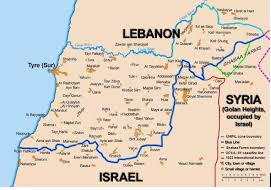
Spans 120 km from Naqoura/Rosh HaNikra on Mediterranean coast to Shebaa Farms tri-junction, separating Lebanon from Israel/Golan Heights.
Historical Origin
- 1978: UNSC Resolutions 425/426 create UNIFIL post-Israel invasion.
- 2000: UN delineates line after withdrawal; both parties commit to respect without prejudice to final borders.
Key Attributes
- Technical verification line for withdrawal compliance, not sovereignty settlement.
- UNIFIL custodianship with Lebanese Army; includes disputed Ghajar village, Kfarchouba hills.
- Frequent violations: Israeli overflights, cross-fire, construction; Israel-built security fence.
Strategic Role
Essential for Israel-Hezbollah de-escalation, UN Resolution 1701 peacekeeping, and civilian returns—flashpoint for regional stability
7. The Budget and the imperative of fical consolidation
GS paper III-ECONOMY
Context :Union Budget 2026–27 advances Viksit Bharat@2047 vision, prioritizing AI, biopharma, semiconductors, and critical minerals for long-term growth amid fiscal constraints.
Expenditure Restructuring
Revenue spending share dropped from 88% (2014–15) to 77% (2026–27 BE), cutting subsidies to boost capital outlay for asset creation over consumption.
Capital Spending Trends
Capex/GDP holds at 3.1%, but growth slowed to 4.2% (2025–26 RE) from 28.3% (2023–24); 11.5% budgeted rise (2026–27) matches GDP, with execution shortfalls persisting.
Revenue and Tax Outlook
Tax projections realistic, but buoyancy at 0.8 lags benchmark; direct taxes responsive, yet GST trails GDP growth amid rising welfare needs.
Centre-State Fund Flows
16th Finance Commission keeps States’ tax share at 41%, but grants fall from 0.43% to 0.33% of GDP, squeezing subnational development roles.
Fiscal Consolidation Pace
Deficit/GDP dips by just 0.1 point in 2026–27; debt-target shift lacks clear glide path, undermining transparency tied to nominal GDP growth.
Debt and Interest Burdens
Debt interest rate hits 7.12% (2026–27), claiming 40% of revenues and crowding out private investment, limiting space for primary spending.
Path Ahead
Boost tax buoyancy, hit capex targets, sustain State transfers, and accelerate consolidation for macroeconomic stability and tech-led growth sustainability.
8. The U.S trade deal -gains from economic diplomacy
GS paper II_IR
Context : India-US trade deal cuts US tariffs on Indian goods to 18% from 50%, boosting export competitiveness amid India’s strategy of rules-based partnerships with EU, UK, Australia, UAE—positioning India as a confident global economic player aligned with the world’s largest democracy.
Negotiation Journey
US-India deal emerged from year-long talks, diplomacy; tariff drop restores exporter edge, signals resilient Indian negotiation amid sensitive bilateral dynamics.
Partnership Expansion
US pact fits India’s web of FTAs—EU/UK/EFTA for Europe, Australia/NZ for Pacific, UAE/Oman for West Asia; US absorbs ~20% of India’s exports as top market.
Sectoral Gains
Apparel leads employment boost as Indian goods undercut Vietnam/Bangladesh tariffs; gems/jewellery, marine/processed foods, footwear/leather gain cost edge for capacity growth.
Competitiveness Edge
Deal outshines China, Bangladesh, ASEAN rivals, fueling India’s manufacturing hub goal via market access, policy certainty, investment, and supply chain integration.
Strategic Outcomes
Tariff cut paves way for full Bilateral Trade Agreement, joint ventures, tech ties in innovation/skills; builds trusted supply chains beyond economics.
Bilateral Reset
Trade gains complement Quad cooperation on resilience; fosters trust-based economic-strategic alignment for stable long-term India-US ties.
Implementation Focus
is line demarcates the border between Israel and Lebanon, established after Israel’s withdrawal from southern Lebanon in 2000 and verified by the UN.