
1. Black box from the Baramati trainer aircraft crash
GS Paper III-Science & Technology
Context :Recovery of the black box from the Baramati trainer aircraft crash in Maharashtra allows investigators to examine flight data and cockpit audio for accident causes.
What is Black Box
Commonly called a black box, this crash-survivable flight recorder aids aviation accident probes, painted bright orange for easy spotting amid wreckage.
Key Components
- Flight Data Recorder (FDR): Captures vital parameters like altitude, speed, heading, acceleration, engine performance, and controls.
- Cockpit Voice Recorder (CVR): Logs pilot talks, air traffic control exchanges, and cabin noises.
- Typically combined and mounted in the tail section for protection.
FDR Specifics
- Tracks essential flight metrics continuously.
- Stores minimum 25 hours of data, with faster sampling in critical phases.
CVR Specifics
- Records audio from cockpit area.
- Holds last 2 hours in modern units via continuous loop overwrite.
Technical Design
- Employs solid-state memory in a Crash Survivable Memory Unit (CSMU).
- Features titanium or steel casing with heat shielding.
- Endures extreme impacts, fires, water pressure, and submersion.
Underwater Locator Beacon
- Triggers 37.5 kHz pings upon water impact.
- Battery lasts about 30 days to aid deep-sea recovery.
Role in Baramati Crash
Data helps reconstruct the flight path, pilot decisions, and potential failures in the trainer aircraft, pinpointing training or mechanical issues.
2. Ethanol blending has impact on food security
General Studies Paper III-Economy -agriculture
Context :”Food vs. Fuel” Dilemma: Aggressive ethanol targets shift land from food crops to fuel feedstock like maize.
- Energy vs. Food Self-reliance: Conflicts Aatmanirbharta in energy with food security goals.
- Maize-Centric Distortions: Administered pricing for maize-based ethanol pushes farmers away from nutritional crops like pulses, oilseeds, and millets.
Ethanol Blending: Achievements So Far
- E20 Milestone: Achieved 20% ethanol blending in petrol by 2025, ahead of 2030 target.
- Forex Savings: Saved over ₹1.44 lakh crore by cutting crude oil imports.
- Crude Substitution: Replaced ~245 lakh metric tonnes of crude oil by August 2025.
- Farmer Income: Disbursed >₹1.18 lakh crore directly to farmers for feedstock.
- Emission Reduction: Avoided ~700 lakh tonnes of emissions, aiding climate targets.
Impact on Food Security
- a) Change in Cropping Pattern
- Maize Expansion: Production and area grew at CAGRs of 8.77% and 6.68% (FY22–FY25).
- Crowding Out: Farmers shift from pulses, oilseeds, millets to maize for ethanol price benefits.
- Failed Diversification: Policy aimed to replace water-intensive paddy with maize, but paddy area unchanged.
- b) Increased Import Dependence
- Edible Oil Crisis: Imports already at 58%; oilseed shift (e.g., soybean) worsens gap.
- Pulses Gap: Declining production keeps import reliance at 18-20% of consumption.
- Feed Shortages: Maize diversion makes India net corn importer, hitting poultry/livestock.
- c) Nutritional Security at Risk
- Micronutrient Loss: Pulses/millets key for protein/minerals; decline threatens nutrition.
- Price Volatility: Lower local staples increase sensitivity to global shocks.
Regional Dimension & Long-Term Risks
- Hotspots: Prominent in Maharashtra, Karnataka due to maize competition for land/water/labor.
- Groundwater Depletion: Summer maize (third crop) in Punjab worsens water crisis.
- Soil Quality: Monocultures of maize/sugarcane harm long-term soil health.
- Market Distortions: Fixed price signals lock farmers into maize, blocking diverse crops.
Policy Tensions Highlighted
- Pricing Mismatch: Maize ethanol prices up 11.7% CAGR, outpacing pulses/oilseeds profitability.
- Administered vs. Market: OMC assured offtake creates artificial demand ignoring food needs.
- Conflict of Goals: Distillery infrastructure pressures sustained high feedstock supply.
Balanced Way Forward
- Yield Improvements: Boost pulses/oilseeds tech for maize-level profitability.
- 2G Ethanol Focus: Prioritize second-generation ethanol from ag-waste (e.g., stubble).
- Periodic Recalibration: Use OECD-style caps to balance fuel targets with food.
- Regional Planning: Match feedstock to local water/ecological limits.
3. Is India prepared for the end of globalisation?
GS Paper I -Indian Society
GS Paper II -Governance & IR
GS Paper III -Economy
Context :Globalization’s shift to “slowbalization” gained spotlight via Economic Survey 2025-26, highlighting trade disruptions and India’s food-fuel tensions.
- Trade Disruptions: US tariffs and 2025-26 protectionism hit record highs, fragmenting supply chains.
- Energy-Food Dilemma: Ethanol blending for oil import cuts crowds out pulses/oilseeds, risking food security.
- Slowbalization: Global growth at 2.6-3.3%, prioritizing resilience over efficiency.
What is Globalization?
Increasing economic, cultural, and population interdependence via trade and tech flows.
- Interconnectedness turns local shocks (e.g., finance/health crises) into global events.
Earlier Phase (Post-1990s)
Unfettered integration post-Cold War.
- Soviet Collapse (1991): Ex-communist states joined capitalist markets.
- Tech Boom: Internet/mobile slashed business costs.
- Hyper-Liberalization: NAFTA (1992), WTO (1995) boosted free trade.
What Has Changed Now?
Geopolitical fragmentation replaces pure markets.
- “America First” Shift: Protectionism now strategic, not cyclical.
- De-risking/Friend-shoring: Supply chains relocate to allies/home (e.g., Vietnam over China).
- Digital Sovereignty: Tokenized payments (UPI-like) bypass dollar dominance.
Why Did Globalization “Collapse”?
Unintended flaws eroded trust.
- Economic Imbalance: Inequality fueled populism/backlash.
- China’s Rise: Selective rule-following made it a Western rival.
- Cooperation Failure: 2008 crisis, COVID exposed “every country for itself”.
India’s Position in New World Order
Mixed opportunities amid challenges.
- a) India’s Dilemma
- Energy vs. Food: Maize ethanol push trades nutrition (pulses down) for self-reliance.
- Bureaucratic Hurdles: Red tape slows high-growth potential.
- b) Missed Opportunities & Structural Problems
- Manufacturing Gap: Lags Vietnam/Mexico in capturing China’s factory shift.
- Agricultural Distortion: Maize pricing fails pulse diversification.
- c) Where India Still Has Potential
- Digital Infrastructure: Aadhaar/UPI as global models.
- Green Transition: Renewables/green hydrogen cut fossil imports.
Core Warning of the Author
Prioritize sustainability.
- Growth can’t sacrifice soil/nutrition.
- Recalibrate beyond globalization myths; manage downsides actively.
4. A little pig goes a long way
GS paper III-Environment
Context :India’s pygmy hog faces rapid decline from tall grassland habitat loss and degradation, despite its vital role in sustaining ecosystem health.
Pygmy Hog Overview
- World’s smallest and rarest wild pig species.
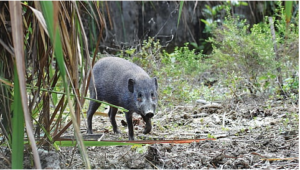
- Among few mammals constructing nests with roofs.
- Serves as indicator species for grassland ecosystem condition.
Habitat Details
- Thrives in undisturbed tall grasslands featuring early successional riverine plants.
- Prefers dense tall grasses combined with herbs, shrubs, and young trees.
- Current range limited to Manas National Park and Orang National Park.
Ecological Importance
- Digs soil with snout to forage.
- Diet includes roots, tubers, fruits, termites, earthworms, and eggs.
- Enhances soil aeration and fertility.
- Promotes seed dispersal for grassland renewal.
Conservation Standing
- IUCN Red List: Critically Endangered.
- Schedule I under Wildlife Protection Act, 1972.
- Wild population extremely low, restricted to Assam
5. Solid Waste Management (SWM) Rules, 2026
Context :India’s Ministry of Environment, Forest and Climate Change notified the Solid Waste Management (SWM) Rules, 2026, superseding the 2016 version, effective April 1, 2026. This update integrates circular economy and Polluter Pays principles amid rising urban waste challenges.
Overview of SWM Rules, 2026
Notified under Environment (Protection) Act, 1986, these rules promote zero-waste landfills through technology and accountability.
Evolution Timeline
- 1986: Parent Environment (Protection) Act established.
- 2016: Introduced basic segregation and landfill norms.
- 2026: Emphasizes on-site processing, digital oversight, and penalties.
Core Provisions
Mandatory Four-Stream Segregation
Waste must separate into:
- Wet Waste: Kitchen scraps, peels for composting or bio-methanation.
- Dry Waste: Plastics, paper, metals for Material Recovery Facilities (MRFs).
- Sanitary Waste: Diapers, pads securely wrapped.
- Special Care Waste: Bulbs, paints, medicines to authorized points.
Bulk Waste Generator Duties
Defined as sites ≥20,000 sqm, ≥40,000L water/day, or ≥100kg waste/day (e.g., malls, societies).
- Implement Extended Bulk Waste Generator Responsibility (EBWGR): On-site wet waste processing or certificates.
- Account for ~30% of total waste, easing urban body loads.
Polluter Pays Enforcement
CPCB levies compensation for violations like unregistered operations or false reports.
Digital Monitoring Portal
Centralized platform tracks generation to disposal, biomining, with online audits and registrations.
Refuse Derived Fuel (RDF) Mandate
Industries (cement, waste-to-energy) phase to 15% RDF substitution from solid fuels over six years.
Landfill and Legacy Waste Reforms
- Restrict landfills to inert waste; higher fees for unsegregated dumps.
- Time-bound biomining/bioremediation of old sites with quarterly online reports.
Hilly/Island Adaptations
- Tourist user fees and inflow caps.
- Decentralized wet waste by hotels; collection points for non-biodegradables.
Strategic Benefits
These rules cut legacy waste burdens, decentralize management, and incentivize recycling via fees and RDF, fostering sustainable urban growth.
6. Has health spending by the center increased?
GS paper III-economy
Context :Union health spending as % of GDP fell to 0.29% in 2025-26 from 0.37% in 2020-21, despite States raising theirs, missing NHP 2017’s 2.5% target.
Health Financing Goals
- NHP 2017 aimed public health spend at 2.5% GDP by 2025, Union share 40%.
- Actual 2025-26 total remains below 2%, showing fiscal shortfalls.
Public Spending Patterns
- India’s per capita health spend lowest vs Bhutan, Sri Lanka, Thailand, Malaysia.
- COVID era saw temporary GDP% rise, led by States not Centre.
Union Budget Trends
- Health allocation down 4.7% real terms vs 2020-21; budget share 2.05% from 2.26%.
- Signals post-pandemic de-prioritization of health.
State Spending Rise
- States up from 0.67% GDP (2017-18) to 1.1%; budget share 5.6% from 5%.
- Fiscal strain as States rely on Union transfers.
Cess Revenue Shortfall
- Health & Education Cess (4%) yields Rs 71k cr FY24, only 25% to health.
- Ex-cess, Union health spend fell 22.5% real terms 2020-24.
Scheme Funding Cuts
- Centrally Sponsored Schemes share down to 43% from 75.9% (2014-25).
- NHM funding declined 5.5% annually in real terms under NDA-II.
Health Outcome Risks
- Higher household out-of-pocket costs.
- Poorer States face bigger strains.
- Weaker primary care, emergency readiness.
- Hinders UHC, SDG health goals.
7. Economic Survey 2025-26 shows India in bright light in an increasingly darker world
GS paper III-Economy
Context :Economic Survey 2025-26 warns of global geopolitical fragmentation, tightening finances, and volatile capital flows hitting India, despite strong macro fundamentals like reduced FDI and FII instability.
Macroeconomic Snapshot
India emerges as a “Bright India in a Darker World,” showcasing resilience amid worldwide uncertainty and fractures.
Major Highlights
- Growth Boost: Medium-term outlook upgraded to 7% (from 6.5%), driven by infrastructure, digital push, and tax reforms.
- Global Risk Scenarios: Outlines 2026 possibilities from “Business as Usual” to “Worst Case” crisis (10-20% odds), possibly from AI bubble or geopolitics, worse than 2008.
- Rupee Undervaluation: CEA notes Rupee “punching below weight,” down ~7% in 2025 due to external risks, not domestic flaws.
Projections and Data
- GDP Target: 6.8%-7.2% growth for 2026-27.
- External Pressures: FDI/FII drying up; economy insulated yet vulnerable to shocks.
8. What is the Salman khan personality rights case ?
GS paper II-POLITY
Context :Delhi High Court hears Salman Khan’s suit against a Chinese AI voice platform seeking to lift an injunction safeguarding his personality rights, spotlighting AI misuse of celebrity identities.
Personality Rights Foundation
- Constitutional Root: Article 21 privacy right (Puttaswamy 2017) underpins protection of identity.
- Economic Aspect: Recognizes commercial worth of public figures’ personas.
- Key Precedents: Delhi HC 2025 Aishwarya Rai case barred unauthorized identity use causing harm.
- Protection Scope: Covers false impersonation, image/name misuse, manipulated content via injunctions.
- Limits: Article 19(1)(g) business rights allow restrictions; artistic use OK if non-misleading; foreign firms ineligible.
Chinese AI Platform Issues
- App Bans: Over 200 Chinese apps blocked under IT Act Section 69A for security/data risks.
- Data Gaps: DPDP Act 2023 passed but unimplemented, exposing AI vulnerabilities.
- Wider Impact: Ruling could curb AI firms’ identity exploitation.
Court Fee Disputes
- Jurisdiction: Commercial Courts Act 2015 handles suits despite no traditional IP.
- Interim Relief: Courts waive upfront fees in celebrity cases amid high brand values.
Regulatory Challenges
- Generative AI Scrutiny: Mirrors EU probes into tools like Grok.
- IT Rules 2021: Takedown options exist but grievance systems falter, driving HC appeals.
- Impersonation Risks: Urgent need for safeguards against digital fakes for all.
Key Takeaway
Case tests AI ethics vs. rights, likely influencing regulations, personality protections, data laws, and redressal efficacy.