1. Soyabean imports
GS PAPER II-IR
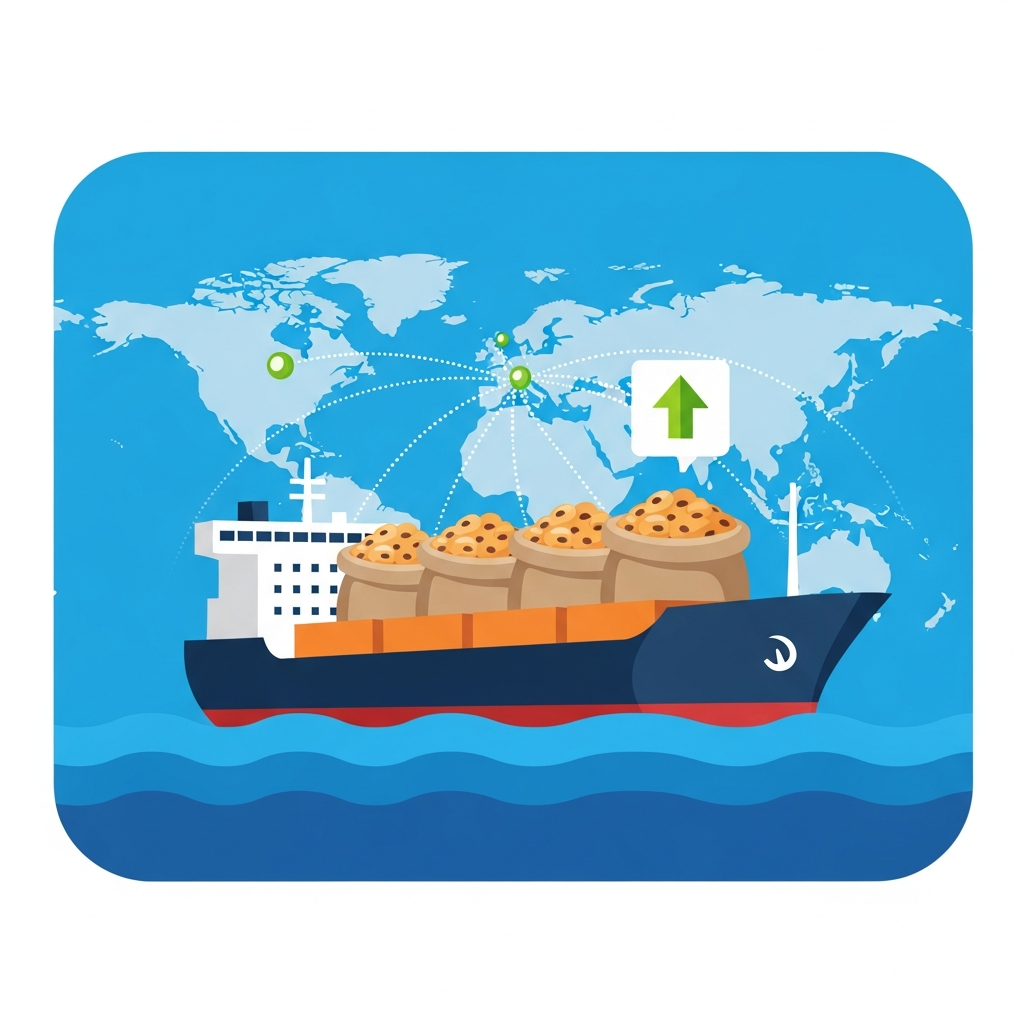
CONTEXT :China booked 25+ Brazilian soybean cargoes for March-April 2026, post fulfilling 12M ton U.S. quota.
- Private crushers prefer Brazil over state-handled U.S. supplies amid trade thaw.
Soybean Importance
- Primary protein for China’s pig/poultry; 18% fat for cooking oil.
- China imports ~100M tons yearly (20% domestic output).
- Global market: $150B+; China takes 60% imports.
Key Players
- Importers: Sinograin, COFCO (state); private crushers.
- Exporters: Brazil/U.S. agribusinesses dominate supply.
- Governments: China-U.S. navigate trade pacts/diplomacy.
Reasons for Brazil Preference
Price Edge:
- Brazil’s record 182.2M ton 2025/26 harvest cuts costs.
- Feb/Mar beans 50-75¢/bushel cheaper than U.S. Gulf.
Tariff Gap:
- Brazil: 3% duty; U.S.: 13% levy hits private buyers.
- Crush margins favor Brazil; U.S. unviable sans subsidies.
Strategic Angle:
- U.S. tariff retained as bargaining chip for talks
2. India ,the beautiful -but first, India the functional
GS paper III-ECONOMY
Context :The Tourism Gap: India’s tourism potential remains vastly under-leveraged compared to global peers like Singapore or Thailand.
- Economic Urgency: Tourism is identified as an engine that creates 8 times more jobs than manufacturing for the same investment.
- National Goal: It is seen as a central pillar for the “Viksit Bharat 2047” vision to build a “welcoming” rather than just a “developed” India.
The Paradox: “Beautiful but Functional”
- What it shows: India has world-class “attractions” (monuments/landscapes) but fails on the “experience” (usability/comfort).
- The Comparison: Singapore (smaller than an Indian district) attracts 13 million visitors, while India struggles to reach similar numbers without the diaspora.
- Core Argument: Tourism is about the total experience (arrival to departure), not just the destination.
The Three I’s: Central Analytical Framework
- Image (Perception Issue):
- Outdated Perception: India is often perceived as “unsafe” or “unclean” by Western travelers.
- Safety Highlighted: Specifically, the global image of India being unsafe for women tourists.
- Why Branding Fails Alone: “Incredible India” ads cannot mask the ground reality of poor safety or harassment.
- Infrastructure (The Functional Problem):
- Missing Middle: India has 5-star luxury or low-end filth, with a massive shortage of quality mid-range hotels.
- Connectivity Gap: Last-mile connectivity and modern amenities at heritage sites remain underdeveloped.
- Immigration (The Gateway Issue):
- Systemic Hurdles: Bureaucratic visa processes and unfriendly arrival experiences act as a deterrent.
- Permissions: Filming or organizing large events is bogged down by excessive red tape.
Solutions Proposed (Multi-Pronged Strategy)
- Segmented Marketing: Move from one “Incredible India” to many specific brands (wildlife, beach, heritage, etc.).
- Women Police Deployment: Deploying more female officers in tourist zones to shift the safety perception.
- Industry Status: Granting the hospitality sector official “Industry Status” to unlock financial benefits and lower GST hurdles.
- Infrastructure Diversification: Incentivizing the construction of varied hotel types to meet the 2030 demand of 5.2 billion domestic visitors.
Economic & Strategic Importance
- Job Multiplier: Acts as a vital absorber for both skilled and unskilled labor (guides, drivers, vendors).
- Soft Power: Tourism serves as a “mirror of the nation’s soul,” creating global ambassadors for India.
- Foreign Exchange: Targets “Chinese money” and global travelers to boost the $60 billion industry target by 2028.
Conclusion
India must shift its focus from promoting “India the Beautiful” to ensuring “India the Functional.” Success lies in matching our unmatched cultural wealth with a world-class visitor experience that makes guests feel safe, respected, and comfortable.
3. Avalanche hits J&K’s Sonamarg tourist resort
GS Paper I-Geography

Context :Massive avalanche hit Sonamarg resort in J&K, burying buildings/vehicles amid heavy snow.
- Blocked Jammu-Srinagar highway; flights cancelled, spotlighting Himalayan risks.
What is an Avalanche?
- Rapid flow of snow, ice, rocks, debris down slopes when gravity beats snow strength.
Types of Avalanches
- Slab: Solid snow layer breaks as one along fracture line—most dangerous.
- Loose Snow (Sluffs): Weak snow starts point-like, fans into V-shape downhill.
- Powder Snow: Dry snow cloud races at 300 km/h with turbulent dust.
- Wet Snow: Melt/rain-triggered; slow but dense and destructive.
- Ice/Rock/Debris: Glaciers, boulders, soil mix slide in huge chunks.
Trigger Factors
- Slopes: 30°-45° inclines prime for slides.
- Snow Load: 1m+ daily buildup overloads packs.
- Layering: Weak base under firm slab creates slip plane.
- Weather: Warm-up or rain weakens bonds.
- Triggers: Quakes, skiing, noise jar unstable snow.
Impacts
Primary:
- Deaths from suffocation, trauma, hypothermia.
- Crushes buildings, roads, power lines.
- Blocks highways, buries vehicles.
Secondary:
- Isolates communities via cut comms.
- Losses in tourism, farming, projects.
- Forests destroyed; ecosystems altered.
GoI Initiatives
- SASE/DGRE: Daily forecasts via research.
- Monitoring: 72 snow stations, 100+ AWS.
- Radar: North Sikkim detects triggers in 3s.
- Tunnels: Atal/Zojila ensure connectivity.
NDMA Guidelines
- Mapping: Zone high-risk areas for planning.
- Structures: Nets uphill; walls to deflect.
- Warnings: 24-hr alerts from satellites/sensors.
- Training: Survival tools like beacons/shovels.
- Coordination: NDMA/SASE/BRO for rescues.
4. State’s 3 Buddhist sites in tentative list for UNESCO World Heritage tag
GS PAPER I-Art &Culture
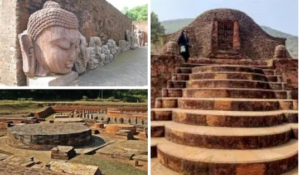
Context :UNESCO added Odisha’s Buddhist Diamond Triangle (Lalitgiri, Udayagiri, Ratnagiri) to India’s Tentative World Heritage List.
- Highlights 1,500 years of Buddhism evolution; boosts cultural heritage recognition.
What Defines Diamond Triangle?
- Serial nomination of three monastic sites in Jajpur-Cuttack districts, Odisha.
- Traces Theravada (Hinayana), Mahayana, Vajrayana Buddhism continuity.
Lalitgiri Highlights
- Oldest site (2nd-3rd BCE) in Cuttack district.
- Features Buddha relic caskets (gold/silver/stone); first apsidal chaityagriha.
- Hosted Sri Chandraditya Vihara learning centre for millennium.
Udayagiri Features
- Largest complex (1st-13th CE) with double-storeyed monastery.
- Madhavapura Mahavihara; colossal Avalokiteswara, Pancha Dhyani Buddhas.
- Peak Mahayana art expression.
Ratnagiri Significance
- Vajrayana (Tantric) hub, akin to Nalanda.
- Sculptures of Tara, Vajrapani, Jambhala; queen patronage evident.
- Unique stupa fusion of Buddhist-Brahmanical styles.
5. Tulu 2nd official language
GS paper II-POLITY
Context :Karnataka govt considers declaring Tulu as second official language after studying other states’ models.
Tulu Language Details
- Dravidian tongue spoken in coastal Karnataka (Dakshina Kannada, Udupi) and north Kerala.
- Rich 3,000-year literary/oral tradition.
- Own Tigalari script; now uses Kannada script commonly.
Article 345 Provisions
- Empowers State Legislature to adopt language(s) in use or Hindi as official via law.
- Applies only to states, not Union.
- Full legislative discretion; no cap on languages.
- Requires law, not executive order.
- Independent of Eighth Schedule listing.
6. Cybercrime and a global governace crisis
GS paper II-governance
GS paper III-S &T
Context :UN Cybercrime Convention signed in late 2024 amid deep global divisions; India abstained despite active participation.
Convention Politics
- Russia-China led 2017 initiative challenging Budapest Convention’s Europe-centric model.
- Europe signed to retain influence; US objected to vague definitions risking rights abuses.
- Cyber governance now tied to geopolitics and competing digital visions.
India’s Position
- Reluctance reflects failed sovereignty/data control proposals during talks.
- Signals declining global norm-setting clout vs. past climate successes.
- Prioritizes policy autonomy amid fragmented institutions.
Principles vs. Practice Gap
- Consensus on harms like child abuse; vague terms enable domestic overreach.
- Mirrors AI regulation: shared safety goals yield divergent rules.
- India’s AI watermarking shows prescriptive approach hindering cooperation.
Multilateralism Crisis
- Weakened UN forums push polycentric, overlapping arrangements.
- Raises compliance costs; strains emerging powers like India.
- Demands technical expertise for multi-forum navigation.
Path Ahead
- India needs regulatory coherence, expertise investment for digital influence.
- Risk of marginalization without proactive engagement.
7. The new logic of the Chinese economy
GS paper II-IR
Context :China’s 2025 economy hit 140 trillion yuan ($20T) with 5% growth, led by domestic demand.
Growth Drivers
- Consumption contributed 52% to growth; physical intake rivals global leaders.
- Exports added 32.7%; high-tech goods up 13.2%.
- Capital formation at 15.3%; shift to consumption-led model.
New Engines
- Advances in AI, quantum tech, brain-computer interfaces.
- High-end manufacturing boom: servers, industrial robots.
- Green sectors thriving: renewables, clean energy.
Export Capacity Reality
- 74.4% industry utilization matches US/EU; no overcapacity.
- Competitiveness from R&D, domestic rivalry, full industrial chain.
- Meets real global demand, aids developing nations’ infrastructure.
India Strategy
- Leverage tech cooperation, market access to cut trade deficit.
- Turn asymmetries into mutual Asia growth gains.
8. Can the ED file writ petitions before courts?
GS paper II-Polity
Context :Supreme Court examining if ED can file writs under Article 226 amid Kerala gold smuggling case disputes.
Case Background
- Originated from 2020 UAE baggage smuggling at Thiruvananthapuram; ED invoked FEMA/PMLA.
- Targets Kerala officials including ex-CM; ED sought HC mandamus/certiorari for records.
Writ Petitions Explained
- Court orders under Art 32/226 to enforce rights or fix wrongs when remedies fail.
- Types: Habeas corpus (release), mandamus (duty), prohibition (jurisdiction), certiorari (quash), quo warranto (office).
- Exemptions: No mandamus vs President/Governor (Art 361); rarely vs private parties.
Core Issue
- Can ED invoke Art 226 writ jurisdiction as statutory body?
- HCs (Kerala/Madras): ED independent, not mere Union dept.
States’ Arguments
- ED lacks juristic person status; no explicit FEMA/PMLA sue power.
- Bypasses Art 131 Centre-State exclusivity.
- Only juristic entities can sue governments (SC precedents).
ED/Union Defence
- Deputy Director filed in official capacity with statutory powers.
- Denial hampers PMLA/FEMA enforcement.
SC Observations
- Substantial constitutional question on federalism, not technicality.
- Referred for detailed hearing.
Challenges Ahead
- Blurs Centre-State boundaries.
- Risks ED power expansion sans legislation.
- Potential Art 131 dilution.
Possible Outcomes
- ED allowed: Gains RBI-like status, boosts central probes.
- Denied: Strengthens State autonomy via Art 131.
Way Forward
- Legislate ED legal personality in FEMA/PMLA.
- Set judicial locus standi standards.
- Balance federalism with probe efficiency.
9. SCO Council of National Coordinators (CNC) meeting for 2026
GS PAPER II-IR
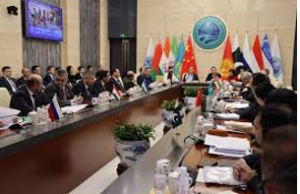
Context :First SCO Council of National Coordinators (CNC) meeting for 2026 opened in Beijing under Kyrgyz chairmanship.
CNC Role
- Primary SCO coordination mechanism linking permanent bodies to member states.
- Synchronizes multilateral cooperation per SCO Charter.
- Prepares groundwork for Heads of State/Government summits.
- Oversees implementation of prior summit decisions.
SCO Overview
- Largest regional organization by geography/population (42% global population, 23% GDP).
- HQ: Beijing Secretariat; founded June 2001 from Shanghai Five (1996).
- Official languages: Russian, Chinese.
Member States
- Belarus (2024), India (2017), Iran (2023), Kazakhstan.
- China, Kyrgyzstan, Pakistan (2017), Russia, Tajikistan, Uzbekistan.
Permanent Structures
- Beijing Secretariat: Executes organizational decisions.
- Tashkent RATS: Targets terrorism, separatism, extremism (“Three Evils”).
Shanghai Spirit
- Mutual trust, mutual benefit.
- Equality, consultation.
- Respect for cultural diversity.
- Pursuit of common development