
1. Centre seeks access to phone source codes
GS paper II -Cybersecurity & Tech Policy
Context :India’s government is proposing new telecom security rules requiring smartphone makers to share source code for vulnerability checks amid rising cyber threats. Tech giants like Apple and Samsung oppose it, citing IP risks, while the government denies mandating it and calls it ongoing consultations.
- Reuters reported India’s plan for 83 security standards, including source code access, sparking debate last week.
- Follows IT Rules 2021 consultations; govt clarifies no forced sharing, just stakeholder talks on mobile security.
Source Code Explained
- Human-readable instructions in programming languages forming software’s core blueprint for phones.
- Sensitive as it reveals algorithms, security features, and potential exploits if leaked.
Why Companies Guard It
- Proprietary IP; exposing risks reverse-engineering, competitive theft, or state misuse globally.
- Apple rejected China’s requests; no major country mandates it, per industry lobby MAIT.
Government Wants Exactly
- Vulnerability analysis and source code review at Indian labs for full security assessment of devices.
- Mandatory measures: malware scans, prior notice on updates, uninstallable pre-installed apps, 12-month log storage.
Why Pushing Now
- Rising digital threats: online fraud, breaches targeting 750M+ users’ data in India’s vast market.
- Policy intent: robust framework for user safety, shifting to digital payments amid cyber risks.
Tech Opposition Reasons
- “Not possible” due to secrecy, privacy; lacks global precedent in EU, US, etc.
Practical issues: battery drain from scans, delays in urgent updates, insufficient device storage for logs.
2. Bhairav Battalions
GS Paper III-Defence technology
Context Debuting at Jaipur Army Day Parade on Jan 15, 2026, after viral rehearsal videos.
- Highlights Army modernization amid border tensions and global conflicts.
Raise Reasons
- Changing warfare: drones, electronic warfare, quick localized conflicts demand speed.
- Lessons from recent ops: gaps in rapid response between infantry and Para SF.
What are Bhairav Battalions
- Light commando units for “Fight Tonight” doctrine: instant border threat response.
- Core characteristics: high-speed, tech-heavy, agile for tactical raids.
Scale Details
- Each battalion: 200-250 soldiers, 7-8 officers from infantry/artillery/signals.
- Total raised: ~15 now, expanding to 25; “Sons of Soil” recruitment by region.
Differences from Existing
- Vs infantry: lighter, faster, drone/tech-focused, not massed formations.
- Vs Para SF: tactical/border ops, not deep strikes; larger than platoons.
Bridging Critical Gap
- Fills void: quick reaction for border security, freeing SF for strategic roles.
- Technology & drones: UAVs for intel/strikes, signals jamming key pillars.
Deployment Role
- Part of border formations: Rajasthan desert, Ladakh, J&K, NE India.
- Enables persistent deterrence, escalation control in hybrid threats
3. Reimaging Delimitation
GS paper II-polity
Context : Delimitation—the process of redrawing boundaries for Lok Sabha and State Assembly seats—is scheduled to take place before the 2029 elections.
- The Conflict: There is a growing tension between northern states with high population growth and southern states that have successfully implemented population control.
- The Tipping Point: The freeze on seat allocation is set to expire in 2026, leading to fears of significant shifts in political and fiscal power.
Why Delimitation is Controversial Now
- Population Imbalance: Most population increases since 1991 occurred in northern states like Bihar and UP, while southern states successfully reduced growth.
- Political Power Impact: Southern states fear their relative political power will diminish as their share of Lok Sabha seats is reduced.
- Finance Commission (FC) Link: The FC already uses population as a 50% weight for tax distribution, which has already led to reduced fund allocations for the south.
Constitutional Background
- 84th Constitutional Amendment Act (2001): This act extended the freeze on the number of seats in the Lok Sabha until the first census taken after 2026.
- Census Delay: The 2021 Census was delayed; results are now expected by October 2028, after which the Delimitation Commission will be constituted.
Why Southern States are Worried
- Punishment for Success: They feel penalized with less representation and fewer funds despite investing heavily in health and education to control population.
- Northern Dominance: Southern states fear the central government could maintain permanent power by primarily controlling the populous northern states.
Solutions Suggested by the Article
- Increase Lok Sabha Seats: Raise the total number of seats (potentially to 866) while maintaining the current proportional distribution among states.
- Equal Representation in Rajya Sabha: Raise Rajya Sabha seats from 245 to 290 and introduce equality where each state gets a fixed number of seats (e.g., 10 each).
- Strengthen State Legislatures: Increase seats in Vidhan Sabhas to equalize representatives per 1,000 population, improving representation at the state level.
- New Seat Allocation Ratios: Allocate 60% of seats by population and 40% based on efforts to reduce population growth (a downward sliding scale).
- Digressive Proportionality: Adopt the European Parliament model where larger states get more seats but fewer per person, and smaller states get more representation per person.
4. Golden Temple
GS paper I-Art &Architecture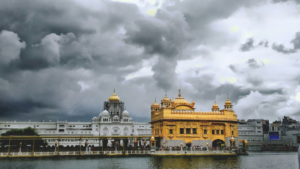
Context : restoring a rare Guru Gobind Singh fresco using authentic Kangra (Pahari) techniques on lime plaster. This preservation highlights Sikh heritage amid climate challenges for such murals.
Current Spotlight
- Restoration employs traditional fresco method where pigments bind chemically with wet plaster.
- Revives Kangra school artwork featuring soft colors, lyrical landscapes from Himachal hills.
Historical Foundations
- Founded 1577 by Guru Ram Das; completed 1604 by Guru Arjan Dev with Adi Granth.
- Foundation stone by Sufi saint Mian Mir; gold-plated under Maharaja Ranjit Singh (1800s).
Architectural Essence
- Built below ground level symbolizing humility; encircled by Amrit Sarovar sacred pool.
- Four entrances denote inclusivity for all faiths, housing Guru Granth Sahib eternally.
Artistic Tradition
- Kangra style peaked under Maharaja Sansar Chand: naturalistic figures, delicate expressions. [context]
- Pahari miniatures from hill states like Basohli, Guler; moisture-sensitive yet durable.
Governance Framework
- Administered by Shiromani Gurdwara Parbandhak Committee (SGPC) via 1925 Act.
- Ensures langar (community kitchen) serves 100,000+ daily, embodying seva (service)
5. Faster in not fairer in POCSO case clearance numbers
GS Paper II: Governance, Social Justice, and Judiciary
Background: Why POCSO Was Enacted
- Before 2012, child abuse was tried under IPC sections (375, 354) that were not gender‑neutral and had narrow definitions.
- POCSO aimed to create a child‑friendly judicial process to reduce trauma and secondary victimization during trials.
- It was enacted to fulfill India’s obligations under the UN Convention on the Rights of the Child (UNCRC).
Latest Numbers: The Statistical Reality
- In 2025, courts disposed of 87,754 POCSO cases against 80,320 new filings, achieving a 109% disposal rate.
- Conviction rates in Fast Track Special Courts (FTSCs) have fallen from about 35% in 2019 to nearly 19% in 2025.
- Nearly half of all pending POCSO cases have remained unresolved for over two years.
Why Convictions Have Fallen (Despite Faster Trials)
- Weak investigations: Hasty filing of chargesheets leads to gaps in evidence and poor forensic documentation.
- Overburdened courts: Judges under pressure to clear backlogs may overlook nuanced evidence, resulting in acquittals.
- Hostile witnesses: Prolonged trials allow the accused to coerce or pressure families into turning hostile.
- Lack of child‑centric support: Without proper counseling, children struggle to maintain consistent statements under cross‑examination.
PLVs: The Missing First Line of Defence
- Para‑Legal Volunteers (PLVs), trained by NALSA, act as intermediaries between the child and the legal system.
- The Supreme Court has directed that a PLV/support person must be present at every police station during FIR registration.
- In practice, most states have failed to notify the scheme or provide adequate funding for PLV deployment.
- Without a PLV or support person, the child faces the police and courts alone, increasing trauma and risk of case collapse.
Serious Systemic Problems
- Marriage to survivor logic: Courts sometimes quash cases if the accused marries the victim, which critics say normalizes the crime.
- Delayed compensation: Many survivors wait years for interim relief or rehabilitation funds mandated under POCSO rules.
- Economic burden: Families often lose livelihoods due to frequent court appearances, making them vulnerable to settlements with the accused.
- Family’s central argument: The system treats victims as statistical entries, not as individuals needing holistic healing and support.
What Should Be Done?
- Institutionalize support: Mandate a trained psychologist and support person in every FTSC to assist the child.
- Invest in investigation: Create a separate investigative wing for child abuse cases to ensure high‑quality evidence collection.
- Utilize Nirbhaya Fund: Redirect unused funds to set up 600 additional e‑POCSO courts and upgrade forensic labs.
- Sensitize judiciary: Conduct regular training for judges and lawyers on trauma‑informed interviewing and child psychology.
6. Forest Rights Act (FRA), 2006
GS PAPER II-Polity
CONTEXT : While the Ministry of Tribal Affairs (MoTa) issued management guidelines in 2023, Community Forest Resource Management Committees (CFRMCs) currently lack formal budgetary support.
- Inter-Ministerial Coordination: The Union government is exploring ways to bridge the gap between MoTA (the nodal agency for rights) and MoEFCC (which controls forest funds) to provide dedicated financial backing to these committees.
- The Goal: To move from “recognition of rights” to “active management” by aligning community plans with scientific forest working plans.
Core Definitions
- CFR (Community Forest Resource): Customary common forest land within traditional boundaries, including protected areas and sanctuaries.
- CFRMC: A committee constituted by the Gram Sabha specifically to protect, conserve, and manage these resources.
- OTFDs: Non-tribal forest dwellers who have resided in and depended on the forest for at least 75 years (3 generations).
Institutional Framework & Rights
The Hierarchy of Claims
- Gram Sabha: The foundational body that initiates and verifies all forest rights claims.
- SDLC (Sub-Divisional Level Committee): Responsible for the first level of technical scrutiny.
- DLC (District Level Committee): The final authority that approves or rejects claims.
Types of Rights
| Individual Rights | Community Rights |
| Ownership/title to hold and cultivate forest land. | Right to Minor Forest Produce (MFP) like honey, wax, and Tendu leaves. |
| Right to habitation and self-cultivation. | Rights to grazing, fishing, and access to water bodies. |
| Protection against eviction during the claim process. | Section 3(1)(i): The legal right to protect, regenerate, and manage CFRs. |
The Crisis: Funding of CFRMCs
- Institutional Isolation: CFRMCs are formed by Gram Sabhas, not the Forest Department, often leaving them outside existing budgetary pipelines.
- Parallel Management: Currently, Forest Department “Working Plans” are funded, but community “CFR Management Plans” are not.
- Proposed Solution: A mechanism where MoEFCC supports CFRMC funding for hiring staff, training, and preparing management plans.
- The Red Line: Any new funding model must not dilute the authority of the Gram Sabha in favor of the Forest Department.
7. Digitalizing India’s Dairy Sector
Context :NDDB’s milestone of generating over 35.68 crore Pashu Aadhaar IDs under NDLM highlights India’s push for a digital dairy ecosystem, enhancing traceability and farmer welfare (PIB, Jan 2026).
Overview
India leads global milk production at 25% share; digitalization marks Second White Revolution, focusing on efficiency and value addition.
Key Trends and Data
- Production hit 221.06 MT (2021-22), up 73% in a decade.
- Market value: $130B (2021), projected $300B by 2027.
- AMCS integrates 17.3 lakh producers.
- Per capita availability: 444g/day, above global average.
Significance of Dairy Sector
- Rural Income: Supports 80M households; buffers crop failures in Vidarbha-Marathwada.
- Nutrition: Key protein source; fortified in Mid-Day Meals for child health.
- Economy: Outpaces rice-wheat in agri-GDP; Amul boosts Gujarat billions.
- Women Empowerment: SHGs in Odisha-AP manage collection, aiding independence.
- Equity: 75% rural homes with 2-4 animals drive 25% global share.
Digitalization Initiatives
- NDLM (Bharat Pashudhan): Unified database for breeding/health records.
- Pashu Aadhaar: 12-digit ear tags for animal traceability (35.68Cr issued).
- AMCS: Automates fat testing, instant payments via app/SMS.
- NDERP: Open-source ERP for end-to-end supply chain.
- GIS Optimization: Cuts milk transport costs using satellite mapping.
Key Challenges
- Low Yields: 987kg/lactation vs global 2,038kg; indigenous breeds lag.
- Fragmented Chain: 75-85% unorganized; dudhiyas face spoilage.
- Fodder Shortage: Rising maize-soy prices inflate costs.
- Adulteration: Limits exports (<1% global share) due to standards.
- Credit Gap: Smallholders rely on moneylenders; banks see high risk.
Way Forward
- Breed Upgrades: SSMS ensures quality AI/genomics for locals.
- Cold Chain: Village chillers via AMCS for real-time quality.
- Value Products: Expand yogurt/cheese like Amul-Epigamia.
- Exports: Codex alignment, Gujarat zones for certification.
- Digital Credit: Pashu Aadhaar as collateral via NDLM fintech.