
1. Analyse data from Aditya-L1
GS paper III-Science and technology
Context :ISRO announced first AO cycle for Aditya-L1 on Jan 5-6, 2026, inviting proposals.
- Calls for VELC/SUIT observation analysis using 23 TB released data.
Aditya-L1 Mission
- Launched Sep 2, 2023; reached L1 halo orbit Jan 6, 2024 via PSLV-C57.
- 7 payloads study solar layers, wind, CMEs, space weather continuously.
Primary Objective
- Observe photosphere, chromosphere, corona dynamics and solar events.
- Monitor heliosphere for space weather forecasts impacting Earth.
Sun-Earth L1 Point
- 1.5M km from Earth-Sun line; gravity balance enables stable halo orbit.
- No Earth occultation; halo orbit avoids Sun-Earth eclipses.
L1 Key Advantages
- Uninterrupted Sun observation 24/7 without communication gaps.
- Pristine in-situ data free from Earth’s magnetosphere interference.
Announcement of Opportunity
- ISRO invites Indian PIs for targeted observations Apr-Jun 2026 via ALPPS.
- Proposals due Feb 6, 2026; ALTAC reviews for merit and feasibility.
Why ISRO Doing This
- Maximize 2-year mission data yield through community expertise.
- Shift to guest investigator mode for peer-reviewed publications.
Broader Significance for India
- Establishes India as solar mission leader with global data access.
- Enhances space weather prediction for satellites, power grids resilience.
2. What are biomaterials and how do they work?
GS paper III-Environment
Context: India’s bioplastics market valued at ~$500 million in 2024, with strong growth forecast amid global shifts to low-carbon products.
- Key investments include Balrampur Chini Mills’ ₹2,000 crore PLA plant (India’s first industrial-scale, operations by 2026).
- Startups like Phool.co (temple waste to biomaterials) and policy focus on reducing single-use plastics drive attention.
What are Biomaterials?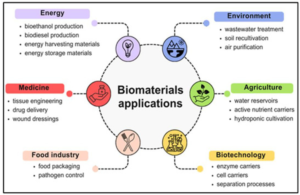
- Biomaterials are materials derived/partly derived from biological sources or engineered via biological processes.
- They replace or interact with conventional materials, increasingly used in packaging, textiles, healthcare, construction.
- Categorized into three types based on integration and properties.
Types of Biomaterials
- Drop-in Biomaterials: Chemically identical to petroleum-based (e.g., bio-PET, bio-PE); fit existing systems without changes.
- Drop-out Biomaterials: Chemically different (e.g., PLA from corn/sugarcane); require new processing/end-of-life infrastructure.
- Novel Biomaterials: Offer unique properties (e.g., self-healing materials, bioactive implants, advanced composites).
How Do Biomaterials Work?
- Derived from renewable biomass (plants, algae, waste) via fermentation, polymerization, or extraction.
- Biodegrade/compost under specific conditions, reducing persistent waste.
- Provide similar mechanical/functional properties to fossil-based materials while lowering carbon footprint.
- Applications include biodegradable packaging, medical implants (e.g., sutures, scaffolds).
Why Does India Need Biomaterials?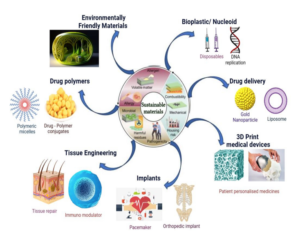
- Reduces heavy dependence on imported fossil-based plastics/chemicals.
- Supports sustainability goals, waste reduction (e.g., single-use plastic ban), and low-carbon exports.
- Diversifies agricultural income via feedstocks/residues (sugarcane, maize).
- Addresses environmental issues like pollution, supports farmer livelihoods, aligns with climate commitments.
Where Does India Stand Today? Key Examples
- Bioplastics market ~$450-500 million (2024), projected strong growth to $2-2.4 billion by 2030-33.
- Balrampur Chini Mills: India’s largest upcoming PLA plant (75,000 tons capacity).
- Startups: Phool.co (flower waste biomaterials), Praj Industries (demo bioplastics plant).
- Rich agri-base but emerging industrial scale; domestic innovation growing.
Current Limitations
- High production costs (50%+ over conventional plastics) due to feedstock/tech imports.
- Limited large-scale infrastructure, fermentation/polymerization capacity.
- Weak waste management/composting systems undermine biodegradation benefits.
- Fragmented policy, foreign tech dependence for advanced conversion.
How Indigenous Biomaterials Reduce Fossil-Based Imports
- Replace petroleum-derived plastics/polymers with bio-based alternatives (e.g., bio-PE, PLA).
- Utilize local agri-residues/feedstocks, cutting crude oil/chemical imports.
- Support bioeconomy goals, similar to ethanol blending saving forex on fuel.
- Enable self-reliance in packaging/textiles, reducing import bills significantly.
Challenges India Must Address
- Scaling feedstock supply without competing with food/agri practices.
- Aggressive agricultural impacts: potential water/soil stress.
- High capex for plants, weak infrastructure/coordination.
- Slow adoption due to cost, unclear regulations/labeling.
Way Forward
- Scale biomanufacturing (fermentation/polymerization) via incentives/PLI schemes.
- Invest in R&D, standards for drop-in/novel types; improve feedstock productivity.
- Clear regulations, labeling, end-of-life pathways (composting/recycling).
- Government procurement, time-bound incentives, shared facilities for de-risking.
3. Americas Venezuela actions are most unlawful
GS paper II-IR
CONTEXT :US military abduction of sitting President Maduro without consent breaches territorial integrity.
- Trump announced US will “run” Venezuela for regime change and resource extraction.
UN Charter Framework
- Article 2(4) bans threat/use of force against state integrity or independence.
- Core post-WWII rule prohibits aggression; no consent from Venezuela or UN.
Only 2 Legal Exceptions
- UN Security Council authorization (absent here).
- Self-defense under Article 51 after armed attack (not met; drugs not “kinetic assault”).
Expansion/Misuse of Self-Defense
- US claims narco-terrorism equals armed attack, but law requires military/armed assault.
- Ignores necessity/proportionality; sets precedent for non-military threats.
Law Enforcement & Use of Force
- US labels “judicial extraction” by law enforcement/military; actually large-scale strikes.
- No legal basis for force to arrest abroad; violates sovereignty regardless of charges.
Head of State Immunity
- Maduro retains immunity as effective controller, despite non-recognition by some states.
- French Cour de Cassation 2025: Immunity not dependent on third-state recognition.
Recognition vs Effective Control
- Classical law: Effective territorial control trumps legitimacy claims.
- Post-Cold War shift favors democracy but requires SC mandate, not unilateral force.
Monroe Doctrine Revival
- Trump actions echo 1823 doctrine: Americas for US sphere, opposing external interference.
- Seen as “imperialist aggression” for oil/resources via unilateral intervention.
ICJ Ruling
- No direct ICJ ruling on this incident; US rarely accepts jurisdiction.
- Could address aggression but lacks basis; Pellet notes limited enforcement power.
Strengthening International Law: Solution
- Global condemnation, UNSC action to prevent precedent eroding Charter.
Reinforce non-force principles via regional orgs, accountability for violations.
4. Rethinking Indias skilling outcomes
GS-II (Governance/Social Justice): Institutional failures (SSCs), policy execution gaps.
GS-I (Society): Minor – social mobility, youth issues.
Context: Highlights persistent low employability despite PMKVY training 1.4 crore candidates (2015-2025).
- Calls for overhaul of Sector Skill Councils (SSCs) and greater industry accountability.
- Aligns with ongoing discussions on Skill India reforms and India Skills Report 2025 findings.
Core Issue
- Skilling not a first-choice pathway; remains transactional and unaspirational for youth.
- Uneven employability outcomes and modest/inconsistent wage gains (PLFS data).
- Formal vocational training penetration stagnant at ~4-5% of workforce.
- Certification symbolic, not economic; lacks labour-market signalling value.
Why Skilling Fails to Inspire Aspiration Among Youth
- Limited recognition for certified skills in informal sector (absorbs most workers).
- Little visible improvement in quality of life or progressive employment.
- Post-degree skilling low (~2% graduates pursue additional certifications).
- Perceived as welfare intervention, not pathway to aspirational jobs.
Low Penetration of Formal Vocational Training
- Only ~4.7% workforce formally trained (barely up from 2% a decade ago).
- Most training short-duration; focus on quantity over quality.
- Informal employment dominates, offering no premium for certifications.
- Youth prefer degrees; skilling seen as secondary or remedial.
Global Comparison
- India: 4-5% formal vocational training participation.
- Germany/Japan: >70%; South Korea: >90% (OECD data).
- High-participation countries integrate skilling with education and industry mandates.
- India lags due to fragmented ecosystem and weak outcomes accountability.
Disconnect Between Education and Skilling
- Skilling runs parallel to formal education, not integrated.
- Degrees valued more; skilling lacks equivalence or progression pathways.
- Graduates rarely pursue skilling; seen as unrelated or inferior.
- No seamless transition from school/college to workplace-relevant training.
Key Insights of the Article
- PMKVY scaled massively but outcomes uneven.
- Industry consumes skilling but does not co-design or commit to hiring.
- SSCs failed core mandate: own value chain from demand to employability.
- Need outcome-based accountability, not just certification compliance.
Why Industry Participation Remains Weak – Industry Reality
- No incentives/obligations for curriculum, standards, or assessment contributions.
- High attrition/onboarding costs (30-40% in retail/logistics/manufacturing).
- Prefer internal training, referrals, private platforms over public certifications.
- Skilling seen as consumption, not co-ownership; lags real labour-market needs.
The Structural Failure of Sector Skill Councils
- Mandated to define standards, ensure relevance, anchor employability.
- Limited to standards creation; do not own outcomes or placements.
- Responsibility fragmented: training/assessment/certification/placement split.
- No single entity accountable for certified candidate’s job readiness.
Why SSC Certification Lacks Credibility
- Employers view as low signalling value vs degrees/experience.
- Assessments fair/graded but not binary (pass-fail common).
- Industry-led models (e.g., AWS/Google) credible due to outcome focus.
- SSC certs symbolic; not reliably used as hiring benchmark.
The Real Diagnosis
- Failure of accountability, not funding or intent.
- Short-term training without industry hiring mandate.
- Outsourced assessments, fragmented responsibility erode trust.
- Skilling must shift from welfare to economic empowerment pillar.
How Skilling Can Drive Sustained Economic Growth
- Embed skills in degrees; treat industry as co-owner.
- Tie SSC credibility to placement/employability outcomes.
- Deepen integration: push skilling into workplace (PM-SEATU like schemes).
- Modernise ITIs, stronger execution for demand-driven training.
Bigger Picture: Why This Matters for India
- Demographic dividend at risk; youth unemployment high.
- Productivity loss from skill mismatches hampers growth.
- Converts demographic strength to sustained economic driver.
- Essential for formalisation, better wages, global competitiveness.
5. Lucknow is set to launch India’s first urban night safari at Kukrail Forest Area.
GS paper III-Environment
CONTEXT :Uttar Pradesh is developing India’s first urban night safari at Kukrail Forest Area in Lucknow.
- The project is being promoted as a unique model that brings nocturnal wildlife viewing within city limits.
- It is seen as a step towards sustainable urban tourism, combining conservation, education, and recreation.
What is the urban night safari?
- India’s first urban night safari is a controlled nocturnal wildlife viewing experience within city limits.
- It is located in the Kukrail Forest Area, along the Kukrail River on the northern outskirts of Lucknow, Uttar Pradesh.
- The safari is designed to be educational and conservation‑focused, not a spectacle‑driven tourist attraction.
Aim of the project
- To promote urban eco‑tourism while strengthening public awareness about wildlife and nocturnal animal behaviour.
- To allow city residents, families, and students to experience wildlife without travelling to distant forests or national parks.
- To integrate conservation, education, and recreation in a sustainable, low‑impact urban model.
Key features
- Nocturnal safari routes with restricted movement and low‑impact lighting to minimise disturbance to animals.
- Existing conservation facilities for crocodiles, gharials, and turtles are being upgraded, not replaced.
- Eco‑friendly infrastructure like bamboo huts, nature walk trails, and interpretation centres is being developed.
- Guided educational programmes on night ecology, bird‑watching, and conservation are planned for schools and colleges.
Significance
- Urban innovation in conservation: first attempt in India to mainstream nocturnal wildlife education within a city ecosystem.
- Model for sustainable urban planning: shows how biodiversity protection and urban leisure can coexist in a green buffer zone.
- Boosts local employment and eco‑tourism, positioning Kukrail as a new ecotourism landmark for Lucknow.
6. National Environmental Standard Laboratory (NESL) and National Primary Standard Facility for Solar Cell Calibration at CSIR–NPL.
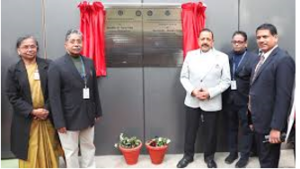
Context :Union Minister Dr. Jitendra Singh inaugurated the National Environmental Standard Laboratory (NESL) and National Primary Standard Facility for Solar Cell Calibration at CSIR–NPL.
- NESL is the world’s second such national environmental standard lab, highlighting India’s growing metrology capabilities.
- The solar cell calibration facility is the world’s fifth primary standard, placing India in an elite global group.
- These facilities are seen as key steps towards Atmanirbhar Bharat in environment and renewable energy sectors.
About the National Environmental Standard Laboratory (NESL)
- NESL is India’s apex national facility for testing, calibration, and certification of air pollution monitoring instruments.
- It is located at CSIR–National Physical Laboratory (NPL), New Delhi, under the Council of Scientific & Industrial Research (CSIR).
- It calibrates instruments like PM2.5/PM10, SO₂, NOx, CO, and O₃ monitors under Indian climatic conditions.
- Ensures that environmental data is accurate, traceable, and standardised for policy and enforcement.
- Only the UK and India currently have such dedicated national-level environmental standard laboratories.
Key features and objectives of NESL
- Establishes India-specific standards for air pollution monitoring equipment.
- Tests instruments under real Indian conditions (temperature, humidity, dust load).
- Supports effective implementation of pollution control policies like the National Clean Air Programme (NCAP).
- Provides reliable, transparent environmental data for regulators, industries, and startups.
- Helps domestic manufacturers, MSMEs, and startups by enabling local testing and certification.
- Reduces dependence on foreign labs and saves foreign exchange on calibration and certification.
About the National Primary Standard Facility for Solar Cell Calibration
- It is an advanced metrology facility for high-precision calibration of solar (photovoltaic) cells.
- Located at CSIR–National Physical Laboratory (NPL), New Delhi, as part of the National Solar Energy Complex.
- Ensures that solar panels meet global standards for efficiency and performance.
- India is now the fifth country in the world to have such a primary standard facility.
Key features and significance
- Uses a laser-based Differential Spectral Responsivity (L-DSR) system for calibration.
- Achieves world-leading calibration uncertainty of 0.35% (k=2).
- Developed in collaboration with Physikalisch-Technische Bundesanstalt (PTB), Germany.
- Reduces dependence on foreign agencies for solar cell certification.
- Shortens turnaround time for calibration and boosts investor confidence in India’s solar sector.
- Supports domestic solar manufacturing, startups, and MSMEs with indigenous, high-accuracy services.
Broader context and importance
- Strengthens India’s metrological infrastructure for environment and renewable energy.
- Enhances quality assurance and standards for “Atmanirbhar Bharat” in critical sectors.
- Reinforces CSIR–NPL’s role in national timekeeping, environmental standards, and advanced metrology.
- Links scientific institutions directly to national development and economic growth goal