

1. National Intellegence Grid linked to NPR
GS PAPER II-Indian Polity and Governance / Internal Security‑
Context :NATGRID has been linked to the NPR database covering about 119 crore residents.
- Home Ministry informed Lok Sabha about an Organised Crime Network Database on NATGRID.
- Union Cabinet approved Census 2027 with no separate budget for updating NPR.
What is NATGRID
- Centralised intelligence and data‑access platform under Ministry of Home Affairs.
- Conceived after 26/11 to quickly track suspects’ travel, finance and communication trails.
- Integrates multiple databases: travel, banking, telecom, passport, vehicle, crime records.
- Access given only to authorised security and law‑enforcement agencies.
What is National Population Register (NPR)
- Register of “usual residents” of India maintained by Registrar General of India.
- Contains demographic and family‑wise details collected house‑to‑house.
- First prepared in 2010 with Census 2011 house‑listing and updated in 2015.
- Considered a foundational database that can support creation of NRC.
Linking of NATGRID and NPR: meaning
- NATGRID can now pull NPR records in real time for approved queries.
- Agencies can view family‑wise details of any suspect or person of interest.
- Tool “Gandiva” uses NPR data for facial recognition and entity resolution.
- All queries are logged and subject to senior‑officer oversight, per government.
- Raises surveillance and privacy concerns due to scale and depth of combined data.
Organised Crime Network Database: usage and scale
- Being built on NATGRID to map organised‑crime and terror networks.
- Will store profiles, associates, financial links and movement patterns of criminals.
- Enables NIA, ATS and state police to securely share and analyse inputs.
- Likely to draw on all integrated NATGRID datasets, making it nationwide in scope.
Census 2027 and NPR
- Census 2027 approved at cost of about ₹11,718 crore, using largely digital methods.
- Government has not sanctioned a separate NPR update alongside Census 2027.
- Existing NPR (2010–15) will continue to be the main population register for now.
- Future NPR decisions may affect how much fresh data NATGRID can eventually access.
2. Kimberley Process (KP)?
GS PAPER III-Economy
Context :India selected as Chairperson of Kimberley Process (KP) from January 1, 2026, for the third time, reflecting global trust in its commitment to integrity and transparency in diamond trade.
What is Kimberley Process (KP)?
International certification scheme to prevent trade in conflict diamonds; tripartite initiative involving governments, industry, and civil society.
Nature of Kimberley Process
Voluntary, consensus-based; monitors rough diamond trade; certifies shipments as conflict-free; 85+ participants, covers 99% of global diamond trade.
Origin and Definition of Conflict Diamonds
- Originated in 1990s civil wars in Africa (Sierra Leone, Angola, Liberia).
- Conflict diamonds: Rough diamonds mined in war zones, used by rebel groups to finance armed conflict against legitimate governments.
India’s Role in Kimberley Process
- Member since inception (2003).
- Major diamond cutting/polishing hub (90% global polished diamonds).
- Hosts KP meetings; leads reforms; chairs Kimberley Process Certification Scheme.
Why India’s Selection Matters
- Demonstrates India’s leadership in ethical trade.
- Strengthens position in global diamond industry.
- Boosts trust in India’s G&J exports.
Challenges Before Kimberley Process
- Weak enforcement in some countries.
- Loopholes in certification.
- Non-members trading.
- Definition limited to “conflict” diamonds (ignores other unethical mining).
- Human rights abuses in mining not fully addressed.
Way Forward
- Strengthen monitoring and audits.
- Expand definition to include human rights violations.
- Increase civil society involvement.
- India to lead reforms during 2026 chairmanship.
3. Rabies :the cruel and expnsive disease of India most impoverished
GS‑II -Health, Government programmes
GS‑III -Public health, poverty, internal security via stray‑dog issues.
Context :Reports highlight increasing animal‑bite cases and preventable rabies deaths in several states.
- Courts and governments are debating strict measures on stray dogs and dog‑bite accountability.
What is rabies?
- Rabies is a viral disease that attacks the central nervous system and is almost always fatal after symptoms start.
- It is a zoonotic disease, usually transmitted from infected animals (mainly dogs) to humans.
How the virus spreads
- Virus is present in saliva of a rabid animal and enters through bites, scratches or licks on broken skin.
- It travels along peripheral nerves to the brain, causing encephalitis and then widespread organ failure.
India’s rabies burden
- India contributes roughly one‑third of global human rabies deaths each year.
- Millions of animal‑bite cases are reported annually, but human deaths are under‑reported.
Who is most affected?
- Poor, rural and peri‑urban communities with high stray‑dog density are most affected.
- Children under 15 are disproportionately bitten because of close contact and inability to report early.
Post‑exposure prophylaxis (PEP): life vs death
- Rabies is 100% preventable if full PEP (washing, vaccine, immunoglobulin when needed) is taken correctly and on time.
- Once clinical symptoms start, there is virtually no effective treatment and death is almost certain.
What should be done after a bite
- Wash the wound immediately with soap and running water for at least 15 minutes.
- Apply povidone‑iodine or similar antiseptic and avoid tight bandaging or harmful home remedies.
- Seek medical care urgently for assessment, vaccine schedule and possible rabies immunoglobulin (RIG).
Accessibility, availability, affordability failures
- Many primary facilities lack continuous stocks of modern anti‑rabies vaccines and RIG.
- Patients often travel long distances, pay out‑of‑pocket or buy from private pharmacies at high cost.
- Missed doses and incomplete regimens occur because of repeated visits, travel cost and lost wages.
Vaccine and RIG crisis
- Periodic shortages and stock‑outs of RIG are reported even in big hospitals.
- Some states face quality concerns, interrupted supply chains and reliance on older vaccine types.
Health‑system failure and poverty trap
- Weak surveillance means dog‑bite and rabies data are fragmented and under‑estimated.
- Poor households face catastrophic health spending, debt and productivity loss after repeated bites.
Role of quackery and misinformation
- Unqualified practitioners promote oils, powders or cauterisation instead of evidence‑based PEP.
- Myths like “small bites are harmless” or “puppy bites need no vaccine” delay proper treatment.
Stray dogs: law and ethics
- Animal Birth Control rules emphasise sterilisation and vaccination rather than indiscriminate culling.
- Court orders seek humane control, safe shelters and accountability when authorities fail to prevent attacks.
Positive developments
- National Action Plan for Elimination of Dog‑Mediated Rabies aims for zero human deaths by 2030.
- Some states and cities show success with mass dog vaccination and systematic ABC programmes.
Way forward
- Ensure free, uninterrupted supply of WHO‑recommended vaccines and RIG at all public facilities.
- Integrate rabies into primary health care, with standard protocols and staff training.
- Scale up mass dog vaccination, sterilisation and dog‑population management using One Health approach.
- Strengthen surveillance, mandatory reporting and data transparency on bites and rabies deaths.
- Run sustained public campaigns against quackery, promoting immediate washing and timely PEP.
4. Did an ancient flood contibute to Keezhadis abandonment ?
GS PAPER I-History
Context :Large early historic settlement on Vaigai floodplain in Sivaganga district, Tamil Nadu, showing planned brick architecture and drainage.
- Provides rare urban‑like cultural remains south of the Vindhyas, filling gap between Indus cities and later South Indian polities.
- Helps build material context for Tamil society mentioned in Sangam literature, especially trade and craft activities.
Link with Sangam literature
- Sangam poems describe prosperous towns, markets and riverine trade along the Vaigai but lack firm dates.
- Keezhadi’s craft debris, script, and brick structures offer archaeological correlates to such urban life, allowing cross‑dating with texts.
- The new work refines this by separating “time people lived” from “time flood buried” layers, sharpening chronology vis‑à‑vis Sangam age.
Core questions of the study
- When were the sand–silt–clay layers that cover Keezhadi’s structures actually deposited?
- Were these layers formed by ordinary overbank silting or by a single high‑energy flood event?
- Did such flooding force damage, abandonment or relocation of parts of the settlement?
Institutions behind the research
- Physical Research Laboratory (PRL), Ahmedabad, led the geochronology work.
- Tamil Nadu Department of Archaeology provided excavation context and site access.
- Results were published in the journal Current Science (Indian Academy of Sciences).
Scientific technique: OSL basics
- Optically Stimulated Luminescence (OSL) dating measures trapped charge in quartz grains released as light when stimulated.
- It gives the time since grains were last exposed to sunlight, i.e., when they were buried by new sediment.
Sampling and laboratory method
- Researchers took four sediment samples from two stratigraphic pits (KDI‑1 and KDI‑2) using light‑tight metal tubes.
- In lab, outer ends were removed, inner parts kept dark, wet‑sieved and quartz grains separated and cleaned.
- Standard single‑aliquot regenerative‑dose (SAR) OSL protocol was used to estimate equivalent dose and burial age.
- Annual dose rate was calculated from radionuclides in the sediment; together these gave ages for each layer.
Findings: flood‑induced burial
- OSL ages show upper sandy layer was deposited roughly within last 1,200 years, younger than the cultural occupation beneath.
- Grain bleaching patterns and sediment textures indicate rapid deposition by high‑energy floodwater, not slow overbank silting.
- Variable thickness of flood deposits between pits implies uneven burial and preservation of older cultural layers.
High‑energy flood event
- Study interprets a strong Vaigai river flood that carried coarse sand first, then finer silt and clay as waters receded.
- Such an event could damage buildings, clog drains and force residents to abandon or shift parts of the town.
Climate context: late Holocene
- Authors link the flood to late Holocene hydro‑climatic variability in peninsular India over last ~2,000 years.
- Regional records show alternating wet and dry phases, with rivers shifting course and generating episodic high‑magnitude floods.
- Present course of Vaigai, now a few kilometres away, supports long‑term channel migration across the floodplain.
Archaeological significance
- Distinguishes habitation age of Keezhadi structures from burial age of overlying flood sediments, refining site chronology.
- Shows environmental hazards, not only political change, shaped settlement history and possible abandonment.
- Helps plan future excavations by predicting where thick flood cover may hide intact older layers.
- Provides a model for integrating geoscience tools like OSL into interpretation of other South Indian riverine sites
5. ‘Samudra Pratap’
GS paper III-Science and technology
Context: The Indian Coast Guard has commissioned its first indigenously designed and built Pollution Control Vessel (PCV), ‘Samudra Pratap’, to strengthen maritime environmental protection.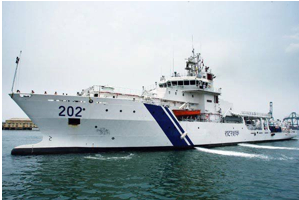
What is ‘Samudra Pratap’?
- A specialised Pollution Control Vessel of the Indian Coast Guard for marine pollution control, oil‑spill response and firefighting.
- It is the largest ship in the ICG fleet and the first fully indigenously designed and constructed PCV.
- Built by Goa Shipyard Limited under a two‑ship PCV programme for the Coast Guard.
Main design and technical features
- Dimensions: about 114.5 m long, 16.5 m wide, with 4,170‑tonne displacement for long‑range operations.
- First ICG vessel with Dynamic Positioning (DP‑1) for accurate station‑keeping during pollution control missions.
- Fitted with oil‑spill detection, oil fingerprinting, viscous‑oil recovery gear and an onboard pollution‑control laboratory.
- Carries FiFi‑2/FFV‑2 class external firefighting systems for shipboard and offshore installations.
- Armed with a 30 mm CRN‑91 gun and two 12.7 mm remote‑controlled guns linked to fire‑control systems.
- Uses indigenous Integrated Bridge, Platform Management and Automated Power Management Systems.
Environmental and strategic importance
- Greatly improves India’s capacity to tackle oil spills, chemical leaks and marine pollution in the EEZ and adjoining seas.
- Provides rapid response for offshore industrial accidents and ecological emergencies.
Showcases Aatmanirbhar Bharat and Make in India in high‑end maritime environmental protection platforms.
6. Why manufacturing has lagged in India
GS paper III-Economy
Context :India’s manufacturing lags behind China and South Korea.
- Central puzzle: why services boomed but manufacturing share, jobs and productivity stayed weak.
Role of manufacturing in development
- Manufacturing absorbs surplus labour at rising wages and builds export strength.
- It historically provides broad‑based productivity gains before a shift to advanced services.
Arvind Subramanian’s explanation
- He argues India faces a “subtle Dutch disease” driven by high government wages and booming services.
- These factors raised costs and drew workers away from factories, hurting competitiveness.
What is Dutch disease?
- Classic Dutch disease: resource windfall raises currency and wages, squeezing tradable sectors like manufacturing.
- Labour and capital shift to booming non‑tradables, causing de‑industrialisation despite higher incomes.
Applying Dutch disease to India
- Here, the boom came from public jobs and modern services, not natural resources.
- High public salaries and strong services made manufacturing employment relatively unattractive and costly.
Limits of Dutch disease view
- India’s wage rise was gradual and policy‑driven, unlike sudden resource shocks.
- Framework underplays firms’ weak technological upgrading and structural policy failures.
Innovation theory
- Induced‑innovation theory: high wages can push firms to adopt labour‑saving technology.
- Historical examples: Britain, Germany, Japan, South Korea turned wage pressure into innovation and automation.
Technology and wage stagnation in India
- In IT and software, real entry wages have stagnated despite rapid sector growth.
- Many new‑age platforms rely on cheap gig labour instead of deep technological upgrading.
Inequality and lopsided growth
- Profits and billionaire wealth rose faster than median wages and productivity.
- Growth is concentrated in skill‑intensive services, with limited good jobs for the majority.
Central question for India
- Why did higher wages and growth not trigger broad‑based innovation and manufacturing dynamism.
- Did easy access to cheap labour and policy choices lock India into a low‑tech, unequal path.
Conclusion
- India’s manufacturing lag reflects both wage‑cost dynamics and failure of technological upgrading.
- Strategy must align wages, innovation, and industrial policy to generate inclusive, productivity‑led growth.
7. What is the Bureau of Port Security and its role ?
GS Paper II -(Governance, Constitution, Polity, Internal Security)
Context :Centre has set up the Bureau of Port Security (BoPS) as a statutory body under the Merchant Shipping Act, 2025.
- It aims to strengthen coastal and port security amid rapid growth in India’s maritime sector.
What is BoPS?
- BoPS is a national regulator for security oversight of ships, ports and related facilities under the shipping ministry.
- It is modelled on the Bureau of Civil Aviation Security, with powers to set and enforce security standards.
Why was BoPS created?
- Coastal security was fragmented among Coast Guard, CISF, State police, Navy and port authorities.
- Lack of coordination and single‑point accountability created gaps and delays in response.
Key coastal security challenges
- Maritime terrorism, arms and drugs smuggling, and human trafficking by sea routes.
- Illegal fishing, poaching, piracy and unauthorised intrusions into Indian waters.
- Vulnerability of ports and shipping lanes to cyber‑attacks and disruption.
How BoPS will address challenges
- Acts as a single statutory body to monitor, coordinate and deter security threats at ports.
- Enforces international codes like the ISPS Code and standardises security plans and drills.
- Trains security personnel across major and non‑major ports for uniform practices.
Cybersecurity: new focus area
- Creates a dedicated division to protect port IT infrastructure and digital systems.
- Focuses on detecting cyber intrusions and sharing security‑related information with national agencies.
India’s maritime growth
- Cargo traffic and port capacity have surged strongly over the last decade.
- Coastal shipping volumes and inland waterway cargo have risen, opening new logistics corridors.
Why security becomes critical
- Higher volumes and connectivity raise the stakes of any terrorist or criminal incident.
- Disruption at major ports can quickly impact trade, energy supplies and overall economic stability.
BoPS and Maritime India Vision 2030
- Maritime India Vision 2030 seeks safe, sustainable and secure maritime growth.
- BoPS aligns with this by embedding high security standards into port development and operations.
Modernisation of port laws
- New port and shipping laws replace the 1908 framework with updated security and business norms.
- Laws aim to ease Indian ownership, simplify licensing and integrate conservation and security.
Criticisms and concerns
- States fear Union overreach and dilution of maritime federalism, especially at non‑major ports.
- Port officers’ wide entry and inspection powers are criticised for weak procedural safeguards.
Conclusion
- BoPS can plug critical gaps in India’s coastal security architecture if implemented cooperatively.
- Balancing strong security with federal principles and civil‑liberty safeguards will be essential.
8. Archaeologists find 2,000-year-old labyrinth that reveals India’s role in ancient global trade
GS paper I-ART &Culture
Context : Archaeologists have identified a nearly 2,000‑year‑old circular stone labyrinth in Solapur, Maharashtra, throwing new light on Indo‑Roman trade routes and Satavahana‑era commerce.
What is the discovery?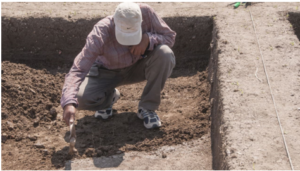
- A large circular stone labyrinth built with precisely arranged concentric stone rings.
- Tentatively dated to about 2,000 years ago and associated with the Satavahana period (1st–3rd century CE).
Location and setting
- Situated in the Boramani grasslands of Solapur district, Maharashtra.
- Semi‑arid grassland conditions limited disturbance, helping the structure survive for centuries.
Physical characteristics
- Measures about 50 feet by 50 feet, making it India’s largest known circular labyrinth.
- Consists of 15 concentric stone circuits, the highest number documented in Indian circular labyrinths.
- Circular in plan, unlike the larger but square labyrinth at Gedimedu, Tamil Nadu.
Landscape context
- Lies in open grassland, not inside a settlement, temple complex or fortification.
- Indicates use as a marker or ritual‑cum‑route feature in a wider cultural landscape.
Links within western India
- Comparable smaller labyrinths are reported from Sangli, Satara and Kolhapur districts.
- Their spatial pattern suggests an interconnected network across western Maharashtra.
- Likely aligned with inland Deccan tracks feeding into western coastal ports.
Trade and Indo‑Roman connections
- Layout resembles labyrinth motifs seen on ancient Roman coins, including those found in Indian trading centres.
- Archaeologists infer that such structures may have served as navigational or symbolic signposts for caravans.
- Maharashtra’s position made it a corridor between interior production zones and Arabian Sea ports engaged in Indo‑Roman trade.
Overall significance
- Strengthens evidence of sophisticated route‑planning and symbolic markers in Satavahana‑era trade.
- Highlights Maharashtra’s pivotal role in ancient trans‑regional commerce and cultural exchange.
Demonstrates how grassland landscapes can preserve crucial archaeological remains over millennia.