1. India -New Zealand conclude trade talks
GS paper II-IR
Context :India and New Zealand have concluded negotiations on a Free Trade Agreement (FTA) to be signed in early 2026.
- The pact aims to double bilateral trade to about USD 5 billion in five years.
- It also seeks to attract around USD 20 billion of investments from New Zealand over 15 years.
Background and context
- Talks focused on giving Indian exports duty‑free or reduced‑tariff access to the New Zealand market.
- India protected politically sensitive farm sectors like rice, wheat, dairy and several other agri‑products.
- The agreement comes when Indian exporters face high tariffs (around 50%) in the U.S., so diversification to Oceania is strategic.
What is a Free Trade Agreement (FTA)?
- An FTA is a treaty between two or more countries to reduce or eliminate tariffs and non‑tariff barriers on selected goods and services.
- It aims to boost trade, investment and economic integration while allowing each side to protect “sensitive” sectors.
Major benefits for India
- Duty‑free or cheaper access to about 95% of New Zealand’s tariff lines, including many industrial products.
- Better market access for Indian textiles, leather, rubber, footwear, home‑decor, pharmaceuticals and engineering goods.
- Opportunities for labour‑intensive sectors and MSMEs to expand exports in a new market.
- Temporary employment visas for up to 5,000 Indian professionals annually in skilled occupations, with stays up to three years.
Benefits for New Zealand
- Tariff‑free access for exports such as sheep meat, wool, coal and most forestry and wood products to India.
- Concessions on high‑value items like kiwi fruit, wine, seafood, cherries, avocados, persimmons, bulk infant formula, Manuka honey and milk albumins.
- Better access to India’s fast‑growing consumer market and potential for job creation in New Zealand’s export sectors.
Products not covered under the FTA
- No concessions for Indian imports of dairy products from New Zealand.
- No opening for sensitive farm items such as rice, wheat and many other agricultural commodities.
- On the New Zealand side, no concessions in dairy sector exports are offered under this agreement.
2. Reforming the fertilizer subsidy demands political courage, offers high rewards
GS PAPER III-Economy -agriculture
CONTEXT :The fertiliser subsidy has come into sharp focus as part of the broader debate on rationalising India’s farm support system.
- With the fertiliser subsidy expected to touch ₹2 lakh crore in FY26 — making it the second-largest subsidy after food subsidy and bigger than the entire agriculture ministry’s budget — economists and policymakers are warning that the current regime is fiscally unsustainable and environmentally damaging.
- Amid ongoing reforms in GST, labour laws, and rural employment, experts argue that agriculture, especially the fertiliser subsidy, is overdue for structural reform.
What is the fertiliser subsidy?
- Government support to keep retail prices of fertilisers (especially urea) artificially low for farmers.
- It compensates manufacturers/importers for the gap between cost and controlled retail price.
- Aim: ensure affordable inputs, boost foodgrain output, and shield farmers from global price volatility.
Current status and trends
- Fertiliser subsidy to reach ~₹2 lakh crore in FY26, second-largest after food subsidy.
- Exceeds total budget of Ministry of Agriculture & Farmers’ Welfare (₹1.37 lakh crore in FY26).
- Urea dominates subsidy: ~two-thirds of total, sold at ₹242 per 45-kg bag (among world’s cheapest).
- High import dependence: ~78% natural gas (urea), ~90% phosphatic inputs, ~100% potash.
- Makes subsidy vulnerable to global energy and commodity price shocks.
- Severe nutrient imbalance: N:P:K ratio is 10.9:4.4:1, far from ideal 4:2:1.
Why is the subsidy needed in India?
- Food security: Key to Green Revolution; helped achieve self-sufficiency in cereals.
- Strong fertiliser–grain response ratio (1:10 in 1970s) boosted production.
- Protects small/marginal farmers (85% of farmers) from volatile global prices.
- Sudden removal could sharply raise input costs and reduce fertiliser use.
- Keeps per-acre cultivation costs manageable, especially for cereal farmers.
- Helps control food prices and cost-push inflation in agriculture.
- Acts as income buffer in climate-vulnerable, monsoon-dependent farming.
Challenges with the current regime
- Low nutrient use efficiency: only 35–40% of nitrogen absorbed; rest lost or pollutes.
- Reflects inefficient, excessive urea use with diminishing yield returns.
- Environmental damage: nitrate pollution of groundwater, soil carbon loss, degraded fertility.
- Nitrous oxide emissions (278× more potent than CO₂) from excess nitrogen.
- Productivity stagnation: fertiliser–grain response ratio fell from ~1:10 (1970s) to ~1:2.7 (2015).
- Leakages and diversion: 20–25% of subsidised urea diverted to non-agri uses or smuggled.
- Fiscal strain: import dependence exposes subsidy bill to global price shocks.
- Geopolitical risk: spikes in gas/potash prices directly inflate subsidy outgo.
Way forward: Key reform options
- Gradual price decontrol with income support: shift from price subsidy to direct income transfers (e.g., expanded PM-KISAN).
- Allow market-based fertiliser prices while protecting farmer incomes.
- Bring urea under Nutrient-Based Subsidy (NBS) regime (currently for DAP, MOP).
- Link subsidy to nutrient content, not fixed retail price.
- Reduce nitrogen subsidy, rebalance support towards phosphorus and potassium.
- Use digital agriculture: integrate land records, PM-KISAN, sowing data, satellite imagery.
- Apply AI/ML to target subsidies and cap fertiliser quantity per land size and crop.
- Promote balanced and precision farming: complex fertilisers, micronutrients, fertigation, custom blends.
- Learn from China: ~60% complex fertiliser use vs ~17% in India; higher productivity.
- Digitise distribution: e-vouchers or PoS-based delivery (e.g., e-RUPI style) redeemable only at authorised dealers.
- Reduce diversion, improve accountability, ensure subsidies reach genuine farmers.
Conclusion
- Reform is not about withdrawing support, but making it smarter, greener, and more equitable.
- Correcting price distortions (e.g., urea under NBS, shift to income support) can save ~₹40,000 crore annually.
- Savings can be redirected to agri-R&D, irrigation, and high-value agriculture value chains.
- India’s current “Goldilocks” phase (high growth, low inflation) offers ideal window for reform.
- Goal: long-term soil health, higher productivity, and sustainable farm incomes.
3. Anjadip ,indigenous anti submarine
GS PAPER III-science and technology
Context :Indian Navy has inducted INS Anjadip, the third vessel in the Anti-Submarine Warfare Shallow Water Craft (ASW SWC) series.
- It has been indigenously designed and built by Garden Reach Shipbuilders & Engineers (GRSE), Kolkata.
Background
- ASW SWC project is a key part of India’s push for self-reliance in naval shipbuilding.
- The series is being built under a public–private partnership, involving GRSE and L&T Shipyard, Kattupalli.
What are ASW Shallow Water Craft?
- Specialized small‑displacement naval vessels for anti‑submarine warfare in coastal and shallow waters.
- Optimised for littoral operations, harbour defence and protection of offshore assets and sea lanes.
Design, construction and collaboration
- Designed to conform to Indian Register of Shipping (IRS) naval classification norms.
- Built using an indigenous design with active involvement of Indian industry and partner yards.
Technical features of INS Anjadip / ASW SWC
- Approx. 77 m in length, making them among the largest Indian naval ships with water‑jet propulsion.
- Fitted with state‑of‑the‑art lightweight torpedoes, anti‑submarine rockets and sonar.
- Capable of coastal surveillance, mine‑laying support and engagement of underwater threats.
Strategic importance for India
- Strengthens India’s anti‑submarine warfare capability in the Arabian Sea and Bay of Bengal.
- Enhances protection of coastal infrastructure, ports, sea lanes and offshore assets.
Indigenous content and Atmanirbhar Bharat
- High indigenous content (reported above 80% in the series) showcases local design and manufacturing.
- Supports Atmanirbhar Bharat by building advanced combat platforms within India and nurturing MSMEs.
Symbolism and naval tradition
- Named Anjadip after Anjadip Island off Karwar, reflecting tradition of naming ships after islands.
- Continues legacy of the earlier INS Anjadip, a Petya‑class corvette decommissioned in 2003.
GRSE achievements
- With this delivery, GRSE has delivered five warships to the Navy in a single year, a rare feat.
- INS Anjadip is the 115th warship built by GRSE and the 77th delivered to the Indian Navy
4. Save Aravalli campaign’:
GS paper I-Geography
Context :The Supreme Court recently accepted the Centre’s new definition of the Aravalli Hills, limiting legal protection only to landforms that rise at least 100 metres above the surrounding local relief.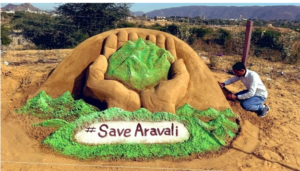
- This narrow, elevation‑based criterion has sparked a nationwide #SaveAravalli campaign, with experts warning it may open large parts of the Aravalli range to mining and ecological damage.
- Environmentalists, scientists and citizens are demanding comprehensive protection of the entire Aravalli landscape, not just high‑elevation ridges.
What is the Save Aravalli campaign?
- A citizen‑led, expert‑backed environmental movement to protect the Aravalli mountain range from ecological degradation.
- It opposes the dilution of legal safeguards for the Aravallis by a purely height‑based definition of what constitutes a “hill”.
- The campaign mobilises public opinion, scientific evidence and civil society to demand holistic ecological protection for the entire Aravalli system.
Key issues raised by the campaign
- Redefinition risk: The 100‑metre rule may exclude low‑lying ridges, forested outcrops and catchment areas that are ecologically vital parts of the Aravalli system.
- Mining exposure: Experts estimate that up to ~60% of the Aravalli landscape could become vulnerable to mining and construction if only high ridges are protected.
- Hydrology and climate impacts: Loss of ridges threatens groundwater recharge, dust control and local temperature moderation, especially in the Delhi‑NCR region.
- Biodiversity loss: Fragmentation of wildlife corridors (for leopards, birds, etc.) and degradation of common forest and scrubland areas.
- Governance concern: A uniform geomorphological definition may ignore landscape ecology, cumulative impacts and the interconnectedness of hills, forests and aquifers.
Ecological and strategic significance of the Aravallis
- Ecological shield of North India: The Aravallis act as a natural barrier, blocking desert dust and sand from the Thar Desert and stabilising the regional climate.
- Water security: They are critical for groundwater recharge and feed important rivers like the Chambal, Sabarmati and Luni.
- Climate resilience: Intact ridges help reduce heat extremes, drought risk and air pollution in densely populated areas like Delhi‑NCR.
- Ancient geological system: Among the world’s oldest mountain ranges, with unique biodiversity and fragile ecosystems that are easily degraded.
5. Right to Disconnect Bill
GS paper II-polity
Context :A private member’s Right to Disconnect Bill has been introduced in Parliament to regulate after‑hours work communication.
- It seeks to address stress and constant connectivity in India’s fast‑growing digital and platform economy.
Background
- Indian labour law is built around fixed working hours, overtime rules and employer control over physical workplaces.
- Smartphones, emails and work apps have blurred boundaries between work time and personal time.
What does the Bill propose?
- Gives employees a legal right to not respond to calls, emails or messages outside prescribed working hours.
- Requires employers to frame policies and charters defining after‑hours communication norms.
Core problem: What is “work” in a digital economy?
- Indian law does not clearly define whether digital engagement after office hours counts as “work”.
- The Bill regulates after‑hours communication but does not clarify how this fits into the legal notion of working time.
Conflict with existing labour laws
- Labour Codes regulate working hours, overtime and employer control, but treat time as the core metric.
- The Bill creates a parallel rule on communication without integrating it into working‑time calculations.
Comparative perspectives
- EU jurisprudence treats on‑call time, standby duty and availability where employer controls time as “work”.
- France, Germany integrate digital communication and rest periods via collective bargaining and statutory rules.
Mandatory right vs contractual right
- The Bill seems to create a statutory right, but leaves many details to employer‑employee agreements.
- It does not clearly state whether the right can be limited, waived or modified by contract.
Constitutional dimensions
- The freedom to disconnect is linked to individual autonomy and privacy under Article 21.
- The Bill does not explain how this right will be balanced against employer’s business freedom and control.
Conclusion: Why is the Bill incomplete?
- It recognises the harm of digital over‑work but does not redefine or align “working time” with digital labour.
- It leaves unresolved whether the right is fundamental, statutory or purely contractual, inviting conflicting interpretations.
6. National Maritime Heritage Complex (NMHC) at Lothal in Gujarat
GS PAPER I-Art &Culture
CONTEXT ;India and the Netherlands have signed an MoU to strengthen cooperation in maritime heritage, giving a big boost to the development of the National Maritime Heritage Complex (NMHC) at Lothal, Gujarat.
- The MoU links NMHC, Lothal with the National Maritime Museum, Amsterdam, for knowledge exchange, museum design, curation and conservation.
- This collaboration is being highlighted as a major step to showcase India’s 4,500–5,000‑year‑old maritime legacy on the global stage.
What is the National Maritime Heritage Complex (NMHC) at Lothal?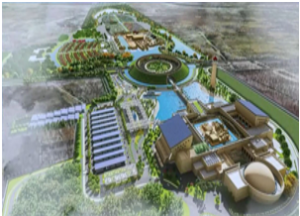
- A flagship cultural and heritage project of the Ministry of Ports, Shipping and Waterways (MoPSW).
- Aimed at showcasing India’s long maritime history (4,500–5,000 years) through a world‑class museum and cultural complex.
- Being developed as India’s first comprehensive national institution dedicated exclusively to maritime heritage.
Location and nodal ministry
- Located at Lothal, near Ahmedabad, in the state of Gujarat.
- Nodal ministry: Ministry of Ports, Shipping and Waterways (MoPSW).
Key features of NMHC
- World‑class maritime museum with galleries on ancient navigation, shipbuilding, trade routes, naval history and coastal cultures.
- International collaboration with the National Maritime Museum, Amsterdam, for design, curation and conservation.
- Maritime research and training centre for scholars and professionals.
- Venue for global maritime fairs, exhibitions and cultural events.
- Focus on inclusive public outreach with affordable access for students, local communities and underprivileged groups.
- Use of modern technology and immersive experiences to enhance visitor engagement.
About Lothal (Harappan site)
- Located at Lothal, near Ahmedabad, Gujarat.
- Part of the Indus Valley (Harappan) Civilization cultural landscape.
- Excavated in 1957 by the Archaeological Survey of India; dates back to around 2400 BCE.
Key features and significance of Lothal
- Home to the world’s earliest known man‑made dockyard, indicating advanced maritime engineering.
- The dockyard connected Lothal to ancient maritime trade routes with Sindh, Saurashtra, Mesopotamia, Egypt and beyond.
- Evidence of advanced town planning, tidal regulation and port management.
- A major port town that facilitated trade in goods as well as exchange of cultures, ideas and technologies.
- Demonstrates India’s continuous maritime tradition spanning over 4,500–5,000 years, forming the historical basis for NMHC.