

1. India-Jordan Bilaternal linkage
GS PAPER II-IR
CONTEXT :PM Modi arrived in Amman on the first leg of a multi-nation tour, marking his first full-fledged bilateral visit to Jordan in several years.
- The visit coincides with a milestone in diplomatic ties and is projected to boost cooperation in trade, investment, security, and people-to-people links.
Diplomatic significance
- Reinforces India’s political engagement with a moderate Arab monarchy seen as a stabilising actor in West Asia.
- Provides a platform to coordinate positions on regional issues such as Palestine, West Asian peace, and multilateral forums.
- Signals India’s intent to diversify partners in the Arab world beyond the Gulf oil monarchies.
Symbolism and protocol
- Ceremonial welcome at Amman and personal reception by the Jordanian leadership underline warmth and mutual respect.
- Description of the PM as a “valued guest” and references to long-standing ties highlight trust and continuity.
- Visit scheduled around an anniversary of diplomatic relations, adding commemorative significance.
Key engagements: political dialogue
- One-on-one talks between PM Modi and King Abdullah II focus on regional security, counterterrorism,
 and political cooperation.
- Delegation-level talks review all sectors: defence cooperation, security dialogue, UN coordination, and regional diplomacy.
Key engagements: economic and business cooperation
- India–Jordan business event aims to connect Indian and Jordanian companies in sectors like fertilizers, pharmaceuticals, IT, and infrastructure.
- Discussions likely cover investment opportunities, expansion of trade volumes, and collaboration in technology and innovation.
Cultural and historical significance
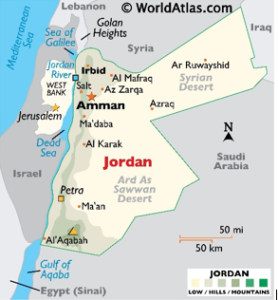
- Visit to Petra and other historic sites underlines shared civilisational links through ancient trade and cultural contacts.
- Showcasing heritage tourism creates space for cooperation in culture, tourism promotion, and heritage conservation.
India–Jordan relations: diplomatic
- Diplomatic ties span several decades, characterised by regular high-level visits and cooperation in UN and NAM platforms.
- Jordan often supports India’s positions in multilateral forums, while India backs Jordan’s stabilising role in the region.
India–Jordan relations: economic
- India is among Jordan’s top trading partners, especially in phosphates, fertilizers, textiles, and engineering goods.
- Scope exists to scale up investments both ways, including in renewable energy, IT services, health, and education.
Strategic relevance of Jordan
- Geographically located between Israel, Palestine, Syria, Iraq, and Saudi Arabia, Jordan sits at a critical strategic crossroads.
- Its internal stability and moderate foreign policy make it a key partner for managing regional volatility and refugees.
Role in India’s broader foreign policy
- Fits into India’s “Think West/Link West” policy of deeper engagement with West Asia beyond energy dependence.
- Helps balance ties with Israel and Arab states by strengthening relations with an Arab country closely engaged on the Palestine issue.
2. Centre ropes in heritage architects for upkeep of ASI monuments
GS paper I -Art & culture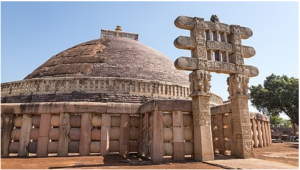
Context :The Ministry of Culture has launched a new mechanism to empanel heritage conservation architects so that ASI-protected monuments can be scientifically conserved and restored with better professional support and structured participation of private donors via the National Cultural Fund.
About Heritage Conservation Architects
- A heritage conservation architect is a specialist trained in restoring, conserving, and managing historic buildings while preserving their original architectural character, materials, and cultural significance as per accepted conservation norms.
About the Empanelment Initiative
- The Ministry of Culture is creating an official panel of qualified conservation architects, recognised and approved by the Archaeological Survey of India (ASI), at the national level.
- This empanelled list will be used by donors, companies, and private bodies to directly hire ASI-approved professionals for conservation projects financed through the National Cultural Fund (NCF).
Salient features of the scheme
- Greater choice for donors:
Donors will have the freedom to select any architect from the ASI-approved panel for conservation of a monument they wish to support. - Continued ASI supervision:
All projects will remain under ASI’s technical oversight to ensure adherence to scientific and internationally accepted conservation practices. - Clearly defined roles:
The empanelled architects will be responsible for preparing Detailed Project Reports (DPRs), designing conservation strategies, offering project management inputs, and supervising on-site implementation. - Implementation arrangement:
Physical restoration and repair work will be done by executing agencies chosen by the donor, but these agencies must receive prior approval from ASI. - Eligibility conditions:
Only architects with proven experience in conservation or restoration of heritage structures that are more than 100 years old will be considered for empanelment. - Duration of empanelment:
The empanelment will be valid for a period of three years, with performance of architects reviewed every year.
3. SHANTI Bill to allow private sector to make ,run nuclear power plants
GS paper II-polity
Context :The Centre has tabled the Sustainable Harnessing and Advancement of Nuclear energy for Transforming India (SHANTI) Bill, 2025 in Lok Sabha.
- The Bill seeks to replace the Atomic Energy Act, 1962 and the Civil Liability for Nuclear Damage (CLND) Act, 2010 and allow private sector operation of nuclear plants.
What is the SHANTI Bill, 2025?
- A comprehensive nuclear-sector reform law enabling both Indian and foreign private players to build and operate nuclear power reactors.
- It redesigns regulation, safety oversight, and liability rules to align with current technology and investment needs.
Why this Bill is needed – issues with existing laws
- State monopoly: Only central government entities can build and run nuclear power plants under the 1962 Act.
- Investment deterrence: CLND Act’s supplier liability provisions are seen as harsh and unclear, discouraging foreign suppliers and technology providers.
- Regulatory gaps: Present structure limits independence, transparency, and capacity of regulation for a larger, more diverse nuclear fleet.
- Energy transition needs: India’s net‑zero and baseload clean power goals require rapid nuclear expansion, which public sector alone cannot finance.
Key provisions – entry of private sector
- Allows private Indian companies (and joint ventures with foreign firms) to set up and operate nuclear power plants under licensing.
- Enables public–private partnership models for new reactors, including small modular reactors and customised designs.
- Maintains central government control over sensitive activities like fuel cycle and strategic facilities.
Key provisions – new regulatory framework
- Reconfigures the atomic energy regulator as a more autonomous, statutory body answerable to Parliament.
- Consolidates safety, security, safeguards, and emergency preparedness oversight under this strengthened regulator.
- Prescribes clearer licensing, inspection, and enforcement powers for all civilian nuclear facilities.
Changes in nuclear liability regime
- Narrows the conditions under which plant operators can recover compensation from equipment suppliers after an accident.
- Sets graded caps on operator liability based on plant size and risk, and limits maximum penalties even for “severe breach”.
- Seeks better alignment with international nuclear liability norms, improving bankability of projects and comfort for suppliers.
Legal and innovation support
- Amends related laws and rules to ease patent use, technology transfer, and localisation for advanced reactor designs.
- Facilitates government funding and risk‑sharing for R&D in small modular reactors and new‑generation heavy‑water or fast reactors.
- Provides a framework for long‑term decommissioning funds and waste management obligations.
Contribution to India’s energy goals
- Helps scale nuclear capacity beyond current levels to support 24×7 low‑carbon baseload power.
- Reduces over‑dependence on coal, aiding commitments towards 2070 net‑zero emissions and cleaner air.
- Enhances grid stability by complementing variable renewables like solar and wind.
Significance and India’s advantages
- Leverages India’s strong nuclear engineering base, PHWR experience, and indigenous fuel cycle expertise.
- Attracts global capital and technology while retaining sovereign control over strategic aspects of the sector.
- Positions India as a potential regional hub for nuclear technology deployment, components, and services in the Global South.
4. Natyashastra’s Contemporary Relevance at the Sidelines of UNESCO ICH Meeting
Context :Natyashastra is the foundational Sanskrit treatise on drama, dance, music, aesthetics, and stagecraft in the Indian artistic tradition.
- It is revered as the Natya Veda or “Fifth Veda”, meant to convey ethical, aesthetic, and social values to all sections of society through performance.
Authorship and language
- The text is traditionally attributed to Bharata Muni.
- It is composed in Classical Sanskrit, mainly in verse (śloka) form, with some prose portions in later recensions.
Historical background
- Scholars generally date the composition of Natyashastra to around 200 BCE–200 CE.
- It grew out of an earlier oral performance tradition before being systematically codified, and Abhinavagupta’s Abhinavabharati (10th–11th century CE) is its most influential classical commentary.
Structure and core ideas
- The text contains about 36 chapters (some traditions count 37) and covers the full process of theatrical production from conception to performance.
- Its central contribution is Rasa theory, explaining aesthetic experience through the Rasa–Bhava framework, with classical rasas such as Shringara, Hasya, Karuna, Raudra, Veera, Bhayanaka, Bibhatsa, and Adbhuta, with Shanta added later.
Acting, stagecraft, and dance
- Natyashastra describes fourfold Abhinaya (means of expression): Angika (body), Vachika (speech), Aharya (costume and props), and Sattvika (inner emotional states).
- It details plot construction, character types, performance modes, theatre architecture, costumes, make-up, direction, and codifies dance gestures, body positions, eye and facial movements, and karanas for systematic training.
Integrated view of the arts
- The text treats performance as a synthesis of music, rhythm, movement, and expression, making theory and practice inseparable.
- It provides a civilisational foundation for India’s classical performing arts and supports cultural continuity by enabling contemporary reinterpretation of traditional forms without breaking their lineage.
5. The Oman visit is more than a routine diplomatic trip
GS paper II-IR
CONTEXT :PM is visiting Oman (Dec 17) on the Oman leg of his Jordan–Ethiopia–Oman tour.
- The visit coincides with 70 years of India–Oman diplomatic ties and follows high-level exchanges in recent years.
Why Oman is strategically important for India
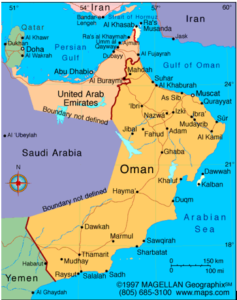
- Sits astride the Strait of Hormuz, overlooking vital sea lanes for India’s energy imports.
- Acts as a politically moderate, stable partner in a conflict-prone West Asian neighbourhood.
- Maintains balanced ties with multiple regional actors, useful for India’s wider outreach.
Defence and security cooperation – key features
- Long-standing defence MoU; regular naval, air and army exercises with Omani forces.
- Access for Indian Navy to Duqm port and Omani facilities for berthing, refuelling, and maintenance.
- Cooperation in maritime security, anti‑piracy, and surveillance in the Arabian Sea and Indian Ocean.
Strategic importance for India
- Provides a reliable foothold on the Arabian Sea rim opposite India’s western coast.
- Helps India monitor sea lanes and regional naval activity, including extra‑regional powers.
- Serves as a “balancing” partner in the Gulf, reducing over‑dependence on any single state.
Economic and investment relations
- Oman hosts a large Indian diaspora and is a key destination for Indian labour and services.
- Bilateral trade spans energy, fertilizers, chemicals, metals, textiles and food products.
- Discussions aim to scale FDI both ways, including in ports, logistics, renewables and manufacturing.
Oman–India Joint Investment Fund (OIJIF)
- A joint private equity fund between Oman’s sovereign/official investors and India’s institutions.
- Invests in Indian growth sectors like infrastructure, financial services, and manufacturing.
- New tranches and commitments are expected to expand its corpus and project pipeline.
Digital and fintech cooperation
- Central banks have worked on linking payment systems and promoting seamless cross‑border remittances.
- Cooperation in digital public infrastructure (like real‑time payment rails and ID platforms) is a new focus.
- Fintech and start‑up partnerships are likely to grow, leveraging India’s digital ecosystem and Oman’s gateway role.
6. PM Modi expresses happiness over stamp honouring Emperor Perumbidugu Mutharaiyar II
GS PAPER I-ART &CULTURE
CONTEXT :Emperor Perumbidugu Mutharaiyar II is in news because a commemorative postage stamp has been issued in his honour, and the Prime Minister has highlighted his administrative abilities and his role as a great patron of Tamil culture.
Who he was ?
- Perumbidugu Mutharaiyar II, also known as Suvaran Maran or Shatrubhayankar, was an important ruler of the Mutharaiyar lineage who flourished around 705–745 CE.
- He is remembered as a powerful regional leader with notable administrative skill, strategic acumen, and commitment to justice in the central Tamil region.
Political background and realm
- He belonged to the Mutharaiyar dynasty, a strong Tamil ruling house that largely operated as feudatories under the Pallava kings, especially Nandivarman II.
- The Mutharaiyars controlled much of the central Cauvery belt, including areas around Thanjavur, Tiruchirappalli, Pudukkottai and neighbouring districts, ruling mainly from the Tiruchirappalli region for several decades.
Governance and military role
- He is described as a capable administrator who ensured political stability and effective management of his territories.
- As a Pallava ally, he is believed to have participated in several campaigns that helped maintain order in the region during phases of Pallava weakening.
Cultural, religious, and architectural patronage
- The Mutharaiyars were among the early temple patrons of Tamil Nadu, contributing to both rock-cut and structural temples and shaping architectural forms that influenced the later Chola temple style.
- Perumbidugu Mutharaiyar II supported Shaivism while also allowing philosophical engagement with other traditions such as Jainism, and promoted Tamil language, literature, and religious institutions, as seen in inscriptions.
Public works and regional impact
- Epigraphic evidence points to grants for temples, irrigation works, and agrarian facilities, which strengthened the Cauvery delta’s agrarian economy.
- His rule reflects the emergence of strong local chieftains in the interregnum between Pallava decline and the rise of the Cholas, making him an important link between Pallava and Chola political and cultural traditions, and a revered figure for the Mutharaiyar community in present-day Tamil Nadu.