
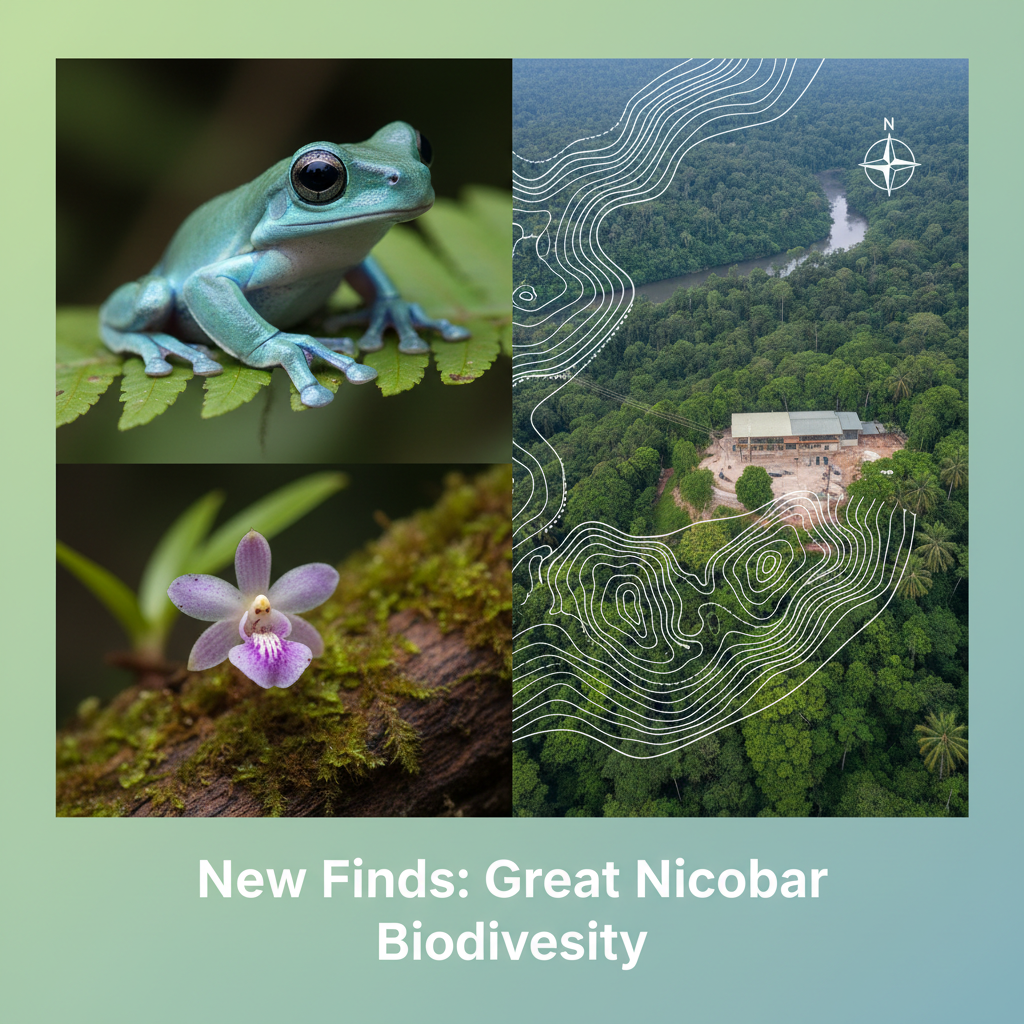
1. New finds highlight Great Nicobar project sites biodiversity
GS PAPER III-ENVIRONMNET AND ECOLOGY
A new snake species, Lycodon irwini, and a potentially new bird species, the Great Nicobar Crake, underscore Great Nicobar Island’s exceptional yet threatened biodiversity.
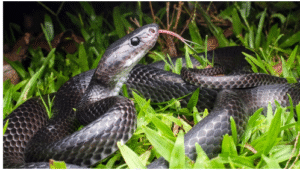
New snake species: Lycodon irwini
- Newly discovered wolf snake, endemic to Great Nicobar Island.
- Named after Australian wildlife expert Steve Irwin.
- Slender, nocturnal, about 1.2 m long.
- Uniform glossy black body, lacking white cross‑bands.
- Distinct scale counts and head shape separate it from related species.
Range and conservation (snake)
- Known only from a small area on eastern Great Nicobar.
- Prefers undisturbed tropical evergreen forest floor.
- Extremely few records so far, indicating rarity.
- Scientists suggest assessment as Endangered under IUCN criteria.
Potential new bird: Great Nicobar Crake (Rallina sp.)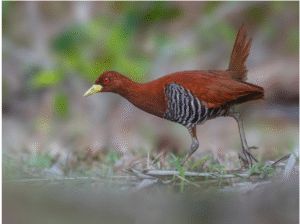
- Rail‑like bird, tentatively described from Great Nicobar.
- Belongs to genus Rallina, hence called Great Nicobar Crake.
- Small, reddish‑brown bird, with strong legs and long toes.
- Occupies damp forest floor and wetland edges.
Knowledge gaps about the crake
- True taxonomic status not yet fully resolved.
- Population size and exact distribution remain unknown.
- Very limited data on breeding biology and nesting sites.
- No formal IUCN assessment specific to this form yet.
Other new species since 2021
- Around 40 new species reported from Great Nicobar surveys.
- Include frogs, crabs, geckos and many insect groups.
- Several species described from project‑affected forest areas.
- Discoveries show island remains biologically under‑explored.
Why Great Nicobar is biologically important
- Part of Great Nicobar Biosphere Reserve under UNESCO’s MAB.
- Hosts about 650 plant species and over 1,800 animal species.
- Roughly 24% endemism in some faunal groups.
- Contains rainforest, mangroves, coastal and coral‑linked habitats.
- Supports rare species like Nicobar megapode and tree shrew.
Conservation concerns
- Mega infrastructure plans risk large‑scale forest diversion.
- Habitat fragmentation threatens narrowly distributed endemics.
- Coastal works may alter nesting beaches and intertidal zones.
- Invasive species and climate‑driven sea‑level rise add pressure.
- Strong EIAs, protected corridors and long‑term monitoring are essential
2. India needs research pipelines
GS‑III– Economy &Science and technology
Context :Article by Mamidala Jagadesh Kumar argues India needs predictable “research pipelines” beyond episodic CSR grants.
- Focus is on linking corporate R&D spending with universities through clear, scalable policies.
Why public grants are not enough ?
- Government grants alone cannot match the scale and speed of private sector innovation.
- Reliance only on public funds leaves research vulnerable to budget cuts and changing priorities.
How other countries built ecosystems
United States
- US firms invest huge R&D outlays and work with universities via joint centres and long‑term contracts.
- Programmes like NSF’s Industry–University centres fund pre‑competitive research relevant to industry.
China
- Chinese tech and auto firms spend a high share of revenue on R&D, with some above 7–8%.
- Companies collaborate with universities through shared labs and large mission‑oriented projects.
Key idea
- Countries that turned science into industry matched firm R&D to university strengths.
- They created predictable pipelines: labs, PhD cohorts, and pilot lines serving industry needs.
India’s current situation
Company‑wise R&D intensity
| Company (India) | Sector / Focus | R&D spending snapshot | R&D intensity (R&D as % of sales or revenue) |
| Tata Motors | Automobiles | R&D outlay about ₹4,348 crore in FY24 | Around 6–7% of revenue. |
| Sun Pharma | Pharmaceuticals | About 6.7% of global revenues spent on R&D in FY24 | Roughly 6–7% intensity. |
| Dr. Reddy’s | Pharmaceuticals | R&D spend ≈ ₹2,911 crore in FY24 | About 8–9% of revenue. |
| Bharat Electronics | Defence electronics | R&D ≈ 6.24% of turnover in FY24 | About 6% intensity. |
| Tata Steel / others | Capital‑intensive industry | Significant but lower R&D ratios compared with global peers | Often below leading global benchmarks. |
- India’s GERD is about 0.65% of GDP, with enterprises funding nearly two‑fifths.
- Private R&D lacks predictable pipelines and structured links with universities.
What India needs to do ?
Set clear R&D mandates
- Fix three‑year sectoral R&D‑to‑sales ratios for autos, pharma, electronics, defence etc.
- Tie these ratios to energy, climate and technology goals relevant to India’s needs.
Strengthen industry–university collaboration
- Use campus programmes that bring industry mentors and PhD scholars together.
- Create multi‑university centres working on problem portfolios, not isolated projects.
Modernise tax incentives
- Link tax deductions to measurable R&D outputs like patents, standards and field trials.
- Support universities through tax‑smart instruments that reward joint IP and prototypes.
Teach how to collaborate
- Train faculty and students in IP, negotiation and working with firms.
- Design adjunct positions and dual‑track roles so researchers move between labs and industry.
Improve disclosure by listed companies
- Ask boards to report R&D as strategic investment, not incidental expense.
- Publish R&D metrics in accessible formats and Indian languages to signal seriousness.
Final message of the article
- India must treat corporate R&D as a long‑term pipeline feeding universities and industry together.
- With clear targets, strong partnerships and transparent reporting, India can match global innovation leaders
3. Sky roots first orbital rocket
GS paper III-science and Technology
Context :Prime Minister Narendra Modi inaugurated Skyroot Aerospace’s first orbital rocket, Vikram‑I, and its new “Infinity Campus” in Hyderabad.
- The event highlights India’s shift to an open, innovation‑driven and private‑sector‑led space ecosystem.
Background: India’s evolving space ecosystem
- Space sector liberalisation since 2020 has allowed private firms to build and launch rockets and satellites.
- Over 300 space startups now operate in India, supported by ISRO, IN‑SPACe and various incubators.
What did PM Modi emphasize?
- “Unprecedented opportunity” in space :India is at a pivotal stage to expand its role in the global space economy.
The Prime Minister underlined that policy reforms have created this window of opportunity.
- Rising private sector role :Private startups are now designing launch vehicles, satellites and downstream services.
Government acts as an enabler, with ISRO sharing infrastructure and expertise.
- Launch of Vikram‑I orbital rocket :Vikram‑I is Skyroot’s first orbital‑classlaunch vehicle for putting satellites into Low Earth Orbit.
Its unveiling marks a major milestone for India’s private launch capabilities.
- Skyroot’s “Infinity Campus” :New R&D and manufacturing campus in Hyderabad to design, assemble and test rockets.
Aims to serve as a hub for talent, innovation and future vehicle development.
About Skyroot Aerospace
- Hyderabad‑based private space startup founded by former ISRO engineers.
- First Indian private company to launch a rocket (sub‑orbital Vikram‑S in 2022).
What PM Modi said about Skyroot ?
- Praised the founders as role models for young space entrepreneurs.
- Stressed that their risk‑taking and confidence show how startups can transform the nation.
Why this is important for India ?
Boost to Indian private space sector
- Validates the business model of private launch startups and attracts more investment.
- Reduces exclusive dependence on ISRO for launching small satellites.
- Strengthens Make in India and self‑reliance in high‑technology manufacturing.
Tapping the global space economy
- Global space economy is currently around USD 450–500 billion and rising fast.
- Projections suggest it could exceed USD 1 trillion by 2040, led by satellites and launch services.
- India seeks a larger share through low‑cost rockets, satellite production and space‑based services.
Youth empowerment
- Space startups open careers in launch‑vehicle design, satellite systems and avionics.
- Also create roles in AI‑based space analytics, telecom, navigation and remote‑sensing applications.
Strategic importance
- A diverse private launch capability supports resilient access to space for national needs.
- Enhances technological depth, supply‑chain strength and global competitiveness in space services.
What is Vikram‑I?
Vikram‑I rocket – key features
- Private orbital rocket developed by Skyroot Aerospace.
- Designed to carry roughly up to 300 kg payload to Low Earth Orbit (LEO).
- Built using advanced carbon‑composite structures to reduce weight and increase strength.
- Employs a combination of solid fuel stages and a liquid (or hybrid) upper stage for precision.
Importance of Vikram‑I
- Makes India one of the few countries with a private company building orbital launchers.
- Targets the growing global small‑satellite market for Earth observation and communication.
- Positions Skyroot to compete with small‑satellite launch providers like Rocket Lab and smaller vehicles from SpaceX.
Overall significance
- The inauguration of Vikram‑I and the Infinity Campus signals that India’s space story is no longer only about ISRO.
- It showcases a maturing ecosystem where startups, policy reforms and youth innovation together drive India’s rise as a competitive space power.
4. Italy becomes latest nation to legally recognise ‘femicide’: What it means
- GS-I: Society :Gender issues, patriarchy, status of women, social empowerment.

Contex:Italy has enacted a landmark law that explicitly recognises femicide as a distinct offence, punishable with life imprisonment.
Meaning of femicide
- Femicide is the intentional killing of a woman or girl because she is a woman.
- It usually involves intimate partners, relatives or others driven by control, misogyny or rigid gender roles.
Core characteristics
- It is a gender‑motivated crime, rooted in power imbalance, coercion and domination over women.
- Law and criminology often group cases into partner‑related, family‑related and non‑family femicides.
- It is treated as a separate legal category because the victim’s gender or gender identity is a central motive.
Why criminalizing femicide matters ?
- Gives formal legal recognition to gender‑specific motives and recurring patterns of lethal violence.
- Enables systematic data collection and official statistics, improving targeted laws, policing and welfare measures.
- Helps society understand links between toxic masculinity, harassment, coercive control and eventual killings, supporting early‑stage prevention.
5. AIDS and TB fight -Tamil Nadu Shows the way again
GS paper III-Science and technology -bitechnology
Context :Tamil Nadu’s innovative model for TB and AIDS control has shown effective outcomes.
- The state drastically reduced TB mortality and improved AIDS management.
- It aligns with national and global goals of disease elimination by 2025.
What Are AIDS and TB?
- AIDS is caused by HIV, which weakens immunity, making the body prone to infections.
- TB is a bacterial infection mainly affecting lungs but can spread to other organs.
- HIV increases the risk of TB development due to immune suppression.
How They Affect Human Health ?
- HIV/AIDS leads to reduced immunity and susceptibility to infections like TB.
- TB causes prolonged illness, lung damage, and can lead to death if untreated.
- Co-infection worsens health outcomes and complicates treatment strategies.
Background
- India bears the highest global burden of TB and has many HIV-positive cases.
- HIV escalates TB incidence, complicating TB control efforts.
- Central programs: National TB Elimination Programme (NTEP) and National AIDS Control Programme (NACP).
Government Initiatives
- NTEP targets TB elimination by 2025 through early detection and treatment.
- NACP runs HIV prevention, testing, and care via State AIDS Control Societies.
- National awareness campaigns like ‘Azadi ka Amrit Mahotsav’ support these efforts.
Tamil Nadu Model
- “TB Free Tamil Nadu 2025” focuses on active case finding and micro-planning.
- TN-KET (Tamil Nadu Kasanoi Erappila Thittam) triages TB patients by severity, reducing early deaths by 20%.
- The state has 23 mobile diagnostic units, extensive microscopy, and molecular labs.
- Integrated HIV and TB programs address co-infection risks effectively.
- Conducts intensive 100-day TB awareness and screening campaigns with community outreach.
Global Context
- HIV worsens TB epidemics globally, especially in Africa and Asia.
- India accounts for about 26% of global TB cases and is second in HIV population.
- Managing HIV-TB co-infection requires integrated approaches.
6. Madhav Acharya
GS paper I -Art &culture
Context : PM Narendra Modi invoked Jagadguru Madhvacharya’s legacy during Udupi visit, linking it to India’s spiritual heritage amid Ramayana Theme Park inauguration in Goa.
About Madhav Acharya
- Madhvacharya (1238–1317 CE), born Vāsudeva in Pajaka near Udupi, Karnataka, founded Dvaita Vedanta as a Vaishnava acharya and incarnation of Vayu.
- Renowned for physical prowess and intellect, he took sannyasa young, becoming Purna Prajna and Ananda Tirtha.
Dvaita Philosophy Core
- Dvaita (Tattvavāda) asserts realist dualism via Pancha-Bheda: eternal distinctions between God-soul, God-matter, soul-matter, soul-soul, matter-matter.
- Vishnu is supreme independent reality; souls/matter dependent; moksha via bhakti and grace, not jnana.
- Accepts three pramanas: pratyaksha (perception), anumana (inference), sabda (scriptures).
Bhakti Movement Role
- Reinforced Vishnu devotion, smarana (remembrance), challenging Advaita monism and Vishishtadvaita.
- Authored 37 works: commentaries on Gita, Brahma Sutras, Upanishads, Bhagavata Purana (Tatparya-nirnaya).
- Established Udupi Krishna Math and Ashta Mathas, inspiring Jayatirtha, Vyasatirtha, Raghavendra
7. Why India gets a ‘C’ Grade in IMF’s data adequacy assessment
GS Paper II-IR
IMF gave India a ‘C’ rating for national accounts (GDP/GVA) in its 2025 Article IV consultation, indicating shortcomings that hamper surveillance.
IMF Background
- Established at 1944 Bretton Woods Conference; operational from December 27, 1945, with 191 members.
- Washington, D.C. HQ; UN specialized agency for monetary cooperation, stability, trade, and growth.
Data Adequacy Ratings
- A: Fully adequate.
- B: Broadly adequate (China, South Africa).
- C: Somewhat hampers surveillance (India GDP).
- D: Significantly hampers.
Major Data Issues
- 2011-12 base year outdated amid digital/gig economy shifts.
- WPI deflator used sans PPI, distorting real GDP.
- Production-expenditure discrepancies from informal sector gaps.
- Lacks quarterly seasonal adjustment; weak modeling.
Statistical Reforms Ahead
- New GDP series (2022-23 base); Q1 data by February 2026.
- CPI update (2024 base from 2023-24 survey) by February 12, 2026.
- Revised IIP (2022-23 base); monthly BoP data by RBI