
1. Centre junks quality control order on, polyester fibre, yarn
General Studies Paper I: Indian Economy — Industry and Infrastructure (specifically Textile Industry and Industrial Policy)
Context: Centre revoked QCOs on polyester fibre, yarn, PTA & MEG to ease raw material access for textiles.
- Move responds to industry demands for relief from compliance, raw material shortages, and cost concerns.
What is a Quality Control Order (QCO)?
- QCO: Government mandate requiring products to meet specified quality norms, mainly certified by BIS.
- Ensures only defined quality products can be sold, produced, or imported in India.
Purpose of QCO
- Protect consumers by ensuring minimum and uniform quality standards.
- Enhance industry’s global competitiveness via benchmarked quality.
- Prevent substandard/unsafe imports entering Indian market.
- Promote innovation to comply with quality benchmarks.
Why Were QCOs Introduced for Industrial Raw Materials (PTA/MEG)?
- To ensure uniform quality of critical raw materials like PTA & MEG.
- Protect domestic industry from poor quality, cheap imports.
- Align with global standards to boost trust in Indian textile supply chain.
Why Has the Government Revoked These QCOs Now?
- India faces shortage of PTA/MEG, vital raw materials for MMF sector.
- QCOs made imports harder/expensive, worsening shortages and raising costs.
- Industry cited delays in BIS certification for overseas suppliers, hurting supply.
- To reduce input cost, support exports, and address competitive pressures.
Impact on the Textile Sector
Immediate Situation (India’s PTA/MEG Shortage)
- Domestic production insufficient to meet total demand.
- QCOs earlier caused higher raw material prices due to limited import access.
Impact of Removal
- Raw material costs drop; supply chain disruptions ease.
- MMF (man-made fibre) industry gets boost due to cheaper inputs.
- Exporters gain competitiveness as compliance burdens reduce.
Industry Opposition to QCOs
- Supply disruption as foreign suppliers faced certification delays.
- Higher prices for industrial users due to limited supplier options.
- Smaller, newer businesses disproportionately affected by compliance cost.
Problems Caused by QCOs
- Short-term raw material shortages, leading to price spikes.
- Delayed imports as global suppliers wait for BIS clearances.
- Loss of industrial efficiency and export competitiveness.
Significance of Move
Short Term
- Immediate cost relief for textile and apparel manufacturers.
- Prevents production halts due to shortages.
Medium Term
- MMF sector’s output and exports likely to rise.
- More stable raw material supplies and smoother trade flows.
Long Term
- Indian textiles become more globally competitive.
- Confidence returns to sector, supports investment and job creation.
2. Why Hepatitis A deserve a place in India universal immunization programme
GS Paper III -Science & Technology; Social Issues – Health
CONTEXT: Recent Hepatitis A outbreaks in Kerala, Maharashtra, UP, and Delhi caused acute liver failures and deaths, raising public health alarm.
- India debates adding Hepatitis A vaccine to UIP with typhoid vaccine due to shifting disease patterns and indigenous vaccine availability.
What is Hepatitis A?
- Viral liver infection caused by Hepatitis A virus (HAV).
- Spreads via fecal-oral route, more severe in adolescents/adults.
- Self-limiting but can cause rare fulminant hepatic failure; no specific antiviral treatment.
Universal Immunisation Programme (UIP) – Background
- Launched 1985 to provide free vaccines against major childhood diseases.
- Successfully eradicated polio, reduced measles deaths, added vaccines like rotavirus and pneumococcal.
- Expands use of WHO-prequalified, effective vaccines based on evidence.
Hepatitis A Changing Epidemiology in India
Earlier Situation (Past Decade)
- Most children infected early, mild illness, lifelong immunity.
- 90% protective antibodies in adults due to early exposure.
Because of Better Sanitation
- Reduced early exposure shifts risk to adolescents/adults with severe illness.
- Serosurveys: antibody prevalence dropped below 60% in many urban areas.
- Outbreaks linked to urbanization, contaminated food/water, changing habits.
Evidence of Increased Hepatitis A Risk
- Hospital clusters with acute liver failures and deaths in multiple states.
- Urbanization and hygiene improvements increase susceptibility in older age groups.
Declining Natural Immunity
- Natural immunity from early exposure is decreasing.
- Growing pool of susceptible adolescents and young adults.
No Specific Treatment
- Only supportive care available; no specific antivirals.
- Post-exposure prophylaxis limited to immune globulin in high-risk contacts.
Why Hepatitis A Vaccine is Attractive for UIP
- High effectiveness: >90–95% protection.
- Safe: decades of use, WHO-approved, low adverse events.
- Indigenous vaccine (Biovac-A) ready for mass use.
- Long-lasting immunity: single dose protects 15–20 years or lifelong.
- No antibiotic resistance risk unlike typhoid vaccine.
Typhoid vs Hepatitis A:
| Criteria | Typhoid Vaccine | Hepatitis A Vaccine |
| Disease Burden | Declining mortality, all ages | Increasing severe cases in adults |
| Vaccine Efficacy | 80-90%, booster doses needed | >90-95%, single-dose protection |
| Safety & Durability | Good but waning immunity | Excellent, long-lasting immunity |
| Cost-Effectiveness | Moderate, multi-dose schedule | High, single-dose and indigenous |
| Programmatic Ease | Complex due to carrier states | Simple, no resistance issues |
| Public Health Impact | Important but treatable | Urgent due to no treatment option |
Policy Pathway to Introduce Hepatitis A in UIP
- Conduct periodic serosurveys to map immunity and hotspots.
- Start phased rollout in high-risk states with pilot programs.
- Co-administer vaccine with existing boosters (DPT, MR).
- Use current cold chain, healthcare workers for delivery.
- Engage stakeholders (NTAGI, WHO) for approval and budget.
- Monitor coverage, vaccine safety, and outbreak reduction.
- Expand nationwide after successful pilot evaluation.
3. Centre releases draft seed Bill: farm outfits cautions, industry welcomes it
General Studies Paper III: Agriculture (Seed Industry and Agricultural Reforms), Government Polices, Regulatory Framework
Context: The Ministry of Agriculture released draft Seeds Bill 2025 on Nov 13, inviting public comments till Dec 11.
- Aims to replace outdated Seeds Act 1966 and Seeds (Control) Order 1983.
- Seeks to address spurious seed sales causing crop losses, while modernising seed regulation.
Background – Why New Bill Needed
- Current laws are outdated, lack strong quality control and farmer protection.
- Past drafts (2004, 2019) withdrawn due to farmer protests over fears of corporate dominance.
- Bill aligns regulations to support innovation, productivity, and international standards.
Key Objectives
- Regulate seed quality and curb fake or substandard seeds in the market.
- Ensure affordable access to high-quality seeds for farmers.
- Promote innovation via liberalised imports of global seed varieties.
- Safeguard farmers’ traditional rights to save, exchange, and sell farm seeds.
- Decriminalise minor offenses, impose strict penalties for serious violations.
- Introduce seed traceability systems for transparency.
Major Provisions
- Mandatory registration for seed dealers; non-registration is a major offense.
- Seeds must meet germination, purity, and health standards with mandatory labeling and QR-coded traceability.
- Farmers exempted from registration/certification for saving or exchanging own seeds (except branded seeds).
- Liberal import rules for research, trials with quality and biosafety checks.
- Minor offenses attract warnings or fines; major offenses attract heavy fines and imprisonment.
Stakeholder Response
- Farmer outfits cautious, fear corporate favours and monopoly risk.
- Calls for strong compensation mechanisms for seed-related crop losses.
- Concerns about enforcement challenges in rural areas.
- Demand more consultation to avoid protests like in 2004 and 2019.
Significance
- Positive: Could reduce crop failures by 20-30%, boost yields; foster innovation and job growth; protect farmer rights.
- Concerns: May disproportionately benefit big seed firms; enforcement ambiguity; rights dilution on branded seeds; risk of repeat farmer backlash.
4. Global Carbon Budget 2025 shows rising emissions amid progress from 35 countries
GS paper III-Environment and Ecology
Context: The Global Carbon Budget 2025 highlights India’s fossil fuel emissions rising marginally by 1.4% from 3.19 to 3.22 billion tonnes, showing an early sign of emission growth stabilization.
- This slowdown contrasts with the 4% rise in 2024 and is attributed to factors like an early monsoon reducing electricity demand and rapid growth in renewable energy capacity.
- India’s power-sector CO₂ emissions declined in early 2025 for the first time due to solar and wind energy expansion.
- Despite being the third-largest CO₂ emitter globally, India’s per capita emissions (~2.3 tonnes) remain significantly lower than major emitters like the U.S. and China.
What is the Global Carbon Budget?
- An annual scientific assessment by the Global Carbon Project (GCP) that quantifies worldwide CO₂ sources and sinks from fossil fuels, land use, and oceans.
- Established in 2001 under Future Earth and the World Climate Research Programme.
- Mandated to measure and monitor the global carbon cycle and its climate impact.
Purpose of the Global Carbon Budget
- Tracks global CO₂ emission trends, carbon sequestration, and atmospheric CO₂ levels.
- Provides authoritative data to inform COP climate negotiations and national climate policies.
- Supports the design of climate policies on energy transition, carbon removal, and land use.
Scope and Methodology
- Covers CO₂ as well as other greenhouse gases like methane and nitrous oxide.
- Utilizes national inventories, satellite data, and earth system models.
- Uses the Global Carbon Atlas for visualization of emissions by country and sector.
Significance
- Provides transparent, peer-reviewed carbon accounting data.
- Evaluates national climate action progress and informs the Paris Agreement goals.
- Collaborates with major bodies like IPCC, UNFCCC, and WMO for comprehensive climate action support.
5. Govt to begin year-long national migration survey from July 2026
GS paper I- Indian society: Population & Associated Issues
CONTEXT: The Ministry of Statistics and Programme Implementation (MoSPI), through the National Statistics Office (NSO), will conduct a nationwide National Migration Survey from July 2026 to June 2027.
- It is the first comprehensive migration survey in 17 years to track internal migration rates, patterns, and impacts.
About the National Migration Survey (2026–27):
Overview
- Covers all Indian states and Union Territories except hard-to-reach areas of Andaman and Nicobar Islands.
- Includes rural-urban, inter-state, return, long-term, short-term, and seasonal individual migration.
Scope of Data Collection
- Records employment, income changes, education, housing, health, and remittance details.
- Uses GPS-enabled handheld devices for real-time, accurate data capture.
- Studies pandemic-driven and cyclical return migration flows.
Historical Context
- Previous dedicated migration surveys conducted in 1955, 1963–64, and 2007–08.
- Post-2007 data was partial and limited in migration specifics.
- Female migration primarily due to marriage; male migration mainly for employment.
Revised Definitions and Methodology
- Short-term migration redefined as stays from 15 days to less than 6 months (previously 1 month+).
- Broader cause categorisation now includes climate stress, displacement, economic distress.
- Well-being assessed via post-migration stability and access to services.
6. Indian Railways to Install AI-Based Technology to Enhance Security in Freight Trains
GS paper III: science and technology 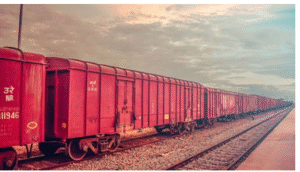
Context: Indian Railways has launched DRISHTI, an AI-powered system to detect unlocked or tampered freight wagon doors in real time while trains are in motion. Developed jointly by Northeast Frontier Railway (NFR) and IIT Guwahati’s Technology Innovation and Development Foundation (TIDF), the system is currently in advanced trials and marks a major step toward automated, contactless freight security — reducing theft, pilferage, and operational delays.
About DRISHTI System
- Full Name: AI-Based Freight Wagon Locking Monitoring System
- Developer: Northeast Frontier Railway (NFR) in collaboration with IIT Guwahati TIDF
- Core Purpose: Automatically monitor and verify the locking integrity of freight wagon doors during train movement
- Key Focus: Prevent cargo theft, tampering, and safety risks due to improper sealing
- Trial Status: Successfully tested for 10 months on select freight rakes with high detection accuracy
How DRISHTI Works – Technology & Process
- AI-Enabled Cameras: High-resolution imaging units capture real-time visuals of wagon doors
- Computer Vision & ML Algorithms: Analyze door position, latch status, and sealing condition
- Real-Time Anomaly Detection: Identifies unlocked, partially open, or tampered doors instantly
- Edge-to-Cloud Processing: Onboard AI processes data; critical alerts sent to central control
- Non-Stop Operation: Works at full train speed — no halting required
Key Features & Functional Advantages
- Continuous Live Monitoring: 24/7 surveillance of every wagon door in motion
- Instant Alert System: Auto-notifies loco pilots, RPF, and control rooms via SMS/app
- Zero Manual Intervention: Replaces time-consuming physical checks by staff
- Digital Audit Trail: Logs all events for post-journey analysis and legal evidence
- Seamless Integration: Links with existing freight tracking and railway IT platforms
- Scalable Design: Ready for nationwide rollout post-pilot validation
Operational & Strategic Benefits
- Enhanced Cargo Security: Prevents in-transit theft and unauthorized access
- Reduced Human Error: Eliminates risks from missed or faulty manual inspections
- Faster Turnaround: Cuts inspection time from 30–60 minutes to under 1 minute per train
- Cost Efficiency: Lowers manpower deployment and loss due to pilferage
- Predictive Insights: Data analytics support maintenance scheduling and trend analysis
- Supports Atmanirbhar Bharat: 100% indigenous technology in rail safety and logistics
Current Status & Future Roadmap
- Pilot Success: Validated on multiple freight routes under NFR jurisdiction
- Accuracy Benchmark: Over 95% reliable detection in diverse weather and terrain
- Next Phase: Expansion to high-volume corridors (Dedicated Freight Corridors)
- Long-Term Vision: Full integration with Kavach, MVIS, and FOIS for end-to-end smart freight ecosystem
DRISHTI represents a paradigm shift from reactive to proactive freight security — leveraging AI, indigenous innovation, and operational efficiency to make Indian Railways safer, smarter, and more reliable.