
1. India, U.S. sign pact to enhance defence ties
GS PAPER II: International Relations
Context: India and the U.S. signed a 10-year defence partnership framework at the 12th ASEAN Defence Ministers’ Meeting-Plus(ADMM-Plus)
| Background
US designated India as a Major Defense Partner (MDP) in 2016, a status that facilitates defense trade and technology transfers at levels comparable to America’s closest allies. Strategic Agreements and Logistics Cooperation: India and the US have signed several foundational agreements, that have significantly boosted operational coordination, especially in the Indo-Pacific, like: Logistics Exchange Memorandum of Agreement (LEMOA), 2016: Allows the armed forces of both countries to use each other’s bases for refueling and resupply. Communications Compatibility and Security Agreement (COMCASA), 2018: Enables secure communications between their military platforms. Basic Exchange and Cooperation Agreement (BECA), 2020: Facilitates sharing of geospatial intelligence and satellite data for military use. Joint Military Exercises: India and the US regularly conduct joint military exercises to enhance interoperability and readiness. Some notable exercises include: o Malabar (Naval Exercise): Conducted with Japan and Australia as part of the Quad alliance. o Yudh Abhyas (Army Exercise): Enhances land warfare coordination. o Vajra Prahar (Special Forces Exercise): Strengthens counterterrorism capabilities. o Cope India (Air Force Exercise): Focuses on aerial combat and air superiority. |
Key Objectives and Focus Areas:
- The framework covers all defence domains: land, maritime, air, space, and cyberspace.
- It focuses on maintaining a free and open Indo-Pacific region.
- It aims to enhance interoperability between the two militaries.
- It seeks to strengthen maritime security to ensure the free flow of commerce.
- It expands cooperation with like-minded partners through mechanisms like the Quad.
- It aims to prevent the proliferation of weapons of mass destruction.
- It bolsters defence industrial innovation through advanced technology partnerships.
By focusing on interoperability, technology sharing, and a shared vision for regional security, the agreement aims to enhance their ability to address common threats and promote stability in the Indo-Pacific region.
2. Unseasonal rain damages onion crop in Maharashtra
GS Paper I -Geography – (Climatic Regions, Weather Patterns)
Context: Unseasonal late-October rains hit Maharashtra’s onion belt, damaging crops and sparking protests.
- Media highlighted crop losses and agrarian distress amid rising costs and falling prices.
- The timing threatens rabi sowing (Oct–Nov), risking shortages and price spikes as in 2023-24.
Background: Rains from Oct 25–27, 2025 damaged early onion nurseries in Nashik, Ahmednagar, Pune, and Solapur.
- Rainfall of 36.8–58.4 mm far exceeded post-monsoon norms, flooding fields.
- Over 1,000 hectares of onion nurseries washed out; wheat, maize, and cotton also hit.
- Farmers fear entire Jan–Apr 2026 harvest failure if resowing fails.
- State began damage surveys (panchnamas), but delay in relief intensified protests.
Impacts and Challenges
- Massive nursery losses (Rs 20,000–30,000 per acre) increase debt burden.
- Only 7.43 lakh ha insured in 2024–25, leaving majority unprotected.
- Rabi crop (60% of supply) threatened, risking price spikes and export cuts.
- Past export bans and low prices worsened farmer incomes; protests link to survival.
Importance of Onion in Maharashtra
- Contributes 35–43% of India’s onions; 6 major districts dominate cultivation.
- Nashik alone covers 2.9 lakh ha, world’s largest onion hub.
- Generates Rs 10,000+ crore annually, employing lakhs in trade and processing.
- 2024’s 28% loss caused rural distress, suicides, and migration.
Importance of Onion in India
- India is 2nd largest global producer (28–30 MMT annually).
- Rabi season onions form 60% of annual output.
- Export value around Rs 3,000 crore; key buyers include Bangladesh and UAE.
- Price volatility affects inflation and food security; NAFED stores 4.68 LMT for stability.
Why Unseasonal Rainfall is a Problem
- November normally sees below 10 mm rain; excess causes crop rot and fungal spread.
- Onion seedlings (15–30 days old) highly sensitive to waterlogging.
- Past events (Nov 2023, Apr 2025) cut national onion output by 20%.
- Rain-induced yield loss (up to 50%) risks retail spikes, hurting consumers.
Meteorological Reasons
- Western Disturbances from the Mediterranean reached Maharashtra via jet streams.
- Cold northern and warm southern winds created thunderstorms and heavy showers.
- Jet stream shifts increased weather instability in Oct–Nov 2025.
- Climate change raised moisture load and rain intensity by up to 20%.
- Maharashtra saw 4 of 5 years with excess rains between 2019–24, showing pattern shift.
3. Kunming Biodiversity Fund (KBF)
GS paper III: Enviro & Biodiversity -Conservation, Environmental Pollution & Degradation.
Context: In October 2025, seven countries—Cook Islands, Madagascar, Mexico, Nepal, Sri Lanka, Turkey, and Uganda—received $5.8 million from the Kunming Biodiversity Fund (KBF) for nature-friendly agriculture projects.
Kunming Biodiversity Fund (KBF): Essentials
- Purpose: Helps developing nations implement the Kunming-Montreal Global Biodiversity Framework (KMGBF), targeting zero biodiversity loss by 2030 and major ecosystem recovery by 2050.
- Launch: Started in 2021 at COP-15 (Part 1), Kunming, China, under China’s presidency of the UN Convention on Biological Diversity (CBD).
- Seed Funding: China pledged $200 million (1.5 billion yuan) as the initial corpus.
- Management: Operated jointly by China’s Ministry of Ecology & Environment, UNEP, CBD Secretariat, UNDP, and other partners, using a Multi-Partner Trust Fund structure.
Focus Areas and 2025 Grants
- Supports National Biodiversity Strategies and Action Plans (NBSAPs).
- Prioritizes ecosystem restoration, invasive species control, sustainable agriculture, and community empowerment, including Indigenous Peoples.
- The October 2025 allocation (via FAO) advances KMGBF Target 19 (mobilizing $200 billion/year by 2030) and aims to shrink the $700 billion global biodiversity finance gap.
Global and Indian Context
- KBF is a key international biodiversity finance mechanism, complementing the GEF, Green Climate Fund, and the new Cali Fund.
- India has not yet secured direct KBF funding but remains eligible as a biodiversity-rich developing country and is active in the CBD.
- Indian national plans (NBAP, National Biodiversity Mission, Green India Mission) align closely with KBF priorities, focusing on restoration and community participation.
4. The case for a board of peace and sustainable security
GS- paper II: International Relations, Issue: UN body, proposes Board of Peace and Sustainable Security (BPSS)
Context: The United Nations (UN) was founded 80 years ago to prevent wars and maintain peace globally. However, ongoing conflicts show the current system, especially the UN Security Council (UNSC), is reactive, lacking sustained engagement for durable peace. Peace processes often falter due to absence of permanent UN bodies providing political support throughout and after conflicts.
The Need for Functional Reform
- Instead of only structural reform of the UNSC, the UN should focus on functional reform to improve immediate peace efforts.
- The UN General Assembly (UNGA) has authority under Article 22 of the UN Charter to create subsidiary bodies as needed.
Introducing the Board of Peace and Sustainable Security (BPSS)
- The BPSS would fill the gap by offering continuous political engagement post-conflict, where current UN presence fades.
- It would use political—not coercive—means to support peace processes.
Core Functions of BPSS
- Support nationally-led dialogues during peace transitions.
- Accompany peace agreement implementation stages.
- Coordinate regional diplomatic efforts effectively.
- Ensure peacekeeping missions align with achievable political goals.
Coordination and Institutional Role
- Operate in coordination with the UN Secretary-General and UNSC.
- Subsumes the existing Peacebuilding Commission (PBC).
- Aligns peacekeeping and peacebuilding efforts with political outcomes without undermining UNSC authority or Secretary-General’s powers.
Conclusion
To overcome its episodic interventions and lack of follow-through, the UN must institute a body like BPSS to provide steady political accompaniment from conflict to sustainable peace.This proposal addresses a critical institutional weakness in the UN’s peace architecture, aiming for better crisis management and long-term stability.
5. Trump drops a bomb, on U.S. nuclear weapons testing
GS- paper II: International Relations.
Context: Trump’s decision to resume nuclear testing breaks a 30-year global moratorium and signals a major shift in nuclear politics amid already heightened U.S.–Russia–China tensions.
Impact on Power Equations and Dynamics
- U.S.-China and U.S.-Russia Relations: The announcement directly impacts the power dynamics between the U.S., China, and Russia. China has already urged the U.S. to adhere to the Comprehensive Nuclear Test-Ban Treaty (CTBT).
- Potential for Renewed Testing by China and Russia: If the U.S. resumes testing, China and Russia might follow suit, potentially leading to the development and testing of advanced weapons, including low-yield tactical nuclear weapons.
- Challenges to the New START Treaty: The resumption of testing could complicate negotiations for a successor agreement to the New START Treaty, which expires in February 2026 and limits the number of strategic warheads and delivery vehicles deployed by the U.S. and Russia.
Undermining Nuclear Arms Control
- Threat to 50 Years of Arms Control Efforts: Resuming nuclear testing challenges decades of nuclear arms control norms upheld since the 1990s, even without the CTBT in force.
- Risk of Global Testing Resurgence: If the U.S. resumes testing, other nations may follow, citing precedent and weakening restraint.
- Weakening the NPT Framework: Such a move contradicts commitments under the NPT toward nuclear disarmament and threatens the treaty’s credibility.
- Erosion of the NPT’s ‘Grand Bargain’: Non-nuclear states may feel betrayed and reconsider staying
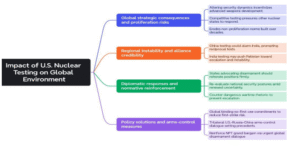 non-nuclear, arguing that nuclear states are not fulfilling their disarmament promises.
The hope is that the U.S. will not implement this policy. However, if the U.S. does resume testing, the rest of the world should not fall prey to questionable policy choices at the cost of its own stability and security.
6. GI Tagged Indi and Puliyankudi Limes
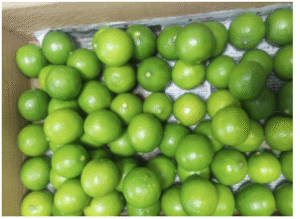
Context: APEDA, under the Ministry of Commerce and Industry, enabled India’s first air export of GI-tagged Indi Lime (Karnataka) and Puliyankudi Lime (Tamil Nadu) to the UK.
- Marks a milestone in promoting region-specific horticultural exports and boosting farmer income through GI-based branding.
Indi Lime – Key Facts
- Origin: Mainly grown in Vijayapura district, Karnataka.
- GI Recognition: Received in 2023; second lime variety after Assam Lemon to get GI tag.
- Features: Known for strong aroma, balanced acidity, high juice yield, and thin rind.
- Taste Profile: Tangy-sweet flavor with rich oil content suitable for culinary and medicinal use.
- Growing Conditions: Thrives in semi-arid climate and black cotton soil; cultivated by traditional organic methods.
- Economic Role: Vijayapura produces about 58% of Karnataka’s lime; vital for local economy and heritage.
Puliyankudi Lime – Key Facts
- Origin: Cultivated in Puliyankudi, Tenkasi district, Tamil Nadu, known as “Lemon City of Tamil Nadu.”
- GI Recognition: Granted in April 2025.
- Features: Kadayam variety has thin peel, strong acidity, high juice (≈55%), and rich ascorbic acid (≈34.3 mg/100g).
- Aroma & Flavor: Highly aromatic with sharp tanginess, favored in domestic and export markets.
- Growing Conditions: Raised in red loamy soil under tropical climate using traditional methods.
- Nutritional Value: High in vitamin C and antioxidants; aids immunity, digestion, and metabolism.
7. Integrated Cold Chain and Value Addition Infrastructure (ICCVAI) Scheme
Context: The Union Cabinet approved an increased budget of ₹6,520 crore for the Pradhan Mantri Kisan Sampada Yojana (PMKSY) in 2025.
- ₹1,000 crore of this is allocated for establishing 50 irradiation units under the Integrated Cold Chain and Value Addition Infrastructure (ICCVAI) Scheme, marking a major boost in cold chain facilities for agricultural produce.
What is the ICCVAI Scheme?
- Objective: To create a seamless cold chain and value addition infrastructure from farm to consumer, minimizing post-harvest losses and ensuring fair returns to farmers.
- Implementing Body: Central Sector Scheme under the Ministry of Food Processing Industries (MoFPI), as part of PMKSY.
- Coverage: Focuses on perishables like non-horticultural produce, dairy, meat, poultry, and marine fish (excluding fruits, vegetables, shrimp covered under Operation Greens).
Core Features of ICCVAI
- Develops infrastructure including pre-cooling units at farms, multi-product processing centers, distribution hubs with multi-temperature storage, refrigerated transport (reefer vans, mobile tankers), and irradiation units for sterilization and shelf-life extension.
- Promotes modern technologies like renewable energy and enhances food safety standards.
Financial Assistance & Eligibility
- Grants cover 35% of the project cost in general areas and 50% in difficult areas (NE states, hill areas, islands, ITDP regions) or for SC/ST/FPO/SHG entities.
- Maximum grant capped at ₹10 crore per project, disbursed in three installments.
- Applicants must meet net worth criteria (≥1.5× grant in general areas, equal to grant in special areas) and integrate farm-level infrastructure with distribution hubs and/or refrigerated transport.
Progress and Impact
- As of mid-2025, 395 projects approved, 291 operational.
- Total preservation capacity created: 25.52 lakh metric tonnes per annum; processing capacity: 114.66 lakh metric tonnes.
- Generated around 1.74 lakh jobs nationwide.
Complementary Government Initiatives
- MIDH: Credit-linked subsidy for cold storages up to 5,000 MT capacity.
- National Horticulture Board (NHB): Support for Controlled Atmosphere storage for horticulture.
- Operation Greens (PMKSY): Focuses on supply chain stabilization of fruits, vegetables, and shrimp.
- Agriculture Infrastructure Fund: Offers 3% interest subvention on loans up to ₹2 crore for cold chain and processing units.
- National Centre for Cold-chain Development (NCCD): Acts as a think tank providing standards, training, and best practices in cold chain management.