1. INDIA Gets a waiver on U.S sanctions against Iran port
GS Paper II: International Relations—India and its neighborhood, Effect of policies and politics of developed and developing countries on India’s interests.
GS Paper III: Economic Development—Infrastructure, Investment Models (indirectly, connectivity and trade corridor implications).
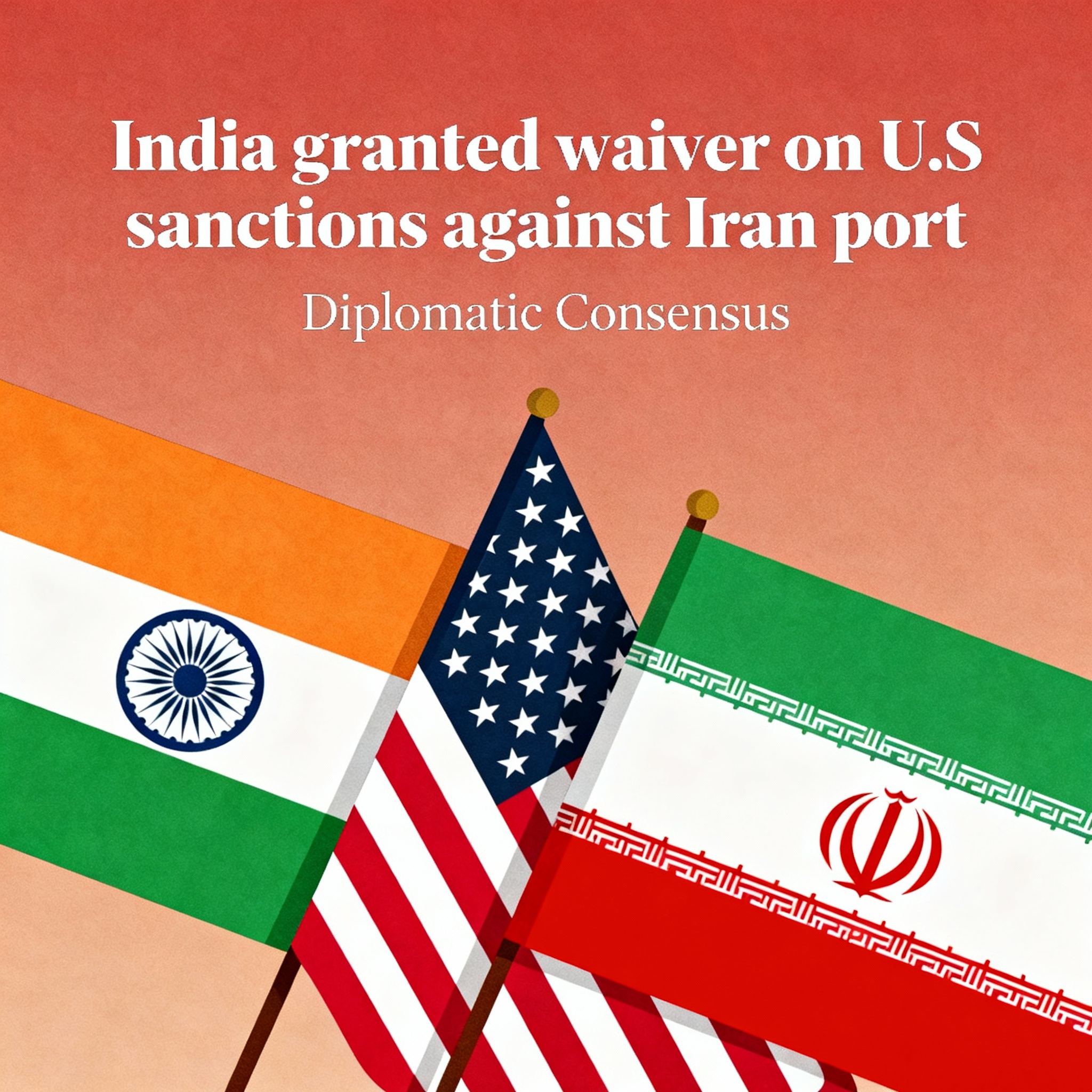
Context: The U.S. imposed new sanctions on Iran, but India received a six-month exemption to continue work at Chabahar port.
- The U.S. waiver directly enables supply lines to Afghanistan and India’s strategic projects, amidst heightened tensions after threats to revoke the waiver earlier this year.
What is Chabahar Port?
- Deep-water port in Sistan-Baluchistan, Iran, linked to Shahid Beheshti Terminal.
- Located close to Pakistan and China’s Gwadar Port, pivotal for bypassing Pakistan.
- Managed by IPGL under a decade-long agreement since May 2024.
- Handles 8 million tonnes cargo/year, key for humanitarian aid and Afghanistan transit.
- Central to INSTC route, cutting Europe transit-time by 40%.
Background of US Waiver
- First granted in 2018 under IFCA, supporting Afghan reconstruction.
- Regularly renewed due to port’s strategic role for India.
- India-Iran joint development MoU signed 2015; operations speed up post-IPGL control in 2024.
What Happened (Now 2025)
- Trump administration revoked waiver on September 16; effective September 29.
- India flagged risks and opened negotiations, tying issue to broader trade talks.
- MEA announced a six-month exemption starting October 29, keeping operations running.
- Previous short waiver expired October 28; extension granted October 30.
Impact on India
- Extension eases immediate concerns but highlights long-term uncertainty for port projects.
Economic Loss
- $370 million investment exposed to sanctions risk.
- Potential $2-3 billion annual export losses via disrupted access to Afghanistan/Central Asia.
- Humanitarian shipments and cargo handling face interruption, adding 20-30% costs.
Connectivity Plans Hit
- INSTC corridor delay likely, slowing multimodal trade by 30-40%.
- Aid to Afghanistan and direct overland routes threatened.
- Central Asian states may pivot toward China’s BRI.
Diplomatic Tensions
- Waiver uncertainty strains US-India ties, exacerbated by trade tariffs and additional sanctions.
- India-Iran trust tested as long-term cooperation faces periodic risks.
- Regional alliances with Gulf, Israel, face added complexity from US moves.
Geopolitical Shift
- Gwadar’s primacy grows, boosting China’s Belt and Road ambitions.
- US-Iran escalations raise risk of drawing India into proxy tensions.
- Multipolar trends: India looks to Russia and Eurasia as sanctions risk rises.
Why is the US Doing This?
- Follows “maximum pressure” mandate to isolate Iran over nukes, missiles, and proxy support.
- Disrupts Iran’s financial networks and applies leverage in global trade talks.
- Original Afghan stabilization logic less relevant post-Taliban takeover.
- Waiver now serves as bargaining chip with India.
India’s Options Ahead
- Push for permanent waiver in future US trade negotiations.
- Develop rupee-rial trade and alternative financing channels.
- Speed up IMEC, explore Bandar Abbas and other fallback routes.
- Deepen ties with Iran-Uzbekistan and pursue Eurasian FTAs.
- Use local Iranian staffing, scale down at-risk ops, minimize US exposure.
2. KOYLA SHAKTI Dashboard
Why in the News?
- The Union Minister of Coal and Mines launched two digital governance platforms—KOYLA SHAKTI Dashboard and CLAMP Portal—to enhance transparency and efficiency in the coal sector.
KOYLA SHAKTI Dashboard
- Purpose: A unified digital platform integrating coal production, logistics, dispatch, and consumption data in real-time.
- Features: Consolidates inputs from coal PSUs, Indian Railways, ports, power utilities, and state mining departments for end-to-end oversight.
- Technology: Uses AI-based analytics for demand forecasting, logistics optimization, and supply chain management.
- Governance Impact: Improves transparency and accountability, supports evidence-based policymaking, and reduces bottlenecks.
- Sectoral Benefits: Enhances coordination across stakeholders and boosts operational efficiency in coal dispatch and management.
CLAMP (Coal Land Acquisition, Management, and Payment) Portal
- Overview: A centralized digital system to streamline land acquisition, compensation, and rehabilitation for coal mining projects.
- Functions: Integrates land records, ownership details, compensation workflows, and tracking of payments to stakeholders.
- Transparency: Enables real-time monitoring of land acquisitions and reduces delays & disputes with a single-window system connecting coal PSUs, state, and district authorities.
- Efficiency: Minimizes paperwork, ensures timely approvals, and improves compliance with land acquisition and rehabilitation policies.
- Public-Centric: Prioritizes fair grievance redressal and timely payment verification for affected communities.
3. Nauradehi Wildlife Sanctuary as the third cheetah habitat under Project Cheetah
GS Paper III: Environment and Ecology—Wildlife Conservation, Biodiversity, Species Reintroduction, Ecosystem Restoration.
CONTEXT: Madhya Pradesh CM Mohan Yadav announced Nauradehi Wildlife Sanctuary as the third cheetah habitat under Project Cheetah on October 30, 2025.
- Six crocodiles were also released at Indira Sagar Dam, emphasising conservation efforts.
Background of Project Cheetah
- Launched in September 2022, Project Cheetah is India’s effort to reintroduce cheetahs lost since 1952.
- It is the world’s first intercontinental large carnivore translocation, led by NTCA and partners.
- By 2025, 31 cheetahs live in India, with survival rates improving to 85.7%.
About Nauradehi Wildlife Sanctuary
- Located in central Madhya Pradesh spanning Sagar, Damoh, Narsinghpur, Raisen districts; largest sanctuary in MP (~1,197 km²).
- Part of Veerangana Durgavati Tiger Reserve since 2024.
- Key wildlife corridor with grasslands, tropical dry deciduous forests, and rich fauna including tigers, wolves, deer.
- Approved for cheetah enclosure development in October 2025; village relocations ongoing for habitat expansion.
Reason for Site Expansion Beyond Kuno
- Kuno National Park’s limited area and predator competition restrict cheetah numbers to under 10.
- Nauradehi adds ~1,200 km², diversifies habitat, and supports metapopulation goals.
- Supports genetic diversity and reduces overcrowding risks, following IUCN guidelines.
Crocodile Release at Indira Sagar Dam
- Six mugger crocodiles introduced to restore aquatic ecological balance and fish population control.
- Cultural significance linked to Maa Narmada; combined ecological and spiritual conservation effort.
Challenges in Cheetah Reintroduction
- High initial mortality (~40-50%), though improving survival with enclosures and veterinary care.
- Habitat constraints, competition, genetic concerns, and human-wildlife conflicts remain.
Conservation Significance
- Restores apex predator role, boosts biodiversity and ecosystem balance in grasslands.
- Promotes eco-tourism and community livelihood in Madhya Pradesh.
- A global precedent in carnivore conservation and ecosystem restoration
4. Cyprus ready to be part of IMEC
GS Paper-I International relations, geography (Mediterranean region), and India’s global connectivity initiatives
CONTEXT :Cyprus Foreign Minister visited India on October 30, 2025 to discuss Cyprus joining India-Middle East-Europe Economic Corridor (IMEC).
- Discussions included India-Cyprus Joint Action Plan 2025-2029 and Cyprus’ EU Council Presidency in Jan 2026.
Location and Geography
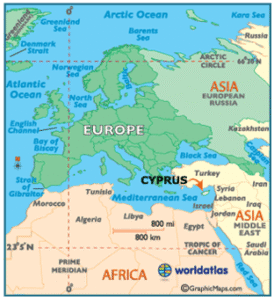 Why in the News
- Cyprus FM Kombos visited India on Oct 30, 2025, pushing for IMEC inclusion.
- Reviewed India-Cyprus Joint Action Plan 2025-2029.
- Cyprus to hold EU Council Presidency from Jan 2026.
- Focus: IMEC hub role, countering Turkey, trade, defense, EU-India FTA.
Location and Geography
- Island in Eastern Mediterranean, crossroads of Europe, Asia, Africa.
- 70 km south of Turkey, 105 km west of Syria, 240 km north of Egypt.
- 9,251 km²; third-largest Med island after Sicily, Sardinia.
- Terrain: Troodos Mts (Olympus 1,952 m), Kyrenia Range, Mesaoria plain.
- Climate: Hot dry summers, mild wet winters; rich in copper, forests.
- Coasts: Rocky north, sandy south; 1,800+ endemic plant species.
- Divided since 1974: South (60%) Republic, North (36%) TRNC; UN Green Line.
Strategic Importance
- Links Europe (EU since 2004), Middle East, Africa; key for Suez routes.
- Hosts UK bases (Akrotiri, Dhekelia); vital for NATO/EU ops.
- IMEC transshipment hub for India-Europe trade, bypasses China BRI.
- Offshore gas (Aphrodite field); supports EastMed Pipeline, EuroAsia link.
- Counters Turkish influence in East Med disputes.
- EU membership amplifies global diplomatic leverage.
Political System
- Unitary presidential democracy; 1960 Constitution (power-sharing suspended).
- President (head of state/govt) elected 5-year term; Nikos Christodoulides since 2023.
- Unicameral House: 80 seats (56 Greek, 24 Turkish vacant); 5-year elections.
- Judiciary: Independent Supreme Court; EU law since 2004.
- Key parties: DISY (right, 17 seats), AKEL (left, 15), DIKO, EDEK.
- Northern Cyprus: Separate TRNC system, unrecognized except by Turkey.
Historical Background: British Rule and Independence
- Ottoman rule (1571–1878): Greek enosis push vs Turkish minority.
- British lease 1878, annexed 1914; Crown Colony post-WWI.
- British built roads, ports; used divide-and-rule on ethnic lines.
- EOKA revolt (1955–59) for enosis; 500+ deaths; Makarios exiled then returned.
- Independence Aug 16, 1960 via London-Zürich; Greece, Turkey, UK guarantors.
- UK kept bases; Makarios first President.
The Cyprus Conflict (1974-Present)
- Ethnic divide led to 1974 Turkish invasion; island split along Green Line.
- UN talks stalled; bi-zonal federation proposed but failed.
Events and Description
| Date | Event | Description |
| Jul 15, 1974 | Greek Coup | Athens-backed Guard ousts Makarios, installs Sampson for enosis. |
| Jul 20, 1974 | Turkish Invasion I | 40,000 troops land; seize 3% (Kyrenia-Nicosia); ceasefire Jul 22. |
| Jul 23-24, 1974 | Greek Junta Fall | Regime collapses; Clerides interim President; Geneva talks fail. |
| Aug 14-16, 1974 | Turkish Invasion II | Expand to 37% north; 200k Greek Cypriots flee south. |
| Feb 1975 | Turkish State | Denktaş proclaims autonomous Turkish Cypriot administration. |
| Nov 1983 | TRNC Declaration | North declares independence; only Turkey recognizes. |
| 1983–Now | UN Peacekeeping | UNFICYP guards buffer; Annan Plan 2004 rejected; talks deadlocked. |
Economy
- High-income, service-led; 2024 GDP €28.3B, 3.4% growth; 2025 ~3%.
- Services >76% GDP; tech, energy diversification.
Aspects and Details
| Aspect | Details |
| GDP & Growth | €28.3B (2024); $42k/capita; 3.4% rise; consumption +3.8%. |
| Tourism | 15% GDP; 4M+ visitors/yr; UK/Russia/Germany key; +15.4% in 2025. |
| Financial Services | 10%+ GDP; low-tax hub; NPLs down 95% post-2013. |
| Shipping | 5% GDP; major registry; Limassol port vital; IMEC JV with India. |
| Real Estate | 5-7% GDP; +1.2% permits 2024; Russian/Chinese FDI. |
| ICT & Tech | 12%+ annual growth; digital hub; Great Sea Interconnector 2025. |
| Agriculture | 1-2% GDP; citrus, potatoes; water scarcity issue. |
| Fiscal | 4.3% surplus 2024; debt 65% GDP; EU funds aid infra. |
India-Cyprus Relations
- Close ties since Non-Aligned Movement; India supported Cyprus independence.
- Growing economic and defense cooperation, joint maritime exercises, and strategic support in international forums.
- Cyprus set to hold EU Council Presidency Jan-June 2026, enhancing bilateral engagement.
5. GREAT NICOBER PROJECT
GS Paper-III (Environment & Internal Security).
Context: Centre defended Great Nicobar project before NGT on Oct 30, 2025, highlighting biodiversity awareness and mitigation plans.
- NGT noted tribal welfare monitoring gaps and ICRZ violations in Ashish Kothari’s petitions.
- Next hearing on Nov 7, 2025; follows 70+ experts’ letter (Oct 27, 2025) urging halt over ecological harm.
- ₹81,000 crore project under scrutiny; phased tree felling from 2025-2047 amid forest clearances.
What is the Great Nicobar Project?
- Conceived by NITI Aayog in 2021; developed by ANIIDCO for strategic, economic, defence growth.
- Cost: ₹81,000 crore (updated 2025); includes transshipment port, dual-use airport, township, power plant.
- Aims: Boost connectivity, trade, security; eco-tourism, logistics hub near Malacca Strait.
- Timeline: Bids for solar (5 MW) in Apr 2025; deep-sea mining blocks awarded.
Location
- Southern tip of Andaman & Nicobar Islands; 150 km south of mainland India, 80 nautical miles from Indonesia.
- Area: 885 km²; key sites: Galathea Bay (port), Campbell Bay (airport/township).
- Near Malacca Strait; part of UNESCO Biosphere Reserve (2013).
- Includes Campbell Bay National Park (426 km²), Galathea National Park (110 km²).
Environmental and Tribal Concerns
- Diverts 130 sq km forest (16% island); impacts mangroves, corals in seismic megathrust zone.
- No physical displacement; affects Shompen (PVTG, 200-300) and Nicobarese (ST, ~300 post-2004 tsunami) via habitat fragmentation.
- Rapid EIA underplays risks; violates FRA 2006/PAT 1956 on tribal isolation.
- 70+ experts cite irreversible damage to 24% endemic species in old-growth forests.
| Issue | Explanation |
| Biodiversity Loss | Hits leatherback turtles (51 nests), Nicobar megapode, macaque, coconut crab; 20,668 corals at risk, 16,000 to translocate. |
| Tribal Displacement/Habitat | 1.82% land use (166 sq km) fragments territories; breaches PVTG isolation under PAT 1956. |
| Coastal/Seismic Risks | Port in ex-“no-go” ICRZ; removes tsunami buffers; 2004 sink 15 ft, July 2025 quakes signal eruptions. |
| Forest Diversion | 130 sq km old-growth cleared; Phase 1 felling 9.26 sq km from 2025; ₹80 crore for conservation by Mar 2025. |
Centre’s Defence Before NGT: Government Key Arguments
- Fully aware of impacts; used decades of studies for translocation, conservation till 2052.
- ₹80 crore disbursed for wildlife/healthcare (e.g., ₹23.55 crore for corals/ZSI).
- Limited scope: 1.82% land (166 sq km); 82% forested, three new sanctuaries.
- Tribal safeguards: Conserve nesting beaches; independent committee, add Tribal Affairs Secretary.
- Strategic need: Naval port, dual-use airport for tri-services; viable transshipment (75% Indian cargo foreign-dependent).
- Legal: Sealed HPC report (Jul 2025) fixes NGT issues; monitoring as “live document”; no EC interference.
Biodiversity of Great Nicobar: Significance
- UNESCO Biosphere: 24% endemics; old-growth rainforests, mangroves; seismic activity.
- Rare fauna/flora in fragmented habitats; global biodiversity corridor.
- Project risks irreversible loss; could model “green” infra but prioritizes development.
| Biodiversity Aspect | Significance |
| Flora & Forests | Last Indian old-growth; mangroves for disaster buffer; endemics like Nicobar breadfruit; 130 sq km loss hits carbon sinks. |
| Marine Life | 20,668 corals; 51 leatherback sites; coconut crab intertidal; Galathea hotspot key for fisheries/tourism. |
| Fauna | Endemic megapode bird, macaque; Shompen-linked species; translocation risky in seismic zone. |
| Geological/Ecological | Megathrust fault; 2004 tsunami resilience via mangroves; project amplifies quake/disaster vulnerability. |
Legal & Governance Aspects
- NGT: Under NGT Act 2010; Eastern bench (Justice Shrivastava) since 2023; HPC formed Apr 2023; stayed aspects, sealed report Jul 2025.
- ICRZ 2019: MoEFCC rule bans fragile zones (e.g., Galathea mangroves); petitioners claim violations; Centre seeks reclassification.
- Governance: ANIIDCO leads; MHA “strategic” tag; FRA/PAT apply but A&NI cites pre-protection; NGT flags monitoring independence.
Development vs Conservation Debate
- Development: Malacca hub cuts Singapore reliance; defence/logistics boost; 4 lakh township; ₹81,000 crore A&NI growth.
- Conservation: Biosphere habitat loss; unaddressed seismic risks; flawed EIA; tribal rights ignored; experts decry “political” override.
| Aspect | Developmental Arguments | Environmental Concerns |
| Economic/Strategic | Transshipment port; strengthens Andaman Command; local jobs. | Viability unproven; 80% commercial masks defence; ignores eco-BRI balance. |
| Land/Forest Use | 1.82% diversion; phased 2025-2047 felling; 82% forests retained. | 130 sq km pristine loss; ICRZ no-go breach; removes tsunami mangroves. |
| Tribal Impact | No relocation; PAT 1956 welfare; monitoring committees. | Fragments PVTG/ST lands; FRA non-compliance; isolation policy violated. |
| Biodiversity/Mitigation | ₹80 crore plans; translocation/monitoring to 2052. | Poor baseline data; seismic translocation failure; species endangerment. |
| Risks & Viability | Resilient design; holistic island development. | 2004 tsunami precedent; EIA downplays geology; endemic irreversible harm. |
6. BREAST CANCER TREATMENT
General Studies Paper-III (Science & Technology – Developments and their Applications and Effects in Everyday Life; Health and Biotechnology)
Context: Breast cancer treatment is undergoing a paradigm shift in 2025 with the introduction of new targeted therapies and alternative drug delivery methods like subcutaneous therapy, moving away from traditional intravenous (IV) chemotherapy
Background: What’s Changing in Breast Cancer Treatment?
- Treatment is becoming more personalized with biomarker-driven protocols and targeted therapies improving survival and quality of life.
- Major clinical trials in 2025 support de-escalating aggressive radiation and chemotherapy where possible.
- New oral SERDs and combination therapies delay or reduce the need for conventional chemotherapy.
Science Behind the Shift: Key Features
- Traditional IV Therapy: Delivers drugs via vein, typically requiring hospital visits and multiple sessions.
- Subcutaneous Therapy: Injects drugs under the skin, enabling faster administration, less pain, and potentially outpatient or home-based treatment.
- Targeted Therapies: Focus on cancer subtypes, e.g., PIK3CA mutations, reducing systemic side effects.
Traditional Intravenous Therapy
- Lengthy infusion times, often causing side effects and requiring clinical supervision.
- Potential for infusion-related complications like allergic reactions and infections.
Subcutaneous Therapy
- Faster administration, generally under 10 minutes versus hours.
- Reduced hospital visits and resource use, improving patient convenience and adherence.
- Lower risk of infusion reactions and improved quality of life.
Why This Matters: Practical Benefits
- For Patients: Less time in hospitals, fewer side effects, better treatment adherence and comfort.
- For Doctors: Streamlined administration, freeing clinical resources, enhanced patient management with potential remote monitoring.
Challenges in India
- Unequal healthcare access: Urban areas have advanced facilities; rural areas lack infrastructure, trained staff, and affordability.
- Public Health Constraints: Limited availability of diagnostic tools, lack of biomarker testing, and insufficient immunotherapy access create disparities.
- Implementation gap: Mismatch between evidence-based protocols and real-world practice.
Large Theme: Evidence Meets Practice
- Translating clinical trial success to wide-scale adoption requires healthcare infrastructure strengthening, clinician education, and public funding support.
- Bridging the urban-rural divide is crucial to ensure equitable cancer care access across India.