

1. Cyclone Montha
General Studies Paper I: Important Geophysical phenomena (cyclones, earthquakes, floods, etc.)
General Studies Paper III: Disaster Management (preparedness, mitigation, impact).
Why in News
- Cyclone Montha is expected to cross the Andhra Pradesh coast between Machilipatnam and Kalingapatnam on Tuesday evening, bringing severe cyclonic conditions and heavy rainfall.
- India’s meteorological authorities have issued red alerts for 16 districts due to potential destructive winds and flooding.
What is Cyclone Montha
- Cyclone Montha is classified as a severe cyclonic storm with sustained wind speeds of 90–100 km/h gusting up to 110 km/h.
- The storm is moving from the Bay of Bengal and is forecast to make landfall, affecting coastal and adjoining regions
Affected Areas
- East coast of India most threatened: Andhra Pradesh, Odisha, Tamil Nadu, Chhattisgarh.
- Andhra Pradesh: Kakinada, Konaseema, Visakhapatnam, Anakapalli, Srikakulam, E/W Godavari, Eluru, and 1,419 villages, 44 towns.
- Heavy rains in Vijayawada, coastal towns; major impacts in north coastal AP.
- Odisha: Eight southern districts (e.g., Ganjam, Rayagada, Koraput); light rain, trajectory may affect more.
- Tamil Nadu/others: Chennai (Marina Beach), Tiruvallur, Chengalpattu, Kancheepuram, Puducherry/Yanam; rain in coastal/southern regions.
- Some effects also expected in Chhattisgarh, West Bengal.
Warnings & Alerts
- IMD warnings cite risks of storm surge, flooding, structural damage.
- Red Alert: 16 AP districts (>20 cm rain/24hr, winds to 110 kmph); 8 in southern Odisha; Andhra/Odisha coasts.
- Orange Alert: 23 AP districts (7–20 cm rain/24hr); key TN and Odisha districts; wind up to 80 kmph.
- Yellow Alert: TN and West Bengal coasts; fishermen warned, beaches closed to tourists.
Preparedness Measures
- Focus on ‘zero casualty’ with evacuations, relief, support for infrastructure.
- Nearly 10,000 evacuated from AP (Kakinada/Konaseema), 3,000+ in Odisha including pregnant women.
- 22 NDRF teams across AP, Odisha, TN, Puducherry, Chhattisgarh; 128 disaster teams in S Odisha.
- Control rooms, helplines (e.g., Nellore: 0861-2331261) operational; rehabilitation centers active.
- Schools closed, earthmovers for debris; essential supplies and medical teams on standby.
- Railway/flight advisories for minimal travel; residents urged to shelter indoors; reservoir water released to reduce flood risks.
2. CJI Gavai recommends J. Kant as the 53rd Chief Justice of India
GS PAPER I: polity -Executive & Judiciary
Context: Chief Justice of India (CJI) B.R. Gavai formally recommended Justice Surya Kant, senior-most Supreme Court judge, as his successor and the 53rd CJI.
Role and Importance of Chief Justice of India (CJI)
- The CJI is the head of the Supreme Court and highest judicial officer of India, acting as “Master of the Roster” for case allocation and bench constitution.
- Performs both administrative and judicial roles, managing the Court’s functioning and leading constitutional jurisprudence.
Constitutional Basis and Powers
- Article 145: Constitutes Constitution Benches for substantial constitutional questions.
- Article 136: Exercises special leave jurisdiction for important legal appeals.
- Article 32: Safeguards Fundamental Rights under original jurisdiction of Supreme Court.
Administrative Responsibilities
- Manages roster system, case assignments, Supreme Court registry, staff, and judicial coordination with executive and legislature.
Advisory Role (Article 143)
- The CJI leads the collective advisory opinion of the Supreme Court on legal/constitutional questions referred by the President.
Appointment Process (Article 124)
- The senior-most Supreme Court judge is recommended by the outgoing CJI, after consulting senior colleagues.
- The recommendation is sent to the Union Law Minister, then to the Prime Minister, and finally the President formally appoints the CJI.
- Appointment based on the Memorandum of Procedure and seniority system (“first among equals”).
Other Key Points
- Tenure lasts until age 65; removal only by impeachment in Parliament (majority and two-thirds present voting).
- Past deviations from seniority sparked controversy (Justice A.N. Ray, Justice M.H. Beg).
This formal recommendation process balances tradition, judicial independence, and executive authority, making the appointment a crucial event in India’s judiciary.
3. Rampur and Mudhol Hound dog breeds to be inducted by BSF:
General Studies Paper III: Internal Security: “Various Security Forces and Agencies and Their Mandate”
Security Challenges: Border management, force readiness, innovations in security operations.
Context: BSF is training 150 Rampur and Mudhol Hounds for border and special operations duties.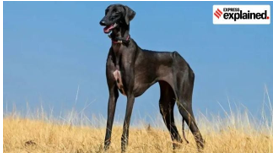
- Marks renewed push for indigenous dog breeds in national security roles.
Background: Indian Breeds in Defence Forces
- Indian breeds like Mudhol Hound, Rampur Hound, and Rajapalayam have been previously used by armed and paramilitary forces.
- PM Modi promoted use of native breeds for better adaptation and self-reliance.
Mudhol Hound: Use in Forces
- Regularly deployed for patrolling, detection, and anti-Naxal/terror operations; won awards in national police dog meets.
- Known for speed, stamina, intelligence, and adaptability in challenging Indian terrain.
Rampur Hound: Use in Forces
- Indigenous to Uttar Pradesh; now being used for border patrol due to energy, loyalty, and long-distance endurance.
- Effective in rural, semi-arid, and forested environments.
Why Use Indian Breeds?
- Naturally resilient, disease-resistant, and require less maintenance compared to imported breeds.
- Adapt well to local climates and tough working conditions; promote Atmanirbhar Bharat (self-reliant India) ethos.
Global Comparison: Security Dog Breeds
| Breed | Used By | Traits | Roles |
| Mudhol Hound | India (BSF, CRPF) | Speed, stamina, sharp senses | Patrolling, detection, search |
| Rampur Hound | India (BSF) | Endurance, loyalty, agility | Border patrol, tracking |
| German Shepherd | US, EU, India | Intelligence, obedience, strength | Detection, patrol, search/rescue |
| Belgian Malinois | US, Israel, NSG | Drive, agility, intelligence | Commandos, K9 units, special ops |
| Labrador Retriever | UK, US, India | Sense of smell, calmness | Detection (explosives, drugs) |
| Doberman | Germany, others | Alertness, speed, obedience | Guard, search and rescue |
Why Dogs are Vital in Security Forces
- Superior sense of smell and hearing helps detect explosives, drugs, and intruders.
- Serve as deterrents during patrol, protect handlers, track suspects, and aid in disaster rescue operations.
Challenges
- Historical preference for foreign breeds created training and breeding gaps for Indian dogs.
- Need for updated training and breeding programs, and large-scale deployment.
- Overcoming myths about native breeds being less capable; changing handler and public perception.
4. Dogri language
GS Paper I: Society – Salient features, Diversity, and Issues related to regional languages.
Context: Growing concern over rapid decline of Dogri language in Jammu region; a linguistic heritage at risk.
- Study and surveys highlight erosion due to political neglect, migration, economic factors, and preference for widely spoken languages.
The Story So Far
- Human society faces extinction of many languages; India tops list with over 220 languages lost in 50 years.
- Dogri language, despite official recognition, lacks presence in education and administration, hastening its decline.
Is Dogri in Decline?
- Dogri’s status weakened by generational shifts, urbanization, and globalization pressures.
- Political choices and lack of active native speakers deepen the crisis.
Why is Dogri not being spoken?
- Decline linked to lack of government support, generational divides, and rural-urban disparity.
- Delayed constitutional recognition until 2003 weakened institutional backing.
Survey Findings
- 48% respondents feel government failed Dogri support; 43.2% see limited employment relevance.
- Sharp literacy and proficiency divide seen across age groups and urban-rural populations; younger respondents almost zero proficiency in reading/writing Dogri.
- Urban speakers fewer and less proficient than rural counterparts.
What is the Way Ahead?
- Need updated, comprehensive data on endangered languages, which is hindered by Census delays.
- Awareness and policy change required to support linguistic diversity and overcome mindset equating English with progress.
- Emphasises larger task of linguistic decolonisation.
5. PM’s ‘Mann Ki Baat’ appreciates Ambikapur’s unique ‘garbage cafe’
GS Paper 2: Governance, citizen-centric service delivery, inclusive policies.
GS Paper 3: Environmental conservation, solid and plastic waste management, sustainable urbanization.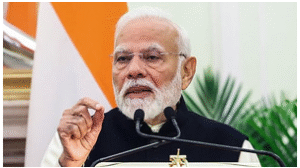
Context: Highlighted by PM Modi in Mann Ki Baat for its innovative blend of waste management and social welfare.
What is Garbage Café?
- Project of Ambikapur Municipal Corporation under Swachh Bharat Mission; addresses plastic pollution through a “plastic-for-food” model.
- Citizens deposit plastic waste in exchange for meals, promoting zero-waste and sustainable living.
Key Features
- Plastic-for-Food: 1 kg plastic = meal, 0.5 kg = snack; makes food accessible for waste collectors, especially the poor.
- Recycling Innovation: Collected plastic used for road construction and recycling, reducing landfill pressure.
- Community Inclusion: Run by women self-help groups, providing jobs and encouraging civic engagement.
- Circular Economy: Drives behavioral change and inspires adoption in other states, reinforcing circular goals.
Impact and Significance
- Tackles twin problems—plastic waste and hunger—by giving value to trash and dignity to marginalized groups.
- Demonstrates grassroots approach to SDG 12 (Responsible Consumption & Production) and SDG 11 (Sustainable Cities).
- Urban sustainability enhanced; sets replicable model for cities nationwide.
Replication and Success
- Inspired states like Kerala and Madhya Pradesh to adopt similar models.
- Since inception, removed over 23 tonnes of plastic from streets; consistent ranking among India’s cleanest cities.
6. Vidyapati Thakur
GS paper I: Arts & Culture
Context: Vidyapati Thakur, the 14th–15th century Maithili poet-philosopher, has resurfaced in public discourse following a Down To Earth feature highlighting his ecological and ethical worldview. The article revisits his synthesis of culture, nature, and devotion, prese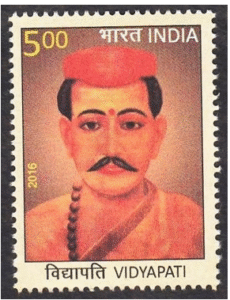 nting him as an early Indian voice on environmental ethics and vernacular dignity—centuries before modern ecological thought.
About Vidyapati Thakur (1352–1448)
Origin and Identity
Renowned Maithili poet, scholar, and thinker from Mithila (present-day northern Bihar), active under the Oiniwar dynasty.
Language and Expression
Wrote in Maithili, Sanskrit, and Avahatta, uniting classical grace with common speech to create a distinctive regional literary tradition.
Literary and Cultural Role
Celebrated as the Father of Maithili Literature for making Maithili a vehicle of devotion, love, and philosophy, challenging Sanskrit’s literary monopoly.
Historical Backdrop
Flourished during the eastern expansion of the Bhakti movement, harmonizing court Sanskrit traditions with local devotional and folk idioms.
Bhakti and Literary Contributions
- Through Radha–Krishna poetic songs (Padavali), he expressed women’s emotions and inner voice.
- Authored Ganga Stuti, portraying the Ganga as both moral guide and divine mother.
- His Purusha-Pariksha upheld humility and knowledge over caste and wealth status.
Vernacular Assertion
Proclaimed the sweetness of native speech (“Desil bayana sab jan mittha”)—asserting the cultural and spiritual power of the mother tongue over elitist Sanskrit.
Ethical and Environmental Vision
- Bhu-Parikramanam depicted rivers, trees, and winds as moral beings—showing early ecological ethics.
- Saw nature as sacred space, combining ecological awareness with devotion.
Administrative and Scholarly Works
Composed Likhanavali, a governance and record-keeping manual, proving expertise beyond poetry.
Regional Literary Influence
His idioms shaped Bengali, Odia, and Assamese traditions, influencing the Brajabuli style and Chaitanya-era Vaishnava poets.
Lasting Legacy
Vidyapati’s ideals of love, humility, and environmental consciousness continue shaping Mithila’s cultural identity and inspire discussions on integrating ecology and spirituality in literature.
7. NRF, in collaboration with ICMR and Gates Foundation, launches Maha MedTech Mission
Why in News
- The Anusandhan National Research Foundation (ANRF), in partnership with the Indian Council of Medical Research (ICMR) and Bill & Melinda Gates Foundation, launched the Maha MedTech Mission to boost medical technology innovation, manufacturing, and commercialization in India.
Overview of Maha MedTech Mission
- A national initiative to accelerate development and commercialization of affordable, high-quality medical technologies, improving healthcare access and affordability.
- Aims to reduce dependence on costly imports and promote self-reliance aligned with national health priorities like tuberculosis, cancer, and neonatal care.
- Funding support ranges from ₹5-25 crore per project, up to ₹50 crore for exceptional cases, targeted at startups, MSMEs, academia, hospitals, and industry collaborations.
Key Features
- Embraces cutting-edge technology including devices, diagnostics, implants, AI/ML tools, robotics, and assistive technologies.
- Supportive frameworks include Patent Mitra for intellectual property protection, MedTech Mitra for regulatory aid, and Clinical Trial Network for validation.
- Two-stage application process: concept notes (Sep-Nov 2025) followed by full proposals from Dec 2025 onward.
Significance
- Enhances India’s Atmanirbhar Bharat vision in medical technology.
- Promotes collaboration between industry and academia for translating research into market-ready innovations.
- Ensures equitable healthcare access through affordable technology.