
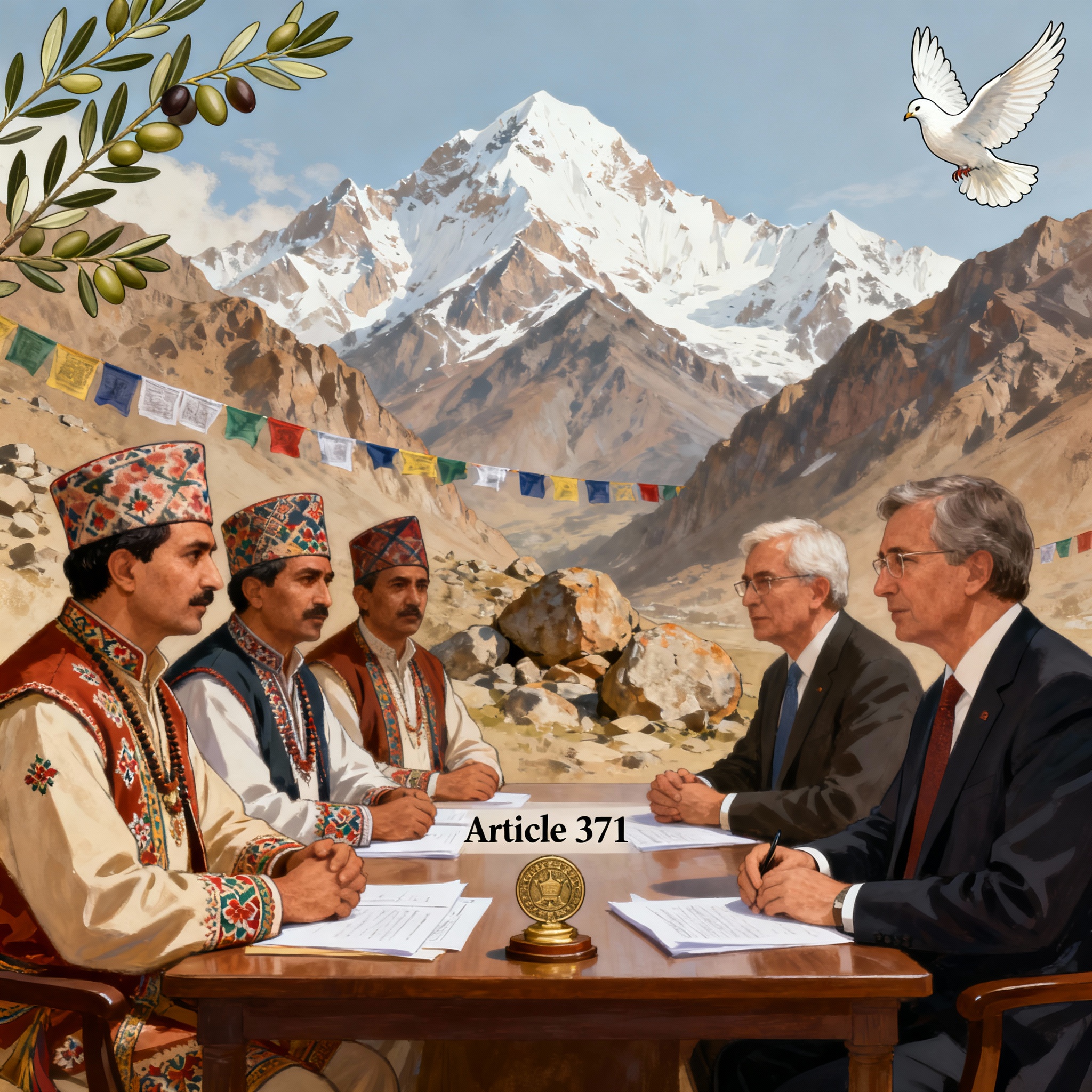
1. Ladakh delegates offered terms of Article 371 by Govt
General Studies Paper-II: Indian Polity and Governance
Context: Ongoing protests erupted after violence on September 24, 2025—four killed, 100+ injured in Leh.Climate activist Sonam Wangchuk detained under NSA during a hunger strike.
- MHA proposed Article 371 protections for Ladakh at October 22 talks, amid demands for statehood and Sixth Schedule status.
- Judicial inquiry into killings announced October 17, followed by resumption of talks October 19.
Main Issue
- Ladakh remains a Union Territory without its own legislature since 2019, post Article 370 abrogation.
- Fears of loss of tribal autonomy, cultural erosion, and demographic shifts due to outsider land access.
- LAB and KDA demand constitutional safeguards for land rights and self-governance.
- Violent escalation, hunger strikes, and detentions fuel discontent with central rule.
Article 371: Special Provisions for Certain States
What is it?: Part XXI of Constitution grants tailored protections to certain states for local needs.
What it Applies to: Applies to Maharashtra, Gujarat, Nagaland, Assam, Manipur, Andhra Pradesh, Sikkim, Mizoram, Arunachal Pradesh, Goa, Karnataka—each with customized sub-articles.
How it Helps: Restricts land ownership by outsiders, preserves tribal customs, establishes development boards—strengthening autonomy.
Examples
- Article 371A (Nagaland): State assembly’s consent needed for laws affecting tribal land/culture.
- 371F (Sikkim): Special Governor powers and reserved seats for groups.
- 371J (Karnataka): Development boards and job quotas in Hyderabad-Karnataka.
Sixth Schedule: Autonomous District Councils
What is it?: Empowers Autonomous District Councils for tribal regions, under Article 244.
Key Features
- Elected councils govern land, forests, administration, health, inheritance.
- Councils have judicial powers under custom; can set village courts.
- Financially autonomous—levy taxes, get grants; Governor nominates members.
- Applies to tribal areas in Assam, Meghalaya, Tripura, Mizoram only.
Why Ladakh Wants It?
- 97% ST population; wants protection from outsiders, safeguarding land, jobs, culture.
- Fears demographic and environmental loss post-UT status; Sixth Schedule ensures self-governance.
- The model is grounded in indigenous authority, unlike current centrally appointed system.
The Meeting
Who Met: LAB, KDA, Buddhist Association leaders met MHA officials and Ladakh MP; sub-committee follow-up planned.
What Happened
- MHA offered Article 371 for Ladakh; did not assure Sixth Schedule inclusion.
- Delegates restated demands; officials promised follow-up but no detainee release confirmed.
- Civil groups remain firm—awaiting written commitments and concrete actions.
Demands of the Ladakh Groups
| Demand | Explanation |
| Inclusion in Sixth Schedule | Autonomous councils, powers over land/culture, protection from outsider influx—97% ST region |
| Statehood for Ladakh | Restore legislative assembly, full self-governance, local decision-making lost since UT status |
| Ladakh Public Service Commission | Exclusive local job recruitment and reservations for natives |
| Two Parliamentary Seats | Separate Lok Sabha seats for Leh and Kargil, fairer representation |
| Release of Detainees | End NSA detentions (e.g., Sonam Wangchuk), rebuild trust |
| Judicial Probe into Killings | Independent inquiry into Sept 24 violence, ensure accountability |
| Ecological/Cultural Safeguards | Protect fragile ecosystem, Buddhist heritage, Himalayan identity from rapid development/climate risks |
Why Ladakh is Significant?
Strategic Location/Geopolitics
- Borders China (Aksai Chin) and Pakistan; a frontline defense region.
- Gateway to Central Asia via Karakoram Pass; historic trade crossroads.
- Houses key military bases, vital for national security.
Economic/Resource Potential
- Rich in minerals (rare earths, lithium); supports India’s green energy goals.
- Tourism hotspot: Pangong Lake, Nubra Valley; drives local economy but risks sustainability.
- Indus River tributaries important for irrigation and hydropower.
Cultural/Ecological Significance
- Unique tribal demography (Buddhist Leh, Muslim Kargil); historic monasteries and cultural heritage.
- Glaciers feed major Indian rivers; vital for climate research and biodiversity.
- Legacy buffer zone; past independent kingdom, now part of India’s multi-ethnic fabric.
2. Blue Flag Beaches: A Global Movement for Sustainability
General Studies III –Environment and Ecology
CONTEXT: Five beaches in Maharashtra—Shrivardhan, Nagaon, Parnaka, Guhagar, and Ladghar—received the prestigious Blue Flag certification in 2025.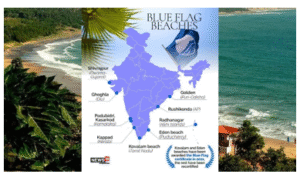
- This international recognition places Maharashtra among the top states promoting sustainable and clean coastal tourism.
What is the Blue Flag Certification?
- Global Eco-label: Blue Flag is an internationally recognized certification for beaches, marinas, and tourism boats that meet high standards in environmental quality, safety, and management.
- Governing Body: Awarded by the Foundation for Environmental Education (FEE), Denmark, a global leader in sustainable environmental education programs.
- India’s Participation: India joined the Blue Flag programme in 2018 to enhance sustainable coastal tourism.
Aims and Objectives
- Sustainable Tourism: Promotes eco-friendly tourism, protection of coastal ecosystems, and ensures safe, clean recreational spaces for all.
- Community Engagement: Encourages local awareness and involvement in maintaining coastal environments.
Main Certification Criteria
- Environmental Education: Educates the public about coastal ecosystems and involves the community in conservation.
- Climate Action: Supports energy-efficient facility development and measures resilience to climate change.
- Biodiversity: Conserves wildlife habitats and manages coastal vegetation.
- Pollution and Water Quality: Requires regular testing, strict waste management, and prevention of plastic/oil pollution.
- Accessibility: Mandates inclusive access for all, including persons with disabilities.
- Safety: Provides lifeguards, first aid, and emergency services to ensure visitor wellbeing.
Current Status of Blue Flag Beaches in India
- Total Certified: As of 2025, India has 18 Blue Flag certified beaches, with five new additions from Maharashtra this year.
- Regional Impact: Strengthens Maharashtra’s profile for eco-tourism and highlights state commitment to clean, green, and sustainable beach management.
Maharashtra’s five newly certified beaches demonstrate India’s progress in sustainable coastal tourism, meeting strict Blue Flag criteria for environmental quality, safety, and community engagement.
3. A path for a battered and broken Himachal Pradesh
General Studies Paper II: Indian Constitution
General Studies Paper III: Disaster and disaster management;
Context: Supreme Court took suo motu action on July 28, 2025, over HP’s growing environmental crisis after monsoon disasters.
- Catastrophic floods, landslides, and cloudbursts in 2025 highlighted unscientific development and infrastructure failures.
Supreme Court’s Intervention
Case
- Originated from a hotel’s challenge to a green belt notification in Shimla that barred construction on Tara Mata Hill.
- SC converted it into a PIL on statewide ecological threats, warning HP could “vanish from the map” if unchecked.
SC Action
- Registered suo motu writ petition and demanded reports on zoning, hydropower, roads, forests, and disaster management.
- Set affidavit deadline for October 28, 2025, and kept the door open for action in all Himalayan states.
Significance
- Positions judiciary as a key defender of Himalayan sustainability, potentially prompting wider reforms.
- Calls for urgent balance between economic growth and ecological safeguards in mountain policy.
The Environmental Crisis in Himachal Pradesh
- Geographical Fragility
- Young, steep Himalayas with fragile soils, frequent earthquakes, and high rainfall variability.
- Landslides and erosion accelerated by construction and deforestation.
- Increasing Disasters
- 2025 monsoon disasters killed hundreds, destroyed homes, and disrupted livelihoods.
- Rising disaster frequency linked to natural hazards compounded by human activities.
Unscientific Development Practices
Hydropower Projects
- 200+ projects fragment rivers, destabilize slopes, and alter sediment flow.
- Cumulative impacts often ignored; approvals granted for short-term gains.
Highways and Road Construction
- Hill cutting for roads destabilizes slopes and increases landslide risk.
- Projects often bypass environmental and geological safeguards.
Unplanned Urbanization
- Rapid, unregulated building on unstable mountain slopes; unsafe for disasters.
- Tourism-led sprawl strains local resources and ecology.
Policy Paradox: Laws vs. Reality
- Strong policies exist but enforcement is weak, leading to paper compliance and disasters on the ground.
| Policy Introduction | Goal | Reality Check |
| Himachal Pradesh State Disaster Management Policy | Risk-based planning, climate resilience | Poor enforcement, persistent disasters |
| Shimla Development Plan, green belt notification | Control urbanization, safeguard green spaces | Challenged in court, illegal construction |
| Environmental Impact Assessment (EIA) Notification | Safeguard ecosystems from large projects | Cumulative impacts overlooked |
| National Mission for Sustaining the Himalayan Ecosystem | Long-term research and adaptation policy | Limited ground action, rising vulnerabilities |
| Forest Conservation Act/State Policies | Restrict tree felling, save forests | Deforestation rampant for projects |
Misinterpretation of Climate Events
- Disasters blamed on climate change/nature, but local mismanagement and risky activities are major amplifiers.
- Hydropower and highways seen as “green” or “progress” despite worsening vulnerability.
Way Forward
- Strictly enforce cumulative EIAs for all projects and integrate hazard assessment.
- Adopt hill-friendly road designs and limit large-scale hydro development.
- Mandate community participation and local ecological expertise in planning.
- Shift policy from revenue focus to sustainability and disaster reduction.
- Use SC monitoring to ensure compliance, transparency, and periodic review of ecological health.
4. UNESCO Global Education Report 2025
GS Paper I – Indian Society: Women’s Empowerment:
GS Paper II – Governance and Social Justice: Welfare Policies:
Context: The UNESCO Global Education Report 2025 finds that 133 million girls globally are still out of school, despite 30 years since the Beijing Declaration (1995).
- The report highlights mixed progress and ongoing inequality in girls’ education worldwide, making it a key issue for social development and UPSC relevance.
 Key Findings of the UNESCO Global Education Report 2025
Global Trends
- School Enrolment Gains: Since 1995, 91 million more girls now attend primary school, 136 million more are in secondary education.
- Remaining Challenges: 133 million girls are still out of school globally, reflecting deep-rooted barriers.
Regional Disparities
- Parity Success: Central and South Asia have reached gender parity at the secondary level.
- Persisting Gaps: Sub-Saharan Africa and Oceania lag behind; e.g., in Mali and Guinea, less than 20% of girls finish lower secondary school.
Quality and Curriculum
- Sexuality Education: Only two-thirds of countries make sexuality education compulsory in primary school; many textbooks still reinforce gender stereotypes.
- Leadership Gap: Women dominate teaching but only 30% hold top positions in higher education, exposing structural barriers.
Economic and Societal Impact
- Transformative Impact: Educating girls is vital for poverty reduction, increasing female labor force participation, and inclusive growth.
- Economic Boost: The World Bank (2024) estimates closing the gender gap in education could increase global GDP by $15–30 trillion.
5. MoCA celebrates 9th UDAN Anniversary
Why in News
- The Ministry of Civil Aviation celebrated the 9th anniversary of the UDAN (Ude Desh ka Aam Nagrik) scheme, highlighting its impact on expanding affordable regional air connectivity in India.
About the UDAN Scheme
- Launch: Began on 21 October 2016, with the first flight between Shimla and Delhi on 27 April 2017.
- Objective: Make air travel accessible and affordable by connecting remote and regional areas to bigger cities.
- Vision: Democratize aviation and boost economic growth in tier-2 and tier-3 towns via affordable flights.
Key Features
- Viability Gap Funding (VGF): Government support keeps fares affordable for passengers and sustainable for airlines.
- Airfare Cap: Ticket prices are maintained within reach of the average citizen.
- Incentives: Includes airport fee waivers and tax benefits for operators.
- Multi-Stakeholder Approach: Involves central and state governments, AAI, and private companies in implementation.
- Expansion: UDAN 5.5 covers water aerodromes and heliports for last-mile access, enhancing coverage.
Achievements and Impact
- Network Growth: 649 routes now operational, connecting 93 airports, 15 heliports, and 2 water aerodromes.
- Passenger Benefit: 1.56 crore passengers served by 3.23 lakh UDAN flights.
- Investment: Over ₹4,300 crore disbursed as VGF; ₹4,638 crore spent on expanding regional airports.
- Airport Network: India’s total airports grew from 74 (2014) to 159 (2024).
- Innovations: New initiatives like Krishi UDAN and UDAN Yatri Cafes improve rural air access and inclusivity.
UDAN has made flying affordable for millions, fostered economic activity in small towns, and built a stronger, more inclusive airport network, celebrating nine years of transformative growth.
6. US-Australia rare earths deal is a start but won’t shake China dominance any time soon
GS-II: International Relations, Issue: U.S.-Australia Rare Earths Deal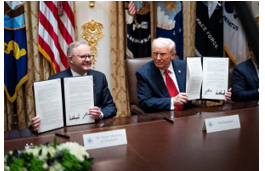
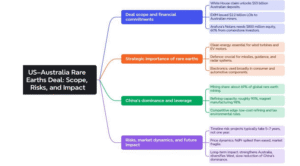
Context: The U.S. and Australia have signed a $3 billion agreement to enhance mining, processing, and investment in critical minerals and rare earths to reduce reliance on China, which currently dominates the global rare earth supply chain.
About Rare Earth Elements (REEs)
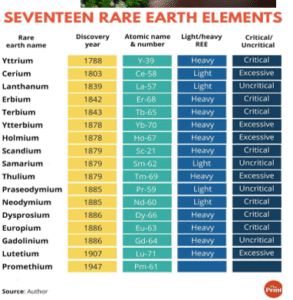
- REE are a group of 17 chemical elements. They comprise the 15 lanthanide elements, along with scandium and yttrium.
- They are relatively abundant in Earth’s crust.
- They are rare because they are found in low concentrations and mixed with other minerals, making them difficult and expensive to extract.
- REEs are used to make magnets for electric vehicles (EVs), wind turbines, weapons, etc.
- They are used in electric vehicle (EV) motors, medical devices, weaponry, etc.
- REEs are divided into Heavy (HREEs) and Light (LREEs).
- LREEs are abundant, while HREEs are more critical due to their high demand and low availability.
- Among LREEs, neodymium is the most critical as it is extensively used in all mobile phones, medical equipment and electric vehicles.
The U.S.–Australia rare earths deal promotes supply chain diversification, but China’s dominance endures, making the shift slow, costly, and technically challenging despite renewed investment confidence.
7. Harappan Site- Kotada Bhadli
General Studies Paper I: Ancient Indian History and Culture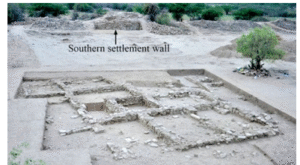
Context: The Harappan site of Kotada Bhadli in Kutch, Gujarat, has been identified by researchers as the earliest known caravanserai, dated to 2300–1900 BCE, reflecting advanced trade and logistical infrastructure in the Indus Valley Civilization.
About Kotada Bhadli – Harappan Site
- Location: Kotada Bhadli is located in the Kutch district, Gujarat, strategically along important inland trade routes linking major Harappan cities such as Dholavira, Lothal, and Shikarpur.
- Era and Function: Belongs to the Mature Harappan phase; functioned mainly as a stopover for traders and pack animals during long journeys, rather than as a permanent settlement.
- Trade Infrastructure: Served as a rural logistical hub, providing shelter, food, and security to Bronze Age traders and their caravans.
Key Structural Evidence
- Caravanserai Features: Excavations show fortified multi-room complexes, bastions, and large open courtyards for storage of goods and housing animals.
- Supporting Technologies: Ground-penetrating radar, isotopic analysis, and satellite mapping confirmed the site’s purpose and zoning.
Trade and Economic Insights
- Role in Harappan Trade: Kotada Bhadli acted as a key rest station connecting inland and coastal centers, demonstrating organized long-distance commerce in the Harappan network.
- Goods Movement: Artifacts found include items from distant regions, indicating the hub’s role in facilitating exchange between various parts of the civilization.
Significance
- Chronological Impact: Kotada Bhadli pushes back evidence of structured trade infrastructure in South Asia by over 2,000 years, predating the famous Silk Route.
- Economic and Administrative Advance: Reveals sophisticated planning, logistics, and support systems in the Harappan economy much earlier than previously believed.
- Historic Value: Highlights the broader reach and complexity of Harappan trade beyond just urban centers and port cities.
Kotada Bhadli’s discovery marks a major step in understanding the logistical backbone of the Harappan civilization, showing a well-organized network that supported large-scale commercial activity long before the Silk Route era.