1. Chandrayaan-2 makes the first-ever observation on lunar exosphere
General Studies Paper III: Science & Technology
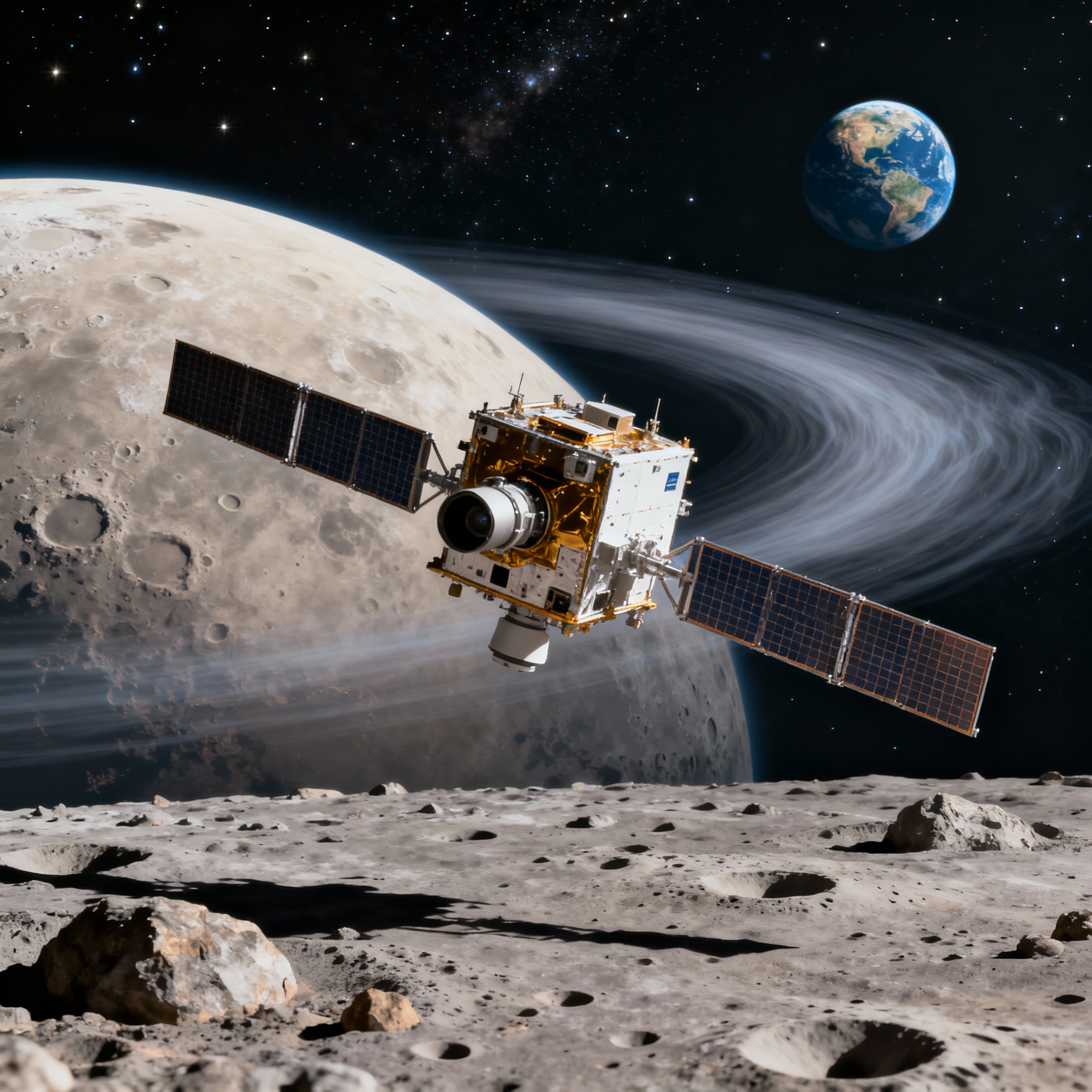
CONTEXT: ISRO’s Chandrayaan-2 orbiter (CHACE-2 payload) made the first-ever observation of a solar Coronal Mass Ejection (CME) directly impacting the Moon’s exosphere, confirming the CME’s powerful effect on lunar environment.
Background: Chandrayaan-2 Mission
- Chandrayaan-2, India’s second lunar mission, was launched on 22 July 2019 using GSLV Mk III-M1 from Sriharikota.
- Mission components: Orbiter (operational), Vikram lander, Pragyan rover (lander crashed, orbiter still working).
- Objectives: Soft-landing technology demonstration, study of lunar topography, mineralogy, exosphere, water signatures, a
 nd elemental abundance.
 - Status: Orbiter operational, major scientific objectives achieved except landing/roving.
| Feature | Detail |
| Mission Name | Chandrayaan-2 |
| Launch Date | 22 July 2019 |
| Launch Vehicle | GSLV Mk III-M1 |
| Components | Orbiter (operational), Vikram Lander, Pragyan Rover |
| Objectives | Soft landing; lunar surface, exosphere, elemental studies |
| Status | Orbiter operational; Lander/Rover lost on 6 Sept. 2019 |
What’s New: Discovery / Observation
- First empirical evidence: CME on May 10, 2024, caused direct, measurable enhancement in dayside lunar exosphere pressure and neutral density, validating prior models.
- Detects real-time changes due to space weather events on Moon.
What is a Coronal Mass Ejection (CME)?
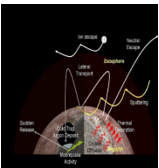
- CME is an explosive burst of solar plasma and magnetic field from the Sun.
- Ejects billions of tons of material at high speeds; causes space weather disturbances.
- Powerful CMEs impact planets, disrupt satellite and lunar environments.
What is the Lunar Exosphere?
- The Moon’s exosphere is its ultra-thin, outermost atmospheric layer.
- Composed of neutral atoms/molecules (helium, argon, sodium) with very low densities.
- Created by solar wind, radiation, meteoroid impacts; sensitive to solar events like CME.
What Did CHACE-2 Observe?
| Observation | Explanation |
| Pressure Increase | CME plasma impacted Moon, knocking off atoms, raising exospheric pressure |
| Higher Neutral Density | Enhanced release of neutral particles, confirmed by CHACE-2 readings |
| Event Specifics | Direct effect on dayside exosphere, during CME passage, then returned to baseline |
Why is this Observation Important?
(1) Scientific Importance
- Empirical data on solar-lunar exosphere interaction, previously only theorized.
- Deepens understanding of planetary atmospheres/exospheres affected by solar activity.
- Informs models for other bodies (Mercury, airless moons).
(2) Practical Importance
- Advance space weather forecasting for lunar missions.
- Helps in designing lunar habitats and shielding against radiation/particle surges.
- Guides strategies for resource utilization during solar events.
Broader Implications for Future Lunar Bases
- CME events can temporarily spike radiation and atmospheric particle density—bases need real-time monitoring.
- Infrastructure (solar panels, antennas) must withstand periodic space weather surges.
- Sustainable lunar resource extraction must factor in episodic exospheric changes.
- Data supports planning for international, long-term lunar research and colonization efforts.
About CHACE-2 Payload (Table)
| Parameter | Detail |
| Instrument Type | Quadrupole Mass Spectrometer with pressure gauge |
| Mass Range | 1–300 atomic mass units (amu) |
| Objective | Composition, distribution, and variability study of the lunar exosphere |
| Operation Mode | Continuous, covering all orbital seasons |
| Key Capability | Detects neutral species; measures spatial/temporal variation |
| Scientific Focus | Exospheric mapping; solar-lunar interaction studies |
What is “Space Weather”?
- Space weather describes solar activity (CME, solar flares, solar wind) and its effect on planets and spacecraft.
- Causes: Solar eruptions (CME, flares), magnetic storms.
- Effects: Satellite operations, GPS, power grids, astronaut safety—all can be disrupted.
- The Moon, lacking a magnetic field, is especially exposed to space weather
Conclusion: This landmark finding by Chandrayaan-2 highlights India’s expanding role in lunar science and advances knowledge of how solar storms impact the Moon. It lays a foundation for safer lunar missions and a deeper understanding of space weather—crucial for future permanent lunar settlements.
2. Fire in the sky
GS paper-II -Environment and Ecology
Context: The Supreme Court of India recently permitted the use of green crackers in Delhi-NCR during Diwali 2025, relaxing a previous ban due to air pollution and public health concerns. This marks a policy shift to balance cultural traditions with environmental priorities.
Background
- On Oct 15, 2025, the Supreme Court permitted NEERI-certified green cracker sales in Delhi-NCR from Oct 18-21, at notified locations only.
- Bursting restricted to open spaces on Oct 19-20, 6-7 AM and 8-10 PM; QR codes required, licences suspended for fakes/smuggling.
- CPCB and State PCBs monitor AQI daily; water sampling checks for pollutant traces.
Why Important?
- Delhi-NCR has severe winter pollution; firecrackers worsen respiratory health risks and disrupt daily life.
- Supports livelihoods in the firecracker industry (Delhi-NCR forms 70% of demand) while curbing emissions; green crackers emit 20-30% less PM than traditional.
- Enforcement remains challenging as bans often lead to smuggling and illegal use.
Supreme Court’s Position (2025 Order)
- Temporary relaxation as a balanced approach to uphold Diwali celebration yet safeguard clean air rights, per CJI Gavai.
- Only CSIR-NEERI and PESO-approved green crackers allowed; banned chemicals strictly prohibited.
- Real-time AQI tracking, strict location-wise monitoring; sales revoked if pollution spikes.
- Reverses July 2025 blanket ban, based on economic and practical impacts.
What Are Green Crackers?
- Eco-friendly fireworks by CSIR-NEERI; reduce PM, SO2, NO2 by 20-30%, cap noise at 125 dB.
- Features: smaller shell, no ash, dust suppressants, water vapor emission, QR for authenticity.
| Parameter | Conventional Firecrackers | Green Crackers |
| Composition | Barium nitrate, chlorate, metals | Safe oxidizers, water vapor, no barium |
| Emissions | High PM, SO2, NO2, ash | 20-30% less PM, SO2, NO2, minimal ash |
| Noise | Up to 160 dB | 110-125 dB |
| Shell Size | Large, more material | 30% smaller |
| Environmental | Significant pollution, health impacts | Cleaner, lesser harm, but not zero-emission |
| Approval | Unregulated | CSIR-NEERI certified, QR traceability |
The Pollution Challenge: Why This Matters?
- Post-Diwali AQI often in “severe” zone (300+); pollutants trapped via winter inversions cause respiratory illness spikes.
- Firecrackers cause a sharp, short-term PM spike (~10-15%), but amplify risks for vulnerable populations.
Major Pollution Sources in Delhi-NCR
| Source | Contribution (Approx.) | Period/Impact |
| Vehicles | 39-51% | Year-round; peak in winter |
| Road Dust | 20-38% | Construction boom, dry seasons |
| Industries | 25-44% | Ongoing, higher in NCR |
| Stubble Burning | 7-35% | Oct-Nov, episodic |
| Biomass/Waste Burning | 10-24% | Winter, festivals |
| Secondary Aerosols | 25-35% | Year-round, enhanced by stagnant air |
| Firecrackers | ~10-15% (seasonal spike) | Festival days |
Scientific Insight
- Pollution is multi-source; meteorology amplifies winter effects 2-3x.
- Green cracker technologies (SWAS, STAR) cut PM by 20-30%, but are not emission-free.
- Historical data: extended rains, GRAP-like interventions can reduce AQI substantially.
The Balancing Act vs. Environment
| Dimension | Explanation |
| Cultural | Diwali crackers symbolize tradition, support 5 lakh jobs |
| Environmental | Spikes AQI; green crackers cut effects, but need robust enforcement |
| Economic | ₹6,000 crore industry; bans hurt, green shift creates jobs |
| Social/Health | Festivals boost morale but raise ER visits; awareness promoted |
| Policy | Courts move from ban to regulated use, per SDG 13, for sustainability |
The Way Forward
- Comprehensive Air Quality Mgmt: Strict GRAP enforcement, regional coordination, daily AQI dashboard.
- Promote Awareness: Campaigns, “Green Delhi” app, community eco-zones, school outreach.
- Technological Shift: Scale up green cracker production, QR traceability, AI monitoring, EV infra.
- Long-Term Reforms: Clean fuels, 50% EV target by 2030, mechanical sweeping, strict construction norms.
- Judicial Prudence: Favor science-based annual reviews over festival-time bans.
- Ethical Environmentalism: Move to responsible celebration, virtual events, sync with SDG 13 goals.
3. FAO Celebrates 80 Years of Partnership with India on World Food Day 2025
CONTEXT: On World Food Day 2025 (October 16), the Food and Agriculture Organization (FAO) of the UN and the Government of India celebrated 80 years of partnership in New Delhi.
- The event, themed “Hand in Hand for Better Food and a Better Future,” marked FAO’s global 80th anniversary celebration.
- The partnership highlights India’s transformation from a food-deficient country to a global food-secure and surplus producer, contributing significantly to global nutrition and agricultural sustainability.
Key Highlights of the Event
- Speaker: Dr. Devesh Chaturvedi, Secretary (Agriculture & Farmers Welfare), delivered the keynote address.
- Acknowledgments: FAO’s technical support in India’s self-sufficiency in food grains, crop diversification, and climate-resilient agriculture.
- Public Stockholding & MSP: Recognized FAO’s role in strengthening food security systems (MSP, NFSA, and public distribution) that ensure access for 800+ million Indians.
- Launch Highlight: FAO released a coffee table book titled “Sowing Hope, Harvesting Success” chronicling 80 years of India–FAO collaboration.
Significance
- Marks a milestone in global food governance, showcasing how international partnerships drive local transformation.
- Reinforces India’s role in achieving SDG 2 (Zero Hunger) through nutrition-sensitive, sustainable, and digital agriculture (AgriStack, natural farming).
- Illustrates FAO’s evolving collaboration with India in climate adaptation, rural livelihoods, and agri-food innovation.
4. Graded Response Action Plan (GRAP):
What is GRAP?
- Statutory framework for air pollution control in Delhi-NCR.
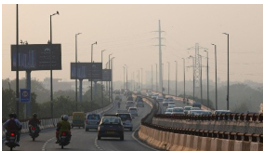
- Specifies progressive, stage-wise interventions as air quality deteriorates.
- First adopted in 2017 by Supreme Court directive; revised by CAQM in 2024.
Aim: Establish graded, preemptive action to manage worsening pollution, based on AQI levels and weather forecasts.
Stages and Criteria
| Stage | Category | AQI Range | Key Actions |
| I | Poor | 201–300 | Dust control, stop garbage burning, vehicle norms |
| II | Very Poor | 301–400 | Mechanical sweeping, regulate DG sets, halt coal/firewood use |
| III | Severe | 401–450 | Restrict BS-III/IV vehicles, construction bans |
| IV | Severe + | Above 450 | Ban truck entry, halt C&D projects, WFH orders |
Key Features
- Dynamic Implementation: Measures activated as AQI worsens or forecasts show impending pollution peaks.
- Cumulative Measures: Higher stages add restrictions but retain previous stage actions.
- Multi-agency Coordination: CAQM leads implementation; CPCB, SPCB, Urban Local Bodies, Traffic Police involved.
- Predictive Enforcement: Actions start before AQI reaches trigger levels, to prevent emergencies.
Context: Stage II Invoked
- CAQM invoked Stage II measures as Delhi AQI crossed 300 (“very poor” air).
- Actions include mechanical sweeping, tighter monitoring of construction and demolition (C&D), and regulating generator use.
- All prior Stage I actions (dust control, vehicle norms, etc.) continue alongside.
- Coordinated response aims to avoid escalation to “severe” (Stage III) and “severe+” (Stage IV) pollution emergencies.
Related Agencies and Legislation
- CAQM: Leads operationalization and oversight.
- CPCB/SPCB/ULBs: Implement field measures.
- Environment Protection Act, 1986: Legislative basis for GRAP and pollution controls.
Categories/Tags
- Air Quality Management, AQI, CAQM, Delhi-NCR, Pollution Control, Environment Protection Act.
5. International Maritime Organization (IMO)
Context: At the International Maritime Organization (IMO) meeting in London, 57 nations voted to delay the adoption of the framework for carbon-free global shipping by one year following U.S. opposition.
- The framework aimed to introduce carbon pricing and cleaner fuel standards for global shipping, but divisions among major economies led to postponement.
About International Maritime Organization (IMO)
What is It?
- UN specialized agency regulating safety, security, and environmental standards in international shipping.
- Provides a global regulatory framework ensuring fair competition and environmental responsibility among member nations.
Establishment: Created by UN convention (1948), entered into force in 1958, and held its first meeting in 1959.
Headquarters: Located in London, United Kingdom.
Aim: To ensure safe, secure, efficient, and sustainable global maritime transport, minimizing unfair economic advantages through environmental neglect.
Key Functions
- Formulate conventions like SOLAS (Safety of Life at Sea) & MARPOL (Pollution from Ships).
- Regulate ship safety, design, and disposal standards for pollution control.
- Develop anti-pollution rules to limit marine and air contamination by ships.
- Oversee training and certification of seafarers globally.
- Support UN SDG 14 (Life Below Water) through sustainable maritime transport initiatives.
Framework for Carbon-Free Shipping
What It Is?
- A key initiative under IMO’s 2023 Greenhouse Gas (GHG) Strategy, targeting net-zero emissions from shipping by 2050.
Aim: Introduce a global fuel standard and a carbon pricing mechanism to cut carbon intensity by 40% by 2030 and achieve complete decarbonization by mid-century.
Features
- Mandates gradual shifting from fossil fuels to green hydrogen and ammonia.
- Establishes a carbon-pricing model to penalize high emissions and fund green innovation.
- Implementation begins 2027, aligned with Paris Agreement objectives.
- Promotes innovation and R&D for efficient marine fuels.
- Ensures equitable implementation by providing financial aid and technology access to developing countries.
Significance of the Delay
- The delay reflects conflicts between developed nations pushing regulations and developing nations demanding financial and technological support for compliance.
- Postponement is expected to impact the timeline for global shipping decarbonization and related climate targets under the Paris Agreement