1. 20 years of Right to Information (RTI) Act
GS PAPER II-polity: Indian Constitution
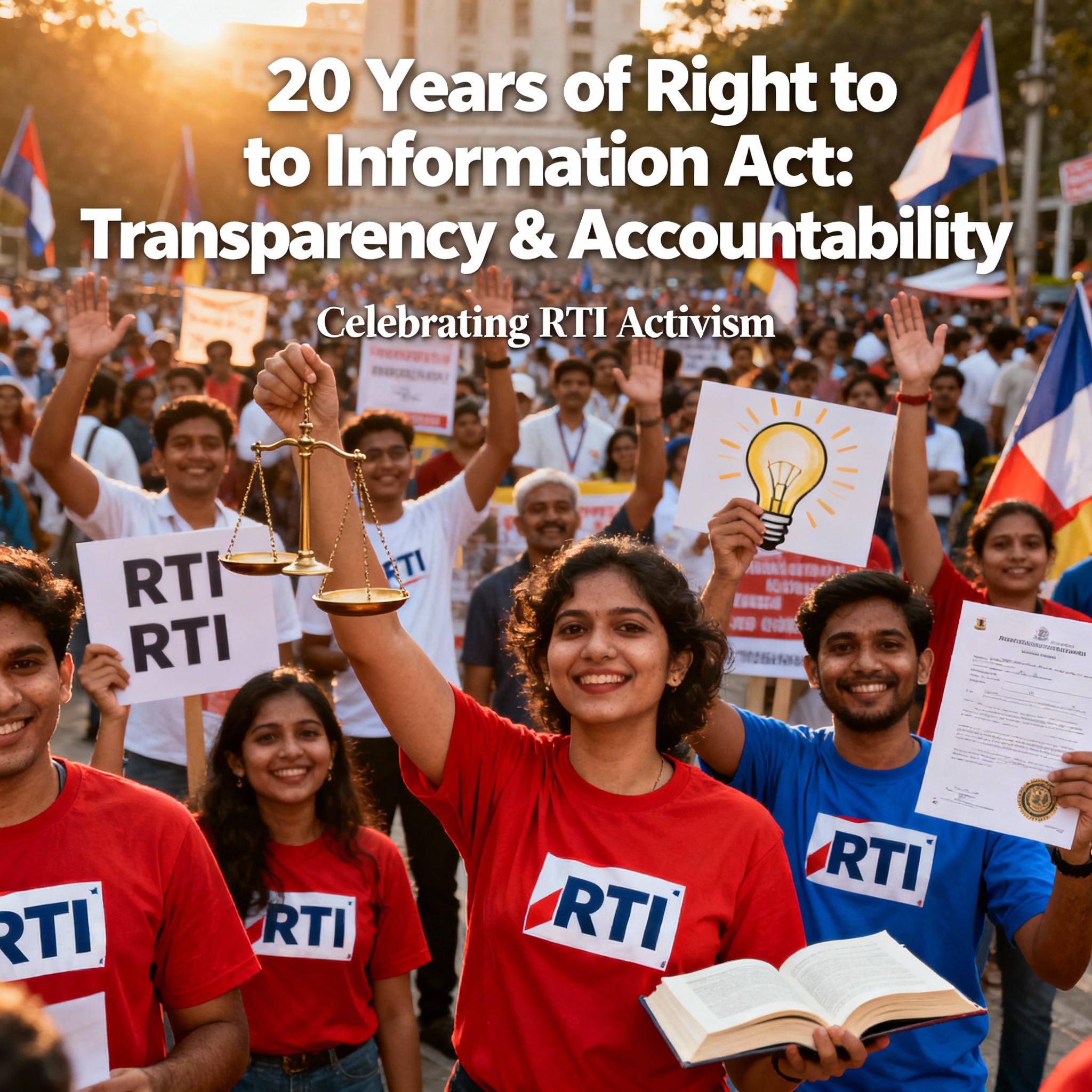
Context: RTI activists across India observed 20 years of the Right to Information Act, 2005, which came into force in October 2005—marking two decades of advancing transparency and accountability in public governance.
Right to Information (RTI) Act, 2005
- Enactment: Passed by Parliament in 2005, replacing the Freedom of Information Act, 2002.
- Primary Goal: Empower citizens to seek information from public authorities, fostering transparency, accountability, and good governance.
- Coverage: Applies to Central, State, and Local Governments, PSUs, statutory authorities, and bodies substantially financed by public funds.
- Overriding Provision: Section 22 ensures RTI has precedence over any other law restricting access to information.
Constitutional Foundation
- Derived From: Article 19(1)(a) – the Right to Freedom of Speech and Expression.
- Judicial Recognition: The Supreme Court has affirmed that access to information is integral to the freedom of expression.
- Constitutional Safeguards: Articles 32 and 226 enable citizens to approach the Supreme Court and High Courts for enforcement.
- Promotes: Articles 14 and 21 by fostering equality, transparency, and participatory governance.
Timelines for Response
- General Cases: Within 30 days of RTI request submission.
- Matters Concerning Life or Liberty: Response within 48 hours.
Information Exemptions
• Section 8(1): Restricts disclosure affecting national security, sovereignty, strategic or economic interests, or foreign relations.
• Section 8(2): Permits disclosure if public interest outweighs harm to protected interests.
Proactive Disclosure by Authorities
• Mandates digitization of records and regular publication of key information to reduce formal RTI requests.
RTI (Amendment) Act, 2019
• Changes Introduced: Removal of fixed 5-year tenure and salary parity with Election Commissioners.
• New Provision: Central Government empowered to define tenure, salary, and service conditions of CIC and ICs.
• Impact: Widely criticized for potentially undermining institutional independence.
Institutional Mechanisms
Central Information Commission (CIC)
• Composition: Chief Information Commissioner + up to 10 Information Commissioners.
• Appointment: Made by the President on the recommendation of a committee including the Prime Minister (Chairperson), Leader of Opposition (Lok Sabha), and a Union Cabinet Minister.
• Tenure: As prescribed by the Central Government or until 65 years of age.
• Functions:
Hear appeals and complaints under RTI.
Exercise civil court powers for summoning evidence.
Conduct suo motu inquiries for systemic violations.
State Information Commissions (SICs)
• Composition: State Chief Information Commissioner + up to 10 Information Commissioners.
• Appointment: By the Governor on advice of a committee comprising Chief Minister (Chairperson), Leader of Opposition, and a State Cabinet Minister.
• Eligibility: Eminent persons in public life, unaffiliated with political or profit-making bodies.
• Role: Ensure RTI compliance and grievance redressal at the state and local levels.
2. A green transition accelerating at express speed
GS paper III -Economics -Infrastructure: Energy, Ports, Roads, Airports, Rail
Context: India successfully conducted its first trial of a hydrogen-powered railway coach at the Integral Coach Factory, Chennai, in July 2025, marking a major advance in Indian Railways’ push for sustainable, low-carbon mobility and net-zero emissions.
Indian Railways’ Decarbonisation Journey Strategic Vision
• Net-Zero Target: Indian Railways aims to achieve net-zero carbon emissions by 2030, setting an example globally by achieving this goal decades earlier than India’s national commitment.
• Urban and National Impact: The rail network supports approximately 24 million passengers and transports 3 million tonnes of freight daily, directly contributing to India’s NDCs under the Paris Agreement.
India’s Broader Energy Transition (2025)
• Power Shift: Over 50% of India’s power capacity (476 GW) is now from non-fossil sources, with robust solar (110.9 GW), wind (51.3 GW), and increasing nuclear capacity (8.8 GW).
• Universal Electrification: All villages electrified, with near-universal household access; but challenges remain in clean cooking fuel adoption and fossil fuel dependency.
Green Initiatives in Indian Railways
Network Electrification
• Electrification Drive: Nearly 45,000 km of broad-gauge routes have been electrified, covering 98% of the Indian Railways network and yielding substantial diesel and GHG emissions reduction.
Renewable Energy Integration
• Clean Traction Power: Installed capacity of 756 MW (553 MW solar, 103 MW wind, 100 MW hybrid), with over 2,000 railway stations powered by solar.
Hydrogen for Heritage
• Flagship Programme: “Hydrogen for Heritage” plans to deploy 35 hydrogen trains to operate on non-electrified routes, starting with the first prototype coach in 2025.
Modernisation and Efficiency
• Green Buildings: Multiple railway buildings now have “Shunya” Net-Zero certification from BEE.
• Advanced Rolling Stock: Adoption of lightweight coaches, regenerative braking, and more efficient locomotives.
Hydrogen Coach Innovation
• Technology: Utilises fuel-cell technology for electricity generation, producing only water vapour as an emission-free by-product.
• Design Purpose: Tailored for non-electrified heritage and remote routes where electrification is costly.
• Global Standing: Puts India alongside Germany and Japan in hydrogen-powered rail systems.
Climate Finance & Governance
Green Financing
• Bond Issuance: India issued ₹58,000 crore in green bonds; ₹42,000 crore directed to electric and green rail projects.
• Multilateral Support: World Bank’s $245 million project targets rail decongestion and emissions reduction.
Institutional Framework
• IRFC Loans: Indian Railway Finance Corporation is a major financial driver in renewable upgrades and green infrastructure.
Policy and Operational Priorities
• Green Power Procurement: Long-term procurement from solar and wind sources to cleanly power trains.
• Multi-modal Mobility: Major stations being redeveloped as eco-friendly transport hubs with EV charging, e-buses, and cycle facilities.
• Freight Transport Shift: Emphasis on electric, LNG, and hydrogen vehicles for greener last-mile logistics.
• Behavioural Change: Green certification and carbon labelling for trains, plus public campaigns to increase awareness.
Projected Impact by 2030
• Emissions: Net-zero railway operations will eliminate an estimated 60 million tonnes of CO₂ yearly, equivalent to taking 13 million cars off the road.
• Economic Savings: Electrification and energy efficiency are projected to save over ₹1 lakh crore by 2030.
• Global Benchmark: Indian Railways is poised to become the world’s largest net-zero rail network—a global leader in sustainable state-run transport.
Conclusion
The hydrogen-powered coach stands as a symbol of technological, financial, and policy convergence for sustainable mobility in India. Indian Railways’ decarbonisation is both a climate imperative and an innovation model for developing economies, anchoring India’s net-zero and green industrialisation vision for the future.
3. Snow leopard
General Studies Paper III (GS-3): Conservation, Environmental Pollution & Degradation
Context: A recent Stanford-based global study revealed that the snow leopard has the world’s lowest genetic diversity among all big cats, raising concerns for its long-term survival and adaptability.
| Parameter | Description |
| Common Name | Snow Leopard |
| Scientific Name | Panthera uncia |
| Habitat | Rugged mountain ranges across 12 Asian countries |
| Notable Feature | Long tail for balance; thick fur for insulation |
| Region in India | Himalayas: Jammu & Kashmir, Ladakh, Himachal Pradesh, Uttarakhand, Sikkim |
| Diet | Carnivorous – Preys on wild ungulates, livestock |
Genetic Diversity: Meaning & Study Findings
| Parameter | Details |
| Meaning of Genetic Diversity | Variety of genes within a species, crucial for resisting diseases and adapting to changes |
| Key Study Finding | Snow leopards have the lowest heterozygosity among big cats, due to persistently small population sizes over evolutionary time |
| Study Method | Whole-genome sequencing of 37 snow leopards by Stanford University scientists |
| Findings Explained | The low genetic diversity likely not due to recent inbreeding, but centuries of small population size, leading to gene ‘purging’ |
| Adaptive Impact | Persistent low genetic diversity could make snow leopards vulnerable to diseases and environmental changes |
| Unique Purging Process | Historically, harmful mutations were weeded out since unsuccessful reproducers gradually disappeared (purging by inbreeding) |
Why is Low Genetic Diversity Concerning?
• It can reduce the ability to adapt to new diseases or rapid environmental changes.
• Increases risk from threats like habitat loss, climate change, and reduced prey.
• May diminish long-term survival prospects despite current population health.
Global Population & Conservation Status
| Parameter | Data / Status |
| Global Population | 4,500–7,500 individuals (approximate estimate) |
| IUCN Status | Vulnerable (downlisted from Endangered in 2017, but still does not meet secure criteria) |
| Population Trend | Stable or declining in many areas |
Snow Leopards in India
| Region | Estimated Population (2023) | Major Indian Habitats |
| Ladakh | ~200 | Ladakh Range, Hemis NP, Changthang (J&K/Ladakh) |
| Himachal Pradesh | 51 | Spiti Valley, Kibber WLS, Great Himalayan NP |
| Uttarakhand | 27 | Nanda Devi Biosphere Reserve, Gangotri |
| Sikkim | 20 | Khangchendzonga National Park |
| Arunachal Pradesh | 5 | Dibang Valley, Tawang |
| Total (India) | About 350–400 |
Major Threats
| Threat | Description |
| Habitat Loss | Infrastructure, development, and climate change reduce habitat quality |
| Prey Decline | Loss or reduction of wild prey due to livestock competition and hunting |
| Poaching | Hunted for fur, bones, and illegal trade |
| Human-Wildlife Conflict | Retaliatory killings over livestock predation |
| Fragmentation | Populations isolated due to roads, dams, and urbanization |
| Climate Change | Alters habitat suitability and prey availability |
Ecological & Human Significance
• Keystone Species: Controls prey populations, helping maintain ecosystem balance in high-altitude Asian landscapes.
• Cultural Value: Revered in local folklore and traditional practices across Himalayan communities.
• Livelihoods: Ecotourism around snow leopard habitats can support local economies when managed sustainably.
Conservation Efforts in India
Project Snow Leopard (2009)
• Launched by the Ministry of Environment, Forest and Climate Change for ecosystem-based conservation across the Himalayan landscape.
• Emphasizes landscape-level planning, community involvement, and research.
National Snow Leopard Ecosystem Protection Programme (NSLEP)
• Launched to implement long-term conservation strategies, improve habitat connectivity, and strengthen protection.
NGO & Institutional Efforts
• Wildlife Institute of India, Nature Conservation Foundation (NCF), Snow Leopard Trust, WWF and state forest departments work on research, community programs, and monitoring.
Zoo & Captive Breeding
• Some snow leopards are bred in captivity in Indian zoos; such efforts help with education and potential future reinforcement if needed.
Study Insights (Stanford & Global Collaboration)
| Parameter | Snow Leopard Findings |
| Sampling | 37 whole-genome sequences (largest dataset so far) |
| Genetic Diversity | Lowest among all big cats |
| Cause of Low Diversity | Persistently small, isolated populations; not just recent inbreeding |
| Impact | Effective removal of harmful mutations (“purging” effect) in small populations |
| Future Concern | Low adaptability to new diseases and environmental changes |
Policy and Research Challenges
• Securing funding and field research permissions, particularly in transboundary regions.
• Harmonizing conservation strategies among 12 snow leopard range countries.
• Addressing climate-induced habitat change and conflicts with local livelihoods.
• Enhancing anti-poaching enforcement and reducing illegal trade.
• Expanding public involvement and community stewardship in fragile mountain ecosystems.
4. RRI technique yields certified randomness with one qubit
GS paper III – science and technology Achievements of Indians In S&T
Context: The Raman Research Institute (RRI), Bengaluru, has successfully mastered a landmark technique to generate and certify true quantum randomness using a single qubit via the Leggett–Garg Inequality (LGI) framework. This achievement has set a new benchmark for practical and accessible quantum-secure solutions, attracting global attention.
What is Quantum Randomness?
• Definition: Quantum randomness refers to complete unpredictability inherent in quantum processes—outcomes that are fundamentally unknowable until measured, arising directly from the laws of quantum physics.
• Contrast with Classical Systems: While conventional computers use pseudorandom number generators (which are ultimately deterministic if the seed is known), quantum systems provide unpredictability even in principle.
• Significance: This kind of randomness is critical for areas like cryptography, data security, scientific modeling, and online transactions, where predictability could be exploited by hackers or produce unreliable results.
RRI’s Breakthrough: Certified Quantum Randomness with One Qubit
• Major Discovery: The RRI team led by Prof. Urbasi Sinha demonstrated, for the first time, that certified quantum randomness can be generated and verified using just a single qubit on a conventional cloud-based IBM quantum computer.
• Accessibility: This technique eliminates the need for expensive lab setups or elaborate multiparticle experiments—making certified randomness generation possible even remotely and affordably.
• Key Outcome: The method proves that even imperfect or noisy quantum computers can reliably produce random numbers that are provably unpredictable and fundamentally secure.
Leggett–Garg Inequality (LGI)–Based Certification: How it Works
• Foundation: The LGI is a test that distinguishes between classical (predictable) and quantum (intrinsically unpredictable) behaviors.
• RRI’s Approach: The research involved measuring a single qubit at three different times and analyzing whether its behavior conformed to quantum mechanics rather than classical realism.
• Critical Checks:
LGI Violation: Confirmed quantum, not classical, randomness.
No Signalling in Time: Ensured each measurement was independent, ruling out hidden or device-based interference.
• Result: Fulfilling both standards means the randomness obtained was “certified” as truly quantum, not a result of device noise or external manipulation.
Applications and Broader Impact
• Cybersecurity: Enables creation of absolutely unpredictable encryption keys for securing sensitive data and online communications.
• Cloud Quantum Access: Allows users and researchers worldwide to generate and use certified random numbers from cloud-based quantum computers.
• Quantum Device Testing: Acts as a direct benchmark to test and validate the quantum nature and reliability of various quantum computers.
• Better Science and AI: Essential for high-integrity simulations, artificial intelligence, and unbiased data analysis dependent on unpredictability.
• Strategic Value: Positions India as a global leader in practical quantum technology and digital security solutions as part of the National Quantum Mission.
Key Scientific Message
This work affirms that genuine randomness is a fundamental part of nature, validating a central prediction of quantum theory. It also democratises quantum-certified randomness, making high-grade cryptographic tools accessible for global digital security and scientific innovation.
5. Volga River
GS paper I: Geography -Salient Features of World’s Physical Geography
Volga River
Geographic Features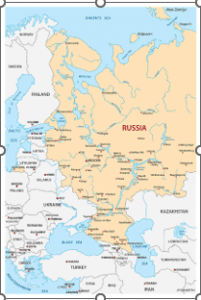
• Longest River in Europe: Measures approximately 3,500 km, starting in the Valdai Hills northwest of Moscow and terminating at the Caspian Sea near Astrakhan.
• Drainage Basin: Covers 1.35 million sq. km, making it one of Europe’s largest river systems; its major tributaries include the Kama, Oka, Vetluga, and Sura.
Historical and Strategic Importance
• World War II Front: The Volga was a decisive location during the Battle of Stalingrad, playing a major role in Russian military history.
• Symbol of Unity: Often called “Mother Volga,” this river is deeply woven into Russian identity and folklore, representing endurance and national unity.
Economic Significance
• Agricultural Output: Supports about a quarter of Russia’s agricultural production and is vital for irrigation.
• Industrial Activities: Facilitates industrial fishing, oil refining, shipbuilding, and hydroelectric power.
• Transportation Network: Linked to the Baltic, Black, and Caspian Seas by canals and reservoirs, forming the backbone of Russia’s inland transportation system.
Urban and Industrial Corridor
• Major Cities: Key Russian urban centers such as Kazan, Samara, Nizhny Novgorod, and Volgograd are established along its banks, creating an industrial-agricultural core region.
Ecological and Biodiversity Value
• Biodiversity Hotspot: The river and its delta support approximately 260 bird species and 70 fish species.
• Environmental Challenges: Pollution and ecological pressures threaten the river’s rich biodiversity and fisheries.
6. Siddi Tribes
GS PAPER I: Indian society -Salient features of Indian Society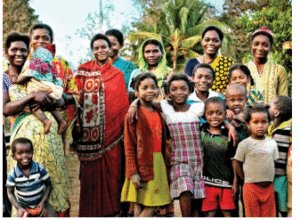
Context: President Droupadi Murmu met members of Gujarat’s Siddi Particularly Vulnerable Tribal Groups (PVTGs) community and praised their 72% literacy rate as a sign of social progress.
About the Siddi Community:
• Overview: An Afro-Indian tribal group descended from Bantu-speaking peoples of Southeast Africa, brought to India via the Indian Ocean slave trade (7th–19th centuries).
• Arrival in India: First arrived at Bharuch port (628 CE) with Arab traders; major influxes during Muhammad bin Qasim’s conquest (712 CE) and later under Portuguese and British.
• Migration & Settlement: Brought as soldiers, sailors, slaves, and servants; some escaped bondage to form independent forest settlements.
• Genealogy: Studies show 60–75 % African admixture mixed with Indian and Portuguese ancestry accumulated over two centuries.
• Geographic Distribution: Concentrated in Karnataka (Uttara Kannada, Belgaum, Dharwad) and Gujarat (Junagadh, Gir-Somnath, Saurashtra); smaller groups in Maharashtra, Goa, Telangana, Andhra Pradesh; total population 40 k–2.5 lakh.
• Historical Role: Served in Deccan Sultanate and Nizam armies; most famous figure, Malik Ambar (1600–1626), Ethiopian-origin prime minister of Ahmadnagar (now Ahilyanagar).
Cultural and Demographic Features:
• Social Status: Recognised as Scheduled Tribe (ST) in five regions and as a Particularly Vulnerable Tribal Group (PVTG).
• Language & Culture: Speak regional languages, Gujarati, Konkani, Marathi, Kannada, but retain African musical and spiritual traditions, notably the Goma/Dhamaal dance rooted in Ngoma drumming and ancestral worship.
• Religion: Predominantly Muslim (≈ 99 % in Gujarat) with Hindu and Christian minorities; practices blend Sufi, African, and Indian folk elements.
• Livelihoods & Economy: Depend on agriculture, forest labour, crafts, and daily wage work; socio-economic deprivation and limited access to education, health, housing persist.
• Cultural Continuity: Maintain African-Indian fusion in music, attire, and cuisine; Marfa music in Hyderabad and Dhamaal dance near Sasan Gir remain iconic.
• Sports & Identity: Active in boxing and football, using sport for youth empowerment and social mobility.
7. 2025 Nobel Prize in Economic Sciences
GS-III (Economy, growth, innovation, development)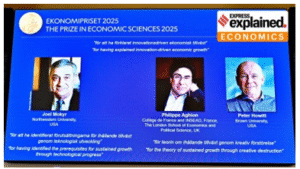
Context: The 2025 Nobel Prize in Economic Sciences was awarded to Joel Mokyr, Philippe Aghion, and Peter Howitt for their landmark work on how innovation drives economic growth through the process of creative destruction and technological progress.
Nobel Economics Prize:
• Full Title: Sveriges Riksbank Prize in Economic Sciences in Memory of Alfred Nobel.
• Established: 1968 by Sweden’s central bank, not included among the original Nobel Prizes instituted by Alfred Nobel in 1895.
• Award Ceremony: Presented along with other Nobel Prizes on December 10, Nobel’s death anniversary.
• Components: Diploma, gold medal, and a prize money (2025: roughly $1.2 million).
• Selection: Administered by the Royal Swedish Academy of Sciences, Sweden.
2025 Nobel Economics Laureates
Name Affiliation Contribution
Joel Mokyr Northwestern University Studied the impact of scientific knowledge, cultural openness, and Enlightenment institutions on the Industrial Revolution and economic growth.
Philippe Aghion Collège de France, INSEAD, LSE Developed the Schumpeterian theory of innovation-driven growth, focusing on creative destruction.
Peter Howitt Brown University Co-developed the Aghion–Howitt Growth Model integrating firm-level innovation into macroeconomic growth.
Main Contributions of the Winners
Joel Mokyr
• Differentiated “prescriptive knowledge” (know-how) from “propositional knowledge” (scientific understanding).
• Showed how the Enlightenment fostered intellectual openness and acceptance of disruptive innovation.
• Linked the Scientific Revolution to a shift where invention and craftsmanship became drivers of economic and societal change.
Philippe Aghion & Peter Howitt
• Co-created the Schumpeterian Growth Model (1992), mathematically explaining how innovation, competition, and firm turnover sustain long-term growth.
• Illustrated the concept of “creative destruction,” where new entrepreneurs replace incumbent firms, stimulating stable economic progress.
• Integrated innovation, competition, R&D, savings, and markets into a unified framework for understanding dynamic growth.
Key Takeaways from the Nobel Committee
• The research explains why continuous innovation—not just capital and labor—fuels modern economic development.
• Emphasizes that economic stagnation was once the norm; persistent growth is a recent phenomenon thanks to innovation and supportive institutions.
• Offers new ways for policymakers to understand the links between knowledge creation, competition, and prosperity.