1. India–Afghanistan Relations
General Studies Paper II –International Relations, India and its Neighbourhood Relations
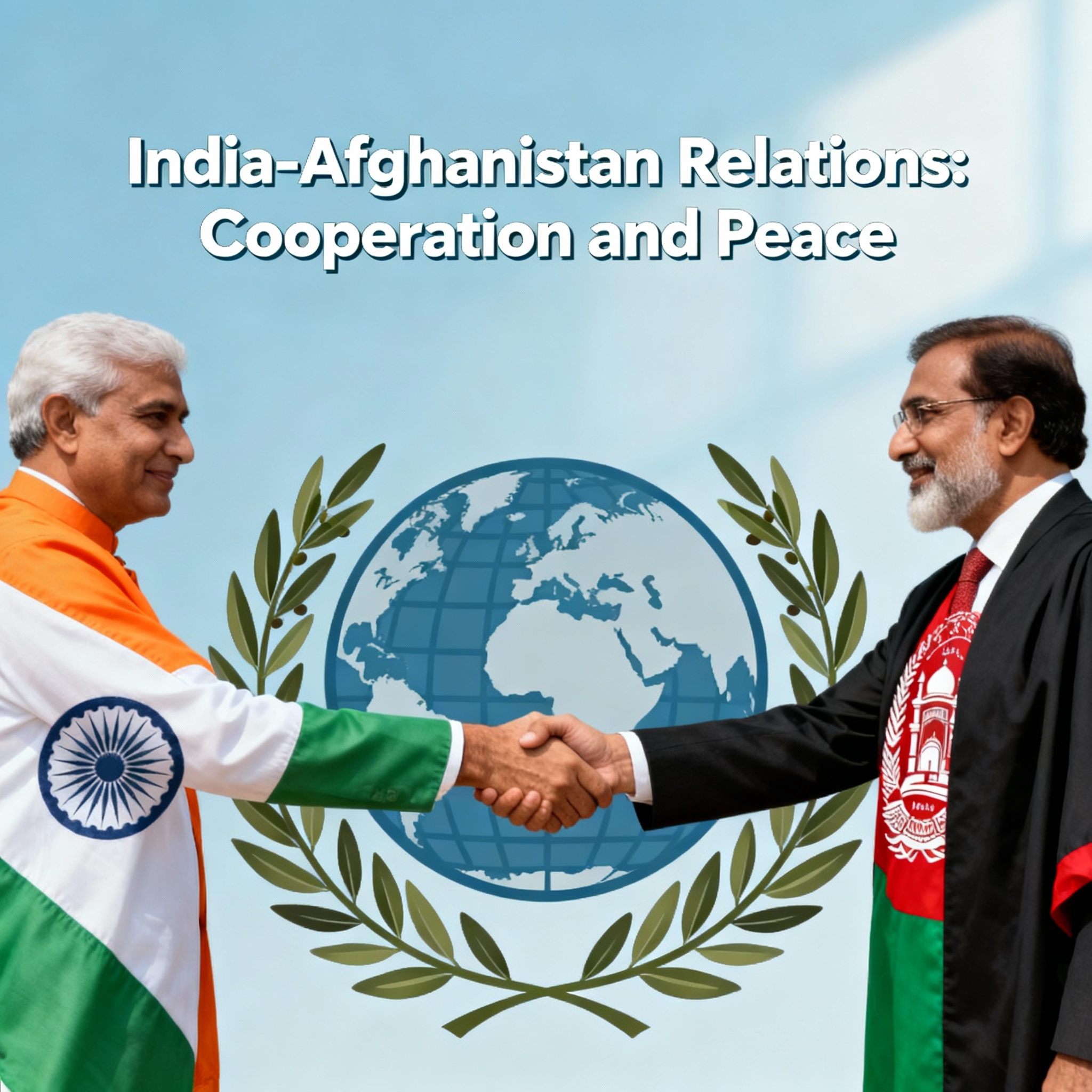
Context: India announced the upgrade of its ‘technical mission’ in Kabul to full embassy status in October 2025, marking a strategic shift in its diplomatic approach to Taliban-ruled Afghanistan.The upgrade was declared during the visit of Taliban Foreign Minister Amir Khan Muttaqi to New Delhi.
Background
Collapse of the Afghan Republic 2021
- Taliban seized Kabul in August 2021; US-backed Afghan Republic fell, and foreign embassies closed for security.
- Humanitarian and economic crises followed, as millions fled and India suspended its embassy, keeping only a technical team for aid delivery.
- Over 1,000 Indian nationals evacuated; India sent $100 million+ humanitarian aid via the UN, pausing formal diplomatic ties.
India’s Returns (2022 Onwards)
- Technical mission in Kabul coordinated food, medicine, education aid, but no recognition of Taliban.
- India resumed visas and cultural exchanges—over 10,000 visas yearly for Afghans, including students.
- Virtual meetings and aid continued, balancing anti-terror caution with economic aims like Chabahar access.
Current Development (2025)
What India Announced
- Embassy status restored in Kabul, enabling full diplomatic work and staff’s return after four years.
- India pledged six new Afghan health projects and support for refugees repatriated by Pakistan.
- Strong condemnation of cross-border terror; urge to Taliban for regional non-interference.
Why It Matters
Strategic Re-engagement
- Counters Pakistan’s Kabul influence; secures Central Asian routes—Chabahar, INSTC, trade links.
- Supports economic revival, including mining, infrastructure, and trade nearing $3 billion pre-2021 trade.
Security Concerns
- Focuses on threats from groups like TTP, ISIS-K; Jaishankar urges joint anti-terror cooperation.
- India links security to Pakistan’s alleged support for cross-border terror and the recent Pahalgam attack.
Humanitarian and People-to-People Ties
- Enhances aid delivery and educational scholarships, including for Afghan women.
- India builds goodwill, issues visas for students/families, pushing positive ties despite Taliban rights abuses.
Regional Diplomacy
- Follows “neighborhood first” strategy—no Taliban recognition, but active engagement to steer governance.
- Alignment with SCO/Iran, balancing regional stability with China’s Afghan presence.
India’s Position on the Taliban
- Non-recognition: Taliban seen as illegitimate unless reforms on women’s rights and counter-terror.
- Pragmatic engagement: Focus on humanitarian/security talks, no formal endorsement.
- Conditional support: Urges Taliban on human rights, inclusive rule, counter-terror assurance.
Regional and Global Implications
| Aspect | Explanation |
| Regional Stability | Boosts India-Afghan ties, reduces Pakistan’s sway, and promotes cooperation. |
| Security Dynamics | Pressures Taliban to address cross-border threats and stabilize frontiers. |
| Economic Connectivity | Revives trade via Chabahar, countering China’s BRI dominance. |
| Humanitarian Impact | Expands Indian aid access for 24 million Afghans, symbolizing constructive engagement |
| Global Precedent | Models pragmatic engagement with non-state actors for US, EU, UNSC. |
| Geopolitical Shifts | Balances Indo-Pacific/Quad focus with Eurasian strategy amid new alliances |
2. 2025 Nobel Peace Prize
General Studies Paper 2 : Governance, International Relations,
Context: María Corina Machado awarded the 2025 Nobel Peace Prize for democratic activism and civilian courage.
- The Nobel Committee cited her as a “key, unifying figure” guiding Venezuela’s opposition toward fair, peaceful democracy.
Background: Venezuela’s Political Crisis
Authoritarian Rule under Nicolás Maduro
- Maduro retained power through electoral rigging and violent repression.
- Regime uses food, media, and legal tools to silence dissent and crush opposition.
- 2024 presidential election was widely deemed illegitimate, with opposition victory suppressed.
Opposition Struggles
- Leaders faced bans, jail, exile, and violent threats for contesting Maduro’s rule.
- María Corina Machado was barred from elections and forced into hiding, but kept resisting in Venezuela.
Recent Events
- Post-election crackdown killed over 20 people; thousands detained.
- Humanitarian crisis deepened with over 8 million Venezuelans fleeing the country.
Nobel Peace Prize Citation: Why Machado Was Chosen
- Honored “for her struggle to achieve a just, peaceful transition from dictatorship to democracy”.
- Recognized for uniting the opposition and standing resilient against severe threats.
- Her actions symbolize hope for democracy worldwide amid rising authoritarianism.
Machado’s Reaction
- Machado expressed gratitude; called it recognition “for the struggle of all Venezuelans”.
- Dedicated the prize to the “suffering people of Venezuela,” emphasizing collective effort.
- Stated: “I am just one person. This is the achievement of a whole society”.
Global Reaction
Significance for Democracy and Human Rights
- Seen as a boost for global democratic movements under threat.
- Her win signals international support for human rights and peaceful resistance to authoritarianism.
Role of Nobel Peace Prize
- Amplifies global awareness and offers legitimacy to Venezuela’s pro-democracy movement.
- The committee reaffirmed democracy’s fragility and peace through dialogue.
Gender Aspect
- Machado is the 20th woman and first Venezuelan woman Nobel laureate.
- Her win underlines women’s growing leadership in democracy struggles worldwide.
International Politics Link
- Major democracies welcomed the win; Maduro regime called it “politics over peace”.
- The award drew global attention to Venezuela’s crisis as a test for democratic values.
Conclusion: Machado’s Nobel spotlighted democracy’s fight in Venezuela and global support for human rights.The honor is a symbol for peaceful civic resistance, inspiring democratic and women leaders everywhere.
3. Hydropower projects on Chenab gets clearance
General Studies Paper 1 (GS-1): Geography—covers resource utilization, environmental impact, and regional development (e.g., Jammu & Kashmir).
General Studies Paper 3 (GS-3): Environment, Economy, and Infrastructure—focuses on hydropower, energy security, and sustainable development.
Context: The Sawalkote Hydroelectric Project received final environmental clearance from the MoEFCC apex committee in October 2025.
- India’s suspension of the Indus Waters Treaty (IWT) with Pakistan in April 2025 accelerated the project and allowed for greater utilization of the Chenab River.
- The project’s estimated cost has risen to ₹31,380 crore due to long delays, underlining India’s drive for clean energy expansion.
Project Overview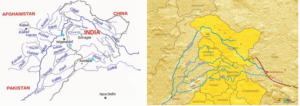
- Sawalkote HEP is a run-of-the-river project located on the Chenab River spanning Ramban, Reasi, and Udhampur districts of J&K.
- Developed by NHPC Limited (from 2021), it seeks to produce clean energy and bolster J&K’s and national energy security.
- This will be the largest hydropower project in Jammu & Kashmir once completed.
Chenab River:
Key Features
Importance
|
Project Details
| Aspect | Details |
| Capacity | 1,856 MW (8 x 225 MW + 1 x 56 MW) |
| Design Energy | 7,994.73 MU (90% dependable year) |
| Estimated Cost | ₹31,380 crore |
| Type | Run-of-the-river |
| Dam Height | 192.5 m (roller-compacted concrete dam) |
| Location | Chenab River, Ramban district, J&K |
| Stages | Stage I (1,506 MW by 2028); full by 2031 |
| Developer | NHPC Limited |
Project History
- Initially accorded environmental clearance in 2017, then stalled due to IWT-related water storage restrictions.
- Transferred to NHPC in 2021; clearance and hearings delayed by forest approval and geopolitical challenges.
- After IWT suspension in April 2025, final clearance was granted in October 2025, overcoming previous hurdles.
What is a Run-of-the-River Project?
- Generates power using the natural river flow and drop, with minimal diversion or reservoir storage.
- Diverts water through turbines, returns it downstream—relies on steady river flow rather than impoundment.
Advantages
- Minimal environment impact—less flooding, lower displacement, ecosystem preservation.
- Lower construction cost, quicker build than reservoir dams.
- Flexible operation and quick adjustment to demand.
- Sustainable, renewable source with low ongoing costs.
Disadvantages
- Output varies seasonally and is flow-dependent.
- Limited or no storage means power shortage during dry periods.
- Ecological risk due to changes in habitat and fish migration.
- Susceptible to climate change: monsoon failures and glacial shifts impact flow reliability.
Other Major Projects on Chenab River
| Project Name | Capacity (MW) | Status |
| Salal HEP | 690 | Operational since 1987 |
| Baglihar HEP | 900 | Operational since 2008 |
| Pakal Dul HEP | 1,000 | Under construction (2026) |
| Ratle HEP | 850 | Under construction (2028) |
| Kiru HEP | 624 | Under construction (2026) |
| Kwar HEP | 540 | Planned/Pre-construction |
| Kirthai I HEP | 250 | Planned |
| Kirthai II HEP | 990 | Planned |
India’s Hydropower Strategy
- Accelerates project approvals and surveys to reach 500 GW non-fossil capacity by 2030, net-zero by 2070.
- Commits to 60 GW pumped storage by 2032 with major investments.
- Focuses on the Northeast and Himalayas (J&K) for untapped hydro potential; added 1,650 MW in FY 2025-26.
- Blends hydro with solar/wind hybrids, promotes environmental safeguards post-IWT suspension.
- Uses western rivers for energy security and import reduction, leveraging IWT suspension.
Conclusion: Sawalkote’s clearance marks a strategic milestone in India’s Chenab hydropower development and green energy move.The run-of-the-river design offers environmental benefits, but seasonal variability and ecological risk must be addressed for sustainable growth.These initiatives strengthen regional economies and affirm India’s commitment to renewable energy and energy security.
4. SC Exempts Pre-2022 Surrogacy Cases from Age Limits
GS paper II: Polity – Indian Constitution
Context: The Supreme Court has held that the age restrictions prescribed under the Surrogacy (Regulation) Act, 2021, cannot be applied retrospectively to couples who had already frozen embryos and initiated the surrogacy process before the law came into effect on January 25, 2022.
Case Background
- Petitions: Filed by three couples who had completed IVF and embryo freezing before the Surrogacy Act’s commencement.
- Issue: They became ineligible under Section 4(iii)(c)(I) due to new age criteria (women 23–50 years; men 26–55 years).
- Argument: The surrogacy process had already begun lawfully before the Act; retrospective disqualification was therefore invalid.
- Court’s Finding: Embryo freezing marked a legitimate initiation of surrogacy, making retrospective age limits unconstitutional.
Supreme Court’s Key Findings
- No Retrospective Effect: The age criteria introduced in 2021 apply prospectively and cannot disqualify those who initiated procedures earlier.
- Equal Protection for Assisted Conception: Justice B.V. Nagarathna observed that couples conceiving through ART or IVF are entitled to the same constitutional safeguards as those conceiving naturally.
- Article 21 – Reproductive Liberty: The Court reaffirmed that the right to reproductive choice—including IVF, ART, or surrogacy—is part of personal liberty and privacy under Article 21.
- Article 14 – Equality Before Law: Retrospective exclusion based on age was termed arbitrary and unreasonable, violating constitutional equality.
- Rejecting Parenting-Age Bias: The assumption that older parents are less fit was dismissed; the state cannot retrospectively assess parenting capability once lawful medical steps are initiated.
- Doctrine of Non-Retroactivity: Unless stated explicitly, a law cannot apply retroactively to penalize or disqualify lawful past actions.
- Precedent Applied: Relied on Suchita Srivastava v. Chandigarh Administration (2009) affirming autonomy and bodily integrity as constitutionally protected rights.
The Surrogacy (Regulation) Act, 2021 – Overview
- Purpose: To regulate surrogacy practices, prevent commercial exploitation, and ensure ethical, altruistic surrogacy based solely on medical reasons.
- Legislative Intent: Uphold ethical medical practices, protect surrogate mothers and children, and align with constitutional morality and reproductive dignity.
- Scope: Applies to all surrogacy procedures involving Indian citizens and works in tandem with the Assisted Reproductive Technology (Regulation) Act, 2021.
Key Highlights
- Form Allowed: Only altruistic surrogacy permitted – no monetary compensation beyond medical costs.
- Couple Eligibility:
- Married for at least five years.
- Woman: 23–50 years; Man: 26–55 years.
- Must have no living biological, adopted, or surrogate child.
- Single Women: Only widows or divorcees (35–45 years) are eligible; unmarried women excluded, a restriction currently under challenge.
- Surrogate Mother: Must be a close relative, married, aged 25–35 years, and have at least one biological child.
- Certification & Procedure: Requires medical eligibility certification, infertility proof, parentage order, and insurance coverage for the surrogate.
- Prohibitions & Penalties: Commercial surrogacy banned; violation carries up to 10 years’ imprisonment or ₹10 lakh fine.
- Regulatory Framework: Establishes National and State Surrogacy Boards for oversight and enforcement.
Supreme Court’s Major Concerns
- Lack of Transitional Protection: The Act omits a clause safeguarding couples whose surrogacy process began before enforcement.
- Inconsistent Parental Standards: The Court noted adoption laws lack upper age limits, creating unjustified disparity.
- Gender Bias: Exclusion of unmarried women from surrogacy was flagged as potentially violative of Article 14.
- Infringement of Fundamental Rights: Retrospective disqualifications impede both equality (Article 14) and reproductive freedom (Article 21).
- Excessive State Intervention: The intention to protect child welfare cannot override individual autonomy or negate lawful prior actions.
Significance of the Judgment
- Affirmation of Reproductive Rights: Establishes surrogacy and ART as intrinsic to reproductive autonomy under the Constitution.
- Prevention of Legal Injustice: Protects couples from punitive or discriminatory retrospective application of law.
- Strengthening Constitutional Doctrine: Reinforces the judiciary’s stance against retroactive nullification of pre-existing lawful rights.
- Balanced Judicial Approach: Harmonises ethical oversight of surrogacy with protection of personal liberty.
- Expanded Relief: Enables similarly affected couples to seek remedy through relevant High Courts.
- Constitutional Morality Upheld: Emphasises that legislative interpretation must align with justice, equity, and good conscience.
5. Does India have a cough syrup problem?
GS paper IV: ETHICS
CONTEXT: India’s pharma sector, hailed as the “pharmacy of the world,” faces scrutiny after toxic cough syrup deaths in Madhya Pradesh and Rajasthan.
- Lab tests uncovered high diethylene glycol (DEG) in syrups, prompting state bans, factory probes, and debate over drug safety oversight.
Recurring Cough Syrup Tragedies
- India has a legacy of DEG-linked incidents, showing systemic regulatory failure rather than isolated error.
- Major poisonings: Chennai (1973), Bihar (1986), Jammu (2019), Gurugram (2020), The Gambia/Uzbekistan (2022) – all caused child fatalities.
- In each case, suppliers substituted toxic industrial solvents for pharma-grade chemicals to save costs.
- Authorities usually enforce temporary bans or arrests, but deep-rooted reform remains absent.
- Underlying problem: Fragmented centre-state coordination, lab funding gaps, and reactive enforcement allow recurrences.
Diethylene Glycol (DEG): The Hazard
- DEG is a clear, sweet solvent for antifreeze, brake fluids, plastics.
- It is abused as a cheap stand-in for required medicinal excipients.
- Even tiny doses can cause fatal kidney failure, acidosis, and gastrointestinal symptoms.
- Legal drug limit is 0.1%; some samples tested over 46%, showing gross negligence.
- Notoriety goes back to the 1937 “Elixir Sulfanilamide” tragedy in the US, which led to new global drug safety laws.
Oversight of Medicines in India
- Law: Drugs and Cosmetics Act (1940) and Rules (1945) set key standards.
- CDSCO (under Health Ministry) regulates imports, new drugs, and quality norms.
- State Drug Control Authorities license makers/distributors and oversee local sales.
- Challenge: Fragmented roles create patchy rule enforcement and overlap.
- CDSCO issues rules, but states often lack labs, staff, or resources to monitor compliance.
- Drugs must be tested at both ingredient and finished product stages, but auditing is weak.
Gaps in Regulation and Enforcement
- Lack of a central digital platform linking all regulatory agencies means poor tracking of licenses, test results, and violations.
- Many SMEs escape periodic audit or third-party inspections.
- State drug labs face funding, staffing, and equipment constraints.
- Fines and jail terms for adulteration are minimal, offering little deterrent against wrongdoers.
- Dual standards: Export drugs may meet global norms, domestic drugs often don’t match WHO/foreign benchmarks.
Impact on India’s Global Image
- WHO issued global alerts after Gambian and Uzbek deaths tied to Indian syrups.
- Some countries now demand independent quality checks on Indian imports.
- Such scandals erode trust in Indian drug exports—critical for $25 billion annual exports and India’s global vaccine/disease-drug supply role.
- Reputational and diplomatic costs rise, threatening future market access.
The Way Forward
- Establish a national digital system for unified oversight—linking manufacturing, testing, and regulatory action across all states.
- Mandate third-party audits for critical solvents, raw materials, and excipients.
- Sharper penalties: Make senior executives criminally liable for fatal or repeated violations.
- Every state drug lab should be modernized, properly staffed, and globally accredited.
- Require WHO-GMP certification for both exports and the domestic market to ensure uniform standards.
6. DRAVYA” portal
Context: The Ministry of Ayush has launched the AI-ready “DRAVYA” portal developed by the Central Council for Research in Ayurvedic Sciences (CCRAS) to digitally catalogue 100 key Ayush medicinal substances in its first phase.
About DRAVYA Portal
DRAVYA is an AI-enabled digital repository that compiles detailed information on Ayush medicinal substances by bringing together knowledge from classical Ayurvedic scriptures and contemporary scientific research. It functions as a dynamic, open-access platform aimed at making verified, evidence-based data on Ayurveda and related systems easily searchable and globally available.
Implementing Organisation
Developed by the Central Council for Research in Ayurvedic Sciences (CCRAS) under the Ministry of Ayush.
Objectives
- Digitise and integrate traditional and modern knowledge on Ayush substances to support evidence-based research and innovation.
- Foster cross-disciplinary cooperation between Ayurveda, botany, chemistry, and pharmacology.
- Guarantee the authenticity, accessibility, and scientific validation of traditional medicinal information.
Core Features
- Extensive Catalogue: First phase includes 100 major medicinal substances, with regular updates and future expansions.
- AI-Ready Framework: Supports data analytics, research correlation, and links to upcoming digital health solutions.
- QR Code Support: Standardised, verified data display for medicinal plant gardens and drug repositories.
- Multi-Field Information: Profiles cover pharmacotherapeutics, botany, chemistry, pharmacy, pharmacology, and safety aspects.
- Intuitive Interface: Enables simple search, retrieval, and comparison of data across different Ayush systems.
- Integration with Ayush Grid: Strengthens interoperability with other national-level digital medical initiatives and research networks.
7. ‘Saksham’ Counter-Unmanned Aerial System (CUAS) Grid
GS PAPER III:S&T- Achievements Of Indians In S&T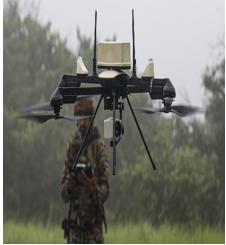
CONTEXT: Indian Army launched procurement of the indigenously developed ‘Saksham’ Counter-Unmanned Aerial System (CUAS) Grid for advanced airspace security and to counter aerial threats.
- Rollout approved under Fast Track Procurement, supporting Atmanirbhar Bharat and the Decade of Transformation (2023–2032).
About Saksham Counter-Unmanned Aerial System (CUAS) Grid
Overview
- Saksham is a counter-drone system co-developed by the Indian Army and BEL, Ghaziabad, for detection, tracking, identification, and neutralisation of unmanned aerial threats.
- Secures the Tactical Battlefield Space (TBS) or Air Littoral—up to 3,000 m altitude above ground.
- System was conceived after Operation Sindoor exposed air defence gaps.
Meaning and Platform
- SAKSHAM: Situational Awareness for Kinetic Soft & Hard Kill Assets Management.
- Works as a Command-and-Control (C2) hub integrating sensors, countermeasures, and AI analytics for Recognised UAS Picture (RUASP).
Key Features
- Detection & Tracking: Continuous surveillance using radar, radio-frequency, and EO/IR sensors for drone identification.
- AI-Enabled Prediction: Employs AI for forecasting hostile activities and suggesting response actions.
- Sensor–Weapon Fusion: Integrates jammers, directed-energy weapons, and interceptors for seamless defence response.
- Automated Support: Offers decision aids for threat prioritisation via a unified, real-time command interface.
- 3-D Visualisation: Delivers dynamic views of friendly and hostile assets in airspace.
- Network Integration: Operates over the Army Data Network (ADN); links with Akashteer Air Defence Control for complete airspace management.
- Mobility & Modularity: Designed to be compact, modular, deployable across varied terrains.
- Indigenous Focus: Fully developed and manufactured in India, showcasing high-level self-reliance.
Visual Representation
- Modular, grid-based command structure fusing sensor data and automated countermeasures in unified digital airspace control.
Saksham represents a major leap for Indian battlefield air defence, combining indigenous innovation, AI-enabled threat management, and real-time drone neutralisation for future-ready