
A Humanitarian Crisis Deepening in Gaza
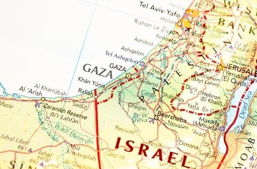
The Gaza Strip, one of the most densely populated regions in the
world, now faces an unprecedented famine. According to the
Integrated Food Security Phase Classification (IPC) report, over
2.2 million Palestinians are on the brink of catastrophic hunger,
with nearly 500,000 in IPC Phase 5 (Famine) conditions. This
tragedy is not an inevitable natural disaster; it is a consequence of
deliberate choices, complex politics, and an entrenched conflict.
As UN Secretary-General António Guterres warned, “Famine is
tightening its grip on Gaza — and it is man-made.”
Historical Context: From Blockade to Breakdown
The roots of this crisis trace back to decades of geopolitical hostility. Since 2007, when Hamas took control of
Gaza, Israel, citing security concerns, imposed a comprehensive blockade on the region, restricting goods, food,
and fuel. While Israel argues this is to prevent weapons smuggling, critics assert that collective punishment has
become the norm, creating a fragile humanitarian situation that worsened after the October 7, 2023 Hamas attack.
• Past Agreements Ignored: The Oslo Accords envisioned economic integration and movement, but today
Gaza’s economy is shattered, unemployment exceeds 45%, and poverty is near 80%.
• Cycles of War: Four major wars since 2008 have devastated infrastructure. After every war, promises of
reconstruction faded amidst political stalemate.
“Wars destroy in days what takes decades to build.” – A common refrain among aid workers.
The Trigger: October 7 and its Consequences
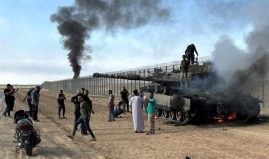
The Hamas-led attacks on October 7, 2023, killing about 1,200 Israelis, triggered Israel’s massive military
response. Since then:
• Over 38,000 Palestinians killed, thousands more wounded (UN data, 2025).
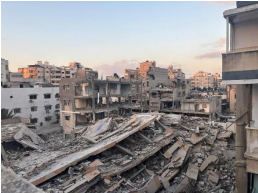
• Infrastructure collapse: Hospitals destroyed, bakeries bombed, water plants non-functional.
• Aid restrictions: Israel controls entry points; even UN convoys have been halted or delayed.
Israel defends its actions as necessary to “eradicate Hamas’s terror infrastructure.” Prime Minister Netanyahu
stated, “There will be no ceasefire without dismantling Hamas.” But the disproportionate humanitarian fallout
raises ethical and legal concerns under International Humanitarian Law.
The Famine Reality: Facts on the Ground
• Food scarcity: Prices skyrocketed — 1 kg of flour costs 20
times pre-war rates.
• Children’s tragedy: UNICEF reports 90% of children face
severe food insecurity, and over 12,000 have died due to
hunger-related causes.
• Aid bottlenecks: Despite international pledges, convoys face
delays at Kerem Shalom and Rafah crossings.
• “Starvation must never be used as a weapon of war.” –
International Committee of the Red Cross (ICRC).
Israel’s Perspective: Security Over Survival
Israel argues the crisis is Hamas-made, accusing the group of:
• Stockpiling aid for fighters.
• Using tunnels to smuggle arms rather than food.
• Hiding among civilians, making precision strikes difficult.
Israeli officials contend that “no country can tolerate a terrorist entity at its border.” However, critics argue that
security cannot justify starvation, citing Additional Protocol I of the Geneva Conventions which prohibits
starvation as a method of warfare.
Hamas’s Role: Catalyst or Culprit?
While humanitarian groups stress Israel’s overwhelming control,
Hamas cannot be absolved:
• Diversion of resources: Reports of aid being seized by
militants.
• Provocation strategy: Hamas anticipated a severe Israeli
reaction, hoping to galvanize Arab and global outrage.
• Governance failure: Despite years in power, Hamas
invested more in rockets than in resilience.
• This dual responsibility complicates accountability: Is Gaza a victim of Israeli siege, Hamas’s militarism,
or both?
Global Reaction: Sympathy vs. Inaction
• UN and ICJ: The International Court of Justice (ICJ) has ordered Israel to allow humanitarian aid,
warning of genocidal risks.
• US and EU: Condemn famine but remain Israel’s key arms suppliers.
• Arab world: Outrage in rhetoric, but little in coordinated pressure beyond aid pledges.
“History will judge those who stood by as starvation was weaponized.” – UN Relief Coordinator.
The Strategic Vacuum: Regional Implications
The famine is not just a humanitarian failure; it is reshaping West Asian geopolitics:
• Erosion of Israel’s moral standing globally.
• Strengthening extremist narratives, possibly fueling another generation of militancy.
• Humanitarian law under stress, setting a dangerous precedent for future conflicts.
The Road Ahead: Can Famine Be Averted?
• Immediate Ceasefire & Aid Corridors: Without a “sustained humanitarian truce,” famine will spiral
beyond control.
• Two-State Solution Revival: Long-term peace needs political dialogue, not perpetual siege.
• Accountability & Reconstruction: Both Israel and Hamas must face scrutiny for violations.
“Peace cannot be built on the bones of starving children.”
A Tragedy Made by Men, Not by Nature
The famine in Gaza is not the outcome of drought or crop failure; it is the result of blockades, bombs, and political
brinkmanship. While Israel cites existential security threats, the moral and legal question persists: Can security
justify starving a population? Equally, Hamas’s militarism worsens the plight of its own people. In this tragic
equation, the civilians of Gaza bear the heaviest cost — a price that challenges the conscience of the world.