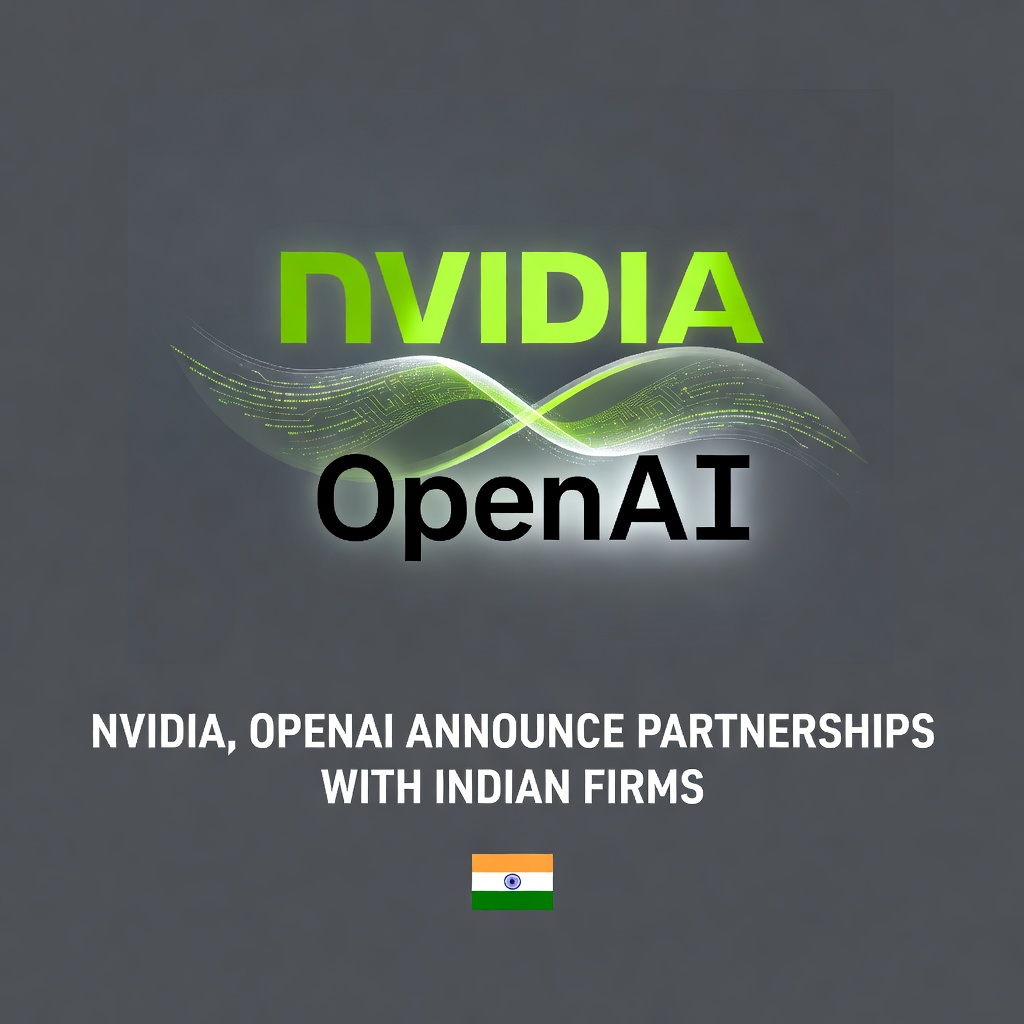
1. Nvidia, open AI announce partnerships with Indian firms
GS paper III-S&T
Context : NVIDIA and OpenAI announced massive collaborations with Indian industry and academia.
- The event showcased India’s shift toward building its own AI infrastructure rather than relying on foreign clouds.
- Indian startup Sarvam AI launched its most powerful language models to date during the summit.
What Exactly Happened?
- NVIDIA signed deals with Yotta, L&T, and E2E Networks to build “AI factories” in India.
- OpenAI launched a nationwide education initiative with top universities like IIT Delhi and IIM Ahmedabad.
- Sarvam AI unveiled two foundational models (30B and 105B) designed specifically for Indian languages.
- Government Alignment: These moves were tied directly to the $1.2 billion IndiaAI Mission.
Who is NVIDIA & Their Role?
- Who they are: A US-based tech giant that holds a 90%+ market share in GPUs (AI chips).
- The “Engine” of AI: Their hardware is essential for training and running models like ChatGPT.
- AI Infrastructure Development: NVIDIA provides the specialized “Blackwell” chips needed to build large-scale data centers.
- Software Stack: They offer tools like NeMo and Nemotron for developers to create custom AI agents.
NVIDIA’s India Partnerships
- Yotta Data Services: Deploying 20,000+ NVIDIA Blackwell GPUs to create the “Shakti Cloud.”
- L&T and E2E Networks: Building massive AI clusters in Chennai and Greater Noida for enterprise use.
- Venture Capital: Partnering with firms like Peak XV and Accel to fund Indian AI startups.
- Tata & Reliance: Collaborating with India’s biggest conglomerates to integrate AI into manufacturing and energy.
OpenAI’s Role: Skilling & Education
- University Cohort: Partnered with IIT Delhi, IIM Ahmedabad, AIIMS, and MAHE to embed AI in curricula.
- ChatGPT Edu: Providing enterprise-grade AI tools to over 100,000 students and faculty.
- EdTech Reach: Collaborating with PhysicsWallah and upGrad to offer AI certifications to the masses.
- Workforce Readiness: Aiming to bridge the gap where 40% of core worker skills are expected to change by 2030.
Sarvam AI & Language Models
- What is Sarvam: A Bengaluru-based startup focused on “sovereign” AI built for the Indian context.
- Sarvam-30B: A high-efficiency model trained on 16 trillion tokens, optimized for Indian languages.
- Sarvam-105B: Their flagship model designed for complex reasoning, outperforming several global rivals.
- Unique Feature: Showcased a voice-based AI bot, “Vikram,” that works on basic feature phones.
Strategic Significance for India
- Data Sovereignty: Keeps Indian data within the country, ensuring privacy and national security.
- Economic Growth: Positions India as a “manufactory of intelligence” rather than just a back-office hub.
- Language Inclusion: Breaks the English-language barrier by supporting India’s 22 official languages.
- Global Third Pole: Establishes India as a major AI power alongside the US and China.
Links with Government Initiatives
- IndiaAI Mission: Directly supports the government’s goal to build indigenous computing capacity.
- Make in India: Netweb Technologies is building AI supercomputers locally using NVIDIA architecture.
- Digital India: Facilitates AI-driven public services in agriculture, healthcare, and governance.
2. Longger head turtles facing threats from climate change
GS paper III-Environment
Context :Recent 2026 reports show turtles are becoming smaller, leading to fewer and smaller eggs.
- A 30-year study found North Pacific loggerheads are moving north six times faster than other species.
- Warming oceans have caused breeding gaps to double from two years to four years in some regions.
- Rising sand temperatures are producing almost exclusively female hatchlings, threatening future populations.
What is a Loggerhead Turtle?
- Scientific Name: Known as Caretta caretta, it is a wide-ranging, highly migratory marine reptile.
- Classification: It is the world’s largest hard-shelled sea turtle and a key marine species.
- Longevity: They are long-lived creatures, often reaching an estimated lifespan of 70 to 80 years.
Size and Physical Features
- Massive Head: Named for their exceptionally large heads that house powerful jaw muscles.
- Weight: Adults typically weigh between 155 to 500 pounds (70 to 227 kg).
- Shell Length: Their heart-shaped, reddish-brown carapace usually measures 2.5 to 3.5 feet.
- Coloration: They feature a reddish-brown top shell and a pale yellow bottom shell (plastron).
Unique Navigation and Habitat
- Magnetic Navigation: They use the Earth’s magnetic field as an internal GPS to navigate vast ocean distances.
- Natal Homing: Females return to the exact same beach where they hatched decades earlier to lay eggs.
- Multi-habitat Life: Juveniles live in the open ocean, while adults prefer bays, estuaries, and shallow coastal waters.
- Sargassum Mats: Young hatchlings spend their early years hiding and feeding in floating mats of brown algae.
Global Distribution
- Wide Range: Found in temperate and subtropical regions of the Atlantic, Pacific, and Indian Oceans.
- Mediterranean Hub: They are the most common sea turtle species found in the Mediterranean Sea.
- India Presence: Occasionally sighted along Indian coasts, though less frequent than the Olive Ridley turtle.
Diet
- Carnivorous Jaws: Their powerful jaws are designed to crush hard-shelled prey like crabs, conchs, and clams.
- Omnivorous Tendencies: They also eat jellyfish, sponges, shrimp, and occasionally marine plants or seaweed.
- Nutrient Recyclers: By crushing shells, they recycle vital calcium and nutrients back into the ocean floor.
Impact of Climate Change
- Metabolic Stress: Warmer waters increase their metabolism, but declining ocean productivity means less food is available.
- Size Reduction: Reduced foraging suitability is causing a multi-decadal decline in the average body size of females.
- Nesting Shifts: Turtles are nesting earlier in the year to synchronize with changing thermal windows.
- Habitat Loss: Rising sea levels and increased storm intensity are eroding critical sandy nesting beaches.
Major Threats
- Fisheries Bycatch: Accidental capture in shrimp trawls, longlines, and gillnets is a leading cause of death.
- Plastic Pollution: Turtles often mistake floating plastic bags for jellyfish, causing fatal intestinal blockages.
- Light Pollution: Artificial lights on beaches disorient hatchlings, leading them away from the sea.
- Coastal Development: Hotels and roads on beaches restrict nesting space and increase human-turtle conflicts.
Conservation Status
- IUCN Red List: Listed globally as Vulnerable, with some subpopulations considered Endangered.
- Indian Law: Protected under Schedule I of the Wildlife (Protection) Act, 1972.
- International Protection: Listed under CITES Appendix I, which prohibits international trade of the species.
Environmental Significance
- Keystone Species: They maintain the health of seagrass beds and coral reefs by controlling invertebrate populations.
- Mobile Ecosystems: Their shells provide a habitat for over 100 species of barnacles, algae, and small crabs.
- Ocean Health Indicator: Their migratory health reflects the overall state of global ocean currents and productivity.
3. New rootstocks promise better apple yields for Kashmir farms
GS paper III-Agriculture
Context : Farmers in Kashmir are adopting clonal rootstock technology to make cultivation more resilient and efficient.
- These new systems promise yields up to 40 tonnes per hectare, significantly higher than traditional methods.
- New rootstocks like M9 and MM106 help trees cope with erratic rainfall and heat stress.
- ICAR-CITH has developed indigenous rootstocks suited for the specific climate of the Himalayan region.
Importance of Apple Farming (Kashmir Context)
- Economic Backbone: Apple production provides livelihoods to approximately 27 lakh people in the region.
- Massive Output: Kashmir produces about 11 lakh tonnes of apples annually, a major share of India’s total.
- Land Utilization: Apple cultivation covers a vast area of 1.08 lakh hectares in the Kashmir valley.
Note on Kerala: Apple farming is not a traditional or commercially significant industry in Kerala due to its tropical climate; the primary hub remains the Himalayan belt.
Why Productivity in Kashmir is Low (Despite Large Area)
- Seedling-based Trees: Most orchards still use traditional, slow-growing, and low-density seedling-based trees.
- Long Waiting Periods: Traditional trees take 6 to 8 years to bear fruit, compared to just 2-4 years for modern ones.
- Climate Stress: Increasing temperatures and decreasing snowfall reduce the “chilling hours” required for fruit set.
- Management Issues: Dense, tall canopies make uniform spraying of pesticides and efficient pruning difficult.
Major Apple Growing Regions in India
- Jammu & Kashmir: The largest producer, with orchards spanning diverse altitudes from 1,500m to 2,800m.
- Himachal Pradesh: The second-largest hub, known for high-quality commercial varieties.
- Uttarakhand: Another significant producer in the Himalayan belt utilizing high-altitude microclimates.
- North-Eastern States: Smaller-scale cultivation exists in parts of Arunachal Pradesh and Sikkim.
Climate and Soil Conditions
- Chilling Requirement: Trees need a specific period of cold (chilling hours) in winter to bloom properly.
- Altitude Sensitivity: Altitude determines how much heat and cold the trees receive, directly affecting fruit quality.
- Soil Type: Apples thrive in well-drained, loamy soils rich in organic matter.
- Temperature: They are sensitive to frost during flowering and extreme heat during the summer growth phase.
Varieties of Apple in India
- Red Delicious: Historically the most popular commercial variety in the Kashmir valley.
- Gala Apples: Gaining popularity due to better color, crunch, and high demand in the Indian market.
- Fuji & Honeycrisp: Modern varieties often grown on dwarfing rootstocks for high-density orchards.
- Indigenous Varieties: Local varieties like Ambri are prized but are being replaced by high-yield commercial types.
Government Support
- Subsidies: The government provides financial aid for high-density plantation schemes and rootstock procurement.
- Mission for Integrated Development of Horticulture (MIDH): A key program supporting nursery infrastructure and technology.
- Holistic Agriculture Development Program: Focuses on boosting orchard productivity and farmer income through modern systems.
- Technical Training: ICAR-CITH conducts demos and training for farmers on pruning, fertigation, and pest management.
4. Circular Economy in Agriculture
Context :The Government of India highlighted progress in the “Waste-to-Wealth” mission via the GOBARdhan scheme, which now covers over 50% of districts with 979 operational biogas plants as of January 2026.
Circular Economy Defined
Circular economy in agriculture promotes a regenerative model minimizing waste through the 6 Rs: Reduce, Reuse, Recycle, Refurbish, Recover, Repair. It converts crop residues, manure, and food waste into bio-CNG, compost, and biochar, unlike the linear take-make-dispose approach.
Key Statistics
- India produces 350 million tonnes of agricultural waste yearly, with potential for 18,000 MW power from residues.
- Circular economy could hit $2 trillion market value and create 10 million jobs by 2050.
- Globally, 1.3 billion tonnes of food wasted annually; 60% in India at household level.
Benefits Overview
- Soil Health: Biogas slurry restores carbon levels per ICAR guidelines, cutting chemical fertilizer use.
- Climate Action: Methane capture aids India’s Net Zero goals via GOBARdhan Portal tracking.
- Income Boost: Punjab-Haryana farmers sell residues instead of burning, gaining extra revenue.
- Water Savings: Treated wastewater reuse under Jal Shakti Mission eases groundwater strain.
- Resource Use: Aligns with SDG 2 and 12; biochar sequesters carbon and aids drought areas.
Major Initiatives
- GOBARdhan Scheme: Turns dung/food waste into CBG/manure; eased rules include carbon credits and tax relief.
- Crop Residue Management: Subsidies for 3.24 lakh machines, 42,000+ hiring centers in key states.
- Agriculture Infrastructure Fund (AIF): ₹66,310 crore for post-harvest assets like 545 organic projects.
- AHIDF: ₹15,000 crore for livestock processing and waste management.
- Jal Jeevan/Swachh Bharat: Rural waste handling for ODF Plus status.
Key Challenges
- High setup costs for biogas/residue tech, tough for small farmers despite AIF aid.
- Logistics issues in collecting biomass from small farms, short harvest-sowing windows.
- Tech gaps in biochar reactors and modular systems.
- Resistance to change from practices like stubble burning.
- Weak markets for manure vs. subsidized chemicals.
Forward Path
- Link farmers to carbon credits for biogas/biochar.
- Boost FPOs for hiring centers and CBG clusters.
- Fund R&D in biochar/microbes for decomposition.
- Equalize policies for organic vs. chemical fertilizers.
- Expand awareness via Jan Andolan for segregation benefits.
5. 80th Anniversary of the 1946 Royal Indian Navy Revolt
GS paper I-Modern History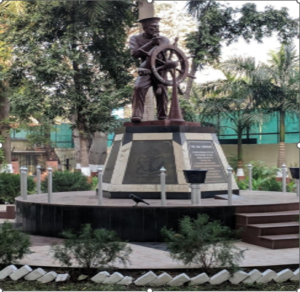
Context : February 18, 2026, marks the 80th anniversary of the 1946 Royal Indian Navy (RIN) Revolt, a pivotal anti-colonial uprising, as highlighted in recent coverage by The Hindu.
Revolt Overview
The RIN Revolt was a five-day armed mutiny (February 18–23, 1946) by Indian naval ratings against British colonial rule, starting as a protest over poor conditions and evolving into a broad anti-imperial rebellion involving sailors, workers, and civilians.
Historical Context
- Indian sailors endured racial discrimination, substandard food, low pay, and brutal treatment.
- Influenced by the Quit India Movement (1942) and Indian National Army (INA) trials.
- Tensions escalated with racist officers like Arthur Frederick King at HMIS Talwar.
Key Leaders
- Leading figures: B.C. Dutt, M.S. Khan, Madan Singh, Salil Shyam, and Rishi Dev Puri.
- A Naval Central Strike Committee coordinated demands and actions across units.
Major Events
- Initiation in Bombay: Began at HMIS Talwar with a hunger strike on February 18 over food quality, escalating to “Quit India” and “Jai Hind” slogans.
- Rapid Expansion: Spread to 78 ships and 20 shore bases in Bombay, Karachi, Madras, Vishakhapatnam, Kolkata, and Andamans, involving nearly 20,000 ratings.
- Mass Support: Joined by workers, students, and civilians; Congress, Muslim League, and Communist flags hoisted together showing Hindu-Muslim unity.
- Bombay Uprising: Street clashes in areas like Kamatipura and Madanpura; British firing killed around 200 civilians.
Revolt Conclusion
Political leaders from Congress and Muslim League called for restraint; ratings surrendered on February 23 after arrests and military crackdown, but it eroded British control.
Lasting Impact
- Undermined British trust in Indian armed forces, hastening power transfer amid rising communal tensions.
- Demonstrated cross-religious solidarity and mass mobilization against colonialism, extending resistance beyond the navy.
6. Indias moment to restoring balance to copyright
GS paper III-S&T
Context :Recent AI advancements have intensified debates on copyright law’s role in balancing creativity, access, and innovation, highlighting tensions between traditional protections and modern tech needs like data analysis for training models.
Core Argument
Copyright, originally meant to foster learning, now acts as a restrictive monopoly that limits innovation and knowledge access, especially amid AI growth. Flexible exceptions for accessibility and data use are needed to realign it with its purpose.
Accessibility Challenges
- Strict rules long blocked cross-border sharing of accessible books for visually impaired readers, despite availability to sighted users.
- Marrakesh Treaty resolved this via exceptions for format conversions and exchanges, exposing industry resistance driven by control, not economics.
- This shows copyright can barrier basic rights to education and information.
Copyright Evolution
- Early Form (1710 Statute of Anne): Limited 14-year author monopoly with registration, aimed at public learning via eventual public domain entry.
- Current System: Automatic protection for life +70 years, covering even minor content like posts; public domain is now rare (“copyright maximalism”).
- Shift prioritizes perpetual control over knowledge sharing.
AI and Data Conflicts
- AI relies on massive text datasets for pattern analysis, not human-like “reading” for enjoyment.
- Equating machine processing to human use is flawed; nations like Japan, Singapore, and EU allow text/data mining if it doesn’t replace originals.
- Without exceptions, AI development, web indexing, and research face legal risks, stifling progress.
Addressing Criticisms
- Job/Creativity Fears: Copyright incentivizes creation, not job preservation; tech shifts (e.g., photography, automation) always reshape fields, creating new roles.
- AI’s full effects are unknown—better addressed via arts funding than data restrictions.
- Focus should stay on promoting innovation, not blocking tools.
Reform Proposals
- Encourage commons like open datasets and public AI models via government curation.
- Add flexible exceptions (fair use, text mining) for accessibility tech, research, and non-commercial AI.
- Protect commercial works while enabling legal innovation.
Key Takeaways
| Issue Area | Problem | Solution |
| Accessibility | Border/format barriers | Marrakesh-style exceptions |
| Historical Shift | From limited to maximalist | Restore public domain focus |
| AI Training | Data analysis restrictions | Mining provisions like Japan/EU |
| Broader Impact | Stifles tech/rights | Balanced reforms for knowledge flow |
7. A Third way for AI Governance
GS paper III-S&T
Context :The AI Impact Summit in Delhi has spotlighted India’s “Third Way” AI governance model, distinguishing it from EU regulations, US market approaches, and China’s state control, amid global debates on balancing innovation and risks.
India’s Unique Approach
India’s November 2025 AI guidelines form a flexible governance framework beyond mere regulation. It spans adoption, diffusion, diplomacy, and capacity-building in sectors like healthcare and agriculture, leveraging existing laws for adaptability.
Initial Actions Taken
- IT Rules amendments mandate AI content labeling and 3-hour takedowns for harmful material—one of the world’s first such requirements.
- Focuses on enforcement against platforms while upholding rights, needing global coordination.
Global South Relevance
- Counters Global North’s AI investment dominance and proprietary dependencies misaligned with local needs.
- Promotes autonomy via public-private ties, shared research, safety frameworks, and risk collaboration among middle powers.
India’s Leadership Potential
India’s scale, digital expertise, and AI growth enable it to lead Global South cooperation. It pushes inclusive development balancing innovation, sovereignty, and equity.
Key Shortcomings
- Lacks strong worker protections against automation displacement, transparency, accountability, and whistleblower safeguards.
- Risks widening inequality without human-centric measures.
Global Standards Needed
Mandate developer transparency, accountability, and community protections as minimums. Governance must blend autonomy with enforceable human rights.
Summit Opportunity
The Delhi summit lets India showcase equitable AI via public-private partnerships and fair gain distribution, establishing it as a middle-power governance hub.
Future Test
India’s “Third Way” success hinges on merging innovation, security, and welfare; addressing gaps could make it a global benchmark.
Model Comparison
| Model | Core Feature | India’s Edge |
| EU | Compliance-heavy | More agile, inclusive |
| US | Market-driven | Adds governance structure |
| China | State-centric | Emphasizes autonomy/equity |
| India (Third Way) | Adaptive framework | Tailored for global majority |