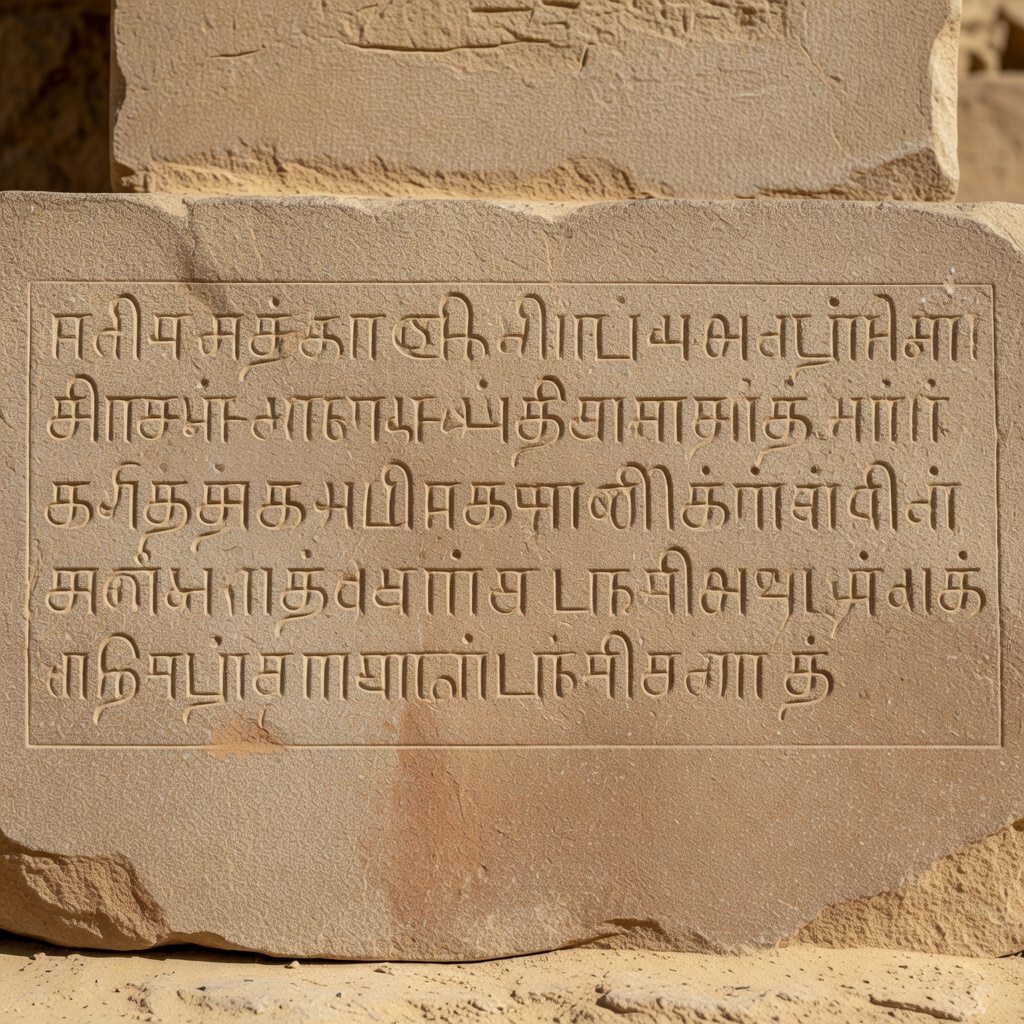
1. Tamil Brahmi inscripton in Egypt
GS PAPER I-Art & culture
Context :Researchers recently identified 30 inscriptions in Indian languages at the Theban Necropolis (Valley of the Kings).
- About 20 of these are in Tamil-Brahmi, while others are in Prakrit and Sanskrit.
- The study was led by Prof. Charlotte Schmid (EFEO) and Prof. Ingo Strauch (University of Lausanne) in 2024–2025.
Background of the Discovery
- The inscriptions were found in six rock-cut tombs originally built for Egyptian pharaohs around 1600 BCE.
- They date back to the 1st to 3rd Century CE, the peak era of Indo-Roman maritime trade.
- Scholars followed the 1926 survey by Jules Baillet, who had documented 2,000 Greek graffiti marks but overlooked the Indian ones.
What is Tamil-Brahmi Script?
- It is the earliest script used to write Old Tamil, adapted from the Ashokan Brahmi system.
- It includes special characters (like ழ, ள, ற, ன) to represent phonetic sounds unique to the Tamil language.
- It was widely used by merchants, kings, and commoners in ancient Tamilagam (modern Tamil Nadu and Kerala).
Nature of the Inscription
- The inscriptions are essentially “ancient graffiti” carved onto the walls of tomb corridors.
- They appear alongside Greek and Latin graffiti, suggesting Indian visitors followed a common traveler’s custom.
- These were not official records but personal marks left by individuals visiting the site.
Key Name Identified: Cikai Korran
- The name Cikai Korran (Sigai Korran) appears eight times across five different tombs.
- “Cikai” may relate to Sikha (Sanskrit for tuft or crown), while “Korran” is a purely Tamil name meaning “victorious” or “leader.”
- The name is often accompanied by the phrase “vara kanta”, meaning “came and saw” (he visited).
Supporting Evidence from Other Sites
- Berenike (Egypt): A potsherd with the name “Korrapuman” was found earlier at this Red Sea port.
- Quseir al-Qadim (Egypt): Pottery with the inscription “paanai oRi” (pot in a net) was discovered here.
- Khor Rori (Oman): A potsherd reading “nantai kiran” confirms the Tamil merchant presence in the Arabian Peninsula.
Significance of the Discovery
- Confirms Indo-Roman Trade: Proves that trade was not just at the coast but extended to inland administrative centers.
- Expands Geography of Indian Presence: Shows that Tamils traveled beyond ports into the Nile Valley for sightseeing or diplomacy.
- Cultural & Civilizational Interaction: Demonstrates that Indian traders were literate and multilingual, interacting with Greco-Roman culture.
- Broader Historical Context: Links the Sangam Age of South India directly to the global economy of the Roman Empire.
2. Have states gained from the 16th FC ?
GS PAPER III-Economy
Context :India’s fiscal federalism relies on Finance Commissions for equitable tax sharing between the Centre and States, with the 16th Commission’s recent report shaping resource allocation for 2026-31.
Constitutional Basis
- Article 280 requires a Finance Commission every five years to recommend tax devolution from the Centre to States.
- Article 270 governs direct distribution of net tax proceeds, covering corporation tax, personal income tax, CGST, and the Centre’s IGST share—but excluding cesses and surcharges.
- The divisible pool thus accounts for roughly 81% of the Centre’s gross tax revenue in 2025-26, fueling ongoing debates on State resource needs.
Trends in State Share (Vertical Devolution)
- Up to 13th FC (2010-15): States got 32% of the pool, plus tied funds via Centrally Sponsored Schemes (CSS).
- 14th FC (2015-20): Raised to 42%, with rationalized CSS for more untied autonomy.
- 15th FC (2020-26): Adjusted to 41% post-J&K reorganization into Union Territories.
This progression highlights a push toward greater fiscal independence for States.
State Allocation Formula (Horizontal Devolution)
- Prioritizes equity via income distance, alongside needs like population and area.
- Includes efficiency metrics: forest cover, demographic management, tax effort.
- Sparks friction between high-growth (e.g., southern) and lagging States.
State Asks to 16th FC
Vertical Share Demands
- 18 States pushed for 50%; others eyed 45-48%.
- Calls to add cess/surcharge to the pool and limit their use.
Horizontal Formula Tweaks
- Retain equity’s heavy weight; trim income distance emphasis.
- Add GDP contribution criterion, led by industrialized States like Maharashtra, Gujarat, Tamil Nadu, Karnataka, Telangana.
16th FC Key Decisions
Vertical Share Outcome
- Kept at 41%, rejecting cess inclusion as unconstitutional for routine use; needed for crises.
- Reasons: States’ large existing share, CSS pass-throughs, Centre’s defence/infra needs.
Horizontal Adjustments
- Principles: Gradual shifts; reward efficiency/growth.
- New GDP contribution factor introduced with balanced weight.
- Effects: Slight gains for southern/western States; minor cuts for northern/central ones.
Additional Fiscal Advice
- Centre: Phase down cess/surcharge dependence.
- States: Target subsidies better; reform power sector; cap deficits/debt.
- Joint: Reform public enterprises for sustainability.
3. Photorealistic AI content online
GS paper III-S&T
Context : The government has introduced the Information Technology (Intermediary Guidelines and Digital Media Ethics Code) Amendment Rules, 2026. These rules come into effect on February 20, 2026.
Tightened Takedown Deadlines
- Court/government-flagged illegal content: Now 3 hours (previously 24-36 hours).
- Non-consensual deepfakes/intimate imagery: 2 hours (from 24 hours).
- Other unlawful material: 3 hours (from 36 hours).
Rationale targets rapid virality; critics note operational challenges and over-removal risks.
AI Content Labelling Rules
- SGI Definition: AI-created/modified audio-visuals appearing real or indistinguishable from actual events/persons.
- Platforms must prominently label such content; seek user disclosures and proactively tag if missing.
- Excludes routine edits (e.g., photo touch-ups); softer than draft’s 10% image space mandate.
Safe Harbour Risks
- Section 79 protection lost if platforms abet/promote synthetic harms via poor due diligence.
- Heightens accountability, pushing proactive moderation on Big Tech.
Administrative Updates
- States can now appoint multiple officers for takedown orders (eased from single-officer limit).
- Boosts enforcement capacity in large states.
Global and Constitutional Context
Triggers
- Deepfake scandals harming women, privacy, elections worldwide.
Rights Balance
- Article 19(1)(a): Short timelines risk chilling speech via hasty removals.
- Article 21: Bolsters dignity/privacy against non-consensual content.
Implementation Hurdles
- Illegality judgments in hours amid legal grey areas.
- Over-censorship stifling expression/innovation.
- Heavy costs for AI moderation, hitting smaller platforms hardest.
- User declaration verification without privacy breaches.
Reform Pathways
- Standardize “illegality” criteria and takedown protocols.
- Create independent appeals for disputed removals.
- Advance local AI detection under national AI initiatives.
- Sync with DPDP Act on consent/privacy.
- Train state officers in cyber-AI laws.
4. Special Intensive Revision
GS paper II-polity
Context :The Supreme Court’s handling of the Special Intensive Revision (SIR) of electoral rolls has sparked debate over judicial boundaries, voter rights, and the Election Commission’s authority in a diverse democracy like India.
Background on SIR Controversy
The SIR involves widespread voter list verification, prompting legal challenges. Rather than halting or ruling on its legality outright, the Court has allowed it to proceed under its guidelines. This approach blurs lines between judicial oversight and administrative management, potentially making any flaws irreversible.
Judicial Oversight vs Management
- Courts enforce constitutional compliance through review, not by directing executive operations like document rules or timelines.
- Issuing procedural instructions shifts the judiciary toward supervision, diluting its core role as rights protector.
- Prolonged hearings enable on-ground implementation, creating a “fait accompli” that hampers effective reversal and erodes rule of law credibility.
Election Commission’s Statutory Limits
- The Representation of the People Act permits targeted roll revisions for defined reasons in specific areas.
- SIR’s nationwide scale exceeds this, functioning as mass eligibility checks akin to citizenship probes.
- This overreach questions separation of powers, as the Commission stretches limited powers into broad verification authority.
Citizenship Presumption Reversed
- Democracies assume citizenship unless evidence proves otherwise; SIR flips this by burdening all voters to prove eligibility.
- Mass mandates replace targeted scrutiny, turning inherent rights into provisional approvals.
- Such inversion weakens state-citizen trust and political inclusion at democracy’s foundation.
Risks of Mass Verification
Disenfranchisement Threats
- Deletions via objections risk excluding legitimate voters, hitting representative democracy hard.
- Voting as core expression faces arbitrary cuts, threatening governance stability and rights safeguards.
Unequal Documentation Burdens
- Proof needs favor those with easy record access, disadvantaging poor, women, castes, and marginalized groups.
- Formal neutrality ignores real inequalities, clashing with substantive equality and justice principles.
Wider Governance Shifts
- Efficiency drives sideline human dignity, empowering bureaucracy over belonging.
- No firm ruling breeds uncertainty, letting processes morph into exclusion tools.
- Core issue: Electoral tools must bolster, not undermine, democratic structure and participation.
5. India’s aviation sector
GS paper III-S&T
Context :India’s aviation sector faces intense scrutiny after recent mass cancellations by IndiGo and rising safety incidents, exposing overstretched operations in the world’s third-largest domestic market.
Reason for Spotlight
- Multiple disruptions last year, including IndiGo’s December meltdown, highlight systemic risks amid 350 million annual passengers and 840 aircraft.
- Growth from incomes, UDAN connectivity, and private fleets outpaces infrastructure, manpower, and regulation.
Key Operational Failures
- Mass cancellations and delays signal capacity strain beyond single airlines.
- Frequent safety notices from DGCA reveal compliance gaps.
- System runs near full tilt, turning minor issues into national connectivity breakdowns.
Pilot Supply Crisis
- Demand for 25,000-30,000 pilots next decade outstrips training output.
- New FDTL rules cut night flights and mandate rest, disrupting schedules.
- Low pilot-aircraft ratios (below global norms) raise fatigue risks; airlines poach foreigners at high cost.
Weak Regulatory Framework
- DGCA suffers chronic staff shortages in technical roles despite sector boom.
- Ad hoc exemptions prioritize continuity over safety enforcement.
- Crisis firefighting erodes preventive oversight and public trust.
Duopoly Market Risks
- Two groups control 90% traffic, making them “too big to fail.”
- Many routes have single-operator service; disruptions kill access entirely.
- Smaller cities suffer most from lost time-sensitive links.
New Regional Airline Push
- Government approvals target UDAN underserved routes for competition.
- Past flops underscore hurdles: ATF costs, low demand, infra gaps, price wars.
- Needs sustained aid like subsidies, airports, fuel stability.
Fuel Volatility Pressures
- ATF ties to oil prices and rupee swings hit thin-margin carriers hard.
- No global-style buffers (spare crew/fleets); full utilization amplifies shocks.
- Historical trigger for airline insolvencies.
6. India’s Ease of Doing Business Performance Strengthened; World Bank B-READY Assessment Scheduled in 2026
CONTEXT :India’s participation in the World Bank’s Business Ready (B-READY) 2026 assessment underscores its push for business reforms, succeeding the discontinued Doing Business Report to benchmark regulatory and operational climates more transparently.
About B-READY
- Launched in 2024 by the World Bank Group post-2020 Doing Business controversy.
- Uses expert consultations and firm surveys (World Bank Enterprise Surveys) for evidence-based global rankings.
- Aims to gauge how rules and services foster private sector growth, digital adoption, sustainability, and inclusion.
Core Assessment Pillars
Regulatory Rules (Pillar I)
- Examines laws on business startup, operations, and wind-down (de jure focus).
Government Services (Pillar II)
- Reviews public infrastructure like digital licensing, dispute forums, and support systems.
Real-World Execution (Pillar III)
- Tracks compliance ease via nationwide firm experiences (de facto insights).
Standout Methodology Features
- Lifecycle Approach: Covers 10 stages from firm birth to closure for full-spectrum analysis.
- Three-Tier Structure: Blends legal texts with practical outcomes and firm feedback.
- Integrated Priorities: Weaves in digital tools, green practices, and gender equity across topics.
- Dual Data Sources: Pairs regulatory reviews with ground-level enterprise surveys.
- Yearly Global Standard: Annual reports ensure ongoing, credible comparisons.
B-READY equips India to refine reforms, attract investment, and align with sustainable growth amid global competition.
7. CPI base revision to 2024
GS PAPER III-ECONOMY
CONTEXT :India’s CPI base revision to 2024 updates inflation tracking to match evolving household spending amid urban growth and digital shifts.
CPI’s Role in Daily Economics
CPI gauges price changes in household essentials like food, housing, and fuel.
It shapes RBI monetary policy, wage hikes, pensions, and interest rates.
Accurate CPI ensures policies reflect real consumer pressures.
Reasons for 2024 Base Update
- Prior base (2012) misses urbanisation, services boom, e-commerce, and spending diversification.
- New base uses 2023-24 Household Consumption Survey for current patterns.
- Aligns India with global standards while suiting local needs.
Revised Consumption Weights
- Boosts weights for rising spends (e.g., services, urban goods).
- Cuts weights for shrinking shares (e.g., outdated items).
- Adds modern trends like digital services and varied diets.
Upgraded Data Methods
Digital Integration
- Adds online tracking for air tickets, telecom, internet services.
- Retains field surveys for fresh produce, rent, local markets.
Tech Enhancements
- Computer-assisted collection cuts errors, speeds validation.
- Real-time data improves policy timeliness.
Expanded Data Sources
- Incorporates official records: rail/postal fares, fuel prices, PDS grains.
- Blends surveys, admin data, and web prices for less bias.
- Builds broader, reliable database over past market-only reliance.
Oversight and Coordination
- MoSPI led multi-agency effort with field teams and experts.
- National/international input ensured transparent, robust methods.
- Balances innovation with historical comparability.
Policy and Household Impact
- Updated CPI sharpens inflation views for better rate decisions and benefits.
- Tracks lived costs—rent hikes, fuel jumps, grocery shifts—accurately.
- Sustains CPI as key economic mirror for India’s dynamic households.
8. New Guidelines on ‘Vande Mataram’
GS paper II-POLITY
Context : India’s Union Government has mandated singing all six stanzas of Vande Mataram at official events, marking the 150th anniversary of Bankim Chandra Chatterjee’s iconic composition from his 1882 novel Anandamath, a rallying cry during the freedom struggle.
Guideline Essentials
Ministry of Home Affairs (MHA) notification sets the full version—3 minutes 10 seconds—as the official rendition for uniformity.
Mandatory Performance Settings
National Ceremonies
- Civil investitures and state functions.
- President’s arrival/departure; before/after addresses on All India Radio and Doordarshan.
State-Level Events
- Governors’ or Lieutenant Governors’ entry/exit at official gatherings.
Cultural and Educational Gatherings
- Flag hoisting and cultural programs.
- Daily school morning assemblies via group singing.
Rendition Protocols
- Audience stands at attention; drumroll (mridang/trumpet) precedes.
- Seven preparatory steps in marching drills.
- Optional at ministers’ informal events; exempt in cinemas (films/newsreels).
Broader Purpose
- Cultural Revival: Honors the song’s role in nationalism, blending devotion with anti-colonial fervor.
- Protocol Clarity: Ends variations, ensuring consistent respect nationwide.
- Unity Building: Fosters shared identity through schools and public participation.
These rules reaffirm Vande Mataram as national song—distinct from the anthem—while balancing reverence with practicality in modern settings.
lly during the freedom struggle.