1. Menstrual health in schools is intergral to right to life
GS PAPER II-POLITY -Fundamental rights
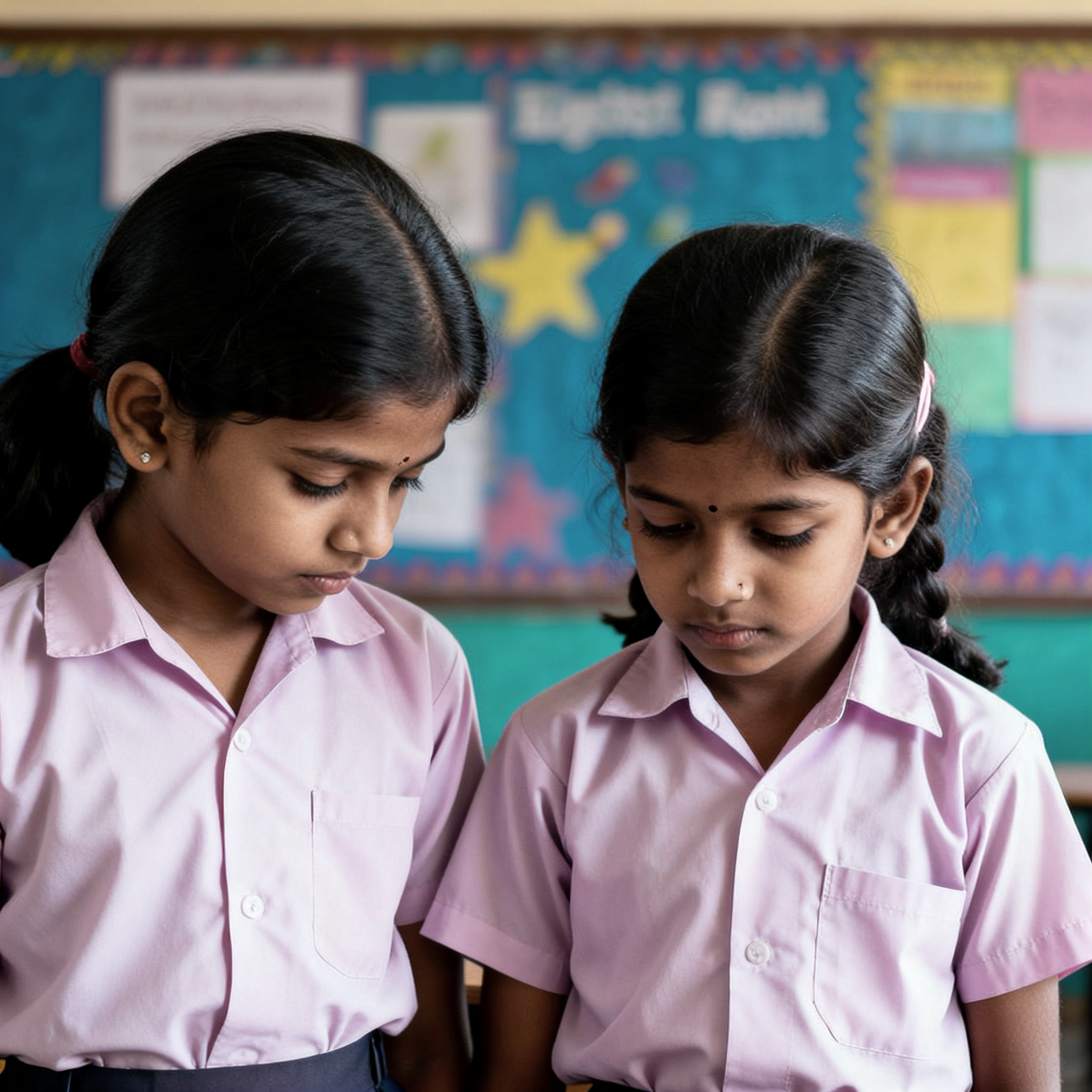
Context :Supreme Court ruled (January 2026) that menstrual hygiene management (MHM) in schools is a Fundamental Right under Article 21, linking it to dignity and education (Article 21A). Mandates free sanitary products and facilities nationwide;
Constitutional Rights Linkage
SC expands Article 21 scope to include practical menstrual access.
- Dignity as lived reality, not abstract concept for girls.
- Absence causes exclusion, stigma violating bodily privacy.
- Ties to Article 21A: “Menstrual poverty” blocks equal education.
Core Judicial Interpretation
Ruling rejects policy-only approach to MHM.
- Hygiene gaps create humiliation, stereotyping of menstruating girls.
- Ensures equal footing with boys/rich peers in schooling.
- Bodily autonomy central to life/liberty protections.
Directives for Governments
Mandatory orders for States/UTs across all schools.
- Covers govt, aided, private institutions in rural/urban areas.
- Functional gender-segregated toilets required universally.
- Free oxo-biodegradable sanitary napkins via vending machines.
- Machines placed inside toilets for user privacy.
2. UGC Equity Rules flow from Article 15
GS paper II-polity, governance
Context :Supreme Court stayed UGC (Promotion of Equity in Higher Education Institutions) Regulations, 2026 on January 29, 2026, calling them vague and prone to misuse, reviving 2012 rules pending March review.
UGC Equity Rules Basics
Issued by UGC for HEIs to foster inclusion via Article 15.
- Targets systemic caste discrimination in education settings.
- Applies to all higher education institutions nationwide.
- Replaces 2012 framework with stronger enforcement.
Article 15 Framework
Constitution’s anti-discrimination pillar enables affirmative action.
- 15(1): Bars State discrimination by caste, religion, sex, etc.
- 15(2): Ensures equal public access without bias.
- 15(4)/(5): Permits special aid for SC/ST, backward classes.
- Stresses substantive equality over formal sameness.
Regulations’ Core Features
Shift to institutional accountability for equity.
- Defines caste-based exclusion in campuses explicitly.
- Requires anti-discrimination cells and redressal setups.
- Ensures equal access to hostels, classes, resources.
- Focuses prevention over isolated incident response.
Legal and Judicial Backdrop
Sukanya Shantha ruling anchors defence.
- Upholds laws fixing historical caste inequities.
- Rejects identical treatment for unequals.
- Balances fraternity with targeted remedies.
- Court flags vagueness in terms like “segregation”.
Dispute Highlights
Petitioners vs Government clash on validity.
- Claim “reverse discrimination” against general category.
- Government cites Article 15 for structural fixes.
- SC stays implementation citing misuse risks.
- Hearing set for March 19 on core constitutional questions.
3. Jal Jeevan Mission (JJM)
GS Paper II/III -governance, welfare
Context :A 2024 government survey under Jal Jeevan Mission (JJM) shows 98% rural tap coverage but only 75% get reliable, safe water—highlighting functionality gaps amid 2026 progress reports
JJM Programme Essentials
JJM, launched 2019, targets rural tap water for all via shared Centre-State funding.
- Aims for 55 litres potable water/person/day with sustained sources.
- Shifts focus to service delivery over mere infrastructure builds.
- Stresses community role, quality checks, and regular supply.
Rural Coverage Progress
Tap connections neared universality from <20% in 2019.
- Goa, Gujarat, Andhra Pradesh, UTs exceed 97% household taps.
- Over 2.7 lakh villages certified “Har Ghar Jal” by early 2026.
- Certification tracks infrastructure, not always actual delivery.
Functionality Shortfalls
Survey exposes gaps beyond tap installation.
- 83% households got water once in last 7 days; 80% met quantity.
- Only 76% passed E.coli, coliform, pH safety tests.
- Combined metrics: Just 75% benefit fully as envisioned.
State-wise Performance Gaps
Outcomes vary sharply by region and resources.
- Bihar: Water in 61% homes; Sikkim lags per capita norms.
- Coastal States lead; UP, Nagaland trail on availability.
- Disparities tie to groundwater, terrain, local capacity.
Funding and Execution Hurdles
Rs. 3.6 lakh crore spent since 2019; more needed.
- Budget underuse noted; 2024 target now pushed to 2028.
- Last-mile ops, maintenance, source issues demand Rs. 4 lakh crore extra.
- Resource-heavy amid sustainability challenges.
Monitoring Mechanisms
Multi-layer oversight tracks real outcomes.
- 2024 survey hit 2.3 lakh Har Ghar Jal homes for insights.
- Village committees, third-party checks, live dashboards active.
- Method tweaks limit direct past comparisons.
Steps for Lasting Success
Pivot to maintenance over expansion for welfare impact.
- Boost Panchayat committees, source recharge, quality surveillance.
- Integrate with sanitation, groundwater, climate-resilient plans.
- Link to health schemes for true rural water security.
4. Stem cell therapy
GS II -governance, health rights
Context :Supreme Court ruled against offering stem cell therapy for Autism Spectrum Disorder (ASD) as routine clinical service outside approved trials (January 2026), citing no scientific proof of safety/efficacy and invalid consent. Directs government to form stem cell regulatory body;
About Stem Cell Therapy
Regenerative treatment repairs damaged cells via immune modulation.
- Reduces inflammation; aids autoimmune, neurological conditions.
- Promising for various disorders but needs rigorous validation.
- Experimental stage for many uses, risks unproven benefits.
Understanding Autism Spectrum Disorder
Neurodevelopmental condition alters brain function from early childhood.
- Affects social interaction, communication, repetitive behaviors.
- Onset before age 3; lifelong but symptoms may ease.
- Varies in severity—learning, attention, motor differences common.
Supreme Court Ruling Highlights
SC bans commercial ASD stem cell therapy absent trial data.
- Restricts to monitored research only due to efficacy gaps.
- Informed consent invalid without full risk-benefit disclosure.
- Patient autonomy limited by ethics, scientific standards.
- Fails “reasonable care” duty doctors owe patients.
- Caregivers can’t demand unproven treatments as rights.
- Slams govt inaction on rogue clinics peddling false cures.
- Mandates dedicated national stem cell oversight body.
5. Rising digital addiction ,mental health problems
GS Paper III -Economy, health
CONTEXT :The Economic Survey 2025-26, tabled by Finance Minister Nirmala Sitharaman on Jan2026, highlights rising digital addiction as a major public health crisis and threat to India’s economic productivity.
This flags risks to the demographic dividend amid near-universal internet access (970 million connections by 2024) and massive smartphone usage (1 lakh crore hours in 2024 alone).
Understanding Digital Addiction
Digital addiction involves ongoing, uncontrollable overuse of devices and online platforms, causing emotional harm and daily life disruptions. It shows up as:
- Mental effects like stress, sadness, poor confidence from online comparisons and harassment.
- Body issues such as poor sleep, less exercise, and neck strain.
- Brain impacts including shorter focus and fading real-world friendships.
Major Patterns from Economic Survey 2025-26
- Widespread reach: Internet users soared from 250 million (2014) to 970 million (2024); 15-29 group now fully connected.
- Time explosion: Indians logged 1 lakh crore smartphone hours in 2024.
- Learning mismatch: ASER 2024 notes just 57% of 14-16-year-olds use phones for studies vs. 76% for social apps.
- Prime targets: 15-24 age group at highest risk for social media and gaming hooks.
- Growth irony: Digital sector drives 74% of national income, yet fuels health risks.
- Health pivot: While maternal deaths fell 86% since 1990, screen-driven mental issues rise as top concern.
Main Drivers
- Reward loops: Apps from Meta and Google use endless feeds and auto-play to exploit teen brain chemistry.
- Lockdown habits: COVID pushed all learning and socializing online, embedding heavy screen reliance.
- Low-cost connectivity: Cheap data plus 5G boom spikes video and gaming use.
- Money lures: Real-cash games triggered the 2025 Online Gaming Regulation Act to prevent debt traps.
- City solitude: Urban dwellers, especially in slums, turn to screens without community ties.
Core Hurdles for India
- Data void: No full stats on scale; awaits updated National Mental Health Survey.
- Kid workarounds: Youth dodge controls via VPNs or fakes, seeing limits as unfair.
- Company pushback: Firms like Meta resist curbs that hit their huge Indian audience.
- Seen as normal: Parents hand screens to kids as young as 2, harming early growth.
- Care shortages: Few centers like NIMHANS’ SHUT Clinic exist, ignoring rural needs.
Steps Forward
- Provider controls: ISPs offer family plans with education unlimited, fun capped.
- Age gates: Enforce under-16 bans (like Australia) and ID checks for social/gambling sites.
- School lessons: Add required classes on screen smarts, online safety, and mind health.
- Real-world spots: Build youth centers and enforce playtime in schools.
- Helpline boost: Grow Tele-MANAS for proactive screen habit guidance.
India needs to shift from digital push to wellness focus, blending rules, community checks, and mental health funds to safeguard future workers.
6. Western Disturbances
GS Paper I -geography/climatolog
GS paper – III (agriculture/disaster management)
Context : The India Meteorological Department (IMD) issued alerts on January 31, 2026, for back-to-back Western Disturbances (WDs) impacting Northwest and Central India until February 3.
These storms promise snowfall in the Himalayas and rain in plains like Punjab, Haryana, Delhi-NCR, and UP, aiding Rabi crops but risking hail damage and cold waves.
Defining Western Disturbances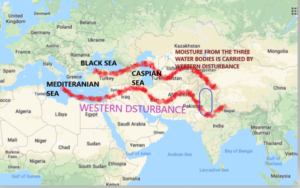
Western Disturbances are extratropical low-pressure systems bringing non-monsoonal winter rain to northwest India.
- They form as storms over the Mediterranean Sea, drawing moisture from Caspian and Black Seas.
- Cold polar air from Europe clashes with warmer Mediterranean air, creating depressions steered eastward by the Subtropical Westerly Jet Stream.
- These systems traverse the Middle East, Iran, Afghanistan, and Pakistan before entering India.
- Upon reaching the Himalayas, rising moist air triggers condensation, snowfall, and rain.
How They Form
WDs arise from atmospheric interactions far from the tropics.
- High-pressure zones near Ukraine drive cold air southward into the moist Mediterranean.
- This contrast develops extratropical depressions—non-tropical storms fueled by baroclinic instability.
- Jet stream winds at 10-12 km altitude propel them toward India, peaking in winter (December-March).
- Himalayan orography forces orographic lift, enhancing precipitation on windward slopes.
Effects on India
WDs shape India’s winter weather, agriculture, and water cycles with dual-edged impacts.
Precipitation Patterns:
- Heavy snow in J&K, Himachal Pradesh, Uttarakhand; moderate rain in Punjab, Haryana, Delhi, western UP.
- Vital for non-monsoon rainfall, comprising 30-40% of northwest India’s winter precipitation.
Agricultural Influence:
- Benefit: Essential moisture for Rabi crops like wheat, mustard, chickpeas—acts as natural irrigation in dry winters.
- Risk: Strong WDs spawn hailstorms, thunderstorms, lodging crops; IMD advises field drainage to avert root rot.
Temperature Shifts:
- Pre-arrival: Cloud cover raises nighttime temperatures via greenhouse trapping.
- Post-passage: Clear skies allow cold, dry Himalayan winds to plunge daytime temperatures, fostering fog and cold waves.
Hydrological Role:
- Snow accumulation replenishes glaciers feeding Ganga, Yamuna, Indus rivers.
- Ensures summer water flows, bolstering irrigation and drinking supply amid erratic monsoons.
Current alerts underscore IMD’s role in forecasting these for farmer advisories and urban preparedness.
7. Green steel can shape Indias climate goals trajectory
GS III -Economy, Environment
CONTEXT :India’s push for green steel aligns with its updated NDC commitments ahead of COP31, amid steel production tripling needs to 400 MT by 2050 and 12% emission share.
Steel’s Role in Growth vs Emissions
Steel drives infra and industry but poses climate risks.
- Production must triple to 400 MT by mid-century for development goals.
- Coal blast furnaces cause 12% of India’s CO2 emissions currently.
- Lock-in risk: Long-life assets embed high emissions for decades.
- Dual challenge: Sustain growth while hitting net-zero targets.
Worldwide Trends Pressuring India
Global majors decarbonise, threatening non-green exporters.
- China scales scrap steel and green hydrogen to cut coal use.
- EU’s CBAM taxes carbon-heavy imports from 2026 onwards.
- Market access hinges on low-carbon credentials for premiums.
- Laggards face tariffs, lost competitiveness, reputational hits.
Industry Steps and Shortfalls
Producers pilot tech but scale lags urgently.
- Trials in hydrogen injection, renewables, carbon capture underway.
- Modernisation and scrap use improve efficiency gradually.
- Pilots insufficient; need demo plants and zero-emission rollout.
- SMEs must adopt best tech for equitable shift.
Policy Gains Yet Incentive Gaps
Frameworks exist but lack decisive push.
- Greening Steel Roadmap charts transition path forward.
- Green Steel Taxonomy sets India as low-carbon pioneer.
- Green Hydrogen Mission, renewables aid intensity targets.
- Barriers: High H2 costs, scrap shortages, skill gaps persist.
Path Ahead for Market Transition
Bold signals needed for investment confidence.
- Set phased emission targets for short/medium/long term.
- Roll out carbon pricing at $90-100/tonne CO2 viability level.
- Mandate taxonomy, public procurement, certification systems.
- Fund shared infra hubs; fiscal aid for SMEs’ high capex.
8. The 27th amendment, Pakistan democratic dilemma
GS II -International relations, governance
CONTEXT :Pakistan’s 27th Constitutional Amendment, passed recently, shifts constitutional powers from the Supreme Court to a new Federal Constitutional Court, sparking fears of judicial erosion amid political instability.
Pakistan’s 27th Amendment Overview
The amendment restructures judicial authority under military and executive pretexts.
- Transfers Supreme Court’s original jurisdiction on rights, disputes to new FCC.
- Weakens apex court’s role in landmark political cases like Panama Papers.
- Risks executive dominance over constitutional interpretation long-term.
Supreme Court’s Reduced Authority
Historic guardian role faces deliberate sidelining.
- Lost power to adjudicate federal-provincial, fundamental rights cases.
- Fragmented adjudication undermines coherent constitutional rulings.
- Exposed to executive influence in fragile political system.
Threats to Judicial Autonomy
Rule of law hinges on independent courts per Dicey’s doctrine.
- FCC composition allows political sway, diluting 18th Amendment safeguards.
- Specialised courts viable only with proven neutrality from power.
- Turns judicial review into potential executive tool.
Lessons from Constitutional History
Executive-judiciary clashes echo global precedents.
- 17th-century England: Coke rejected King James I’s personal adjudication claim.
- Established law over monarch, insulating courts from rulers’ whims.
- PCA revives vulnerability, prioritising control over restraint.
South Asian and Global Parallels
Developments warn neighbours like India.
- Fragile Global South democracies tempt control via “stability” amendments.
- Inter-war Europe: Legal changes hollowed institutions incrementally.
- Pakistan’s shift preserves form but erodes substantive checks.
Regional Stakes for India
Neighbourhood instability impacts constitutional health.
- Instructive for India’s robust democracy amid shared pressures.
- Normalises executive overreach, risking democratic backsliding.
- Stresses vigilance on judicial boundaries, institutional respect.
Pakistan’s amendment signals philosophical shift from constitutional shield to governance tool, urging India to fortify judicial independence for regional democratic resilience.