
1. Secondary particulate matter
GS paper III-Environment
Context :The Supreme Court on 6 Jan 2026 directed CAQM to file a scientific report on major causes of worsening air quality in Delhi-NCR.
- The report is a meta-analysis of studies from 2015–2025 to arrive at a “unanimous opinion” on pollution sources.
- It is now in focus as it exposes data gaps, weak enforcement, and the need for a high-resolution, science-based clean-air roadmap.
Major Findings: Winter Contribution Share
- Secondary particulate matter is the largest single contributor – about 27% – in Delhi-NCR’s winter pollution.
- Vehicular transport contributes roughly 23% to winter PM2.5 levels in the region.
- Biomass and waste burning (including crop residue and garbage) account for around 20%.
- Road dust and soil dust together contribute about 15% to winter pollution.
- Industrial emissions (including power plants and factories) make up about 9%.
Secondary Particulate Matter (PM) Explained
- Primary PM is emitted directly as solids/liquids from sources like vehicles, construction, or burning.
- Secondary PM is not directly emitted; it forms in the atmosphere through chemical reactions of gases.
How Secondary PM Forms
- Gases like SO₂ and NOₓ from industries and vehicles undergo oxidation in the air.
- These oxidized acidic gases react with alkaline ammonia (NH₃) to form new compounds.
- Ammonium sulfate and ammonium nitrate then condense into fine solid/liquid particles (PM2.5).
Why Ammonia (NH₃) is Crucial
- Ammonia acts as the main “neutralizer” that converts acidic gases into stable solid particles.
- Over 80% of NH₃ in India comes from fertilizers and livestock waste in agriculture.
- This makes rural agricultural emissions a major indirect driver of urban secondary PM in Delhi-NCR.
Health Impact of Secondary PM2.5
- Secondary PM2.5 is very fine and can penetrate deep into the lungs and enter the bloodstream.
- It causes chronic inflammation and oxidative stress, harming multiple organs.
- Linked to aggravated asthma, COPD, lung cancer, heart attacks, strokes, and eye diseases.
Why the Report Was Framed .
- Past regulatory actions failed due to reliance on coarse or unreliable emissions data.
- Policies often focused only on local sources (like dust) while ignoring large regional secondary pollution.
- CAQM identified the need for a high-resolution (500m × 500m grid) emissions inventory to identify hotspot-specific solutions
2. Upscaling Udhampur’s Kaladi
Context :Union MoS for Science & Technology has asked to upscale Kaladi for wider use in food products and modern recipes.
- The push is to transform this traditional mountain cheese into a commercially viable and nationally recognised food item.
- Kaladi already has a GI tag, making it a protected geographical product of Jammu & Kashmir’s Udhampur region.
What is Kaladi?
- Kaladi is a famous traditional dairy product from the Dogra cuisine of Jammu & Kashmir.

- It is a traditional stretched-curd cheese made in the Udhampur district of Jammu division.
- Kaladi has been granted a Geographical Indication (GI) tag, recognising its unique regional identity.
How is Kaladi Made?
- Traditionally prepared from raw, full-fat milk using whey water as a coagulant.
- Milk is vigorously churned in an iron pot with a wooden plunger-like tool.
- The molten milk solids are separated by adding sour milk or curd (locally called mathar).
- The cheese is then stretched, flattened, and cooled directly on the hot black iron pot.
- After cooling, the flattened cheese is kept in a bowl to solidify and then sun-dried to remove moisture.
- In Udhampur’s mountainous climate, strong sun dries the outside while the inside stays moist and soft.
About the GI Tag
- GI stands for Geographical Indication and is given to products with a specific geographical origin and unique qualities.
- It is used for agricultural, food, handicraft, and industrial goods associated with a particular region.
- In India, GI tags are governed by the Geographical Indications of Goods (Registration and Protection) Act, 1999.
- A GI tag is valid for 10 years and can be renewed thereafter
3. Long range Anti-ship hypersonic missile (LR-AShM)
GS paper III-Science and technology
Context :LR-AShM will be showcased publicly for the first time at Kartavya Path during Republic Day 2026.
- The display follows successful flight tests in late 2024 and 2025 that validated its terminal maneuvers and high accuracy.
- With this debut, India joins the small club of nations (US, Russia, China) with operational hypersonic glide missile technology.
What is LR-AShM? (Key Features)
- It is a long-range air-to-surface hypersonic missile developed by DRDO.
- Reaches speeds of Mach 10 (~3.37 km/s) and maintains an average speed of Mach 5.0.
- Can strike targets up to 1,500 km away, giving Indian forces a large stand‑off distance.
- Uses a two-stage solid-propulsion rocket motor to achieve hypersonic velocity before releasing the glide vehicle.
- Features indigenous X-band SAR and high-accuracy seekers to hit moving ship targets.
Understanding “Hypersonic Glide Missile”
- Follows a boost-glide architecture: rocket lifts the vehicle to high altitude, after which it glides in the upper atmosphere.
- Glide vehicle can perform sharp mid-course and terminal maneuvers, unlike ballistic missiles with fixed paths.
- Its ability to change direction and altitude makes it extremely difficult for current air defense systems to intercept.
- Follows a quasi-ballistic trajectory that stays below traditional radar horizons for most of the flight, adding stealth.
Strategic Importance for India
- Enables strong A2/AD (anti-access/area denial) in the Indian Ocean, especially against hostile aircraft carriers.
- Helps secure key maritime chokepoints like the Malacca Strait from shore-based mobile launchers.
- Showcases fully indigenous avionics and guidance, marking a major step toward Aatmanirbhar Bharat in defense.
- Creates cost asymmetry: a relatively low-cost missile can threaten or disable a multi-billion dollar carrier.
Policy & Border Defense Significance
- Republic Day display signals India’s technological sovereignty and military readiness to the world.
- Acts as a reciprocal deterrent against adversarial “carrier-killer” missiles targeted near India’s borders.
- Designed for all three services, with land-based and future ship-launched variants planned.
- Helps future-proof India’s defences by neutralizing advanced mid-course defence systems being developed by adversaries.
4. World’s oldest cave art discovered in Indonesia’s Muna island
GS paper I-Art &culture
Context :A hand stencil in a cave on Muna Island, Indonesia, has been dated to at least 67,800 years ago.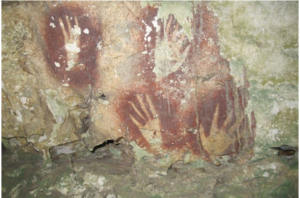
- This makes it the oldest securely dated rock art known globally, older than any previously known cave art.
- The discovery is significant for understanding early human cognition and the spread of Homo sapiens across Island Southeast Asia.
About Muna Island
- Muna Island lies in the Southeast Sulawesi province of Indonesia, across the Strait of Buton from Buton Island.
- It has an area of about 1,704 sq km and a hilly terrain, with forests, beaches, and coastal plains.
- The main town and port is Raha, located on the northeastern coast.
The Rock Art Discovery
- The artwork is a red hand stencil in Liang Metanduno cave, made by blowing pigment over a hand pressed against the wall.
- Uranium-series dating of calcite layers over the pigment gives a minimum age of 67,800 years for the hand stencil.
- This predates the previous oldest known rock art (from Spain and other Sulawesi sites) and is now considered the world’s oldest.
Cultural and Natural Features
- Muna is home to the Muna people, who have a rich cultural heritage with traditional dances, crafts, and social customs.
- The island’s economy relies mainly on agriculture, fishing, and local handicrafts.
- Famous natural attractions include Liangkobori Cave (with prehistoric paintings) and Napabale Lake, which has a natural tunnel to the sea.
5. A dangerpus march towards a Himalayan ecocide
GS PAPER III-Environment
Context :The Char Dham Road Widening Project has become a central point of conflict in 2025-2026 due to a series of disasters in Uttarakhand (like the Dharali flash flood) and the government’s push for wider roads despite expert warnings.
Why the Himalayas are at Risk
- Young Mountains: The Himalayas are tectonically active and still rising, making them naturally unstable.
- Seismic Sensitivity: The region falls under Zones IV and V, meaning it is highly prone to high-magnitude earthquakes.
- Fragile Geology: Slopes consist of loose soil and fractured rocks that cannot support heavy, vertical cutting.
The Controversial Char Dham Road Project
- Project Scope: A ~900 km project to provide all-weather connectivity to Yamunotri, Gangotri, Kedarnath, and Badrinath.
- National Security vs. Ecology: The Ministry of Defence demands 10m wide roads for troop movement, while environmentalists warn of collapse.
- Width Standards: The project ignores the 5.5m Intermediate Lane standard recommended for hilly terrains by the 2018 MoRTH circular.
- Legal Conflict: In 2025, activists filed for a review of the 2021 SC judgment that allowed 10m widths, citing increased landslides
Why the Engineering Approach is Problematic
- Wrong Road Standards: 10-12m wide roads require massive “hill-side cutting” which removes the “toe” support of the mountain.
- Geologically Sensitive Zones: Construction occurs in the Main Central Thrust (MCT), where the earth’s crust is most broken.
- Muck Dumping: Debris (muck) is often dumped into rivers like the Alaknanda and Bhagirathi, raising river beds and causing floods.
- Engineering Failures: Frequent use of vertical cuts instead of gentle slopes leads to immediate and recurring landslides.
Irreplaceable Deodar Forests
- Ecological Anchors: Deodar roots act as natural “nails,” binding the soil and preventing mass soil erosion.
- Microclimatic Regulation: These forests maintain local moisture levels and cool the air, preventing “heat islands” in the valleys.
- Irreplaceable Functions: They act as primary carbon sinks and are essential for the survival of endangered species like the Western Tragopan.
- Flawed Tree Translocation: Old-growth Deodars have deep, complex root systems; moving them has a near-zero survival rate in this terrain.
Consequences & Policy Contradictions
- Risk Multiplier: Climate change causes intense “cloudbursts,” which, combined with weakened slopes, create catastrophic “mud-floods.”
- Water Insecurity: Heavy construction destroys underground springs, which are the only source of water for thousands of Himalayan villages.
- Policy Contradiction: While the government promotes “Green Growth,” it simultaneously bypasses Eco-Sensitive Zone (ESZ) protections.
- Governance Failure: Environmental Impact Assessments (EIAs) are often segmented into small pieces to avoid stringent scrutiny.
6. BRICS India summit needs a green and resilient agenda
GS PPAER II-IR
Context :India is hosting the BRICS Summit in 2026, making it a major diplomatic moment to shape the group’s future path.
- The summit is being seen as a chance to present BRICS as a climate‑resilient, development‑focused bloc amid global uncertainty.
- India is using its G‑20 experience to promote a green, inclusive, and resilient BRICS agenda that speaks to the Global South.
Global Climate Leadership Vacuum
- Climate governance is weakening due to geopolitical tensions and shifting priorities among major powers.
- The US has scaled back climate action, expanded fossil fuels, and weakened multilateral commitments.
- Europe, once climate leaders, are now focusing more on security and economic concerns than on climate ambition.
- This disengagement by developed nations has created a leadership gap that developing countries must now fill.
BRICS as a Climate Action Platform
- BRICS brings together major developing economies that all face climate risks, though in different ways.
- Shared vulnerabilities (infrastructure, health, agriculture, livelihoods) make climate resilience a unifying BRICS theme.
- India can use its balancing diplomacy to advance climate cooperation without harming key bilateral ties.
- A BRICS green agenda can focus on adaptation, equity, and sustainable growth, not just emissions cuts.
Strengthening Climate Coalitions
- BRICS has more economic and political weight than older groups like BASIC, so its voice on climate is stronger.
- BRICS can help coordinate developing countries’ positions in UN climate talks and protect their development space.
- Several BRICS members have hosted major climate COPs, proving their role in sustaining the global climate process after Paris.
- BRICS can collectively oppose unilateral climate‑linked trade measures that harm developing economies.
Climate Finance: The Key Enabler
- Without adequate finance, developing countries cannot scale up climate action, adaptation, or clean energy.
- The 2025 BRICS Climate Finance Declaration stressed urgent need for more funds for developing nations.
- India insists climate commitments must be matched by financial support based on historical responsibility and capacity.
- Effective climate finance needs engagement beyond the New Development Bank, including with the World Bank and IMF.
- As private ESG flows slow, BRICS must help keep international finance flowing to climate projects in the Global South.
India’s Strategic Opportunity
- Expanded BRICS now covers a large share of global population, GDP, and trade, giving it real influence.
- As host, India can shape a BRICS agenda that combines climate resilience with inclusive and equitable growth.
- Leading a green BRICS agenda will boost India’s global standing and its role as a leader of the Global South.
- A strong BRICS climate initiative can help balance China’s growing influence in global climate leadership.
Conclusion
- The BRICS Summit is a strategic moment for India to influence global climate governance toward resilience and equity.
- By putting green, inclusive development at the centre, India can help make BRICS a stable, development‑friendly force in global climate politics.
7. Roadmap for Green Transition of MSMEs”
Context :NITI Aayog released the report “Roadmap for Green Transition of MSMEs” along with decarbonisation plans for cement and aluminium.
- It is a key document to guide India’s 69 million MSMEs toward low‑carbon, sustainable growth over the next decade.
- The roadmap is in focus as it links the MSME sector’s modernisation with India’s pledge to reach net‑zero emissions by 2070.
About the MSME Green Transition Roadmap
- The roadmap is a 10‑year strategic action plan for green transformation of India’s MSME sector.
- It identifies three main levers: energy efficiency, green electricity, and alternative fuels.
- A proposed National Project Management Agency (NPMA) will drive implementation through clusters, demand aggregation and finance.
Key Data on Indian MSMEs
- MSMEs contribute nearly 30% to India’s GDP and about 46% to total exports.
- They employ over 250 million people, making them the second‑largest employment generator after agriculture.
- In 2022, the sector emitted about 135 million tonnes of CO₂e, mainly due to fossil‑fuel dependence.
- MSMEs consume over 25% of total industrial sector energy in the country.
- Most operate in industrial clusters; about 140 major clusters exist, some producing 70–80% of certain national goods.
Why Green Transition is Needed
- MSMEs must decarbonise to meet global standards like the EU’s CBAM, which starts in 2026 and affects steel, textiles, etc.
- They are highly vulnerable to climate shocks; e.g., Cyclone Michaung (2023) hit 4,800 units in Tamil Nadu, causing ~$360 million in losses.
- Green technologies (e.g., efficient motors, solar) can reduce energy bills, improve margins, and offer payback in 1–5 years.
- Domestic regulations like BRSR now require large firms to report supply‑chain emissions, pushing MSMEs to become greener.
- MSME energy demand is expected to rise 50% by 2030, making low‑carbon growth essential for India’s 500 GW renewable target.
Existing Green Initiatives for MSMEs
- ADEETIE Scheme helps MSMEs adopt energy‑efficient tech with interest subsidy and technical support.
- GIFT Scheme offers concessional finance for MSME green projects like waste management and clean transport.
- SPICE supports circular economy in plastics, electronics and similar sectors.
- ZED Certification promotes quality manufacturing with minimal environmental impact.
- The roadmap proposes extending PM Surya Ghar Muft Bijli Yojana‑style rooftop solar benefits to micro‑enterprises.
Major Challenges in Green Transition
- MSMEs often lack access to affordable green finance due to high perceived risk and weak creditworthiness.
- Banks view MSMEs as risky, making it hard for small units to get low‑interest loans for green tech.
- Many MSMEs lack awareness of the latest energy‑efficient and clean technologies.
- Only about 1 in 25 MSMEs measures its carbon footprint, showing a big knowledge gap.
- The sector’s fragmented and unorganised supply chains make uniform green solutions difficult to implement.
- Small units in brick, foundry, etc., struggle to get consistent biomass or gas supply compared to large industries.
- High upfront cost of green machines (e.g., solar panels, efficient motors) is often more than a micro‑unit’s annual turnover.
- There is low trust in third‑party models like ESCOs and Pay‑as‑You‑Save, despite performance guarantees.
Way Forward
- Set up a National Project Management Agency (NPMA) to manage MSME clusters and deliver subsidies effectively.
- Aggregate demand of many MSMEs in a cluster to negotiate better prices for solar, motors and green equipment.
- Create a Climate Sister Impact Fund (CSIF) to provide concessional debt/equity for low‑carbon technologies.
- Introduce a simple, standardised MRV (Monitoring, Reporting, Verification) system for MSMEs to track and certify emission reductions.
- Establish a secretary‑level committee for Regulatory Impact Assessment to ensure green rules do not overburden small units.
Conclusion
- Green transition is no longer optional; it is a strategic necessity for MSME survival and global competitiveness.
- By tackling structural barriers with finance, technology support and strong institutions like NPMA, India can make MSMEs leaders of the green industrial revolution.
- Successfully implementing this roadmap will ensure MSMEs remain the engine of an inclusive, resilient and Viksit Bharat by 2047