1. National Improvised Explosive Device Data Management System (NIDMS)
GS PAPER III-Internal Security
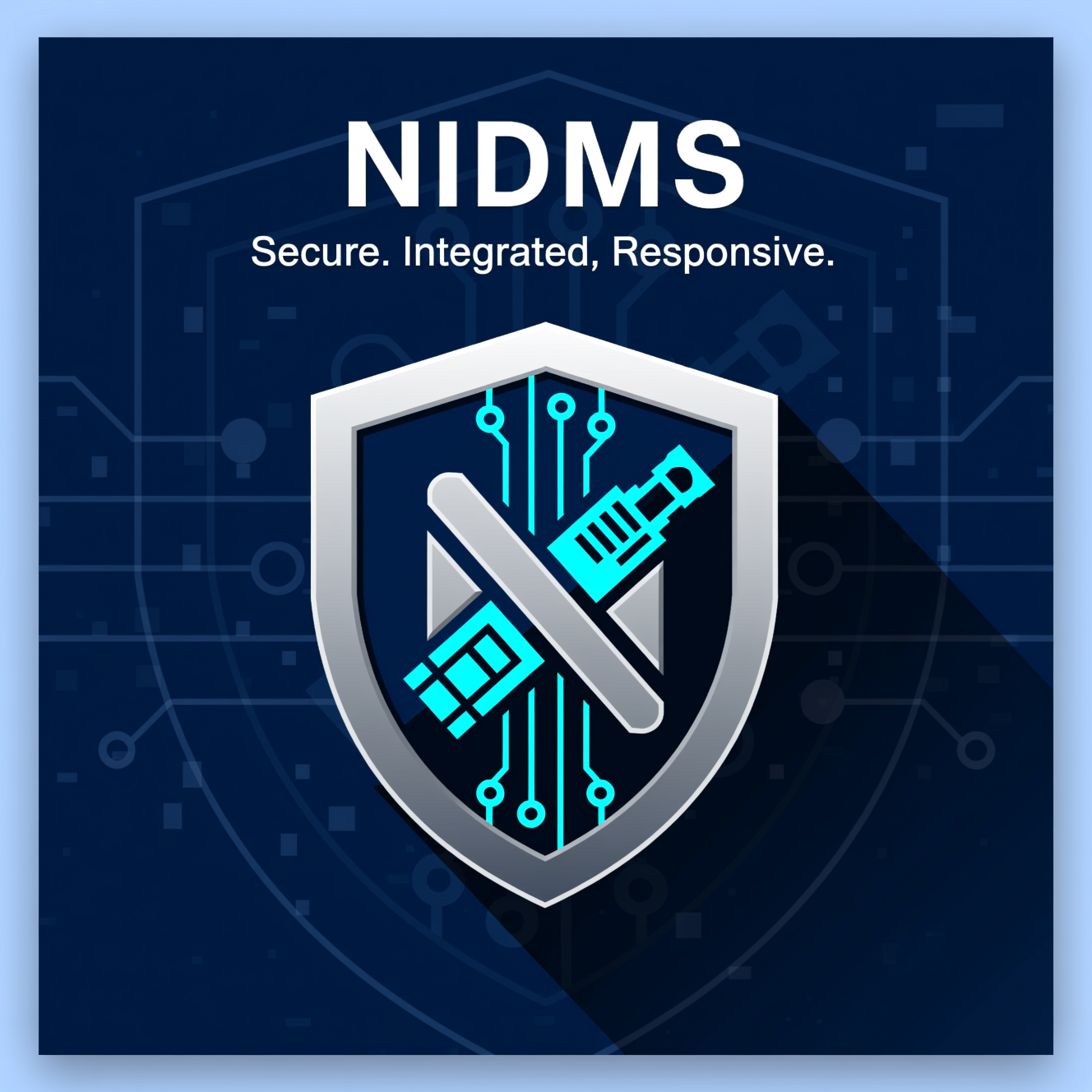
CONTEXT :Union Home Minister has inaugurated the National Improvised Explosive Device Data Management System (NIDMS), a national digital platform to systematically collect and analyse IED and bomb blast data.
- It is India’s first national digital database and analytics platform on IED/bomb blast incidents, aimed at strengthening counter‑terror investigations and prevention.
What is NIDMS?
- Full form: National Improvised Explosive Device Data Management System.
- It is India’s first national digital database and analytics platform on IED and bomb blast incidents.
- Covers all IED and bomb blast cases in India since 1999.
Genesis and Mandate
- Developed under the Ministry of Home Affairs (MHA).
- Aims to integrate fragmented IED/bomb blast data scattered across States and central agencies.
- Mandate includes standardisation of data, secure sharing, documentation, and advanced analysis of blast incidents.
Nodal Agency and Implementation
- Nodal agency: National Security Guard (NSG).
- Operational unit: National Bomb Data Centre (NBDC), NSG.
- Located at Manesar, Haryana.
Key Features and Utility
- Centralised repository of all IED/bomb blast cases, with uniform data formats across States and agencies.
- Uses AI/ML tools for pattern recognition, trend analysis, and risk forecasting.
- Signature analysis to link cases by explosive type, circuits/timers, modus operandi, and targeting patterns.
- Enables post‑blast forensic analysis, inter‑State case linkage, and development of predictive counter‑terror strategies.
- Provides secure, single‑window access to authorised police and security agencies for faster investigation and coordination.
2. Prasar Bharati has launched “Creator’s Corner
GS PAPER II– Governance, Constitution, Polity, Social Justice
CONTEXT :Prasar Bharati has launched “Creator’s Corner”, a dedicated slot on DD News for curated content by digital creators across India.
- It signals a shift towards platform–creator partnerships in public broadcasting and is part of major reforms in Prasar Bharati.
- Aligns with the government’s push for the creator economy and the Prime Minister’s vision of the “orange economy”.
What is Creator’s Corner?
- A dedicated programming slot on DD News to broadcast curated content made by digital creators from across India.
- Aims to integrate grassroots digital content into mainstream public service broadcasting.
Parent Ministry & Institution
- Parent Ministry: Ministry of Information and Broadcasting (I&B).
- Public broadcaster: Prasar Bharati (Doordarshan and All India Radio).
- Key minister: Ashwini Vaishnaw (I&B, Electronics & IT, Railways).
Genesis & Reform Linkage
- Part of major structural and technological reforms planned for Prasar Bharati.
- Seeks to reorient public broadcasting towards industry participation and new-generation creators.
- Aligns with the government’s push for the creator economy and the PM’s vision of the orange economy.
About the WAVES Platform
- WAVES is Prasar Bharati’s OTT platform launched in November 2024.
- One-stop digital hub offering live TV, video-on-demand, digital radio, gaming, and e‑commerce in a single app.
- Available on Android and iOS; provides family-friendly, multilingual content in 12 languages (expanding).
- Has ONDC integration for in‑app online shopping and is mostly free to access.
3. District-Led Textiles Transformation (DLTT )
Context :Ministry of Textiles launched District-Led Textiles Transformation (DLTT) to boost textile sector at district level.
- Aims to make 100 districts global export champions and 100 aspirational districts self-reliant hubs.
- Important for UPSC GS-II as it links textiles, MSMEs, exports, and inclusive development.
About DLTT Plan
- Sector-specific, district-level strategy to transform India’s textile ecosystem.
- Implemented by Ministry of Textiles using data-driven district categorisation.
- Focuses on inclusive, sustainable, and export-oriented growth in textiles.
Aim of the Scheme
- Drive inclusive and sustainable growth in the textile sector.
- Strengthen MSMEs and formalise the textile workforce.
- Create globally competitive clusters through decentralised district-level action.
Key Features
Data-Driven District Scoring
- Districts scored on Export Performance, MSME Ecosystem, and Workforce Presence.
- Helps classify districts into Champion and Aspirational categories.
Two-Pronged District Strategy
- Champion Districts (Scale & Sophistication):
- Turned into Global Export Champions.
- Mega Common Facility Centres (CFCs) and Industry 4.0 adoption.
- Advanced logistics and direct export market linkages.
- Aspirational Districts (Foundation & Formalisation):
- Upgraded into self-reliant textile hubs.
- Basic skilling, certification, and Raw Material Banks.
- Support to SHGs, cooperatives, and micro-enterprises.
Purvodaya Convergence (East & North-East Focus)
- Special focus on Eastern and North-Eastern India, especially tribal belts.
- Improves connectivity and promotes GI tagging of unique handicrafts.
- Positions local products for premium global markets.
Collaborative Implementation Model
- Converges government schemes with industry and academia.
- Strengthens textile clusters and scales proven cluster models across districts.
Significance of DLTT
- Moves India up the textile value chain and diversifies export baskets.
- Strengthens MSMEs and promotes formalisation of textile labour.
- Boosts women- and SHG-led enterprises for inclusive growth.
- Accelerates development in aspirational, eastern, and north-eastern districts.
4. The phaltan cas is also about a victims dignity
GS‑II: Polity & Governance, GS‑III: Internal Security & Social Justice
Context :The Phaltan case (Maharashtra, October 2025) — a young doctor’s suicide after alleging rape and harassment by a police official — has reignited debate on victim dignity and systemic failure in India’s criminal justice system.
- It highlights the gap between progressive laws (like BSA, BNS) and their implementation, especially in protecting victims from secondary trauma, victim-blaming, and institutional betrayal.
Core Issue: The Two Crimes
- First crime: Alleged rape and harassment by a police official and another man, followed by the victim’s suicide.
- Second crime: Systemic failure — police, administration, and protective institutions ignored her pleas for help.
- Third crime: Public sphere — victim’s family faced character assassination, moral judgment, and media scrutiny instead of support.
Institutional Failure and Public Shaming
- State mechanisms failed to act on the victim’s complaints, showing apathy and lack of urgency.
- A woman Chairperson of the Maharashtra State Commission for Women publicly disclosed private details of the victim’s personal life and communications.
- Such disclosures, even as “context,” fuel victim‑blaming and reinforce patriarchal notions of a woman’s dignity being tied to sexual purity and moral behaviour.
Legal Safeguards for Victim Dignity
- Section 53A of the Indian Evidence Act (now Section 50 of Bharatiya Sakshya Adhiniyam, 2023) bans using a woman’s personal history or sexual life to argue consent.
- Section 146 (now Section 48 of BSA) restricts cross‑examination on a victim’s general immoral character or previous sexual experience.
- Identity protection: Section 228A IPC (now Section 72 of Bharatiya Nyaya Sanhita) prohibits disclosing the identity of sexual assault victims to prevent stigma and public humiliation.
Judicial View: Dignity as Constitutional Right
- In State of Punjab v. Gurmit Singh (1996), SC held that a woman’s prior sexual history is irrelevant to consent and her testimony should not be discounted on moral grounds.
- Courts have repeatedly condemned hyper‑scrutiny of victims, calling it an “insult to injury” and a violation of dignity.
- Publicising the Phaltan victim’s dying declaration to media violated both identity protection and the spirit of judicial doctrine.
Institutional Betrayal and Limits of Reform
- The Bharatiya Nyaya Sanhita, 2023, aims for a more women‑centric criminal justice system, but social mindset remains patriarchal.
- When a constitutional or political authority engages in character assassination, it betrays the solidarity needed for gender justice.
- Consequences: victims stop reporting, families withdraw from legal battles, and public discourse shifts blame from perpetrators to victims.
Bridging the Gap: Implementation as Justice
- Police, prosecutors, and judges need trauma‑informed training to handle sexual violence cases sensitively.
- Public discourse must reject victim‑blaming and focus on the accused’s actions, not the victim’s character.
- Expand forensic/digital infrastructure, legal aid, women’s help desks, AV statement systems, and psychological support to enforce new laws effectively.
Conclusion: Law, Institutions, and Social Consciousness
- The Phaltan case forces India to ask: can criminal law protect women when society, media, and institutions still police their morality?
- Laws may evolve, but justice requires alignment between statute, institutional practice, and social consciousness.
- Women in authority must not only hold power but also embody constitutional morality — dignity, equality, and empathy as non‑negotiable values.
5. Beyond economy, Iran stir reflects rage against regime
GS PAPER -II: International Relations
Context :Iran’s largest protests in 3 years span all provinces, evolving from economic woes to anti-regime fury.
- India issues travel advisory for nationals amid clashes, deaths, and instability.
- Key BRICS/SCO/OPEC member with 2nd-largest gas, 4th-largest oil reserves faces turmoil.
Nationwide Protest Surge
- Sparked by Tehran Grand Bazaar merchants over soaring inflation.
- Evolved into broad anti-regime clashes with security forces, causing casualties.
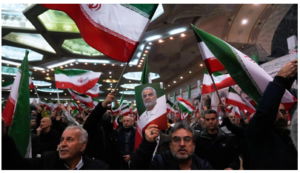
- Unrest now hits every province, biggest wave in three years.
Iran’s Key Facts
- Capital: Tehran.
- Land Borders: N (Armenia, Azerbaijan, Turkmenistan); E (Afghanistan, Pakistan); W (Iraq, Turkey).
- Sea Borders: Caspian Sea (N); Persian Gulf, Gulf of Oman (S).
- Geography: Lake Urmia, Middle East’s largest endorheic salt lake.
- Resources: 2nd in natural gas; 4th in proven crude oil reserves.
Vulnerable Timing
- Inflation surged >30% in 2025, topping 52%; food up 7% monthly.
- Rial lost >50% value, hitting record low of ~1,480,500/USD.
- US/Israel bombings last year damaged regime’s domestic image.
Economic Triggers
- 5-year forex crises, high inflation, low purchasing power hit hard.
- US/UN sanctions worsen import shortages and daily hardships.
Regime Change Unlikely
- IRGC profits from corruption; unlikely to defect en masse.
- No public push to upend bureaucracy handling daily services.
- Revolution would deepen economic misery.
Deeper Weaknesses
- Geopolitics: Weakest since 1979—lost Syria ally, Hezbollah hit, Israel dominant with Trump backing.
- Succession: Elites prep for Khamenei’s transition, a volatile shift.
- Protests disorganized but snowballing, threatening stability.
6. Somaliland is no longer a diplomatic endnote
GS paper II: International Relations,
Context :Israel’s Dec 2025 recognition of Somaliland marks its first major diplomatic breakthrough, challenging China’s One China policy.
- Creates strategic dilemma for China amid Horn of Africa rivalry over ports, Red Sea security, and influence.
- Ties into global competition: Taiwan ties, Ethiopia’s port deal, US/UAE interest amplify tensions.
Somaliland Overview
- Location: Horn of Africa.
- Borders: Djibouti, Ethiopia, Somalia, Puntland; Gulf of Aden coastline.
- Capital: Hargeisa.
- Key Asset: Berbera Port, developing as trade hub for landlocked Ethiopia.
Strategic Importance
- Controls Gulf of Aden/Red Sea route for global trade, energy flows.
- First major recognition by Israel (Dec 2025) boosts diplomatic prospects.
- Taiwan ties since 2020 clash with China’s One China stance.
- Horn rivalry: China, Israel, Gulf states, US vie for ports/bases.
- Vital for Bab-el-Mandeb maritime security amid Red Sea threats.
China’s Potential Counters
- Hybrid Tactics: Economic coercion, elite lobbying, media campaigns (e.g., Star Times) on integrity.
- UN Leverage: Block recognition via Security Council seat.
- Pro-Palestinian Play: Oppose Israel to champion Palestine, risks Middle East entanglement.
Factors Heightening Dilemma
- Ethiopia’s MoU: Trades recognition for Berbera port access.
- US Push: Congress eyes Somaliland as democratic partner.
- UAE Backing: Tacit support erodes isolation efforts.
Core Chinese Challenges
- Curb Taiwan’s regional visibility.
- Limit Israeli/Western Red Sea foothold.
- Prevent rival security setup near Djibouti base.
7. UIDAI launches mascot Udai to simplify communication on public understanding of Aadhaar
GS Paper II-Indian Polity and Governance
Context :UIDAI launched the Aadhaar mascot ‘Udai’ on January 10, 2026, following a nationwide design contest on MyGov platform in 2025 that received 875 entries.
- This move highlights UIDAI’s push for citizen-centric digital services amid India’s expanding Digital Public Infrastructure (DPI), making Aadhaar—used by over 1.4 billion residents—more approachable.
Introduction to the Initiative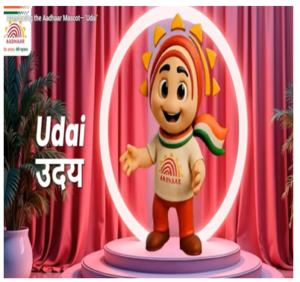
UIDAI has introduced ‘Udai (उदय)’ as an official mascot to humanize Aadhaar services and boost public engagement.
Purpose of Udai
Acts as a relatable character to demystify Aadhaar operations like updates, authentication, offline checks, selective data sharing, and ethical use, targeting diverse users across literacy and language barriers.
Involved Body
Unique Identification Authority of India (UIDAI), under the Ministry of Electronics and Information Technology (MeitY).
Core Objectives
- Simplify and standardize messaging on Aadhaar ecosystem.
- Foster public trust via participatory design.
- Promote accessibility for India’s billion-plus Aadhaar holders, aligning with inclusive DPI goals.
Highlighted Aspects
- User-friendly explanations of technical processes.
- Covers full spectrum: from basic updates to advanced features like new authentication tech.
- Born from public contest with rigorous selection (multi-stage judging).
- Supports multi-lingual, low-literacy outreach for broader inclusion.
Broader Impact
- Builds confidence by embodying “Aadhaar for the people, by the people.”
- Minimizes misuse and errors through clearer info.
- Bolsters India’s DPI stack (e.g., Aadhaar as foundational ID for welfare, banking).
8. ISRO confirms a ‘cosmic dust particle’ hits Earth’s atmosphere every 16 minutes:
Dust Experiment (DEX)
GS PPAER III-Science and technology
Context :ISRO has confirmed that an interplanetary dust particle hits Earth’s atmosphere roughly every 16 minutes, based on data from India’s first cosmic dust detector, DEX.
- This finding is crucial for space safety, satellite operations, and future crewed missions like Gaganyaan and Moon-Mars exploration.
What is DEX?
- DEX (Dust EXperiment) is India’s first indigenously developed cosmic dust detector.
- It is designed to detect and measure high-speed interplanetary and orbital dust particles in Earth’s upper atmosphere.
Developed by
- Developed by the Physical Research Laboratory (PRL), Ahmedabad.
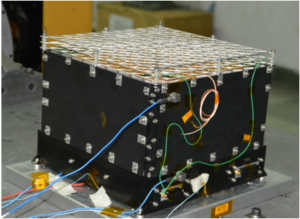
- Under the Indian Space Research Organisation (ISRO).
Flown aboard
- Flown on the PSLV-C58 XPoSat mission.
- Operated on the PSLV Orbital Experimental Module (POEM) at ~350 km altitude.
Aim of DEX
- To directly measure cosmic dust flux in Earth’s atmosphere.
- To generate mission-critical data for space environment monitoring and satellite safety.
Key Features
- Works on hypervelocity principle, detecting dust impacts at >4 km/s.
- Compact 3 kg payload with ultra-low power consumption (4.5 W).
- 140° wide-view detector for higher hit probability.
- Operated in low-Earth orbit at ~350 km altitude, 9.5° inclination.
Major Findings
- Earth’s atmosphere is hit by an interplanetary dust particle roughly every 1,000 seconds (~16 minutes).
- Measured dust flux: ~6.5 × 10⁻³ particles m⁻² s⁻¹, validating global dust models.
About Interplanetary Dust Particles (IDPs)
- IDPs are microscopic fragments from comets, asteroids, and meteoroids.
- They constantly rain onto planetary atmospheres, forming the “meteor layer”.
How IDPs are formed
- Cometary debris released when comets heat up near the Sun.
- Generated from high-energy collisions in the asteroid belt.
- Result from long-term cosmic erosion of celestial bodies.
Implications
- Tiny hypervelocity particles can cause catastrophic damage to satellites and crewed spacecraft.
- IDPs influence orbital debris dynamics and near-Earth space conditions (space weather).
- Provide clues about early solar system evolution and planetary formation.
- DEX-like instruments can enable first-ever dust measurements in Venusian and Martian atmospheres, vital for Moon-Mars human exploration