
1. Folic acid key to prevent spina Bifida
GS paper III- S&T-Biotechnology -Health
Context :India’s folic acid awareness crisis is in news due to Jan 2026 campaigns highlighting preventable spina bifida deaths despite known solutions since 1991. Reports note 9.46/1000 births affected, urging fortification amid systemic gaps.
What is Spina Bifida
- Neural tube defect where spine fails to close fully during fetal development.
- Spinal cord and nerves protrude, causing paralysis, hydrocephalus.
Why Serious
- Lifelong disabilities: paralysis, incontinence, cognitive issues.
- High infant mortality; survivors need lifelong care.
Why Awareness Key
- 70% preventable via pre-conception folic acid, yet low uptake.
- Bridges knowledge gap for women/couples on timing/dosage.
The Tragedy
- India: 9.46/1000 births (higher north ~7.48 vs south 3.6).
- Thousands affected yearly despite cheap prevention.
Systemic Failure
- No mandatory fortification like 58 countries; voluntary only.
- Poor antenatal screening, low folic acid access in rural areas.
Causes
- Folic acid deficiency primary; occurs 21-28 days post-conception.
- Genetic, environmental (diabetes, obesity), drugs factors.
Types
- Occulta: Mild, hidden gap; often asymptomatic.
- Meningocele: Sac protrudes; mild nerve damage.
- Myelomeningocele: Severe; cord exposed, major paralysis.
Folic Acid Role
What: Synthetic folate (B9 vitamin) for DNA synthesis/cell division.
Scientific Evidence
- 400mcg daily reduces NTDs 50-70%; MRC Vitamin Study 1991.
- Fortification cuts incidence 41% globally.
Global Best Practices
- Mandatory fortification (wheat/flour) in USA, Canada: NTDs down 30-50%.
- WHO urges universal; awareness weeks yearly.
India Situation
- Supplements advised but compliance <30%; no fortification mandate.
- Rising trend despite policies; regional diet gaps.
Treatment/Management
- Fetal/infant surgery to close defect; shunt for hydrocephalus.
- Orthotics, physio, catheters lifelong; no cure.
Way Forward
- Mandate fortification, expand ANC screening/awareness.
- Target high-burden north; train ASHA workers.
2. Madhav Gadgil
General Studies Paper I (Indian Heritage and Culture, History and Geography of the World and Society)
GS Paper III (Conservation, Environmental Impact Assessment, Biodiversity)
Context: Madhav Gadgil, a pioneering Indian ecologist, passed away on January 7, 2026, sparking widespread tributes for his people-centric conservation legacy. His work, from Nilgiris to Western Ghats, challenged exclusionary models and emphasized community roles.
Who is Madhav Gadgil
- Ecologist, founded IISc Centre for Ecological Sciences (1982).
- PhD Harvard (1969), pioneered people-centered ecology models.
- Championed forests, rivers, communities via field studies.
His Importance
- Shifted conservation from elite/state control to local democracy.
- Key in Biological Diversity Act 2002, People’s Biodiversity Registers.
- Influenced Supreme Court Western Ghats protection battles.
Early vs Gadgil Shift
- Pre-1980s: Exclusionary—evict people, state/elite manage forests.
- Gadgil’s shift: Include locals as stewards, decisions via gram sabha.
Pre-1980s Model
- Top-down, fortress conservation post-1972 Wildlife Act.
- Evictions, no local rights, ignored community knowledge.
- Focused technical fixes over political/social equity.
Gadgil Paradigm Shift
- Core: Conservation as political, not technical—local veto power.
- Adaptive management with community consent, not bans.
- Sustainability via social harmony, not violence/economy of grabbing.
Core Idea: People-Driven
- Gram sabha decides development vs ecology trade-offs.
- Locals document biodiversity, restore forests organically.
- Rights over resources for harmony, not elite capture.
Western Ghats Background
- Appointed 2010 by MoEF to study ecology-development impacts.
- Consulted 150+ experts/locals across 6 states.
- Submitted WGEEP report 2011 for fragile biodiversity hotspot.
WGEEP Key Recommendations
- Designate entire Ghats as ESA, 64% into ESZ1-3 zones.
- Ban mining, dams, thermal plants in ESZ1; gram sabha veto.
- Western Ghats Ecology Authority under EPA 1986.
Why Resistance
- States (Maharashtra/Karnataka/Kerala) feared livelihood/development curbs.
- Mining/quarrying lobbies saw as anti-growth.
- Misread as mass evictions (report rejected that).
Gadgil Critique of State/Law
- 1972 Wildlife Act unconstitutional—blocks self-defense vs wildlife.
- Exclusionary laws create injustice, counterproductive ecology.
- State grabs resources for few via lawlessness.
Nilgiri Legacy
- Proved people-inclusive model works in 1980s exclusion era.
- Ecological surveys with forest communities, sacred groves.
- Challenged “keep people out” via local involvement.
Nilgiri Biosphere Reserve
- India’s first (1986), spans Tamil Nadu/Kerala/Karnataka.
- Gadgil’s reconnaissance key to declaration.
Gadgil’s Crucial Role
- Lived among communities, trekked Ghats states.
- Shaped inclusive biosphere via local knowledge.
- Model for later reserves.
Key Features
- Core zone strict protection, buffer transitional use.
- Manipulation zone sustainable development with locals.
- Integrates biodiversity, community livelihoods.
Border Contributions
- Border? Likely Nilgiris interstate model for Ghats.
- Pioneered multi-state coordination via locals.
- Biodiversity Registers for cross-border knowledge.
3. NHRC issues notice to gujarat govt over typhoid case spike
GS Paper I Social Issues / Urbanization
GS Paper II-Polity & Governance
Context :Outbreak in Gandhinagar, Gujarat, with 133 suspected cases linked to sewage-contaminated drinking water.
- Mostly affecting children in Sectors 24, 26, 28, and Adiwada; 88 under treatment, 45 discharged earlier.
- NHRC issued suo motu notice on January 8 to Gujarat govt, seeking report on health status and prevention.
Why It Is Typhoid
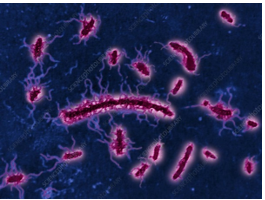
- Caused by Salmonella Typhi bacteria, confirmed in lab tests during outbreak.
- Water-borne here: Sewage leaked into new drinking water pipelines, enabling fecal-oral transmission.
- Flaws in recently laid pipelines near sewer lines caused multiple leaks (7-21 identified).
How Typhoid Spreads (Transmission)
- Mainly fecal-oral: Ingesting bacteria via contaminated water or food.
- Poor sanitation allows sewage mixing; carriers shed bacteria in feces.
- Indirect via flies or unhygienic handling; not airborne or direct person-to-person usually.
- Endemic in areas with inadequate WASH (water, sanitation, hygiene).
High-Risk Conditions
- Contaminated water supply, pipeline leaks, overcrowding in urban areas.
- Children, travelers to endemic regions, and immunocompromised most vulnerable.
- Post-monsoon or infrastructure failures increase risks; chronic carriers amplify spread.
- Lack of vaccination heightens susceptibility in populations like this outbreak.
Symptoms of Typhoid
- Sustained high fever (103-104°F), worsening over days.
- Headache, fatigue, abdominal pain, weakness, loss of appetite.
- Rose spots rash, constipation (adults) or diarrhea (children), cough.
- Delirium or confusion in advanced stages; gradual onset.
Treatment
- Antibiotics like ceftriaxone or azithromycin; test for resistance.
- Hydration (IV fluids/ORS), fever control, supportive care.
- Hospitalize severe cases; full course prevents relapse.
- Early intervention key; no antiviral, only bacterial management.
Public Health Significance of Gandhinagar Outbreak
- a) Infrastructure Failure
- New pipelines laid too close to sewers; pressure caused leaks and contamination.
- Exposes quality lapses in “smart city” development and maintenance.
- Similar to recent Indore crisis; recurring issue in rapid urbanization.
- Questions accountability of civic bodies for testing and repairs.
- b) Preventable Nature of Disease
- Fully avoidable via safe water, sanitation, and basic hygiene.
- Reactive response (repairs, surveys) effective but highlights proactive gaps.
- Vaccination underutilized; outbreak underscores WASH failures.
- No deaths confirmed from typhoid, but erodes public trust in supply.
Urban Health Risks
- Dense cities strain infrastructure; leaks worsened by uncoordinated digging.
- Vulnerable groups (children, poor) disproportionately affected.
- Economic impact from hospitalizations; potential for wider spread if unchecked.
- Climate events or migration could exacerbate future risks.
Prevention and Control Measures
- Ensure safe water: Boil, chlorinate, regular pipeline checks/repairs.
- Hygiene promotion: Handwashing, safe food prep, avoid street food.
- Vaccination: TCV for high-risk groups; boosts immunity.
- Surveillance: Door-to-door surveys, early testing, carrier treatment.
- Long-term: Upgrade sanitation, super-chlorination, community education.
4. Pesticides Management Bill, 2025
GS paper III-Economy
Context :Ministry of Agriculture released fresh draft Pesticides Management Bill, 2025 on January 7, 2026.
- Seeks public/stakeholder feedback by February 4, 2026 via email/website.
- Aims to replace outdated Insecticides Act, 1968; farmer complaints on spurious pesticides prompted action.
- Described as farmer-centric with digital reforms, stricter penalties.
Why New Law Needed: Problems with Old Law (Insecticides Act 1968)
- Over 57 years old; fails to address modern issues like spurious/fake pesticides.
- Inadequate penalties; weak deterrence against substandard/misbranded products.
- No provisions for digital traceability, transparency in supply chain.
- Limited focus on biopesticides, environmental risks, worker safety.
- Fragmented regulation; delays in banning harmful chemicals.
Objectives of the Draft Pesticides Management Bill
- Ensure availability of safe, effective, quality pesticides for farmers.
- Minimize risks to humans, animals, environment; promote biological/traditional pesticides.
- Enhance transparency/traceability for better farmer services, ease of living.
- Streamline processes via technology; balance ease of doing business.
- Curb spurious pesticides through stricter controls, higher penalties.
What Does the Bill Regulate
- Entire lifecycle: Manufacture, import, export, packaging, labelling.
- Storage, advertisement, sale, transport, distribution, use, disposal.
- Pest control operations; accreditation of testing labs.
- Recall procedures; environmentally sound disposal.
Expanded Definition of Pesticide
- Substance/mixture of chemical or biological origin to control pests.
- Includes formulations for agriculture, industry, public health, storage, ordinary use.
- Covers prevent, destroy, attract, repel, mitigate pests.
- Broader than 1968 Act; includes biopesticides explicitly.
Institutional Framework Under Bill
Central Pesticides Board
- Advisory body to Centre/State on scientific/technical matters.
- Recommends GMP standards, pest control best practices.
- Advises on recall, disposal, advertisement standards.
Registration Committee
- Handles pesticide registration applications/decisions.
- Periodic review of safety/efficacy; suspend/cancel registrations.
- Digital scrutiny; mandatory for import/manufacture.
Stronger Mechanisms
- National Register of Pesticides; online tracking of stocks/sales.
- Empowers inspectors for search, seizure, sample testing.
- Mandatory lab accreditation; review/ban based on new evidence.
Safety, Environmental & Consumer Protections
- Strives to minimize risks to humans, animals, non-target organisms, environment.
- Promotes biopesticides, integrated pest management.
- Links to FSSAI MRLs for food safety; export compliance.
- Worker health provisions; poisoning reporting framework.
- Recall/disposal in eco-friendly manner; advertisement regulations.
Penal Provisions
- Up to 5 years imprisonment + ₹10-50 lakh fine for causing death/grievous hurt.
- Higher penalties for spurious/substandard; compounding for minor offences.
- Stricter than 1968 Act; state-defined enhanced fines.
- Deterrent against misbranding, unlicensed operations.
Significance for India
- Protects farmers from fake pesticides; boosts crop yields, income.
- Enhances food safety, reduces health/environmental hazards.
- Supports Atmanirbhar Bharat via indigenous manufacturing promotion.
- Improves export competitiveness with global standards alignment.
- Modernizes regulation; curbs spurious market (major farmer issue in 2025).
5. GSDP shares as criterion for central state transfers
GS paper III-ECONOMY
Context :Highlights mismatch in current devolution; high-contributing States get less back.
- Total transfers 2020-21 to 2024-25: ₹75.12 lakh crore; UP top recipient (15.81%).
- Debate intensifies ahead of 16th Finance Commission recommendations.
Background: Centre-State Fiscal Transfers in India
- Centre shares gross tax revenues via Finance Commission (FC) recommendations.
- Vertical devolution: States’ overall share (15th FC: 41%).
- Horizontal formula: Among States based on need, equity, performance.
- Additional: Grants-in-aid (revenue deficit, sector-specific) and Centrally Sponsored Schemes (CSS).
Tax Devolution
- Mandatory share of divisible pool (Union taxes minus cess/surcharges).
- 15th FC (2021-26): Criteria include income distance (45%), population (15%).
Grants-in-Aid
- Discretionary; for revenue deficits, disasters, local bodies.
- Article 275: Specific purpose grants.
Centrally Sponsored Schemes (CSS)
- Shared funding for national priorities (health, education, infrastructure).
- Often criticized for reducing State flexibility.
Why is the Issue Being Debated?
- Perceived unfairness: High GSDP States (TN, MH, KA) contribute more taxes but receive less.
- Erosion of fiscal autonomy: Rising cess/surcharges (non-shareable) reduce divisible pool.
- GST implementation losses: Destination-based; production States disadvantaged.
- Equity vs contribution: Current formula favors poorer/populous States, penalizes performers.
Tax Collection vs Tax Contribution: The Core Problem
- Jurisdiction-based attribution fails: Taxes paid where companies/individuals registered, not where income generated.
- Multi-location firms, remote work distort State-wise accrual.
- Example: TN auto firms sell nationwide; taxes in TN but consumption elsewhere.
- Kerala plantations: Profits nationwide; taxes in Kerala but PAN elsewhere.
- Result: No accurate State-wise central tax contribution data.
Why GSDP is a Better Proxy for Tax Accrual
What is GSDP
- Gross State Domestic Product: Total value of goods/services produced in State.
- Measures economic activity/origin-based contribution to national GDP.
Empirical Evidence
- Correlation GSDP-direct taxes: 0.75; GSDP-GST: 0.91 (2023-24 data).
- GSDP-tax collections overall: High 0.81; better reflects accrual.
- 15th FC devolution weak correlation (0.24) with tax shares.
- Uniform tax efficiency assumed; GSDP approximates contribution reliably.
Winners and Losers Under a GSDP-Based Formula
- Winners: Maharashtra, Gujarat, Karnataka, Tamil Nadu (higher shares).
- Losers: Uttar Pradesh, Bihar, Madhya Pradesh (largest reductions).
- UP current: 15.81%; Bihar 8.65%; WB 6.96% (2020-25 transfers).
- Shift rewards economic performers; may reduce equalization for poorer States.
6. India -Europe growing ties can bring stability to global politics
GS paper II-IR
Context :EAM S Jaishankar’s first official visit of 2026 to Paris and Luxembourg (Jan 7-8).
- Historic participation in India-Weimar Triangle format meeting in Paris on Jan 7.
- Jaishankar stated India-Europe ties poised to grow, bringing stability to global politics/economy.
- Discussions amid global shifts: Ongoing Russia-Ukraine war, US actions in Venezuela.
Why Europe: Strategic Context
- Europe offers most room for growth among India’s major relationships.
- Need for reliable partners in uncertain times; de-risking shifting to building deeper friendships.
- Europe reeling from US unpredictability under Trump (tariffs, Ukraine support wavers).
- India seeks to diversify from over-reliance on any single power.
Global Background
- Volatile world: Russia-Ukraine conflict persists; US captured Venezuelan President Maduro.
- Trump-era ambiguities: Transatlantic strains, US tariffs on India, Greenland remarks alarm Europe.
- End of rigid blocs; countries reassessing interests amid Indo-Pacific churn.
- Rising multipolarity; need for bridges between centers of stability (India as Global South voice).
What is New: India-Europe Engagement
- First-ever India inclusion in Weimar Triangle (as guest) at foreign minister level.
- Candid talks on India-EU relations, Indo-Pacific challenges, Ukraine perspectives.
- Push for India-EU FTA nearing decisive phase; focus on trade, tech, security.
- Upcoming events: Macron visit to India AI Summit; Luxembourg business delegations.
India-Weimar Triangle Format
- Weimar Triangle: France-Germany-Poland cooperation since 1991 for EU integration/security.
- India joined as first non-European guest in FM-level meeting (Paris, Jan 7).
- Hosted by France; participants: Jaishankar, Barrot (France), Wadephul (Germany), Sikorski (Poland).
- Symbolizes smaller group formats to advance broader India-Europe cooperation.
Deepening India-EU Relations
- Bilateral with France (earliest strategic partner); strong ties with Germany, Poland.
- Collective EU push: FTA talks advancing; cooperation in space, digital, green tech.
- 2026 predicted upswing: More Indian investment of time/energy in Europe.
- Luxembourg’s influence key for EU decisions; diaspora praised for bridging ties.
Why India-Europe Ties Matter Today
For Global Stability
- Jointly stabilize economy/politics amid uncertainty; counter volatility.
- Build bridges in fragmented world; India-Europe as balanced, responsible actors.
- Shared views on multilateralism, rule-based order.
Shared Strategic Interests
- Indo-Pacific security; countering challenges (implied China).
- Ukraine: Exchanging perspectives; Europe seeks India’s role in Global South.
- Trade diversification; tech/AI cooperation (citizen-centric approach).
Shift in Global Thinking
- From de-risking to re-friendshoring; trust-based partnerships rising.
- No fixed alliances; pragmatic dialogues on mutual interests.
- Europe views India as key strategic player in global security.
End of Fixed Blocks
- Post-Cold War rigid blocs fading; flexible formats like Weimar+India.
- Multipolar era: Countries choose partners based on reliability, not ideology.
India’s Position in Fragmented World
- Balances Global South leadership (BRICS chair) with Western engagement.
- Independent voice on Ukraine/Indo-Pacific; forthright views shared candidly.
- Positions as bridge-builder; enhances influence without aligning fully.
Broader Foreign Significance
- Diversifies India’s options amid US strains (tariffs, oil pressure).
- Strengthens multipolarity; counters dominance by any single power.
- Economic gains: FTA potential huge; stability for India’s growth ambitions.
- Long-term: Deeper partnerships for sovereignty, international law defense.
7. DGMS Marks 125 Years of Commitment to Mines Safety and Workers’ Welfare
Context :DGMS celebrated 125th Foundation Day (Jan 7, 2026) in Dhanbad.
- MoS Shobha Karandlaje released new logo, theme song, coffee table book.
- Rescue teams felicitated; plantation drive, safety film screened.
What is DGMS
- Statutory regulator under Ministry of Labour & Employment for mine safety.
- Covers coal, metalliferous, oil mines across India.
Establishment History
- Bureau of Mines Inspection formed Jan 7, 1902 (HQ Calcutta).
- Renamed Dept of Mines (1904); HQ shifted Dhanbad (1908).
- Chief Inspector of Mines (1960); DGMS since May 1, 1967.
Headquarters & Structure
- HQ: Dhanbad, Jharkhand; 8 zonal offices nationwide.
- Headed by Director General; specialist medical/technical staff.
Key Functions
- Enforces Mines Act 1952, rules/regulations.
- Mine inspections, accident probes, hazard prevention.
- Approvals/permissions; health monitoring via medical cadre.
- Safety training, tech adoption, awareness campaigns.
Legal Mandate
- Union subject (Entry 55, Union List, Article 246).
- S&T institution since 1987 with labs/standards.
Aim & Vision
- Risk/hazard-free mines; “First Safety” per PM Modi.
- Worker health, welfare, sustainable minin