1. Popocatepetl volcano’s
GS Paper III-Geography
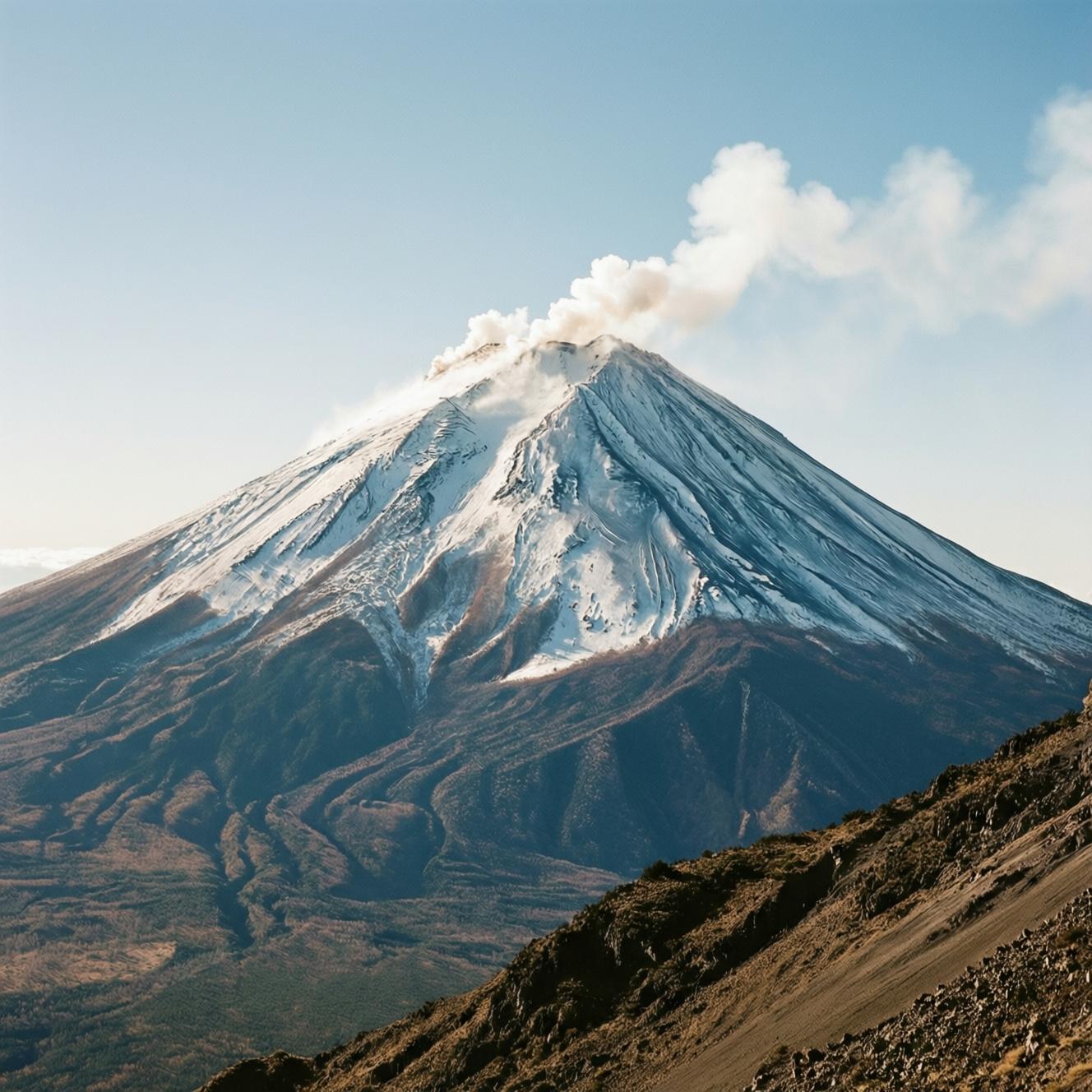
Context :Breakthrough achievement: First high-resolution 3D images of Popocatépetl volcano’s interior revealed in late December 2025.
- Widely reported by global media (AP, ABC News, Phys.org) in early January 2026 due to its scientific significance.
- Highlights advanced mapping of an active volcano near 25 million people, amid ongoing eruptions since 1994.
Why Was This Study Necessary
- Popocatépetl is one of the world’s most dangerous volcanoes, threatening 25 million people within 100 km radius.
- Previous attempts 15 years ago yielded low-resolution, contradictory results on magma location and structure.
- Most risky volcanoes globally have detailed interior maps, but Popocatépetl lacked one despite daily activity.
- Essential for understanding magma accumulation to improve eruption forecasting and hazard mitigation.
How Was the Study Conducted
- Team led by Marco Calò from UNAM’s Geophysics Institute climbed slopes multiple times over 5-6 years.
- Increased seismic stations from 12 (official) to 22-39 broadband seismographs around the volcano perimeter.
- Recorded ambient noise and seismic signals (vibrations from magma, gas, rocks, aquifers) at 100 samples per second.
- Processed vast data to create cross-sectional 3D model extending 18 km below crater.
Key Technologies Used
- Ambient noise seismic tomography: Used cross-correlations of natural ground vibrations for imaging.
- Broadband seismographs: High-sensitivity devices for capturing detailed seismic waves.
- Artificial Intelligence: Adapted algorithms to analyze millions of data points and infer material properties.
- Group velocity dispersion curves inversion: Technique to map seismic velocities and structure.
What Did Scientists Discover
- Complex interior: Multiple pools of magma at varying depths, separated by rock and other materials.
- Magma more numerous and accumulated toward the southeast side of the crater.
- No simple single chamber with main vent, unlike typical school diagrams.
- Reveals dynamic reorganization of magma reservoirs over time.
Understanding Popocatépetl Activity
- Explains ongoing daily plumes of smoke, gas, ash, and periodic dome formations/collapses since 1994.
- Higher tremor frequency on southeast aligns with greater magma presence there.
- Indicates volcano is in continuous internal movement, aiding prediction of eruptive patterns.
- Supports idea of redistributed magma influencing activity levels without immediate major eruption.
Importance of the Study
- Enables better eruption forecasting and timely evacuations for densely populated areas (including Mexico City).
- Provides “natural laboratory” insights into volcanic processes, improving global hazard models.
- Repeated future imaging can detect changes in magma for early warnings.
- Enhances public safety around airports, hospitals, schools; reduces risks from ash falls and pyroclastic flows.
2. Hierarchy of roles
GS paper II-polity
Context : Recent Supreme Court decisions/High-profile UAPA cases where accused got bail and the Court discussed misuse, prolonged incarceration and strict bail bar under Section 43D(5).
Background of the Issue
- February 2020 Northeast Delhi riots during anti-CAA protests killed 53, injured hundreds.
- Delhi Police alleged pre-planned conspiracy by activists to disrupt public order during US President Trump’s visit.
- Multiple FIRs merged into ‘larger conspiracy’ case; accused charged under UAPA and IPC sections.
- Accused in jail over 5-6 years without trial commencement; over 700 witnesses listed.
What is Hierarchy of Participation
- Concept from prosecution narrative distinguishing accused based on alleged roles.
- Higher level: Central, formative, managerial roles like planning and mobilisation (e.g., Khalid, Imam).
- Lower level: Peripheral, facilitative, or associative involvement.
- Requires individual assessment of bail pleas, rejecting parity among co-accused.
Expansion of Terrorist Act Under UAPA
- Section 15 UAPA defines terrorist act beyond explosives/violence to include intent threatening unity, integrity, security.
- Covers disruption of essential supplies, economic destabilisation, civic life breakdown.
- Includes preparatory conspiracy, planning, even without direct violence execution.
- SC held protests/blockades timed for maximum impact can qualify as terrorist acts.
Role of Section 43D(5) UAPA
- Prohibits bail if accusations appear prima facie true based on charge sheet.
- Court must be satisfied allegations are not prima facie true to grant bail.
- Higher threshold than regular criminal cases; reverses ‘bail is rule, jail exception’.
- Applies statutory bar if evidence shows involvement in terrorist/conspiratorial acts.
Problem of Prolonged Incarceration
- Accused detained over 5 years without trial start; damages youth, life irreparably if acquitted later.
- Trial delays due to case complexity, 700+ witnesses, protected witnesses.
- Turns pre-trial detention punitive, violating personal liberty.
- SC noted concern but held delay alone not automatic ground overriding UAPA restrictions.
Why is This Controversial
- Broadens ‘terrorist act’ to cover protests/speeches, potentially chilling dissent.
- Normalises indefinite detention under stringent law without conviction.
- Differential bail treatment raises questions on equality and evidence scrutiny.
- Critics call UAPA ‘draconian’; used against activists, seen as targeting opposition voices.
UAPA Power vs Proportionality
- UAPA gives state strong preventive detention powers for national security.
- Restrictive bail shifts burden to accused; low conviction rates but high pre-trial jail time.
- SC balanced security needs against liberty but rejected delay as ‘trump card’.
- Concerns over disproportionate use in political/protest cases vs actual terrorism.
Significance of Bail Granted to Accused
- Recognises lower culpability for peripheral roles, allowing conditional release after years.
- Signals individualised justice even in conspiracy cases; not all accused equally liable.
- Provides relief to five, highlighting nuanced prosecution evidence.
- Allows Khalid/Imam to reapply after one year or witness examination.
Constitutional Concerns
- Prolonged incarceration without trial violates Article 21 (right to life, liberty, speedy trial).
- UAPA restrictions seen as overriding fundamental rights; vagueness in definitions.
- Debate on whether statutory bars can limit constitutional courts’ bail powers.
- Risk of punitive detention; SC stressed balance but upheld legislative intent for security.
Legal Provisions
- Section 15 UAPA: Defines terrorist act, including threats to sovereignty via various means.
- Section 43D(5) UAPA: Bail bar if prima facie true accusations; prosecutor opposition mandatory.
- Article 21 Constitution: Guarantees liberty; speedy trial implicit, but not absolute against special laws.
- IPC sections: Conspiracy (120B), rioting, sedition (now repealed but applied then).
3. Going forward, much depends on states’ room for spending
GS paper III-ECONOMY
Context : Many States used additional post-Covid borrowing space to ramp up infrastructure while also expanding welfare, raising questions on fiscal sustainability and room for future capex.
Meaning of state-led capital spending
- It is States’ spending on long-term assets like roads, irrigation, power, health, education and urban infrastructure.
- Unlike revenue spending, it boosts productive capacity and can crowd in private investment over time.
Recent capex trends (FY21–FY25)
- Combined State capex plus loans & advances of 28 States grew 18.5% annually, doubling to about ₹8.4 trillion.
- This surge made States key drivers of post-pandemic public investment-led growth.
Role of Union support in capex
- GST compensation loans of about ₹2.6 trillion (FY21–22) and 50 year interest-free capex loans of ₹3.7 trillion (FY21–25) boosted States’ capital outlays.
- These loans came over and above normal borrowing limits, significantly enlarging fiscal space.
Extra borrowing flexibility and reforms
- States were allowed an additional 0.5–1.1% of GSDP borrowing above the 3–4% base deficit limit.
- Reforms (including power-sector changes) enabled access to about ₹1.1–1.3 trillion in extra borrowing during FY22–FY25.
Carry-forward of unused borrowing
- States could carry forward unutilised FY21 borrowing into FY22 to support recovery.
- The 15th Finance Commission also allowed carry-forward of unused headroom within its award period, softening the deficit constraint.
Changing revenue and welfare pattern
- Several States sharply increased welfare and cash transfer schemes (including to women) in recent years.
- To accommodate this, some curtailed older schemes or reprioritised heads, keeping revenue deficit only slightly wider.
Coexistence of welfare and capex
- Despite welfare expansion, many States simultaneously ramped up capital expenditure.
- This suggests smarter expenditure switching rather than a simple welfare-versus-capex trade-off in all cases.
Structural challenges to sustaining capex
- Future State capex faces risk if exceptional 50 year interest-free loans and special Union windows are phased out.
- Sticky welfare commitments and high interest burdens can gradually squeeze fiscal space for new projects.
Expectations from the 16th Finance Commission
- States expect guidance on base borrowing limits, additional headroom and future carry-forward rules to shape capex room.
- The Commission’s design of sharing, borrowing flexibility and buffers will be crucial for sustaining State investment.
Way forward for durable capex
- Prioritise high-multiplier sectors like transport and core infrastructure over low-return current transfers.
- Improve project execution efficiency, reduce cost overruns and strengthen public financial management systems.
Conclusion
- State-led capital spending has become a central pillar of India’s growth in the post-pandemic years, enabled by exceptional fiscal flexibility and Union support.
- Maintaining this momentum now hinges on a calibrated borrowing framework, disciplined welfare design and efficient project execution under the 16th Finance Commission era.
4. What does the SHANTI Bill change ?
GS paper III-science and technology
Context : Parliament passed the Sustainable Harnessing and Advancement of Nuclear Energy for Transforming India (SHANTI) Bill, 2025 in December 2025.
- Received presidential assent in late December 2025, marking major reform in India’s nuclear sector.
- Explained article published in The Hindu on January 5, 2026, highlighting changes amid opposition concerns.
How Open is India’s Nuclear Sector Now?
- Previously fully state-controlled under Atomic Energy Act, 1962; NPCIL held monopoly on power plants.
- SHANTI allows private Indian companies to own, build, operate nuclear plants with licences.
- Up to 49% private participation permitted; government retains 51% control over sensitive activities.
- Foreign participation possible through suppliers or joint ventures, but no direct foreign ownership.
What Role Will Private Firms Play?
- Private firms can seek licences for building, operating, decommissioning nuclear power plants.
- Allowed in fuel fabrication, storage, transport; joint ventures with government entities possible.
- Encourages investment in Small Modular Reactors (SMRs) and indigenous designs for faster deployment.
- Sensitive areas like enrichment, reprocessing, waste management remain exclusively with government.
What Powers Does the AERB Now Have?
- Atomic Energy Regulatory Board (AERB) granted statutory status, accountable to Parliament.
- Empowered to inspect facilities, investigate incidents, issue binding directions.
- Can suspend/cancel licences, enforce safety across full lifecycle including decommissioning.
- Strengthens independence from executive, enhances oversight with private entry.
How Self-Reliant is India’s Nuclear Programme?
- India independent in thorium-based reactors; operationalised fast breeder reactor for fuel recovery.
- Utilises vast thorium reserves; three-stage programme reduces uranium import dependence.
- Handles full fuel cycle domestically: mining, fabrication, reprocessing spent fuel.
- SHANTI supports indigenous tech deployment while allowing private/foreign partnerships selectively.
How Has Nuclear Liability Changed?
- Repeals Civil Liability for Nuclear Damage Act, 2010; removes supplier liability completely.
- Operator bears primary liability with graded caps based on plant size (₹100-3000 crore).
- Government assumes liability beyond operator cap; aligns with international conventions.
- Right of recourse limited to contractual terms; no automatic claim for defective equipment.
Why is the Opposition Opposing SHANTI?
- Dilutes supplier accountability; risks profit-driven safety compromises in private operations.
- Lacks mandatory public hearings, environmental assessments, community consent.
- Concerns over foreign influence, reduced parliamentary scrutiny, potential accidents.
- Viewed as vendor-driven; normalises privatisation of profits while socialising risks.
5. National Green Tribunal
GS paper III-Environment
Context :The National Green Tribunal (NGT) recently criticized the Commission for Air Quality Management (CAQM) for inadequate enforcement of construction bans and emergency measures during severe air pollution episodes in Delhi-NCR. This scrutiny underscores gaps in accountability and implementation within air quality governance frameworks.
Key Features of CAQM
- Legal Basis: Statutory body under Commission for Air Quality Management in National Capital Region and Adjoining Areas Act, 2021.
- Geographical Scope: Covers Delhi-NCR and bordering areas in Haryana, Uttar Pradesh, Rajasthan.
- Primary Goal: Ensures coordinated, effective, sustained efforts to prevent, control, and abate air pollution.
Composition and Powers
- Chairperson: Nominated by Central Government.
- Members:
- Central ministry representatives.
- Chief Secretaries/senior officials from Delhi, Haryana, UP, Rajasthan.
- Experts in air quality, environment, and related domains.
- Structure: Ex-officio model for inter-state coordination.
- Enforcement: Issues binding orders to states, CPCB, SPCBs, local authorities.
Institutional Relations
- Superiority: Overrides state pollution boards in conflicts.
- Partnerships: Collaborates with CPCB, SPCBs, municipal entities.
- Judicial Check: Subject to review by NGT or Supreme Court.
6. What remote sensing reveals
GS paper III-Science and technology
Context : ISRO and other agencies in monitoring crops, forest loss, drought and floods, and for new satellite missions focused on climate, water and disaster management.
What is Remote Sensing?
- Technique to map land, forests, water, minerals without physical contact using reflected light.
- Detects spectral signatures in visible, near-infrared (NIR), and invisible wavelengths.
- Satellites/drones capture data; healthy plants reflect more NIR, absorb red light.
- Enables large-scale, non-invasive monitoring of natural resources and environments.
Remote Sensing & Vegetation/Forests
- Analyses spectral signatures to distinguish plant communities, tree species across forests.
- Monitors vegetation health; high NIR reflection indicates healthy plants.
- Calculates forest biomass (“weighing trees from space”) for carbon storage estimation.
- Helps track deforestation, forest fires, and biodiversity changes.
Key Index: NDVI
- Normalized Difference Vegetation Indexmeasures vegetation health/density.
- Formula: (NIR – Red) / (NIR + Red); higher values indicate denser, healthier greenery.
- Used globally/India to assess forest cover, drought impact, seasonal changes.
- Critical for monitoring carbon sinks and climate change mitigation.
Why This Matters
- Enables faster, cheaper, eco-friendly resource exploration vs traditional drilling/surveys.
- Supports climate action by quantifying forest carbon sequestration.
- Aids sustainable management: prevents over-exploitation of forests/aquifers.
- Vital for agriculture, disaster response, and biodiversity conservation.
Mapping Water from Space
- Detects water via low reflectance in NIR/SWIR bands or radar penetration.
- Essential for monitoring floods, droughts, aquifers even under clouds/vegetation.
- Combines optical/radar for accurate extent in varied conditions.
- Supports water security, especially in cloud-prone or remote areas.
Optical Methods
- Uses visible/NIR light; water appears dark due to high absorption.
- Effective for clear water bodies; indices like NDWI enhance detection.
- Limited by clouds, vegetation cover, or turbid water.
- Common in Landsat, Sentinel-2 satellites for routine mapping.
Radar Methods
- Synthetic Aperture Radar (SAR) penetrates clouds, vegetation; water shows low backscatter (dark).
- Ideal for floods/storms; detects sub-canopy or micro-seepage indirectly.
- Used in Sentinel-1, NISAR; complements optical for all-weather monitoring.
- Crucial where optical fails, e.g., persistent cloud cover.
Groundwater Detection from Space
- GRACE/GRACE-FO satellites measure gravity changes to track terrestrial water storage variations.
- Subtract soil moisture/surface water to isolate groundwater depletion/gains.
- Revealed major aquifer losses (e.g., India, California); monitors global trends.
- Essential for unsustainable pumping detection in agriculture-heavy regions.
Why Remote Sensing is Important
- Provides real-time, wide-coverage data for resource health/location without ground access.
- Enhances environmental protection: monitors depletion, aids conservation policies.
- Supports exploration: targets minerals/oil precisely, reduces invasive surveys.
- Key for global challenges like climate change, food security, disaster resilience.
7. Monroe Doctrine
GS paper II-IR
CONTEXT : Donald Trump has invoked it to justify US military action and regime change in Venezuela, framing it as a “Don roe Doctrine” and reasserting US dominance in the Americas.
Basic idea and origin
- The Monroe Doctrine is a US policy declaring the Western Hemisphere as a zone where external (especially European) interference would be treated as hostile to the US.
- It was proclaimed by President James Monroe on December 2, 1823, in his State of the Union address to Congress.
Key principles of the doctrine
- No new European colonisation in the Americas; old colonies could remain but no fresh ones.
- Any European intervention in the political affairs of the Americas would be seen as a threat to US security.
- The US, in turn, pledged not to interfere in internal European affairs or existing European colonies.
- It asserted separate spheres: Europe and the Americas were to follow distinct political trajectories.
Roosevelt Corollary and expansion
- In 1904, President Theodore Roosevelt added the Roosevelt Corollary, claiming a US right to intervene in Latin America.
- This shifted the doctrine from a passive warning to an active justification for US interventions over “instability” or debt issues.
- It underpinned US interventions in Cuba, Nicaragua, Haiti and the Dominican Republic in the early 20th century.
Contemporary Venezuela episode
- In January 2026, after US forces captured Venezuelan President Nicolás Maduro, Trump called the move consistent with, and even beyond, the Monroe Doctrine.
- He alleged Venezuela was hosting foreign adversaries, acquiring offensive weapons and seizing American oil assets, framing intervention as defence of long standing US principles.
Criticisms and IR significance
- Critics see this as neo imperialism, reviving a doctrine long used to justify US dominance and interventions in Latin America.
- The episode highlights enduring debates on spheres of influence, regime change, and the clash between sovereignty and great power security claims.
8. Suryastra rocket system
GS paper III-science and technology
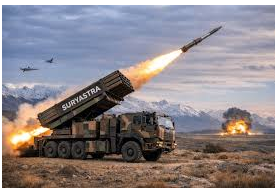
Context : Indian Army signed ₹292.69 crore emergency procurement contract with NIBE Ltd. on January 2-3, 2026, for Suryastra rocket system.
- Collaboration with Israel’s Elbit Systems; first indigenous production of advanced universal launcher.
- Fast-tracked under extended emergency powers (valid till Jan 15, 2026) to address urgent long-range firepower needs.
- Aligns with Aatmanirbhar Bharat; boosts private sector role in defence manufacturing.
What is the Suryastra system?
- India’s first indigenous universal multi calibre long range rocket launcher for precision surface to surface strikes.
- Integrates multiple rocket and missile types on a single mobile launch platform.
Origin and technology base
- Developed by NIBE Ltd. (India) with technology support from Elbit Systems (Israel).
- Based on the Israeli PULS (Precise & Universal Launching System), customised for Indian Army requirements under a 2025 technology pact.
Key capabilities and ranges
- Strike ranges of about 150 km and 300 km, giving tactical deep strike capability.
- Designed for both area saturation rocket barrages and pinpoint precision strikes from the same system.
Universal launcher and payloads
- Can fire multiple calibres such as 122 mm, 160 mm and 306 mm rockets.
- Compatible with select tactical missiles, enabling flexible load configuration per mission.
Accuracy, mobility and engagement
- High precision with Circular Error Probable (CEP) of under 5 metres in trials.
- Mounted on 4×4, 6×6, or 8×8 wheeled chassis, providing high road mobility and rapid shoot and scoot.
- Capable of engaging multiple targets at different ranges in a single mission profile.
Procurement route and Make in India
- Acquired under emergency procurement powers for faster induction without long approval cycles.
- Supports Make in India by local manufacture of launcher, integration and eventual localisation of components.
Strategic and operational significance
- Major step up over systems like Pinaka in both range and precision, expanding depth of Army rocket artillery.
- Enhances stand off, non contact warfare options against high value targets across the Line of Control and Line of Actual Control.
- Strengthens joint firepower for integrated battle groups and theatre commands by adding long range precision fires to the arsenal.