
1. Maternal mortality dropped as institutional devliveries rose to 89%says ,Health Minister
GS Paper II : “Issues relating to development and management of health services”.
CONTEXT : Institutional deliveries have increased from about 79% (2015–16) to nearly 89% (2019–21) in India.
- The Health Minister linked this rise to a significant decline in maternal deaths during childbirth.
Institutional delivery –Delivery conducted in a recognised health facility (hospital/PHC/CHC).
- Conducted by a skilled birth attendant like doctor, nurse or ANM.
- Facility has drugs, blood, operation theatre and emergency services.
Why institutional delivery matters ?
- Reduces infections through sterile environment and clean practices.
- Manages complications like haemorrhage, eclampsia, obstructed labour early.
- Enables timely Caesarean section when normal labour becomes risky.
- Provides immediate newborn care and resuscitation facilities.
Maternal Mortality Ratio (MMR)
- Number of maternal deaths per 1,00,000 live births in a given period.
- Counts deaths during pregnancy or within 42 days of pregnancy end.
- Indicates safety and quality of maternal health services in a country.
How institutional delivery reduces MMR
- Quick detection and treatment of life‑threatening complications.
- Availability of blood transfusion reduces deaths from severe bleeding.
- Skilled staff follow protocols, lowering anaesthesia and surgery risks.
- Better referral to higher centres through ambulance and linkages.
Expansion of medical education in India
- Medical colleges increased rapidly after 2014, crossing 700 institutions.
- AIIMS‑like institutes expanded from a handful to over twenty.
- UG and PG medical seats roughly doubled, enlarging doctor workforce.
- New colleges opened in backward districts to correct regional imbalance.
2. Rhino dehorning nearly eliminated poaching in African reserves
GS paper III-Environment and Ecology
Context : New study shows rhino dehorning in African reserves cut poaching by about three‑fourths.
- Dehorned rhinos had a much lower chance of being poached than horned rhinos.
Why rhinos matter ?
- Mega‑herbivores that shape grassland and savanna ecosystems.
- High ecological, cultural and tourism value for many countries.
Global status (≈2024)
- Fewer than about 28,000 rhinos of all species remain in the wild.
- Some species stable or recovering; others like Sumatran/Javan critically endangered.
Poaching crisis – scale & severity
- Thousands of African rhinos killed since late 2000s for their horn.
- Poaching remained high despite heavy spending on patrols and surveillance.
What is rhino dehorning?
- Management practice of removing most of a rhino’s horn to reduce its value.
- Aimed at keeping rhinos alive until wider demand‑reduction succeeds.
Procedure and ethics
- Rhino is darted, horn cut above growth plate with saw, surface smoothed.
- Horn is like a thick fingernail; done under anaesthesia to minimise pain.
- Critics worry about stress, repeated captures, and effects on behaviour.
Why poachers kill rhinos
- Horn fetches very high prices in illegal markets in some Asian countries.
- Used as status symbol, speculative asset and in traditional medicine.
Study findings – does dehorning work?
- Dehorning reserves saw ≈75% fall in poaching versus pre‑dehorning years.
- Reserves starting dehorning saw ≈78% drop within months.
- Dehorned rhinos had ≈95% lower individual risk of being poached.
Indicators and impacts
| Indicator / aspect | With dehorning (study result) | Impact in brief |
| Overall poaching levels | ≈75% lower than before dehorning | Many more rhinos survive each year. |
| Early‑phase poaching change | ≈78% drop soon after dehorning introduced | Immediate deterrence effect observed. |
| Risk to dehorned individuals | ≈95% lower than to horned rhinos | Poachers avoid low‑value animals. |
| Population trend | More likely stable or slowly increasing | Breeding adults remain in the population. |
| Cost‑effectiveness | High when combined with existing protection | One operation “protects” rhino for several years. |
Why dehorning > policing alone
- Policing reacts to poachers; dehorning removes primary economic reward.
- Enforcement can be undermined by corruption; dehorning works despite that.
- Together, they raise risk and cut reward, pushing poachers elsewhere.
Conservation not one‑size‑fits‑all – India case
India’s rhino success story
- Greater one‑horned rhino numbers have increased, especially in Kaziranga.
- Poaching has fallen sharply in recent years without mass dehorning.
Outcomes and reasons for success
- Strong laws and tough action create high deterrence for poachers.
- Intensive patrolling, intelligence‑based operations and fast trials.
- Habitat management keeps grasslands and wetlands suitable for rhinos.
Role of local communities and rangers
- Communities gain jobs, tourism income and compensation, so support rhinos.
- Locals share information on suspicious activities and trafficking.
- Armed rangers patrol daily, respond quickly and coordinate with police.
3. SCL Mohali (semiconductor Lab)
GS paper III-science and technology
Context :SCL Mohali receives ₹4,500 crore under India Semiconductor Mission to modernise operations.
What is SCL Mohali
- Semi-Conductor Laboratory (SCL), Mohali: India’s only government semiconductor fabrication facility.
- Established in 1983 under Department of Space (now under MeitY).
- Focuses on design, fabrication, and testing of chips for strategic applications.
The 1989 Fire: A Turning Point
- Major fire in 1989 destroyed key facilities.
- SCL lost its early lead in semiconductor manufacturing.
- Never regained global competitiveness thereafter.
Present Role of SCL Mohali
- Produces legacy/imported chips for government and PSU needs.
- Supplies chips for trains, satellites, LED bulbs, etc.
- Serves as training and research resource for students and engineers.
Why SCL Cannot Be Cutting-Edge Today
- Lacks advanced nanometre-scale fabrication technology.
- Far behind Taiwan, South Korea, Japan in modern chipmaking.
- High-end chips require billions of dollars and extreme lithography tools SCL does not have.
₹4,500 Crore Funding: What It Will Achieve
- Modernise existing equipment and infrastructure.
- Improve reliability for legacy chip production.
- Strengthen role in strategic sectors and domestic manufacturing.
- Cannot make SCL a global cutting-edge player.
4. NITI Aayog Releases Report on ‘Internationalization of Higher Education in India’
Context :NITI Aayog released a comprehensive policy report titled “Internationalisation of Higher Education in India” to operationalise NEP 2020’s vision of “internationalisation at home”.
- The report outlines a roadmap to make India a global hub for higher education and research by 2047, aligned with Viksit Bharat @2047.
- It proposes 22 policy recommendations and 76 action pathways to boost inbound students, global research, and India’s soft power through education.
What is Internationalisation of Higher Education?
- Integration of international, intercultural, and global dimensions into the purpose, curriculum, research, and governance of HEIs.
- Aims to benefit the 97% of Indian students who study in India by bringing global exposure within domestic campuses.
Core Features of Internationalisation
Internationalisation at Home
- Embed global curricula, foreign faculty, joint courses, and international research exposure within Indian universities.
Two-way Academic Mobility
- Promote balanced inbound and outbound student–faculty exchanges, joint PhD supervision, and visiting professorships.
Cross-border Institutional Presence
- Enable foreign university campuses in India and offshore campuses of Indian HEIs abroad to expand India’s academic footprint.
Research-led Global Integration
- Focus on joint research, co-authored publications, shared labs, and participation in global research consortia.
Education as Soft Power
- Use higher education as an instrument of diplomacy, cultural influence, and long-term global engagement, especially with the Global South.
Potential of Higher Education in India
- Demographic Advantage: Young population (avg. age 28.4 years) offers a large talent pool for global education and innovation.
- Scale and System Capacity: Over 1,200 universities and 40 million students provide unmatched scale for absorbing international students.
- Cost-Quality Edge: Quality education in engineering, medicine, and management at 30–40% lower cost than Western countries.
- Knowledge Economy Strengths: Success in IT, space, pharma, and digital public infrastructure enhances India’s credibility as a learning hub.
- Global Ranking Presence: 54 Indian institutions in QS World Rankings 2026 signal readiness to host 1 lakh international students by 2030.
Challenges to Internationalisation
- Inbound–Outbound Imbalance: Over 13 lakh Indian students study abroad, but India hosts only ~50,000 foreign students.
- High Forex Outflow: Overseas education remittances reached USD 3.4 billion in 2023–24, straining national resources.
- Regulatory Fragmentation: Multiple regulators and absence of a single degree-equivalence framework deter foreign participation.
- Uneven Institutional Readiness: Most state and rural universities lack international hostels, faculty support systems, and global academic offices.
- Limited Global Branding: Low international visibility, weak alumni diplomacy, and inconsistent global outreach reduce India’s appeal.
Three Global Strategies for Internationalisation
- Transnational Education (TNE) Hubs: Countries like UAE, Singapore, and Australia attract global universities through branch campuses and flexible regulation.
- Academic Mobility & Talent Attraction: Nations like Germany and Canada use liberal visas, post-study work options, and funded fellowships to attract global talent.
- Global Research & Ranking-driven Collaboration: Leading systems (US, UK, EU) prioritise joint research grants, co-authored publications, and global rankings to boost innovation and prestige.
NITI Aayog’s Recommended Strategy
- Inter-Ministerial Task Force: Set up a high-level body under the Ministry of Education to coordinate targets, funding, and global engagement.
- National Equivalence Portal: Create a single-window digital platform for recognition of professional and non-professional degrees to ease student mobility.
- “Campus-within-a-Campus” Model: Allow foreign universities to operate co-located campuses within Indian HEIs using a brownfield approach with a 10-year sunset clause.
- Country Centres of Excellence (CoEs): Designate Central Universities as nodal hubs for specific partner nations (e.g., 54 CoEs for 54 countries) to deepen bilateral research.
- Vishwa Bandhu Fellowship: Launch a flagship fellowship to attract global researchers and diaspora faculty from India’s 3.5-crore overseas community.
- Expansion beyond GIFT City (IFSC): Extend the GIFT model to Law, Management, Public Policy, and Sports Science to attract global institutions.
- Revamped NIRF Framework: Integrate internationalisation indicators (international faculty, inbound students, joint publications) into national rankings.
- Tagore Academic Mobility Framework: Establish multilateral credit-recognition and mobility arrangements for ASEAN, BIMSTEC, BRICS, and other regional groupings.
Conclusion
- The roadmap marks a strategic shift from India being a “source” of global students to a “destination” for global talent.
- By prioritising internationalisation at home, India seeks to retain brain capital, reduce forex outflow, and reclaim its civilisational role as a Vishwa Guru.
- Achieving the target of 8 lakh international students by 2047 is central to realising the vision of a developed, knowledge-led Viksit Bharat.
5. In Gujarat’s Dahod, a unique learning model for children in spotlight
GS PPAER II-social justice
CONTEXT :Gujarat’s Dahod district is in spotlight for a unique play-based early learning model in Anganwadis, supported by UNICEF.
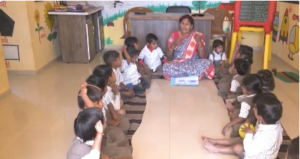
- The “Pa Pa Pagli” initiative has improved learning outcomes, confidence, and school readiness among 3–6 year old children.
What is Pa Pa Pagli?
- A play-oriented pre-school education initiative by Gujarat’s Women and Child Development Department for children aged 3–6 years.
- Implemented in Anganwadi centres, especially in educationally backward districts like Dahod, to strengthen early learning.
Key Features
- Games-cum-learning model: Learning through structured play, stories, songs, puzzles, and movement-based activities.
- Life-skills focus: Builds social skills, communication, hygiene, and daily routines in young children.
- Anganwadi transformation: Expands Anganwadi role from nutrition/health to early cognitive and foundational learning.
- Digital and visual tools: Uses educational videos, flashcards, and activity kits to make learning engaging.
- Institutional support: Implemented with technical guidance and quality standards support from UNICEF India.
Significance
- Early brain development: Targets the critical 0–6 age window when about 85% of brain development occurs.
- Reduces learning gaps: Improves school readiness and lowers future learning deficits and dropout risks.
- Promotes equity: Strengthens foundational learning for marginalised and first-generation learners in tribal and rural areas.
6. Mars Atmosphere and Volatile Evolution (MAVEN)
GS paper III-science and technology
CONTEXT :NASA has lost contact with the Mars Atmosphere and Volatile Evolution (MAVEN) spacecraft after it went silent in early December 2025, following a routine communication blackout.
- MAVEN, which reached Mars around the same time as India’s Mangalyaan, had been a key orbiter for studying Mars’ atmosphere and relaying data from surface missions.
What is MAVEN?
- MAVEN is a NASA Mars orbiter mission dedicated to studying the upper atmosphere, ionosphere, and atmospheric escape processes of Mars.
- It aims to understand how Mars transformed from a warm, wet planet in the past to the cold, dry
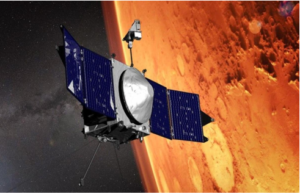 world it is today.
Key Details
- Launch date: November 18, 2013.
- Primary aim: Determine how and how fast Mars lost its atmosphere to space, and the role of the Sun and solar wind in this process.
- Support role: Acts as a data relay satellite, transmitting information from Mars rovers like Curiosity and Perseverance back to Earth.
Key Features of MAVEN
- Orbiter mission: MAVEN follows an elliptical orbit that samples multiple altitudes, allowing study of daily, seasonal, and solar-driven changes in the atmosphere.
- Upper-atmosphere focus: Studies neutral gases, charged ions, solar wind, and magnetic fields in the region where atmospheric escape occurs.
- Eight scientific instruments: Carries eight specialised payloads, including mass spectrometers and plasma sensors, for detailed atmospheric diagnostics.
- Imaging Ultraviolet Spectrograph (IUVS): Though it lacks a conventional camera, IUVS maps the global structure and composition of Mars’ upper atmosphere in ultraviolet light.
- Communications relay role: Functions as an interplanetary relay satellite, supporting data transmission from surface missions to Earth.
- Highly elliptical orbit: Allows close passes through the upper atmosphere and distant observations, enabling vertical profiling of atmospheric processes.
Major Discoveries and Contributions
- Atmospheric loss quantified: MAVEN confirmed that solar wind stripping has been a dominant mechanism in removing Mars’ atmosphere over billions of years.
- Water loss pathways identified: Showed how water vapour breaks into hydrogen and oxygen, with lightweight hydrogen escaping irreversibly to space.
- Impact of solar storms: Observed that solar flares and coronal mass ejections sharply increase atmospheric escape rates during extreme space-weather events.
- lagship initiative of the Gujarat Women and Child Development Department and is being implemented with technical support and quality standards guidance from UNICEF India.
- Statement 3 is correct: The initiative aims to strengthen quality early childhood education by transforming Anganwadis from mere nutrition and health centres into centres of early cognitive and foundational learning