

1. Centre likely to rebrand MGNREGS as Pujya Bapu Gramin Rozgar yojana
GS Paper II – Governance, Welfare Schemes, Government Policies
Context :Union Cabinet has cleared a proposal to replace/modify MGNREGA through a new Bill in the ongoing or upcoming Parliament session.
- The move includes rebranding, higher guaranteed workdays and changes in design and funding norms.
Background of the scheme
- Original National Rural Employment Guarantee Act was passed in 2005 to provide a justiciable right to rural employment.
- It was renamed Mahatma Gandhi National Rural Employment Guarantee Act/Scheme (MGNREGA/MGNREGS) in 2009 to honour Gandhiji and emphasise rural livelihood security.
Proposed renaming
- The scheme will be renamed “Pujya Bapu Gramin Rozgar Yojana / Rozgar Guarantee Yojana” while the legal framework is recast.
- Government frames the renaming as a tribute to Mahatma Gandhi, though critics see it as political rebranding of a UPA-era flagship.
Increase in guaranteed days
- The proposal enhances statutory guarantee from 100 to 125 days of wage employment per eligible rural household.
- Objective is to strengthen rural incomes and provide a larger safety-net during agrarian distress and seasonal unemployment.
Reality check: employment actually provided
- Official data show average days of employment in recent years have been around 50 days per household, far below the 100-day legal guarantee.
- Implementation gaps arise from delayed payments, inadequate funds and worksite shortages, so higher legal days may not automatically mean more actual work.
Review committee
- In 2022, the Rural Development Ministry set up a committee chaired by former secretary Amarjeet Sinha to review and restructure MGNREGA.
- Terms of reference included revisiting types of works, improving fund use, revising wages and addressing governance and technology-related issues.
Possible change in funding pattern
- Presently, wages are fully borne by Centre while material and administrative costs are shared between Centre and States.
- Reports indicate discussions on linking central share and allocations more closely to state-level economic indicators and performance, introducing possible exclusion or differentiation clauses.
Constitutional dimensions
- Scheme flows from Directive Principles, especially Article 39 (adequate livelihood) and Article 41 (right to work and public assistance).
- By giving a legal right to demand work with compensation for non-provision, it operationalises socio-economic rights within the constitutional framework.
Governance dimensions
- Implementation involves Gram Sabhas for planning, Panchayats for execution and strong transparency provisions like social audits and proactive disclosure.
- Persistent issues include delayed wage payments, technological exclusion (NMMS app), capacity gaps in panchayats and underfunding, which reforms and the new Bill aim to address
2. A Critical story that a chunk of the media missed
GS Paper III – Indian Economy
Context :IMF has reportedly given India’s national accounts statistics, including GDP and GVA, a low “C” grade.
- This coincided with Q2 GDP growth of 8.2%, yet the grading got little attention in mainstream media.
Core issue highlighted
- Reliability of India’s GDP numbers, especially how growth is calculated after major shocks.
- Dependence on methods that may mis-measure the informal/unorganised sector.
What IMF said and why it matters
- IMF’s grading signals concerns over quality, transparency and methodology of India’s national accounts.
- As a key external assessor, IMF’s doubts can affect investor confidence, policy credibility and global perception.
Why IMF’s grading is important
- India is a major G20 economy; weak data can distort domestic policy choices and international comparisons.
- Global institutions, ratings agencies and markets rely on these statistics for decisions on lending and investment.
Media’s role and its failure
- Most outlets either ignored or buried the IMF story, despite its systemic importance.
- This failure leaves citizens and even policymakers less informed about weaknesses in economic data.
The technical problem: unorganised sector
- India uses organised-sector data as a proxy to estimate output in the unorganised sector.
- After shocks like demonetisation, GST and COVID-19, organised and unorganised sectors moved in different directions, breaking this proxy link.
Why this ethos is problematic
- Treating proxies and assumptions as hard facts undermines statistical integrity and public trust.
- It encourages complacency instead of investing in better surveys, coverage and data systems for the informal economy.
Implications for quarterly GDP estimates
- Quarterly GDP rests on many assumptions because timely data for the unorganised sector are lacking.
- This can overestimate growth when the formal sector does well but the informal sector is struggling.
Can India fix the problem soon?
- Work is ongoing to change the base year and improve methods, but structural data gaps persist.
- Experts quoted in the article are sceptical that India can fully address IMF’s concerns quickly.
Larger message of the article
- Citizens must treat GDP numbers with caution and demand better data, not blind celebration of headline growth.
- A vigilant media is essential to question official statistics; when it fails, democratic accountability and sound policy both suffer.
3. Bangladesh to hold general election, July Charter referendum on February 12
GS paper II-IR
- The Charter will decide key reforms in the post‑Hasina transition, making it central to the country’s political future.
What is the July National Charter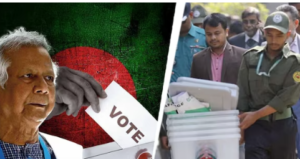
- A post‑uprising political roadmap proposing major changes to Bangladesh’s 1972 Constitution and institutional framework.
- Drafted as a consensus document between the Muhammad Yunus–led interim administration and multiple political parties.
Origins and actors
- Emerged after the July 2024 mass movement that toppled the previous government and demanded democratic restructuring.
- Negotiated with around 30 parties and endorsed by a National Consensus Commission to reflect broad societal agreement.
Core objectives
- Lock in democratic reforms that prevent a return to authoritarian concentration of power.
- Reform constitutional, electoral, administrative and judicial systems to make them more accountable and independent.
- Embed the achievements of the pro‑democracy movement firmly within the formal constitutional order.
Main features
- A 28‑point agenda outlining concrete steps for political, electoral and institutional change.
- Commits future governments to translate the Charter into constitutional amendments, new laws and policy measures.
- Sets a two‑year time frame after the new government takes office to complete the core reform package.
- Provides for legal and constitutional guarantees that Charter provisions cannot be easily reversed.
- Formally recognises the July 2024 pro‑democracy uprising as a historic event in Bangladesh’s state narrative.
Political support base
- Backed by the National Consensus Commission created during the interim period.
- Supported by roughly 25–30 parties across the spectrum, signalling wide—though not universal—political buy‑in.
Significance for Bangladesh
- Intended to lay the foundations of a new democratic path after the fall of Sheikh Hasina’s long‑running administration.
- Aims to rebuild trust in elections, enhance judicial and electoral independence and curb abuse of law‑enforcement agencies.
- Could reconfigure the balance between executive, legislature and judiciary and strengthen anti‑corruption safeguards.
- Seen as an important step in post‑crisis state‑building, moving the polity from centralised rule towards more participatory governance.
4. The Indian Ocean as cradle of new blue economy
GS Paper II (International Relations & Regional Cooperation)
Context :Linked to current debates on blue economy, climate‑resilient development and Indian Ocean regional forums.
- Reflects India’s growing activism in ocean governance ahead of major UN and regional maritime meetings.
Central argument of the article
- The Indian Ocean should be shaped as a laboratory of sustainability, innovation and resilience, not rivalry.
- India, with its history and geography, must guide a rules‑based, equitable blue‑economy order in this region.
India’s historical role in ocean governance
- In UNCLOS negotiations, India backed “common heritage of mankind” for seabed beyond national jurisdiction.
- From Nehru onward, Indian leaders stressed ocean stewardship for shared prosperity, not narrow advantage.
Why the Indian Ocean is crucial today
- Region hosts about one‑third of humanity and many climate‑vulnerable island and coastal states.
- Climate change, rising seas, acidification and overfishing are degrading marine life and economic security.
India’s Blue Ocean strategy: three pillars
- Stewardship of the commons: protecting ocean as a shared resource through conservation and regulation.
- Resilience: building climate‑resilient coasts, communities and ecosystems against rising climate risks.
- Inclusive growth: ensuring blue‑economy benefits for coastal communities, small states and developing partners.
Rising global blue finance
- New multilateral and private funds are emerging to support sustainable ocean projects and green shipping.
- Forums like Blue Economy and Finance initiatives are mobilising billions for resilient marine investments.
Security through sustainability
- Author argues long‑term maritime security flows from healthy ecosystems and climate‑resilient coasts.
- Illicit fishing, pollution and climate impacts are framed as core security threats, not just naval balances.
India’s SAGAR doctrine
- “Security and Growth for All in the Region” sees Indian Ocean as a cooperative, consultative space.
- It emphasises capacity‑building, disaster response and common security of sea‑lanes with neighbours.
Global ocean governance and India’s opportunity
- Ongoing talks on Biodiversity Beyond National Jurisdiction and other UN processes need credible leadership.
- India can showcase inclusive blue‑economy models and bridge developed–developing interests in these forums.
5. Childcare isn’t just a social safety net. It’s a lever for growth
GS paper II-governance
Context :Recent analyses highlight childcare as a core growth lever, coinciding with debates on women’s workforce participation and demographic shifts.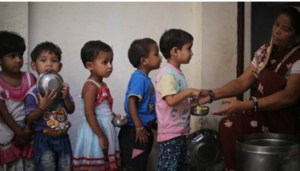
What is childcare?
- Integrated system of early care, learning, nutrition, safety and stimulation for young children.
- Delivered through Anganwadis, crèches, preschools and community or workplace-based centres.
Major trends
- Around 1.4 million Anganwadis serve roughly 23 million children but large coverage gaps persist.
- Women spend far more time than men on unpaid care work, severely limiting their paid work opportunities.
- Urban and migrant-heavy areas face acute childcare shortages, with few fully functional centres.
- Childcare workers are poorly paid, inadequately trained and lack clear career pathways.
Why childcare is essential
- Reliable childcare enables mothers to enter, stay in and progress within the labour market.
- Quality early care supports brain development, improving learning, health and life chances.
- Acts as “soft infrastructure” that boosts productivity and helps achieve high, sustained growth.
- Particularly vital for informal workers, migrants and low-income families who lack private options.
- Supports better outcomes in the context of falling fertility and an ageing future population.
Key initiatives so far
- ICDS provides nutrition, health and preschool education to young children and mothers.
- Poshan-related digital tools offer guidance to caregivers on early stimulation and nutrition.
- Palna scheme supports workplace crèches but current coverage remains limited.
- Some states extend Anganwadi hours, add preschool educators and use para‑professionals or interns.
- Civil society organisations demonstrate low-cost models and advocate for worker recognition.
Major challenges
- Care workers face low pay, high workload, limited training and minimal social protection.
- Urban childcare remains scarce, especially in informal settlements and industrial clusters.
- Responsibilities are split across ministries, causing weak coordination and policy fragmentation.
- Many centres suffer from poor infrastructure, short hours and inadequate learning materials.
- Heavy unpaid care burden keeps female labour force participation low and unequal.
- Public spending on early childcare is small compared to international best practice levels.
Way forward
- Launch a unified National Mission on Early Childhood Care to coordinate all childcare policies.
- Transform Anganwadis into full‑day, high-quality centres with better buildings and longer hours.
- Professionalise and adequately remunerate the care workforce, with training and social security.
- Use a blended model that combines physical centres with digital tools to support parents at home.
- Rapidly expand urban childcare in industrial areas, service hubs and migrant-dense settlements.
- Gradually raise public investment in childcare toward at least 1% of GDP for universal quality access.
Conclusion
- Childcare should be recognised as a productive economic investment rather than a residual welfare expense.
- By strengthening childcare systems and valuing care work, India can enhance growth, gender equality and long-term human capital.
6. The invisible epidemic: why air pollution is now India’s largest health threat
GS PAPER I Geography
Context :Recent health and air-quality studies rank air pollution as India’s largest health threat, with major life‑expectancy losses.
Current air pollution pattern
- Pollution has become a year‑round national problem affecting both cities and villages.
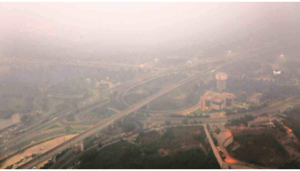
- A majority of monitored cities exceed PM2.5 limits, showing widespread non-compliance.
- Northern metros routinely record PM2.5 levels far above Indian and WHO standards.
- Air‑quality indices cap at 500, hiding extreme values that often go even higher.
- Long-term exposure is estimated to reduce life expectancy by several years in polluted regions.
Main structural drivers
- Rapidly growing vehicle numbers, old diesel fleets and weak public transport emit NOx and fine particulates.
- Coal power plants, brick kilns, refineries and small industries release SO₂, NOx and PM throughout the year.
- Construction and demolition activities create large loads of coarse and fine dust in expanding cities.
- Widespread use of biomass for cooking in rural and peri‑urban homes adds major indoor and outdoor smoke.
Seasonal intensifiers
- Post-harvest stubble burning in north India triggers sharp but short-lived particulate spikes.
- Winter inversions trap pollutants near the ground, worsening smog episodes.
- Fireworks and festival combustion on low‑wind days cause sudden surges of toxic gases and particulates.
Health impacts: heart and lungs
- Fine particles enter the bloodstream, increasing inflammation, high blood pressure, heart attacks and strokes.
- Each incremental rise in PM2.5 is associated with higher annual death risk from cardiovascular causes.
- Respiratory diseases such as asthma, COPD and chronic bronchitis rise, especially among children.
- Children in polluted areas show more emergency visits and measurable declines in lung function.
Health impacts: brain and development
- Tiny particles can cross the blood–brain barrier, contributing to neuroinflammation and cognitive decline.
- Long-term exposure is linked to higher dementia risk and poorer academic performance in polluted cities.
- For pregnant women, pollution increases chances of preterm birth, low birth weight and stillbirths.
- These early-life harms deepen long-run health and economic inequalities.
Inequality and vulnerability
- Poor households often live next to busy roads, landfills or industrial clusters with highest pollution.
- Limited access to healthcare and clean fuels means they face higher exposure and worse outcomes.
Steps taken so far
- The National Clean Air Programme sets reduction targets for PM levels in non-attainment cities.
- Measures include cleaner vehicle norms, EV promotion, graded responses in Delhi‑NCR and tighter industrial rules.
- Courts and tribunals have ordered controls on stubble burning, firecrackers and industrial emissions.
- Real‑time monitoring networks, satellite data and low-emission zones are being piloted.
Policy priorities going ahead
- Update air‑quality standards and indices, prioritising PM2.5 and aligning limits more closely with health science.
- Strengthen pollution control institutions with more staff, funds and independent technical capacity.
- Speed up clean transport and industrial transitions, including electrified public transport and stricter stack norms.
- Enforce dust and waste‑burning controls through better urban planning, mechanised cleaning and waste management.
- Integrate health systems with air‑quality alerts, screening programmes and community-level clean‑air action.
Conclusion
- Air pollution in India operates like a silent, chronic epidemic, undermining health, productivity and equity.
- Recognising clean air as a basic right and treating air‑quality management as a national public‑health mission are essential for a safer, more equal future.
- July National Charter is a multi‑party reform document aimed at reducing executive dominance and strengthening judicial and electoral independence.
- Statement 3: Incorrect – the Charter was negotiated by the interim Muhammad Yunus‑led administration with a broad coalition of parties, not drafted solely by the BNP.