
1. SURYAKIRAN-XIX : India -Nepal
GS paper III-science and technology
Context :The 19th edition of the India–Nepal joint military exercise SURYA KIRAN-XIX (2025) has concluded at Pithoragarh, Uttarakhand.
- The Directors General of Military Operations (DGMOs) of both armies witnessed the final battalion‑level validation exercise at the Foreign Training Node, Pithoragarh.
What is Exercise SURYA KIRAN?
- It is a bilateral joint military exercise between the Indian Army and the Nepali Army.
- Conducted alternately in India and Nepal, usually every year.
- Aims to enhance interoperability, counter‑terrorism skills, jungle and mountain warfare capability, and to strengthen defence cooperation between the two countries.
SURYA KIRAN‑XIX (2025 edition)
Location
- Held at the Foreign Training Node (FTN), Pithoragarh district, Uttarakhand, India.
Participants
- Indian Army contingent (infantry battalion group and supporting arms).
- Nepali Army contingent of comparable strength.
- Senior leadership: DGMO, Indian Army (Lt Gen Manish Luthra) and DGMO, Nepali Army (Maj Gen Anup Jung Thapa) attended the validation phase.
Key highlights of the 2025 exercise
Battalion‑level validation exercise
- Culminated in a two‑day battalion‑level field training exercise.
- Validated joint planning, command and control, and execution of missions by mixed groups of Indian and Nepali troops.
- Emphasis on Chapter VII–type UN peacekeeping operations (peace enforcement) as well as sub‑conventional operations.
Focus on counter‑terrorism
- Training in counter‑terrorism and counter‑insurgency in mountainous and complex terrain.
- Practice of:
- Intelligence‑based surgical missions.
- Room intervention and hostage rescue.
- Cordon and search operations at battalion/company/small‑team level.
- Aerial insertion of troops to enhance rapid‑response capability.
Use of modern technology
- Included cutting‑edge systems such as:
- ISR (intelligence, surveillance, reconnaissance) platforms.
- Precision‑targeting drones and loitering munitions.
- Advanced day/night weapon sights.
- AI‑enabled surveillance feeds.
- Modern operational and logistics management tools and battlefield communication systems.
Symbolic diplomacy: “Tree of Friendship”
- As a gesture of enduring partnership, the DGMOs of both armies jointly planted a “Tree of Friendship” at the exercise location.
- Symbolizes:
- Timeless bonds between India and Nepal.
- Commitment to long‑term strategic cooperation and people‑to‑people ties.
Significance of SURYA KIRAN for India–Nepal relations
- Defence cooperation pillar: Provides an institutionalised platform for regular military‑to‑military engagement, building trust and interoperability.
- Border security: Both share an open border; joint drills help to tackle cross‑border terrorism, smuggling, and trans‑national crime.
- Disaster response and peacekeeping: Enhances joint capability for HADR (Humanitarian Assistance and Disaster Relief) and UN peacekeeping operations, where both contribute troops.
- Strategic reassurance: Signals mutual confidence and India’s role as Nepal’s principal security partner, balancing external influence in the region.
- Cultural and historical ties: Reinforces the traditional “Roti‑Beti” relationship and the long history of Nepali soldiers serving in Indian Gorkha regiments.
2. Over 30% students in Odish schools drop out
GS Paper 2 (Polity & Governance) – Social Justice / Education / Welfare Schemes
Context :CAG audit report (Dec 2025) flags over 30% dropout in Odisha before higher secondary, with GER declining 2018-23 vs national rise.
- Highlights 61,487 out-of-school children not re-enrolled 2018-23; transition rate from upper primary to secondary at 70.3%.
- Questions data anomalies like >100% transition in Bhadrak/Nuapada districts; no analysis by Odisha Education Dept.
What is Gross Enrolment Ratio
- GER measures total enrolment in education level (e.g., secondary) as % of official school-age population, including over/under-age students.
- Reflects access/participation; national higher secondary GER improved 2018-23, but Odisha’s declined amid high dropouts.
What is CAG Report
- Comptroller and Auditor General (CAG) of India audits govt finances/performance; this report audits Odisha’s school education sector.
- Tabled Dec 2025; flags inefficiencies like unanalyzed NER decline, poor infrastructure, and ineffective dropout arrest measures.
Why Decline of Gross Enrolment Ratio
- Ineffective measures to curb dropouts from upper primary to secondary, per CAG; no root-cause analysis by state dept.
- Inadequate school infrastructure/facilities as key indicative reasons; 3.12-7.26% annual dropout rate across classes.
- Data discrepancies (e.g., >100% transitions) suggest enrolment inflation, masking true retention issues in Odisha.
Initiatives Taken by State Government (Odisha) and India
- Odisha: ‘Aasa School Jiba’ campaign (Aug 2025) statewide drive to prevent dropouts in 2025-26 academic year.
- Odisha: NIOS MoU (Nov 2025) accredits schools in high-dropout districts for flexible learning/re-enrolment of out-of-school kids.
- Odisha: Madho Singh Haath Kharcha Scheme benefits 3L+ students with financial aid to cut economic barriers/dropouts.
- Odisha: Re-enrolled 1,800 dropouts in Malkangiri (Oct 2025) via open schooling; regularized 13K junior teachers for quality.
- India: UDISE+ 2024-25 data shows national dropout halving via midday meals, scholarships for marginalized groups.
- India: NIPUN Bharat (2021-on) targets foundational literacy/numeracy by 2026-27; Vidya Pravesh aids 4.2Cr Grade 1 entrants.
- India: Union Budget 2025-26 boosts infrastructure/scholarships; NEP 2020 pushes 100% GER by 2030 with secondary reforms.
Way Forward
- Conduct dept-level analysis of dropout causes; integrate child tracking surveys for real-time monitoring/retention.
- Enhance infrastructure (e.g., Sishu Vatika expansion) and teacher training; scale ANWESHA-like models for ST/SC retention.
- Promote community awareness/digital tools; align state schemes with national like midday meal expansions for equity.
3. National Mission on Edible Oils
Context :The National Mission on Edible Oils (NMEO) is in the news as a key government initiative launched to reduce India’s dependence on edible oil imports and achieve self-sufficiency (Atmanirbharta) in edible oil production. It aims to strengthen the domestic oilseed ecosystem through focused interventions in both oil palm cultivation and traditional oilseed crop production.
What is NMEO?
- A government mission to boost domestic edible oil production.
- Focuses on oil palm expansion and traditional oilseed crop improvement.
- Provides financial and technical support to farmers and stakeholders.
Broad Objectives of NMEO
- Achieve Atmanirbharta in edible oil production.
- Expand oil palm cultivation and increase crude palm oil output.
- Improve seed quality and crop yields for major oilseeds.
- Provide price assurance to oil palm farmers.
- Strengthen value chains and market linkages.
- Promote awareness for healthy edible oil consumption.
NMEO – Oil Palm (2021)
- Centrally sponsored scheme with Rs. 11,040 crore budget.
- Target: 6.5 lakh hectares under oil palm by 2025-26.
- Increase crude palm oil production to 11.20 lakh tonnes by 2025-26.
- Focus on states like Andhra Pradesh, Telangana, and Northeast.
- Provides support for seedlings, drip irrigation, and rejuvenation.
- Introduced Viability Price to protect farmers from price volatility.
- Fund sharing: 60:40 general states, 90:10 NE states, 100% UTs.
NMEO – Oilseeds (2024)
- Seven-year mission (2024-25 to 2030-31) with Rs. 10,103 crore outlay.
- Increase oilseed production from 39 to 69.7 million tonnes by 2030-31.
- Expand oilseed cultivation area from 29 to 33 million hectares.
- Focus on nine major oilseeds like groundnut, soybean, and rapeseed.
- Cluster-based interventions by FPOs and cooperatives.
- Provide free seeds, farmer training, and advisory services.
- Strengthen seed production via the SATHI portal.
- Use Krishi Mapper and Krishi Sakhis for implementation and monitoring.
4. Bio stimulants: The green solution for sustainable Indian agriculture
GS PAPER III-economy -Agriculture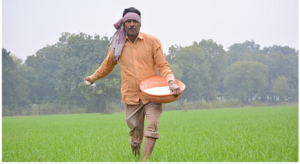
Context : Recent regulatory shift: Provisional registrations for biostimulants expired on June 16, 2025, leaving only 132 approved products under Fertiliser Control Order (FCO), boosting quality and farmer trust.
- Growing sustainability push: Amid high chemical fertiliser use (139.81 kg/ha nationally in 2023-24), biostimulants highlighted as eco-friendly alternative to reduce soil degradation and emissions.
- Seaweed potential: India’s seaweed production at 74,083 tonnes vs. 9.7 million tonnes potential, positioning it as key for blue economy and reducing fertiliser imports.
What are Biostimulants?
- Substances/micro-organisms stimulating natural plant processes, independent of nutrient content.
- Enhance nutrient uptake, stress tolerance, crop quality, and climate resilience.
- Derived from waste like seaweed, humic acids, protein hydrolysates, vitamins.
Why Biostimulants Important?
- Reduce chemical fertilizer dependency and input costs for farmers.
- Improve soil health, carbon sequestration, and biodiversity.
- Boost climate resilience against drought, salinity, temperature stress.
- Support UN SDGs: zero hunger, climate action, life on land.
Key Objectives Using Biostimulants
- Enhance nutrient use efficiency and absorption.
- Improve crop yield, quality, and harvestable produce.
- Build plant tolerance to abiotic stresses.
- Promote soil microbial activity and structure.
How Biostimulants Work
- Stimulate root growth for better water/nutrient uptake.
- Activate enzymes regulating plant metabolism and vigor.
- Enhance beneficial microbe activity in soil.
- Trigger defense mechanisms against environmental stresses.
Regulation of Biostimulants in India
- Included under Fertiliser Control Order (FCO) 1985 via Clause 20C, Schedule VI (Feb 2021).
- Nine categories: botanical extracts, humic/fulvic acids, seaweed, microorganisms.
- Only 132 approved products post-June 2025; require bio-efficacy trials, toxicity tests.
Significance of Biostimulants
- Seaweed extracts (41% global market) yield Rs 13.28 lakh/ha via ICAR-CMFRI.
- Reduce import dependency, create blue economy jobs for coastal women.
- Enable circular bioeconomy from agro-waste; support high-value crops (50% vegetables).
- Foster R&D, farmer training, PPPs for scalable sustainable farming
5. Kondapalli in Chhattisgarh steps into connectivity with first mobile tower
GS paper II-GOVERNACE
Context :Remote Kondapalli gram panchayat in Bijapur, Chhattisgarh, gets first mobile tower and electricity after decades of Maoist control. [web:previous]
Key Developments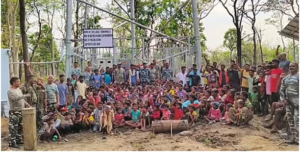
- Jio mobile tower installed April 2025; 60% households now have phones.
- Full household electrification ends long isolation from basic services.
- Enables banking, Aadhaar services, welfare schemes, and emergency contacts.
Strategic Importance
- Signals declining Maoist hold and rising state authority in LWE areas.
- Supports telemedicine, online education, scheme delivery, and local jobs.
- Builds governance trust via digital access in tribal conflict zones.
6. How can India benefit from neurotechnology?
GS paper III-science and technology
Context : India is exploring how brain‑computer interfaces and related tools can transform healthcare, defence and the digital economy while raising major ethical and regulatory questions.
The story so far
Neurotechnology is rapidly moving from lab research to real‑world uses, and global initiatives like the U.S. BRAIN program and China Brain Project underline its strategic importance.
What is neurotechnology?
It covers mechanical and digital tools that interact directly with the brain, such as BCIs, EEG‑based systems and implanted electrodes that can record, stimulate or interpret neural activity.
Why does India need it?
India faces a high and rising burden of neurological disorders like stroke, spinal cord injury, Parkinson’s disease and depression, making neurotech vital for therapy, assistive devices and rehabilitation.
Where does India stand today?
Indian institutes and startups are building BCIs, neuro‑robotic aids and brain‑signal decoding tools, but progress is uneven and commercialization is limited.
What are other countries doing?
The U.S., China, EU and Chile are investing heavily in BCIs and neuromodulation, using partnerships, public funding and clear strategies to push clinical and commercial applications.
The way forward
India needs stronger regulation, ethical standards, public engagement and targeted support for research and industry to harness neurotechnology safely and strategically