
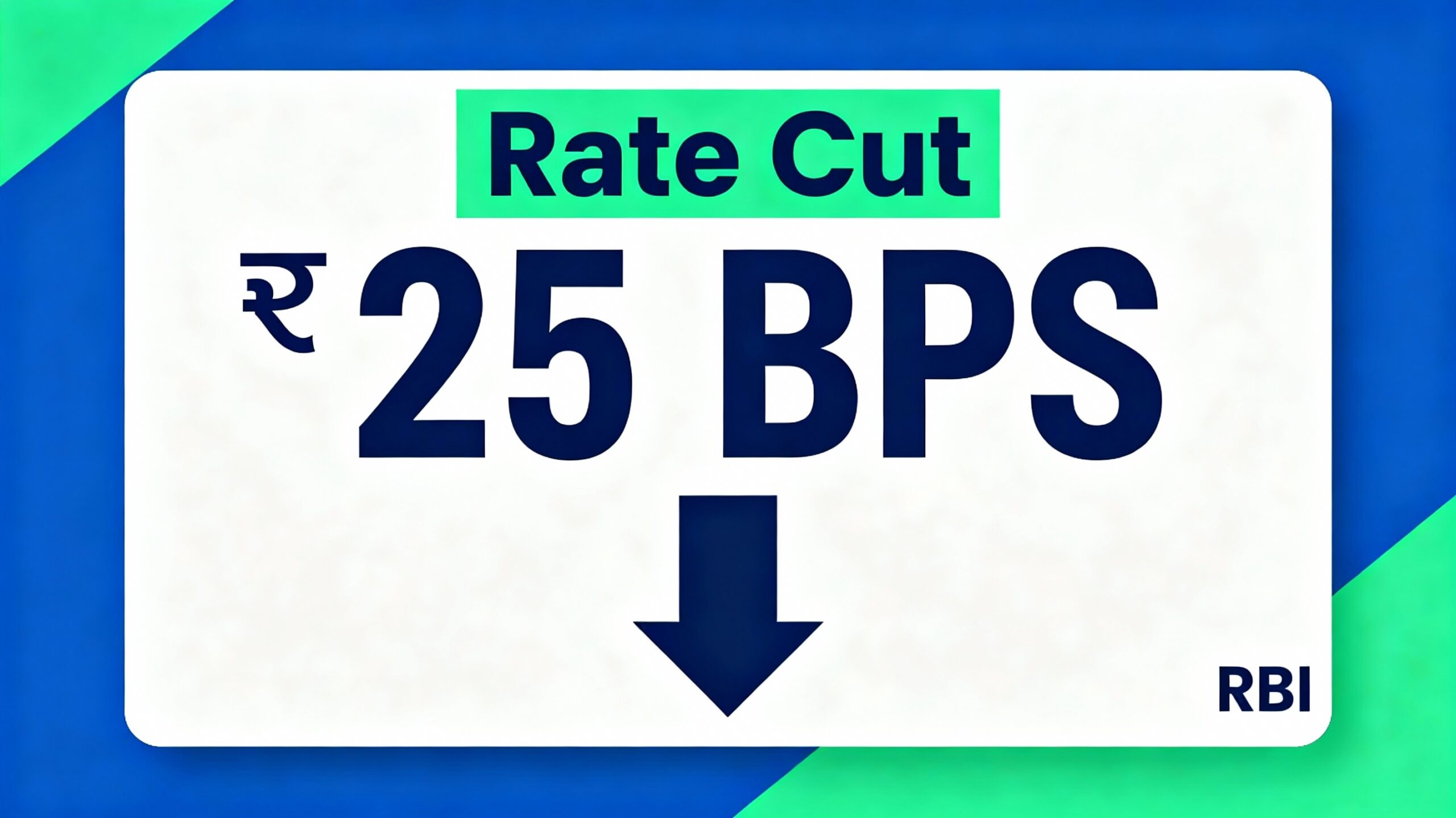
1. Repo rate cut by 25 bps
GS Paper III: Indian Economy
Context :RBI’s Monetary Policy Committee cut the repo rate by 25 bps to 5.25% with immediate effect, its fourth cut under Governor Sanjay Malhotra.
- The move follows Q2 real GDP growth jumping to 8.2% and headline inflation falling to 1.7%, below the 2–6% target band.
Why repo rate is important?
- Repo is the rate at which RBI lends short-term funds to commercial banks; it anchors overall interest rates in the economy.
- Changes in repo quickly transmit to loan and deposit rates, affecting EMIs, savings returns, investment, and growth.
Associated policy rates after the cut
- Standing Deposit Facility (SDF): 5.0% – Floor rate at which RBI absorbs surplus liquidity without collateral.
- Repo Rate (policy rate): 5.25% – Main policy rate for RBI lending to banks against government securities.
- Marginal Standing Facility (MSF): 5.5% – Emergency overnight borrowing window for banks at a penal rate.
- Bank Rate: 5.5% – Long-term reference rate aligned with MSF, used for some penalty and refinance calculations.
Meaning of these changes
- Narrow corridor of 5.0–5.5% signals finely calibrated easing while retaining monetary discipline.
- Lower policy rates should reduce borrowing costs, support credit growth, and still remain consistent with low inflation.
RBI’s monetary policy stance
- MPC retained a “neutral” stance, meaning future moves can be hikes or cuts depending on data.
- Rationale cited: sharp disinflation led by food, easing core inflation, but need to watch growth–inflation balance.
‘Goldilocks’ scenario
- “Goldilocks” refers to the combination of strong growth with very low, within-target inflation.
- With growth near 8% and inflation around 2–3%, RBI views the current phase as unusually favourable yet needing careful support.
2. Chiles lesson for india coal conudrum
GS PAPER II-IR
Context :India has slipped in the Climate Change Performance Index, mainly due to slow progress on phasing down coal-based power.
- An article compares India’s situation with Chile’s experience of planned coal exit to draw lessons for India’s energy transition.
Why coal is a conundrum for India
- Coal gives cheap, reliable electricity and jobs, especially in poorer coal-belt States.
- But it drives air pollution, health damage and rising emissions, worsening climate risks.
- Phasing it out too fast risks social and economic disruption; too slow worsens climate loss.
India’s energy status: the big picture
- Coal supplies over half of India’s total energy use and about three‑fourths of electricity generation.
- Renewables are rising fast and now form roughly half of installed power capacity, but their share in actual generation is still much lower.
- India is also still adding some new coal capacity, locking in future emissions.
Chile’s transition – what did they do differently?
- Cut coal’s share in power sharply (from about 43% to around 17–18%) by 2024.
- Used strict emission standards, carbon pricing and removal of coal subsidies to disincentivise coal.
- Ran large auctions and stable policies to rapidly scale solar and wind.
- Planned early for alternative industries and reskilling to absorb workers from coal regions.
Why India cannot copy Chile directly
- India’s coal dependence (plants, employment, State revenues) is far deeper and more geographically concentrated.
- Many districts in Jharkhand, Chhattisgarh, Odisha and West Bengal have few non‑coal economic options.
- India’s political economy and federal structure make quick privatisation and plant closures more complex.
- Power‑sector finances and grid flexibility are weaker, so absorbing very high renewables is harder.
Why coal phase‑out is still a “no‑regrets” policy
- Avoids long‑term climate damage; unchecked warming can shave several percentage points off future GDP.
- Reduces massive health costs; more coal capacity is linked with higher mortality near plant sites.
- Prevents stranded assets by avoiding new coal plants that may later become uneconomic.
- Frees capital and grid space for cleaner, cheaper renewables plus storage.
Financing the coal transition
- Use blended finance: public funds for communities, workers and grids; private capital for renewables and storage.
- Create a dedicated “just transition” fund to support reskilling, MSMEs and diversification in coal districts.
- Channel multilateral climate finance and green bonds into transmission, storage and RE manufacturing.
- Use carbon pricing / removal of coal subsidies to create fiscal room for transition spending.
Way forward
- Announce a coal road map: no new unabated coal, time‑bound retirement of the oldest and dirtiest plants.
- Prioritise aggressive renewables plus storage, grid upgrades and flexible gas/hydro to back them.
- Reform DISCOMs and power markets to favour clean dispatch and long‑term RE contracts.
- Prepare district‑level just‑transition plans for coal belts, with skilling, social protection and new industries.
- Integrate coal phase‑down into India’s broader growth, employment and climate strategies, with clear milestones.
3. How 5 owl eggs were saved and a ‘miracle’ hatched at a Telangana quarry.
GS PAPER III-environment and ecology
Context :Mining at a stone quarry in Yenakathala, Vikarabad district, Telangana, was stopped for about a month to protect five eggs of a rock eagle owl found in a rock crevice.
- The quarry is bearing an estimated loss of around ₹35 lakh to allow safe incubation and hatching, making it a notable example of
 industry‑supported wildlife conservation.
Rock eagle owl – basic description
- Common name: Rock eagle owl / Indian eagle-owl / Bengal eagle-owl.
- Scientific name: Bubo bengalensis.
- Large, horned owl with prominent ear tufts, orange eyes, brown‑grey plumage and white throat patch with dark streaks.
Taxonomy
- Kingdom: Animalia; Phylum: Chordata; Class: Aves.
- Order: Strigiformes (owls).
- Family: Strigidae (typical owls).
- Genus: Bubo; Species: B. bengalensis.
Habitat
- Prefers rocky hills, cliffs, escarpments, quarries and scrub forests.
- Nests in rock ledges, crevices and sometimes on ground in scrubby, undisturbed terrain.
- Often associated with semi‑arid and dry deciduous landscapes, not dense evergreen forests.
Distribution
- Largely confined to the Indian subcontinent.
- Found across most of India except high Himalayas and very wet forests.
- Also occurs in parts of Nepal, Pakistan and adjoining South Asian regions.
Breeding and behaviour
- Lays eggs (usually 2–5) in rock ledges, crevices or ground scrapes with minimal nesting material.
- Incubation lasts around 6–8 weeks; both parents guard and feed chicks.
- Nocturnal predator feeding on rodents, small mammals, birds, reptiles and large insects; important natural pest controller.
Conservation status – list & status (table)
| Framework / list | Status / protection level |
| IUCN Red List | Least Concern (population trend decreasing). |
| CITES | Appendix II (regulated international trade). |
| Wildlife (Protection) Act, 1972 – India | Listed in Schedule I in this context/article, implying highest legal protection and strict penalties for hunting or trade. |
Conservation significance
- High‑level legal protection reflects ecological role and vulnerability to habitat loss, quarrying and illegal trade.
- The Telangana quarry incident showcases on‑ground implementation of legal protection through voluntary industrial cooperation.
4. Do we nned to change cities are governed in India ?
GS paper II-POLITY
Context :The rise of Zohra Mamdani as New York’s youngest City Council Member has sparked debate in India over the absence of comparable empowered civic leadership. Simultaneously, elections and restructuring in Indian cities like Mumbai and Hyderabad reveal the systemic weaknesses in India’s urban governance model.
Urban Governance Model Challenges
- Despite rapid urbanisation, Indian cities remain under State government control with limited municipal autonomy.
- City Mayors lack real power and visibility; municipal decisions are dominated by State officials and political priorities.
- The 74th Constitutional Amendment intended to decentralise authority but has not delivered genuine administrative or fiscal independence to municipalities.
Article 243-R and Municipal Leadership
- Directly elected municipal members are mandated by the Constitution.
- State Legislatures decide how Mayors are elected and their tenure, often opting for indirect elections that produce weak, largely ceremonial Mayors.
- As a result, State governments and municipal commissioners overshadow Mayors.
Structural Weaknesses of Mayoral Authority
- Chief Ministers hold key powers over policing, planning, and civic institutions, reducing Mayors to figureheads.
- Municipal governance is subordinated to State Assembly politics and priorities.
- Limited autonomy under the 74th Amendment and absence of local accountability restrict effective mayoral leadership.
Reasons for Invisibility of Mayors
- India’s historical development of local governance differs from Western models; municipalities gained constitutional legitimacy only recently.
- Political reluctance has stalled reforms, with State governments retaining control of finances, planning, and administrative cadre.
- Fear of strong urban leadership undermining State political power deters empowerment of Mayors.
Public and Political Dynamics Affecting Mayoral Power
- Local civic issues generate low public demand and mobilisation for empowered governance.
- State and national political narratives overshadow urban service concerns.
- Bureaucrats dominate city administrations, limiting Mayors’ scope for innovation.
Limitations of the 74th Amendment in Practice
- State laws dilute decentralisation by maintaining control over finances, land, and key departments.
- State Finance Commissions are underpowered or non-functional.
- Overlapping functions among various urban bodies weaken overall accountability and governance clarity.
Financial Autonomy: Key to Effective Urban Governance
- Municipalities lack sufficient revenue sources to manage essential services like transport, sanitation, and climate resilience.
- Property tax collections remain low, and grants depend heavily on State discretion.
- Fragmented budgeting and poor integration of municipal priorities into overall fiscal planning hamper efficient governance.
- Predictable financial devolution is critical for infrastructure development and improved urban outcomes.
Need for Urban Political Architecture Reform
- Fragmented authority and overlapping mandates—as seen in Delhi—complicate governance.
- Cities require clear, unified command structures to manage interdependent systems like land, water, and waste management.
- Strengthening mayoral powers and visibility is essential for accountability and effective urban administration.
India’s urban governance remains highly centralised under State governments, marginalising Mayors and weakening municipal accountability. The 74th Amendment’s promise of decentralisation is unfulfilled, resulting in fragmented authority and inadequate fiscal capacity. To cope with urban growth, climate challenges, and service demands, India must empower municipal bodies structurally, ensure fiscal autonomy, and cultivate visible, accountable city leadership.
5. INS Aridhaman
GS paper III-science and technology
Context :The Indian Navy has announced the upcoming induction of INS Aridhaman, India’s third nuclear-powered ballistic missile submarine (SSBN), marking a significant boost to its strategic maritime capabilities.
Overview of INS Aridhaman
- The second vessel in the Arihant-class series of SSBNs
- Developed under the Advanced Technology Vessel (ATV) program
- Constructed at the Ship Building Centre, Visakhapatnam
- Enhances India’s nuclear triad by providing a credible sea-based nuclear deterrent
Strategic Importance
- Strengthens India’s deterrence under the No First Use nuclear doctrine
- Reinforces India’s status as a blue water navy, capable of operating across deep oceans
- Expands India’s maritime security and strategic presence in the Indian Ocean Region
Blue Water Navy Explained
A blue water navy refers to a maritime force with the capability to operate globally, beyond coastal waters, projecting power across the world’s deep oceans.
6. Rainbow Water Snake
GS PAPER III-Environment and ecology
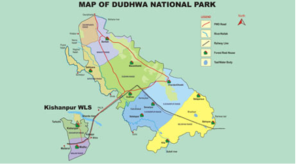
Context :A Rainbow Water Snake (Enhydris enhydris) has been recorded for the first time in Uttar Pradesh, with photographic proof from the buffer zone of Dudhwa Tiger Reserve.
Dudhwa Tiger Reserve Details
- Situated along the Indo-Nepal border in Lakhimpur Kheri district, Uttar Pradesh

- Established in 1988, spanning 1,284 sq km
- Comprises Dudhwa National Park, Kishanpur Wildlife Sanctuary, and Katerniaghat Wildlife Sanctuary
- Buffer zone covers North Kheri, South Kheri, and parts of Shahjahanpur forest divisions
- Features Tarai Bhabar ecosystem of the Upper Gangetic Plains, with rivers like Sharda, Geruwa, Suheli, and Mohana—all tributaries of the Ghagra River
- Vegetation dominated by North Indian Moist Deciduous forests, including Sal, Asna, Asidha, Haldu, Simal, and Kanju.
Rainbow Water Snake Profile
- Scientific name: Enhydris enhydris; IUCN status: Least Concern
 Mildly venomous, piscivorous freshwater species
- Native to South and Southeast Asia, including India, Nepal, Bangladesh, Myanmar, Sri Lanka, and Thailand
- Prefers marshlands, ponds, rice fields, and other freshwater habitats
- Grows up to 130 cm, with brown to greenish-brown body, pale belly, and two pale stripes converging near the crown.
7. New Delhis relative isolation, Indias tryst with terror
GS PAPER II-POLITY
CONTEXT :India confronts unusual diplomatic isolation across West Asia, Europe, and the Indo-Pacific, alongside South Asian turmoil in Pakistan and Bangladesh, and a resurgence of sophisticated Pakistan-linked urban terror modules in Jammu & Kashmir, Delhi, and other cities.
India’s Current Strategic Challenges
- Combines geopolitical marginalisation with rising regional hostility and complex terror threats from Pakistan-backed networks.
- South Asia experiences political, military, and institutional upheaval, shrinking India’s influence.
- Distinct from past scenarios due to isolation paired with revived urban terrorism.
Causes of India’s Diplomatic Isolation
- Perceived as an ‘outlier’ in global order-shaping, with limited roles in key regions.
- Acts as a virtual onlooker in major geopolitical shifts despite high stakes.
- Lacks stable regional support amid South Asian instability.
Regional Hostility Impacting India’s Position
- Pakistan and Bangladesh adopt increasingly unfriendly stances, with Pakistan’s anti-India rhetoric escalating.
- Pakistan’s military restructuring includes a new Chief of Defence Forces with nuclear oversight and a 27th Amendment tilting civil-military balance.
- Bangladesh shows pro-Pakistan signals through naval visits and re-engagement, heightening regional tensions.
Escalating Counter-Terror Challenges
- Urban terror revival in metropolitan areas after years of decline.
- Pakistan-state collusion with Lashkar-e-Taiba and Jaish-e-Mohammed; encrypted channels for radicalisation and logistics.
- J&K-Delhi corridor sees attacks; professionals (doctors, academics) recruited for planning.
- Patterns resemble 1993 Bombay blasts and 2008 Mumbai attacks.
Unique Features of Renewed Terror Threat
- Shift to professional networks blending ideology with academic legitimacy for youth recruitment.
- Encrypted tech, global links (UAE, Saudi, UK, Jordan), and diverse recruits including engineers.
- Local sleeper cells in J&K, Delhi enable rapid mobilisation.
Need for Strategic Diplomatic-Security Response
- Volatile neighbourhood (Afghanistan, Nepal, Maldives, Myanmar) risks spillover instability.
- Pakistan’s civil-military shifts increase miscalculation risks.
- Requires vigilant handling of external-internal terror linkages.
8. Military Exercises in News
CONTEXT :India navigates dual pressures of diplomatic isolation and advanced terror threats amid regional realignments.
- Calibrated diplomacy, enhanced vigilance, and patience are essential to manage this unpredictable geopolitical landscape.
- The two major military exercises involving India have recently attracted attention due to their strategic and operational significance.
- These exercises highlight India’s growing defence cooperation with key partners and enhance its armed forces’ operational capabilities.
Exercise Garuda 25: Indo-French Air Force Exercise Concludes
- Location: Air Base 118, Mont-de-Marsan, France
- Participants: Indian Air Force (IAF) and French Air and Space Force (FASF)
- Key Elements:
- Deployment of IAF’s Su-30MKI fighters, IL-78 air-to-air refuelling tankers, and C-17 Globemaster III transport aircraft.
- Execution of complex air operations including strike missions, escort tasks, air refuelling, and coordinated strikes.
- Joint mission planning and tactical coordination to improve interoperability and share operational procedures.
- High operational readiness maintained by IAF maintenance teams ensuring serviceability of aircraft throughout the exercise.
- Strategic Importance:
- Strengthens the Indo-French strategic partnership in defence.
- Enhances IAF’s war-fighting capabilities through exposure to advanced joint air operations in an international environment.
- Provides valuable operational insights for future collaborative defence engagements.
Exercise Garuda Shakti 2025: Indo-Indonesian Special Forces Training Begins
- Location: Special Forces Training School, Bakloh, Himachal Pradesh
- Participants: Indian PARA Special Forces and Indonesian Special Forces
- Key Focus Areas:
- Training on counter-terrorism tactics, unarmed combat, precision shooting, sniping, and heliborne operations.
- Advanced modules on drone warfare, counter-unmanned aerial systems (counter-UAS), and loitering munitions, adapted to semi-mountainous terrain.
- Exchange of knowledge on weapons, equipment usage, and operational procedures to boost bilateral special forces synergy.
- Culminates in a validation exercise simulating real combat scenarios to assess readiness and coordination.
- Strategic Importance:
- Demonstrates growing defence cooperation and trust between India and Indonesia.
- Enhances operational preparedness against evolving asymmetric threats like terrorism and drone attacks.
- Contributes to regional security by improving joint response capabilities in challenging terrains.