

1. Passive euthanasia ;SC forms medical board for 31 year old man
GS Paper I : Indian Polity & Governance
Cotext :A father has approached the Supreme Court seeking passive euthanasia for his 31‑year‑old son, who has 100% disability with quadriplegia and has been in a vegetative state for over a decade.
- The Supreme Court has directed the district hospital to form a primary medical board, assess whether life‑sustaining treatment can be withdrawn, and report within a set time, after which the Court will take a final call.
Meaning of Euthanasia
- Literally means “good death”; intentional ending of life to relieve unbearable suffering.
- Involves a deliberate act or omission that hastens death in terminal or irreversible illness.
Types of Euthanasia
- a) Active euthanasia
- Death caused by a direct act (e.g., lethal injection or fatal drug dose).
- Act itself is the immediate cause of death, not the disease.
- Generally illegal in India and most countries; allowed only in few under strict laws.
- b) Passive euthanasia
- Withholding or withdrawing life‑support (ventilator, feeding tubes, key drugs).
- Allows underlying disease to cause death when treatment is deemed futile.
- Legally permitted in India under detailed safeguards laid down by the Supreme Court.
Why Patients/Families Seek Euthanasia
- To end intense, unrelievable pain or suffering when cure is impossible.
- Feeling of loss of dignity, autonomy, and meaningful quality of life.
- Emotional and financial strain of prolonged intensive care on family.
- Wish to avoid long, artificial prolongation of life with no realistic recovery.
Global Legality –
- Some European states (e.g., Netherlands, Belgium, Luxembourg) allow active euthanasia/assisted dying with strict criteria.
- Certain US states, Canada, New Zealand permit physician‑assisted dying for competent adults with terminal illness.
- Many countries accept “passive euthanasia” via DNR orders and refusal of futile treatment, even if not named as euthanasia.
- In a large number of jurisdictions, both active euthanasia and assisted suicide remain illegal.
Euthanasia in India – Legal Framework (Passive Only)
Supreme Court Position
- Recognises passive euthanasia (withdrawal of life support) in exceptional cases.
- Accepts “advance directives” or living wills for refusal of life‑prolonging treatment by competent adults.
Key Safeguards
- Patient must be terminally ill or in permanent vegetative state with no reasonable chance of recovery.
- Hospital‑level or independent medical board must certify medical condition and futility of continued life support.
- Court‑supervised or legally prescribed procedure must be followed before stopping treatment.
- Current case of the 31‑year‑old quadriplegic man fits this framework: SC has ordered a medical board report before deciding on passive euthanasia.
Quadriplegia:
What is Quadriplegia?
- Also called tetraplegia; paralysis of all four limbs and usually trunk.
- Caused by damage to cervical spinal cord from trauma, stroke, tumours, or neurological disease.
Effects
- Severe loss of movement and sensation in arms, legs, and torso.
- Bladder and bowel dysfunction; high risk of infections and pressure sores.
- Breathing difficulty if higher neck segments injured; may need ventilator.
- Near‑total dependence for daily activities; heavy psychological and family stress.
Treatment and Management
- No cure for complete spinal cord injury; focus is on rehab and preventing complications.
- Acute: spinal stabilisation surgery where possible, medicines, support for breathing and circulation.
- Long term: physiotherapy and occupational therapy to maximise residual function.
- Use of wheelchairs, special beds, communication aids and other assistive devices.
- Regular care for bladder/bowel, skin, and lungs to avoid sores and infections.
- Psychological counselling, social and caregiver support are essential.
- Experimental options (stem cells, nerve repair) are under research, not standard therapy.
2. The INO that wasn’t and the JUNO that is
GS Paper III (Science & Technology, Economy):Big Science projects in India (INO) and international collaborations (JUNO)
Context :China has completed and begun operating the Jiangmen Underground Neutrino Observatory (JUNO), a huge underground neutrino detector.
- This highlights the contrast with India’s India-based Neutrino Observatory (INO), which has remained stalled for years despite similar scientific goals.
Background: Neutrinos and why study them?
What are neutrinos?
- Neutrinos are electrically neutral, extremely light subatomic particles.
- They interact very weakly with matter, so trillions pass through our bodies and the Earth every second without effect.
- They come in three “flavours”: electron, muon and tau neutrinos.
Why are neutrinos important?
- They help probe processes inside the Sun, supernovae and the early universe.
- Their tiny masses and behaviour test physics beyond the Standard Model.
- Understanding them improves knowledge of fundamental forces and cosmic evolution.
What is INO (India-based Neutrino Observatory)?
- A proposed underground laboratory in the Theni region of Tamil Nadu to host a large Iron Calorimeter (ICAL) neutrino detector.
- Planned to be built inside a mountain tunnel to shield it from cosmic rays.
- Main aims: study atmospheric neutrinos, neutrino oscillations and determine the ordering of neutrino masses (mass hierarchy).
- Designed as a flagship “big science” facility showcasing Indian capability in detector technology and data analysis.
Why did the INO project fail to take off?
- Local opposition over environmental and safety concerns about tunnelling under a hill.
- The project’s association with the Department of Atomic Energy triggered fears and political controversy.
- Delays in clearances, changing conditions, and lack of consistent political backing.
- Collaboration could not secure timely construction and funding, so deadlines slipped repeatedly until the project effectively stalled.
China’s JUNO: what did China do differently?
- Chose and completed a very large underground site and detector on a fast, clearly supported national timeline.
- Ensured strong, sustained government backing and funding as a strategic science priority.
- Built a broad international collaboration, attracting researchers and resources from many countries.
- Reached the data‑taking stage and has already released initial performance results.
Neutrino oscillations and mass ordering (scientific goals)
Neutrino oscillations
- Neutrinos can change from one flavour (electron, muon, tau) to another as they travel.
- This “oscillation” implies neutrinos have mass and mix, described by several mixing angles and mass‑squared differences.
Mass ordering (hierarchy)
- Refers to whether the three neutrino masses are arranged as:
- Normal ordering: m1 < m2 < m3, or
- Inverted ordering: m3 < m1 < m2.
- Both INO (through atmospheric neutrinos in ICAL) and JUNO (through reactor neutrinos in a liquid scintillator detector) were designed to pin down this ordering with high precision.
Missed opportunity for India
- INO would have placed India at the forefront of neutrino physics and big‑detector engineering.
- Delay has meant loss of leadership, training opportunities for young scientists, and associated technology spin‑offs.
- JUNO now leads the race to determine neutrino mass ordering and related parameters, while India remains largely on the sidelines instead of being a major experimental hub.
3. Cyclone Ditwah
GS Paper I: Indian and World Geography
Context :A cyclonic storm over the southwest Bay of Bengal, heading towards Tamil Nadu, Puducherry and south Andhra Pradesh.
- Expected to come close to the TN–Puducherry coast around 30 November, raising landfall/flood risk.
- IMD/RMC Chennai have issued red and orange alerts for very heavy to extremely heavy rain.
- TN government has activated disaster management, fishermen bans, school closures, and preparedness measures.
- May reduce Chennai’s rainfall deficit but can cause serious flooding in low‑lying areas.
What is Cyclone Ditwah?
- A cyclonic storm that formed from a deep depression over the southwest Bay of Bengal near Sri Lanka.
- Name “Ditwah” (meaning lagoon) was given by Yemen under WMO’s cyclone‑naming list.
- On 28 November, located roughly 570 km SSE of Puducherry and 670 km SSE of Chennai.
- Classified as a cyclonic storm (below “severe” level), moving north‑northwest at about 8–13 km/h.
- Core winds around 60–80 km/h, gusting to ~90 km/h; outer bands 35–45 km/h, gusting to ~55 km/h.
- Likely to intensify somewhat but not to a very severe cyclone; will skirt Sri Lanka then head towards TN coast.
Effects on Tamil Nadu and Neighbouring Areas
- Very heavy to extremely heavy rainfall in delta and southern districts; risk of urban and river flooding.
- Strong winds may uproot trees, damage lines and disrupt power and transport.
- Rough seas and high waves make sea conditions unsafe for fishing and coastal activity.
- Short‑term disruption to schools, transport and agriculture; paddy in delta districts especially vulnerable.
- Medium‑term benefit through improved reservoir levels and easing rainfall deficit, including for Chennai.
Development and Path of the Storm
- Originated as a deep depression near Sri Lanka on 26–27 November, then intensified into a cyclonic storm.
- Initially centred near Pottuvil/Batticaloa region of Sri Lanka, about 600–700 km from Chennai/Puducherry.
- Moving north‑northwest across the southwest Bay of Bengal and along Sri Lanka’s coast.
- Expected to reach off the coasts of north TN, Puducherry and south Andhra Pradesh by early 30 November.
Alerts, Impacts and Preparations
- Red alert for extremely heavy rain in delta districts: Thanjavur, Tiruvarur, Nagapattinam, Mayiladuthurai.
- Orange alert for heavy to very heavy rain in districts like Chennai, Tiruvallur, Cuddalore, Chengalpattu, Villupuram.
- Fishermen advised not to venture into the Bay; rough seas likely till around 1–2 December.
- Disaster Response teams on standby; evacuation from very low‑lying and coastal hamlets where needed.
- Residents advised to avoid sea fronts, clear drains, store essentials and follow official weather and safety advisories.
4. Sirpur Archaeological Site
GS Paper I -history -Art &culture
Context :Chhattisgarh government is upgrading Sirpur for UNESCO World Heritage nomination with battery-operated carts, paved pathways, and 3D interpretation center.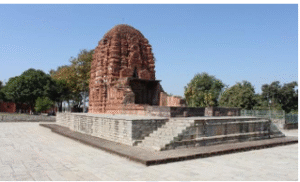
- Plans include four thematic clusters (Buddhist, Hindu, civic-administrative, riverine), trilingual signage, QR panels, eco-tourism, and ASI land transfer for unified management.
- Recent joint inspections and proposal to Union Culture Ministry aim to boost tourism while preserving integrity.
Location
- Lies on the Mahanadi River banks in Mahasamund district, Chhattisgarh, about 2 hours from Raipur.
- Forms a sacred riverine landscape with ghats and temple clusters, blending natural and human elements per UNESCO criteria.
Historical Background
- Identified in 1882 by Alexander Cunningham; excavations resumed in 1950s, 1990s, and 2003.
- Served as capital under Panduvanshi and Somavamshi kings (6th–8th centuries).
- Uncovered: 22 Shiva temples, 5 Vishnu temples, 10 Buddhist viharas, 3 Jain viharas; earliest from 5th century AD.
Architectural Highlights
- Lakshmana Temple (7th century): Finest brick temple on stone jagati with sculpted shikhara, Vishnu carvings, and maithuna panels.
- Surang Tila Complex: Panchayatana style on 9m terrace with 37 steps, four Shiva shrines, Ganesha shrine, 32-pillared mandapa.
- Teevardev Buddha Vihara (8th century): Monastery with monolithic Avalokiteshvara statue, inscriptions, blended iconography.
- Baleshwar and Gandheshwar Temples: Feature carved pillars, female figures, marble lingam; latter reuses sculptures symbolizing continuity.
Urban Features
- 6th-century market complex indicating commercial hub status.
- Infrastructure includes meditation cells, stupas, and advanced water management
5. Scheme to Promote Manufacturing of Sintered Rare Earth Permanent Magnets (REPM)
Context :The Union Cabinet approved this ₹7,280-crore scheme to drastically reduce India’s dependence on imported REPMs.
- It marks India’s first-ever effort to create an integrated REPM manufacturing ecosystem domestically.
- The initiative supports the national goal of technological self-reliance and aligns with India’s Net Zero 2070 carbon-neutral commitment.
- It is a significant step toward securing strategic materials crucial for India’s electric mobility, clean energy ambitions, and defence capabilities.
- The scheme also aims to create employment, foster innovation, and enhance India’s competitiveness in the global rare earth magnets market.
What is the Scheme?
- It is a pioneering national initiative to establish a fully integrated domestic production chain for Rare Earth Permanent Magnets (REPM).
- The scheme covers the entire value chain — from rare earth oxides to metals, alloys, and finally finished high-performance sintered REPMs.
Administering Ministry
- Ministry of Mines oversees the scheme, with coordination from the Department of Atomic Energy and NITI Aayog.
Targets and Capacity
- Set up 6,000 Metric Tons Per Annum (MTPA) of integrated REPM manufacturing capacity.
- Five beneficiaries will be chosen globally via competitive bidding, each allotted up to 1,200 MTPA capacity.
Financial Details
- Total budget: ₹7,280 crore.
- ₹6,450 crore in sales-linked incentives over 5 years to encourage high-quality production and global competitiveness.
- ₹750 crore as capital subsidy for plant setup aiding expensive technologies such as oxide-to-metal conversion, alloying, and sintering.
Timeline
- The scheme duration is 7 years.
- 2 years allotted for setting up manufacturing facilities.
- 5 years for disbursing sales-based incentives.
Scope of Manufacturing
- Comprehensive coverage of all stages: conversion of rare-earth oxides → metals → alloys → finished sintered REPMs under one roof.
- This integrated approach aims to promote efficiency, minimize costs, and secure the domestic supply chain.
About Sintered Rare Earth Permanent Magnets (REPM)
What are REPMs?
- NdFeB (Neodymium-Iron-Boron) magnets are the strongest commercial magnets, created by sintering rare-earth-based alloys.
- These magnets are critical for electric vehicles, renewable energy devices, aerospace, defence, and high-tech electronics.
Current Indian Context
- India holds 6.9 million tonnes of rare earth element reserves, ranking 5th globally.
- Despite this, India produces only about 1% of global REPM supply.
- India currently relies almost entirely on imports for REPMs.
- China dominates global supply, controlling approximately 90% of REPM production.
Key Characteristics of REPMs
- Extremely strong magnetic properties.
- Can withstand high temperatures without performance loss.
- Compact in size yet deliver superior magnetic performance.
- No alternative materials match REPMs for many advanced applications.
6. Gene-edited rice varieties Pusa DST-1 and DRR Dhan 100
GS paper III-Science & Technology / Agriculture (Biotechnology and Crop Improvement)
Context : ICAR rebutted bias allegations by Coalition for GM-Free India over AICRPR trials, calling claims “baseless and motivated” against development.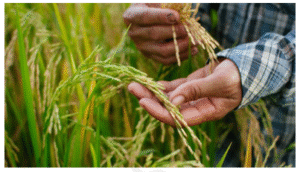
- Controversy highlights debates on safety, ecological risks, and regulation of gene-editing vs. GM crops.
Pusa DST-1 Characteristics
- Improved MTU1010 variant from ICAR-IARI, targeting DST gene for drought/salinity tolerance.
- Yields 15% more in alkaline soils, 30% in coastal saline areas; suited for southern states.
- Features reduced stomatal density for water conservation, enhanced tillering, and survival under 200 mM NaCl stress.
DRR Dhan 100 (Kamala) Features
- Enhanced Samba Mahsuri from ICAR-IIRR, editing OsCKX2 gene for higher grain yield and early maturity.
- Delivers 9-22% higher yields across seasons, matures 20 days earlier, with lodging resistance and 19% overall gain.
- Climate-resilient with lower methane emissions (20% reduction), water savings (7,500 million cubic meters annually), and efficiency under low fertilizers.
Development and Validation
- Rigorous AICRPR trials across 100+ sites over 2-3 years confirm superiority in salinity, alkalinity, and climate-stressed conditions.
- Exempt from GMO rules (Rules 7-11) as SDN-1 edits mimic natural mutations
7. Why are Srinagar’s traditions livelihood struggling to survive ?
GS‑3: Economy, inclusive growth, environmental degradation, climate resilience and disaster management.
GS‑2: Governance in UTs, centre–state (centre–UT) relations, and institutional response in conflict‑sensitive regions.
Context :Srinagar’s traditional livelihoods (tourism, horticulture, crafts) are under stress due to recent floods, ecological degradation and post‑Article 370 governance changes.
- A 2025 explainer highlights how these shocks have deepened unemployment and exposed the city’s economic and environmental fragility.
Why Srinagar Matters
- Srinagar sits in a fragile Himalayan valley where wetlands, lakes and orchards directly support jobs and incomes.
- It is the main urban hub linking rural apple/saffron belts with tourism and handicraft markets.
Post‑Article 370 Changes
- State to UT shift disrupted administration, investment sentiment and supply chains.
- Communication curbs and policy uncertainty hurt tourism, horticulture exports and artisan markets.
Ecological Stress and Urbanisation
- Wetlands and lakes are encroached for housing and “smart city” projects, weakening natural flood buffers.
- Urban sprawl (e.g., building over former marshes) raises living costs and increases flood and water‑logging risks.
Livelihood Crisis
- Tourism, horticulture and handicrafts together support lakhs but all have seen demand and price shocks.
- Youth and women face very high unemployment; many artisans and vendors are pushed out of traditional spaces.
Why the Current Model Falls Short
- Big infrastructure and real‑estate projects favour capital‑intensive growth over local, livelihood‑rich sectors.
- Street vendors, small artisans and women workers are excluded from formal planning and market access.
Pathways for Sustainable Growth
- Strengthen horticulture with cold‑chains, climate‑smart crops, MSP‑like support and farmer cooperatives.
- Promote community‑based, eco‑friendly tourism and heritage circuits instead of only high‑end projects.
- Support artisans through cooperatives, design and digital platforms, and GI‑based branding.
- Protect wetlands and floodplains in land‑use plans and invest in green, water‑sensitive urban infrastructure.