

1. UNSC reforms no longer an option but a necessity: Modu at IBSA meet
General Studies (GS) Paper II – Governance, Constitution, Polity, Social Justice, and International Relations
Context: Prime Minister Narendra Modi, at the recent IBSA (India-Brazil-South Africa) summit, asserted that United Nations Security Council (UNSC) reforms are not just an option but a necessity. He emphasized that the IBSA troika must send a strong message for systemic reforms in global governance, especially as the world faces fragmentation and division during significant global crises.
Why Modi Says UNSC Reforms Are a Necessity
- Present Issues with UNSC:
- The UNSC, with its current composition of five permanent members (P5) holding veto power, does not reflect contemporary geopolitical realities.
- Its structure leads to inaction and deadlock during emergencies, notably due to “P5 veto paralysis” which hampers collective global response.
- The Council’s inability to resolve major crises (such as ongoing conflicts and terrorism) exposes its declining relevance and effectiveness.
- Ineffective in Managing Global Crisis:
- The UNSC has failed to respond robustly to emerging global security threats, humanitarian emergencies, and cross-border terrorism.
- Examples include inconsistent strategies and double standards in dealing with terrorism and other international issues.
- P5 Veto Paralysis:
- The veto held by permanent members often results in political deadlock, undermining urgent action on critical security, humanitarian, or peacekeeping mandates.
- This paralysis has led to calls for a more representative and accountable UNSC.
- Role of IBSA:
- IBSA acts as a unified voice from three major democracies spanning three continents and is pushing for inclusive and democratic reforms in global governance institutions.
- The IBSA platform can bridge divides and facilitate cooperation among developing nations.
IBSA and Security & Counterterrorism
- Joint Security Proposal:
- Modi proposed institutionalizing IBSA National Security Advisor-level meetings to coordinate and strengthen security strategies among the three nations.
- India called for an end to double standards in counterterrorism and for closer coordination on global security.
Technological Cooperation and Digital Innovation
- IBSA Digital Innovation Alliance:
- India suggested the establishment of an IBSA Digital Innovation Alliance to facilitate the sharing and scaling up of digital public infrastructure—such as the CoWIN platform and UPI—among members.
- Focus on cooperation in cybersecurity and women-led tech initiatives.
IBSA Fund and New Proposals
- Ongoing IBSA Fund Initiatives:
- The IBSA Fund supports climate resilience, agriculture, health, education, and women’s empowerment in over 40 countries.
- New Proposals:
- Modi recommended using the Fund for Climate Resilient Agriculture and advancing South-South cooperation for sustainable growth.
Global South, G20 Collaboration, and AI Governance
- Advocate for Global South:
- IBSA’s recent presidencies and G20 Summit participation have amplified the voice and interests of developing countries, exemplifying solidarity for human-centric development and multilateral reforms.
- AI and Future Governance:
- Modi invited IBSA to the AI Impact Summit in India, highlighting the group’s capacity to help craft global norms for safe, trustworthy, and human-centric artificial intelligence technologies.
Sectors for Future Cooperation
- Sustainable Agriculture: Collaboration in climate-resilient and environmentally sustainable farming.
- Health Security: Opportunities in traditional medicine, health digitalization, and addressing public health emergencies.
- Green Energy & Disaster Resilience: Joint projects in green technologies, disaster response, and natural farming systems.
Conclusion
The renewed IBSA resolve, driven by India’s push for UNSC reform, calls for a representative, multilateral order responsive to 21st-century challenges—combating terrorism, fostering technological progress, and amplifying the Global South’s interests at forums like the G20.
2. African grey parrot
GS PAPER III-environment and ecology
Context: Recent RTI responses revealed that State Forest Departments across India have no official record of African grey parrot trade, breeding, or authorized sales, despite the bird’s widespread availability in pet markets. The lack of regulation and data transparency raises concerns for conservation, invasion risks, and the spread of zoonotic diseases.
What is the African Grey Parrot?
- Common Names & Scientific Name:
- Commonly called African grey parrot
- Scientific name: Psittacus erithacus
Physical Features
- Appearance:
- Medium-sized parrots with grey plumage, striking red tail feathers, and white mask around the eyes
- Size:
- Typically, 33–41 cm (13–16 in) in length
- Weight ranges from 400–600 grams
Intelligence and Behaviour
- Cognitive Abilities:
- Renowned for their exceptional intelligence, problem-solving ability, and understanding of human speech
- Capable of mimicking sounds and words
- Demonstrate complex social behaviours and emotional sensitivity
Life Expectancy
- Longevity:
- In captivity, African greys can live 40–60 years
- In the wild, lifespan averages about 23 years due to environmental stressors
Conservation Status
- IUCN Status:
- Classified as ‘Endangered’ by the International Union for Conservation of Nature (IUCN)
- Listed under Appendix I of CITES, restricting international trade
Why is the Species Threatened?
- Habitat Loss:
- Deforestation and environmental degradation in Central Africa decimate natural populations
- Capture for Pet Trade:
- Extensive trapping for global pet markets has led to sharp declines
- Illegal Trade & Poor Regulation:
- Rampant trade, unregulated breeding, and import/export without adequate checks
- Other Risks:
- Disease spread, stress, and reduced genetic diversity in captive populations
Effective conservation of African grey parrots requires stricter regulation, transparent record-keeping, and international cooperation to prevent exploitation and population decline.
3. IAF’s Tejas fighter jet crash during Dubai air show leaves pilot dead;
GS PAPER III-Science and technology
Context: An Indian Air Force (IAF) Tejas Mk1 fighter jet crashed during the Dubai Air Show 2025 at Al Maktoum International Airport, killing Wing Commander Namansh Syal. The aircraft spiraled out of control and ignited on impact while performing a complex aerobatic maneuver at low altitude. A court of inquiry has been ordered to investigate the cause of the fatal accident, which marks the second crash in Tejas history and the first to result in a pilot fatality.
Tejas Mk1A
- An upgraded variant of the Light Combat Aircraft (LCA) developed by Hindustan Aeronautics Limited (HAL).
- Enhances operational capabilities, survivability, and maintainability beyond the baseline Mk1.
- Key features include AESA radar, Electronic Warfare Suite (EWS) for radar warning and jamming, upgraded flight control computers, and compatibility with advanced Beyond Visual Range (BVR) missiles, Air-to-Air and Air-to-Ground missiles.
- Plans include integration of Combined Interrogator and Transponder (CIT), Software Defined Radio (SDR), and Operating Data Link (ODL) for better avionics.
LCA Tejas
- Developed since 1984 to replace ageing MiG-21s, managed by the Aeronautical Development Agency (ADA).
- Lightest, smallest tailless multirole supersonic fighter with a payload capacity of 4000 kg and max speed of Mach 1.8, range ~3,000 km.
- Multiple variants:
- Tejas Trainer(2-seater for training)
- LCA Navy(carrier-capable versions)
- LCA Tejas Navy MK2(improved naval version)
- LCA Tejas Mk1A(upgraded with higher thrust engine)
Fifth Generation Fighter Jets: Context for India
- Designed for highly contested environments with stealth and supercruise capabilities.
- Features: multispectral low observability, enhanced self-protection, radar jamming, and integrated avionics.
- Global operators: Russia (Su-57), China (J-20), USA (F-35).
- India’s IAF faces a squadron shortfall, with about 30 squadrons against a sanctioned strength of 42 and an ageing fleet including MiG-21, MiG-29, Jaguar, Mirage 2000 needing replacement by mid-next decade.
- India is developing indigenous 5G fighters such as the Advanced Medium Combat Aircraft (AMCA) — with five prototypes planned, developed by ADA, HAL, and industry partners.
- These jets aim to strengthen India’s air defenses amid rising airpower competition with China and Pakistan, and boost strategic and technological self-reliance.
Conclusion
The tragic crash of the Tejas fighter jet during the Dubai Air Show highlights the operational challenges and risks associated with advanced indigenous combat aircraft. The Mk1A variant represents a key step in enhancing the LCA’s capabilities, crucial for India’s modernization efforts. Simultaneously, efforts towards fifth-generation fighter development underline India’s strategic intent to maintain parity with global aerospace powers and address critical air force capability gaps.
4. No plan to introduce Bill on Chandigarh, says Union govt.
GS paper II-polity
Context: Controversy erupted in late November 2025 over a draft constitutional amendment on Chandigarh’s administrative status.
- The Constitution (131st Amendment) Bill, 2025 was listed for introduction but later withdrawn after strong political backlash from Punjab.
What Triggered the Issue?
- Bill sought to bring Chandigarh under Article 240, equating it with other UTs, granting the President direct legislative power.
- Political leaders in Punjab, across all parties, protested, calling it an attack on Punjab’s rights over Chandigarh.
- Centre clarified—no final decision, bill not tabled, status quo to continue.
Article 240: Significance
- Empowers the President to make binding regulations for specific UTs (e.g., Andaman & Nicobar, Lakshadweep, Puducherry – if no functional assembly).
- Intended for efficient governance of small, sensitive UTs, bypassing Parliament for local rules.
- Adding Chandigarh would centralize control, removing any administrative link to Punjab.
Present Status of Chandigarh
- Chandigarh is a UT and joint capital of Punjab & Haryana; governed under Punjab Reorganisation Act, 1966.
- Punjab Governor is ex-officio Administrator; local governance by MCC, no legislative assembly.
- Judiciary shared with Punjab/Haryana; central administration, funding, and regulations.
Why is Chandigarh Contested?
- Punjab claims Chandigarh as its own—built on Punjab’s land post-Partition, with longstanding promises for full transfer.
- The change could dissolve Punjab’s remaining administrative role, pave way for an independent LG, or full central rule.
- Steps seen as weakening Punjab’s federal rights and political identity.
Political Fallout
- All major Punjab parties (AAP, Congress, SAD, BJP leaders from Punjab) condemned the move as “anti-Punjab” and “betrayal of federalism.”
- Triggered protests, official meetings, and calls for Assembly resolutions to oppose any unilateral changes.
- Congress called Centre’s approach “first announce, second think,” mocking the quick backtrack.
Centre’s Clarification
- No bill to be introduced in Winter Session; proposal merely a suggestion, not a finalized change.
- No change to current governance or Punjab-Haryana arrangements; decision only after stakeholder consultation.
Broader Context
- Central intent officially cited as administrative efficiency and uniformity for UTs.
- Critics feared centralization, potential for eroding state identity, and a precedent for further altering federal balances.
- Ongoing tension reflects historic disputes over Chandigarh since the 1966 reorganization.
5. National Action Plan On AMR
GS paper III-Science and technology -biotechnology
Context: India has launched the second version of its National Action Plan on Antimicrobial Resistance (NAP-AMR 2.0) amid alarming evidence that in 2023, one in three bacterial infections in the country showed resistance to commonly used antibiotics, compared to one in six globally.
- This spike highlights the failure of the first plan (2017-2021) due to implementation challenges, worsening misuse of antibiotics, and poor inter-state coordination.
- The new plan aims to urgently address a growing crisis in human health, veterinary medicine, agriculture, and the environment before last-resort antibiotics lose effectiveness.
Background of National Action Plan on AMR
- Introduction: The government’s second iteration builds on the 2017 plan, which raised national awareness but suffered from slow implementation and limited state participation.
- Major Issues with Version 1:
- Suboptimal execution despite policy intent.
- Weak state-level engagement; Kerala was an exception with some success.
- Lack of focus on veterinary, environmental, agricultural, and aquaculture contributors.
- Inconsistent enforcement of bans, e.g., on Colistin use as a growth promoter.
Current Status and Challenges
- Severity: Indian health faces a high infectious disease burden that increases antibiotic use and accelerates resistance development. Critical pathogens like E. coli and Klebsiella pneumoniae exhibit severe resistance to last-line antibiotics.
- Multisectoral Nature: AMR is driven by indiscriminate and preventive antibiotic use in agriculture, veterinary care, aquaculture, and environmental contamination through soil and water.
- One Health Necessity: This approach integrates human, animal, and environmental health sectors since resistance genes traverse the entire biosphere and food chains, breaking silos to synchronize surveillance and regulation efforts.
- Importance of Community-level Actions: Tackling AMR extends beyond hospital settings to the wider community and environment.
Goals and Strategies of NAP-AMR 2.0
- Implement strong, enforceable antibiotic stewardship programs in community and hospital settings.
- Establish a nationwide surveillance system for antibiotic resistance, going beyond pandemic-linked expansions.
- Foster state-level accountability and partnerships with enforceable compliance rather than voluntary policies.
- Set accountability mechanisms to curb misuse in human health, veterinary, and agriculture sectors.
- Strengthen coordination through the One Health approach across ministries and departments.
Conclusion
India is at a critical juncture where intent must translate into robust, enforceable implementation of AMR containment strategies. The success of NAP-AMR Version 2 depends on committed stewardship, multisectoral collaboration, and harmonized execution across states and sectors. Failure to act decisively risks making antibiotic resistance an unprecedented public health catastrophe.
6. Pradhan Mantri Fasal Bima Yojana: Why are farmers in Rajasthan protesting about insurance claims?
GS PAPER III: ECONOMY -Agriculture and related issues
Context: Farmers in Rajasthan’s Churu district organized a ‘Kisan Ekta Tractor March’ demanding: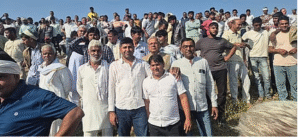
- Settlement of pending crop insurance claims,
- Adequate supply of fertilisers,
- Transparency in the insurance portal, and
- Inclusion of certain crops under the Pradhan Mantri Dhan Dhanya Yojana.
The protest was later postponed following government assurances after late-night negotiations.
Pradhan Mantri Fasal Bima Yojana (PMFBY)
Launch and Objective
- Launched: 18 February 2016
- Nodal Ministry: Ministry of Agriculture & Farmers Welfare
- Purpose: To provide affordable and comprehensive crop insurance to farmers against losses due to natural calamities, pests, and diseases.
- Implementation: Through approved insurance companies in coordination with banks and state governments.
Key Aims
- Offer financial support to farmers facing crop loss.
- Help stabilise farm income and ensure continuity in cultivation.
- Promote adoption of modern agricultural technologies and crop diversification.
- Strengthen credit flow and enhance competitiveness in the agriculture sector.
Coverage and Eligibility
Eligible Beneficiaries
- All farmers, including sharecroppers and tenant cultivators, growing notified crops in notified areas.
- Compulsory for loanee farmers with Seasonal Agricultural Operations (SAO) credit.
- Voluntary for non-loanee farmers with valid land ownership or tenancy documents.
- Farmers must not receive duplicate compensation from other schemes.
- Special focus on SC, ST, and women farmers with budgetary support.
Scheme Benefits
Premium Structure
- Kharif crops: 2% of sum insured.
- Rabi crops: 1.5% of sum insured.
- Commercial/Horticultural crops: 5% of sum insured.
- Remaining premium shared equally by central and state governments; fully paid by government in North-Eastern states, J&K, and Himachal Pradesh.
Risk Coverage
- Covers losses due to natural calamities, plant diseases, and pest attacks.
- Post-harvest losses from hailstorm, landslide, and unseasonal rainfall also covered.
- Excludes damage from war, nuclear risks, malicious acts, or preventable causes.
Claim Settlement
- Compensation to be paid within two months of the crop harvest.
- Technology-driven verification ensures faster and more accurate claim processing.
Technology Integration
- Satellite imagery, drones, and mobile apps for crop loss assessment.
- National Crop Insurance Portal (NCIP) for digital claim processing.
- YES-TECH: Uses remote sensing for yield estimation.
- CROPIC: Facilitates geotagged field verification.
Conclusion
The PMFBY remains India’s flagship crop insurance scheme aimed at risk mitigation and income protection for farmers. However, frequent grievances over delay in claim settlement, data transparency, and crop inclusion highlight the need for systemic reforms and stronger real-time evaluation mechanisms.
7. Research paves the way for efficient Zinc-ion batteries (ZIBs) for a greener future
Context: Scientists at the Bengaluru-based Centre for Nano and Soft Matter Sciences (CeNS), under the Department of Science and Technology (DST), have developed a novel cathode activation technique to significantly enhance the performance of eco-friendly zinc-ion batteries (ZIBs). This breakthrough improves their energy density, longevity, and safety, offering a promising alternative to conventional lithium-ion batteries, which face safety risks and resource constraints.
About of Zinc-Ion Batteries (ZIBs)
- Definition: ZIBs are rechargeable batteries that use zinc metal as the anode and an aqueous electrolyte, making them safer and more environmentally friendly than lithium-ion batteries.
- Innovation: Researchers applied a thermo-electrochemical activation process to vanadium oxide (V₂O₅), transforming it into a zinc-vanadium oxide (Zn-V₂O₅) structure with porous pathways.
- Functionality: This porous structure facilitates faster and easier movement of zinc ions and hydrogen ions during charge-discharge cycles.
Key Features of the Improved ZIBs
- Higher Energy Density: The Zn-V₂O₅ cathode stores considerably more energy than untreated V₂O₅, enhancing battery capacity.
- Exceptional Longevity: The modified cathode allows ZIBs to endure thousands of charge cycles with minimal degradation.
- Hydrogen Ion Stabilization: The structural modifications improve stability during ion insertion and extraction, reducing internal resistance.
- Fully Aqueous Electrolyte: This feature ensures the battery system is non-flammable, making it safer than lithium-ion alternatives.
- Cost-Effective Materials: Zinc is abundant and inexpensive, reducing dependency on costly and less eco-friendly lithium and cobalt.
Significance and Applications
- Provides a safer, greener, and more sustainable energy storage option for grid-scale applications and consumer electronics.
- Reduces India’s reliance on imported lithium and cobalt, supporting energy security and self-reliance.
- Enhances the viability of clean energy technologies, facilitating the integration of renewable energy and advancement of electric mobility.
Conclusion
The breakthrough cathode activation technology developed by CeNS represents a significant advancement in battery technology. By overcoming key limitations of lithium-ion batteries—such as cost, environmental hazards, and safety concerns—stable and high-performance zinc-ion batteries can play a critical role in India’s clean energy transition and energy storage future.