

1. OVER 50% Cases pending in Juvenile justice boards amid staff shortage
GS PAPER II-POLITY
Context: Over 50% of cases before 362 Juvenile Justice Boards (JJBs) are pending as of October 31, 2023, as per the India Justice Report released recently.
- The report is the first of its kind to analyze the functioning and capacity of JJBs and juvenile justice mechanisms nationwide.
Key Findings of the Study
- 55% of cases are pending: JJBs disposed of fewer than half the 1,00,904 cases till October 31, 2023.
- Only 92% of districts have constituted JJBs; pendency rates vary widely (Odisha 83%, Karnataka 35%).
- Vacancies are critical: 24% of JJBs are not fully constituted; 30% lack attached legal services clinics.
- Each JJB faces an average of 154 cases, alongside legal and data bottlenecks.
- Public data sharing is poor – fragmented and unreliable data transfer and transparency.
Reasons for High Pendency
- Staff shortages: Many JJBs do not have a full bench and suffer from a large number of vacancies in child care institutions.
- Lack of legal support: 30% of JJBs do not have attached legal clinics, increasing workload and reducing efficiency.
- Data decentralization and fragmentation hinder coordinated responses and case tracking.
- High workload per board due to inadequate staffing and rising number of cases.
Structural Problems in Juvenile Justice System
- Absence of a central data repository, unlike other judicial branches.
- Decentralized structure creates service gaps, limited oversight, and weak accountability mechanisms.
- Delivery of child-centric services is hampered by poor coordination and infrastructure shortages.
Scale of the Problem (Crime in India 2023 Data)
- 40,036 juveniles apprehended in 2023 under IPC and special/local laws.
- 31,365 cases registered, stressing the system’s capacity.
- Over the past decade, post-JJ Act 2015, systemic bottlenecks remain unresolved.
Why This Matters
- Persistent case backlog affects timely rehabilitation and justice for children in conflict with the law.
- Staff shortages and fragmented systems risk the welfare of vulnerable juveniles.
- Failure to deliver on the JJ Act mandates erodes public trust
2. Indias fisheries and aquaculture, its promising course
GS PAPER III-Environment and Ecology
Context: World Fisheries Day 2025 highlights the critical role of fisheries and aquaculture in nutrition, livelihood, and trade, and calls for renewed global and national commitments.
- India’s Blue Revolution is driving sectoral growth, policy innovation, and value addition in the seafood export supply chain.
Importance of Fisheries and Aquaculture
- Fisheries and aquaculture are among India’s fastest-growing food-producing sectors, supporting millions in livelihoods, food security, and foreign exchange earnings.
- India is now the world’s second-largest aquaculture producer, contributing significantly to global fish supplies.
Key Challenges
- Overfishing, habitat degradation, water pollution, and climate change are major threats to aquatic ecosystems and food security.
- Small-scale fishers struggle with inadequate access to finance, technology, and markets; poor infrastructure limits the tapping of export and domestic market potential.
World Fisheries Day 2025 – Theme
- The FAO and UN agencies call for a renewed commitment to Blue Transformation: “Strengthening Value Addition in Seafood Exports”.
India’s Growth Story in Fisheries and Aquaculture
- Aquaculture production rose from 2.44 million tonnes in the 1980s to 17.54 million tonnes in 2022-23, driven by technological innovation, infrastructure, and sectoral modernization.
- India contributed 10.23 million tonnes of aquatic animals in 2022, supporting a global value of $313 billion in the fisheries sector.
Key Government Reforms
- Major reforms include vessel transponders for safety, Kisan Credit Card, Matsya Sampada Yojana for sectoral growth, and establishment of Climate-Resilient Coastal Fishermen Villages.
- Enhanced traceability, digitization, and credit inclusion represent strategic priorities.
FAO Support to India
- FAO has partnered with India to guide policy, innovation, and sustainability, backing projects like the Bay of Bengal Large Marine Ecosystem (BOBLME) and offering technical support for strengthening aquaculture and sustainable fisheries.
- FAO supports India through guidelines, technical cooperation, and assistance for integrating sustainability into national strategies.
The Road Ahead: Sustainability as the Core
- Future priorities include promoting science-based management, co-managed monitoring and surveillance, certification, traceability, livelihood enhancement, and international competitiveness.
- Sustainable growth requires better stock assessments, responsible technology adoption, and ecosystem-based approaches to secure food and nutritional security for India’s growing population.
3. Why are stone quarries expanding in Kerala?
GS PAPER I-Geography (Physical Geography & Indian Geography
Context: Kerala banned river sand mining in January 2016 to protect its rivers and their ecosystems from degradation caused by excessive extraction.
- After the ban, M-sand (manufactured sand) – an artificial alternative produced by crushing hard rocks such as granite into fine particles – quickly became a popular alternative.
- This led to a sharp rise in stone quarrying to meet the huge demand for M-sand.
The story so far
- A much-needed ban on river sand mining in Kerala has spurred stone quarrying.
- Many of these quarries are located near protected areas.
- Scientists from the National Institute of Technology (NIT) Calicut analysed the expansion of 72 quarries using GIS and Google Earth Pro.
- They found that quarries expanded drastically in size immediately after the 2016 river sand mining ban.
Why did Kerala ban river sand mining?
- To protect rivers and their ecosystems from degradation caused by excessive extraction.
Where are the quarries located?
- Unfortunately, many quarries are near protected areas.
- George Varghese of NIT Calicut and his team identified three quarries of particular concern, all within 10 km of the Malabar Wildlife Sanctuary in Kozhikode and Wayanad districts.
- These quarries grew 23% in size in 2016 alone.
- Three more quarries, within the buffer zone of the Silent Valley National Park across the Palakkad, Malappuram, and Nilgiris districts, also doubled in size.
Why is sand-mining a problem?
- The team’s paper sheds light on the complexity of micro-level sand mining and extractive activities on natural resource trade flows, livelihood welfare conundrums, and socioecological systems.
- Matovu Baker, a research associate at the National Taiwan Ocean University in Keelung said the paper demonstrates “emerging socioecological system trade-offs that are less documented and could lead to blue injustices”, a counter-movement focusing on injustices to “small-scale fishing communities in coastal areas”.
How is demand for sand changing?
- India has been recording an ever-increasing demand for river and marine sand, especially at its major urban centres, according to the India Rivers Forum.
- The scope and severity of consequences vary depending on several on- and off-site mining activities, and interactions between demand and supply, Dr. Baker said.
- He highlighted the example of Chavara village in Kerala’s Kollam district, where the removal of sediments affected the migratory routes of fish.
- There are several solutions, but they have to be sustainable, per Dr. Baker
4. E-commerce forms declare compliance with dark pattern guidelines
GS PAPER III-Economy and Social Development, under E-Commerce and Consumer Rights
Context: leading e-commerce platforms voluntarily declared compliance with Central Consumer Protection Authority (CCPA) Guidelines for Prevention and Regulation of Dark Patterns, 2023.
- Platforms like Flipkart, Zomato, Swiggy, Myntra, and others submitted compliance declarations.
- The move aims to curb rising complaints about deceptive digital practices and enforce consumer protection in India’s growing e-commerce market.
What are Dark Patterns?
- Deceptive UI/UX designs that manipulate users into unintended decisions for commercial gain.
- The 2023 CCPA Guidelines ban 13 types such as false urgency, basket sneaking, confirm shaming, forced action, subscription traps, drip pricing, and disguised ads.
- Examples include pre-ticked boxes, fake countdown timers, and hidden cancellation options.
Why Government Regulates Dark Patterns
- To protect consumers from manipulation and unfair trade in digital spaces.
- Rising complaints via National Consumer Helpline (NCH) necessitate clear rules and enforcement.
- Aligns India with global trends like GDPR and US FTC crackdowns.
- Under Consumer Protection Act, 2019, violations can attract penalties up to ₹50 crore.
- Promotes long-term trust and ethical digital business practices.
Self-Audit Reports
- Platforms required to conduct internal or third-party self-audits within three months of advisory.
- Assess presence of banned dark patterns and take corrective measures.
- Public declarations of compliance uploaded on official CCPA website promote transparency.
Why Some Companies Did Not Submit
- Major players like Amazon India absent possibly due to ongoing audits or UI complexity.
- Smaller firms may lack resources for extensive reviews.
- Non-compliance risks notices and penalties by CCPA.
Why This Matters
- Empowers consumers with better clarity and protection.
- Encourages businesses to self-regulate and foster fair competition.
- Strengthens India’s digital economy by preventing deceptive trade practices.
- Positions India as a global leader in ethical e-commerce regulation.
5. Tribunal Reforms Act
GS PAPER II-Indian Polity
Context: The Supreme Court invalidated important sections of the Tribunal Reforms Act, 2021, which granted dominant control to the Union government over tribunal appointments, functions, and salaries.
- This move was because the law repeated provisions previously struck down by the Court without addressing the constitutional concerns, thus undermining the independence and impartiality of tribunals essential for effective justice delivery.
Supreme Court Judgment on Tribunal Reforms Act, 2021
- Invalidation of Key Provisions: The Court struck down the Act’s Sections 3, 5, and 7, which allowed the government to control appointments, reduced judicial tenure to four years, imposed a minimum age of 50 for tribunal members, and diluted the selection process by allowing the government final say over nominees.
- Need for Tribunal Independence: The Court emphasized that tribunals must function with independence, impartiality, and effective adjudication as constitutional imperatives. Laws that allow executive interference or curtail tenure violate the principles of separation of powers and judicial independence.
- Doctrine of Constitutional Supremacy: Parliament cannot ignore Supreme Court rulings or constitutional principles. Judicial review is a basic feature of the Constitution, and legislative attempts to override binding judicial decisions violate constitutional supremacy.
- Establishment of National Tribunals Commission: The Court directed the Union government to form a National Tribunals Commission within four months to ensure tribunal independence, transparency, and uniform governance. This body must be free from executive influence and ensure transparent appointments and oversight.
- Re-enactment Criticism: The 2021 Act was described as a repackaged version of an earlier ordinance struck down in 2021 without curing constitutional defects, reflecting legislative disregard for previous Supreme Court judgments.
Importance and Power of Judicial Review
- What is Judicial Review?
Judicial review allows courts to examine the legality of decisions or actions by public authorities, ensuring laws and executive actions comply with constitutional provisions.
- Scope and Functions: It extends to legislative, executive, and administrative actions, protecting constitutional supremacy, citizens’ rights, and judicial independence. It includes review of laws (legislative), government actions (administrative), and past judicial decisions, ensuring fairness and constitutional conformity.
- Basic Structure Doctrine: Judicial review is a part of the Constitution’s basic structure, meaning it cannot be abolished or ignored even by Parliament.
- Checks and Balances: India follows separation of functions with judicial review acting as a check on the other branches, guaranteeing no executive or legislature overreach.
Tribunals: Role, Composition, and Issues
- Nature and Constitutional Basis: Tribunals are quasi-judicial bodies created under Articles 323A and 323B of the Constitution to handle specialized disputes efficiently and alleviate regular court caseloads.
- Composition and Jurisdiction: They consist of judicial and technical members with defined subject-specific jurisdiction and appellate routes mostly to High Courts or Supreme Court.
- Significance:
- Ensure specialized expertise for technical and legal matters
- Provide speedy and accessible dispute resolution
- Help reduce backlog in regular courts
- Address service matters and tax disputes efficiently
- Concerns:
- Executive influence over appointments compromises independence
- Short tenure and reappointment clauses increase government control
- Pendency and staffing shortages hamper efficiency (e.g., Armed Forces Tribunal’s backlog)
- Non-uniform procedures and overlapping jurisdiction cause confusion
- Some technical members lack adequate legal qualifications
- Supreme Court’s Stand:
In 2019 and this recent judgment, the Court has reiterated that executive dominance over tribunals violates the separation of powers principle and demanded reforms for judicial dominance in tribunal governance.
This case underscores the judiciary’s commitment to preserving the independence of tribunals as an essential component of constitutional justice and restraining executive overreach. The Supreme Court’s directions for instituting a National Tribunals Commission aim to restore confidence and ensure tribunals function as impartial adjudicatory authorities.
6. Blue NDC Challenge Accepted: Opportunity for Ocean-based Action at COP 30
GS PAPER III-Environment and Ecology
CONTEXT: The Blue NDC Challenge gained prominence recently as 17 countries, including major nations like France, Brazil, Canada, and Singapore, committed to integrating ocean-based climate solutions into their national climate plans ahead of COP30 in Belém, Brazil.
- This initiative aims to enhance global efforts to address climate change by leveraging the significant potential of oceans for mitigation and adaptation, especially through blue carbon ecosystems, marine conservation, renewable ocean energy, sustainable fisheries, and coastal tourism.
What is the Blue NDC Challenge?
- A global initiative urging countries to incorporate ocean-related climate actions in their Nationally Determined Contributions (NDCs).
- It emphasizes sustainable management, conservation, restoration of coastal and marine ecosystems, offshore renewable energy, maritime industry decarbonization, and climate-resilient fisheries.
Objective of the Blue NDC Challenge
- The challenge aims to close the “ocean opportunity gap” by addressing the underfunding of ocean-based climate solutions, which contribute less than 1% of global climate finance, despite their vast potential to deliver up to 35% of emission reductions necessary to meet the 1.5°C target.
Major Actions and Focus Areas
- Promote ocean conservation and restore blue carbon ecosystems like mangroves and seagrasses
- Phase out offshore oil and gas and expand responsible marine renewable energy
- Foster sustainable fisheries and aquaculture
- Support climate-resilient coastal infrastructure and marine industries
Significance of the Initiative
The push represents a strategic shift in climate governance, acknowledging oceans as both victims and powerful allies in climate mitigation, aligning with frameworks like the Paris Agreement, CBD, and High Seas Treaty. It encourages countries to transform commitments into concrete policies with measurable impacts.
7. India’s first indigenous “CRISPR” based gene therapy for Sickle Cell Disease.
Context: India launched its first indigenous CRISPR-based gene therapy named BIRSA 101 for Sickle Cell Disease (SCD), a major breakthrough in affordable genomic medicine aimed particularly at tribal communities. This marks a historic milestone in India’s medical technology self-reliance and supports the national mission to eliminate SCD by 2047.
What is BIRSA 101?
- India’s first indigenously developed gene-editing therapy using CRISPR technology designed to cure Sickle Cell Disease, a severe hereditary blood disorder affecting mainly tribal populations.
- Named in honour of tribal freedom fighter Birsa Munda, commemorating his 150th birth anniversary.
- Developed by CSIR–Institute of Genomics & Integrative Biology (IGIB) in collaboration with the Serum Institute of India (SIIPL) for scalability and affordable deployment.
How Does BIRSA 101 Work?
- Uses CRISPR-Cas9 technology described as “precise genetic surgery” to edit and correct the defective gene responsible for sickle-shaped red blood cells.
- Corrected stem cells are reintroduced into the patient’s body, potentially offering a one-time, lifelong cure by enabling normal hemoglobin production.
Key Features of BIRSA 101
- Fully indigenous CRISPR platform (enFnCas9) engineered by IGIB.
- Low-cost alternative to global gene therapies which cost around ₹20–25 crore.
- Developed as part of Atmanirbhar Bharat for medical self-reliance.
- Public-private partnership ensures safety, regulation, and wide access.
- Supported by advanced translational research facilities at CSIR-IGIB.
Significance of the Launch
- Positions India as a global leader in advanced gene-editing therapies.
- Provides a cost-effective, scalable cure for a debilitating disease highly prevalent in tribal groups such as Gond, Munda, Bhil, and Santal.
- Contributes significantly towards the government’s vision of a Sickle Cell–Free India by 2047.
- Enhances domestic capability in producing world-class genomic medicines at affordable
8. Why India’s sea cows are under threat
GS paper III-Environment and Ecology
Context: A new global report released at the IUCN World Conservation Congress 2025 in Abu Dhabi has warned of sharp declines and possible local extinction risks for India’s dugong (sea cow) populations in the Gulf of Kutch, Gulf of Mannar–Palk Bay, and Andaman & Nicobar Islands. This has raised concern as India is set to unveil its first national Red List of endangered species at the same forum.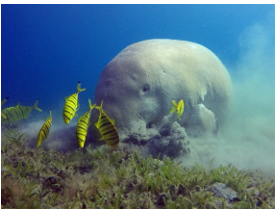
About Dugong:
- Dugong (Dugong dugon) is a large, plant‑eating marine mammal, closely related to manatees and more distantly to elephants.
- It is a slow, docile “sea grazer” whose appearance and behaviour historically gave rise to mermaid legends.
Habitat: Indian and Global Range
- Occurs in warm, shallow coastal waters of the Indian and Pacific Oceans.
- Key Indian sites: Gulf of Mannar–Palk Bay (Tamil Nadu), Andaman & Nicobar Islands, and Gulf of Kutch (Gujarat).
- Globally found from East Africa to Australia, with the most stable remaining population near northwestern Australia.
Conservation Status
- IUCN Red List: Listed as Vulnerable, with numbers declining continuously since the early 1980s.
- India: Included in Schedule I of the Wild Life (Protection) Act, 1972, granting maximum legal protection.
Distinctive Biological Features
- Body size: Grows up to around 3 metres in length and weighs roughly 300–420 kg, adapted to slow, steady swimming in shallow coastal waters.
- Morphology: Possesses a whale‑like tail fluke and broad, paddle‑shaped flippers that assist in smooth swimming and fine manoeuvring in seagrass beds.
- Diet: Strictly herbivorous, feeding almost entirely on seagrass meadows, making it one of the few fully plant‑eating marine mammals.
- Ecological role: Consumes 30–40 kg of seagrass per day, trimming and renewing seagrass beds and thus functioning as an important “ecosystem engineer.”
- Climate link: Healthy seagrass meadows maintained by dugong grazing act as powerful blue carbon sinks, helping long‑term carbon storage in marine sediments.
- Life history: Lives up to about 70 years but reproduces very slowly, with females typically calving once every 3–7 years, which slows population recovery.
Major Threats to Dugongs
- Degradation and loss of seagrass ecosystems: Coastal pollution, increased sediment load, turbidity, dredging, and port and coastal infrastructure projects destroy or fragment seagrass—the dugong’s sole food source.
- Bycatch in marine fisheries: Unintentional capture and drowning in fishing nets is the primary direct cause of mortality in Tamil Nadu waters, Andaman & Nicobar Islands, and the Gujarat coast.
- Marine contamination and toxic metals: Studies have recorded high levels of arsenic, cadmium, chromium, mercury and lead in dugong tissues, largely from sewage discharge, industrial effluents, and agricultural runoff entering coastal waters.