

1. SC recalls verdict rejecting green clearances
GS PAPER II-INDIAN POLITY
CONTEXT: The Supreme Court, in a 2:1 verdict, overturned its own May 16, 2025 judgment that had prohibited retrospective (ex-post facto) environmental clearances. The majority cited severe economic fallout from the earlier ruling, whereas the dissenting judge warned that allowing such clearances seriously undermines environmental protection and the rule of law.
Relevant Constitutional and Statutory Provisions
- Right to a clean environment: Article 21 of the Constitution protects the right to life, which includes the right to a pollution-free environment.
- Fundamental duty: Article 51A(g) imposes a duty on every citizen to protect and improve the natural environment.
- Key legislation: The Environment (Protection) Act, 1986 provides the statutory framework to implement these constitutional guarantees.
Can the Supreme Court Overturn Its Own Precedents?
- The Supreme Court possesses the authority to review and overrule its earlier decisions, but has repeatedly held that such power must be exercised sparingly and only for compelling reasons.
- A settled principle of judicial discipline: A Bench cannot overrule a decision rendered by a coordinate or larger Bench.
Judicial Duty to Safeguard the Environment
The Supreme Court has consistently held that constitutional courts are duty-bound to protect citizens’ environmental rights. Key landmark rulings include:
- M.C. Mehta series → introduced the principle of absolute liability for environmental harm.
- T.N. Godavarman Thirumulpad → expanded the definition of “forest” and strengthened forest protection.
- 2024 Climate Change judgment → explicitly recognized the fundamental “right against the adverse effects of climate change”. Core principle: Economic development cannot trump environmental protection.
Majority Judgment (CJI B.R. Gavai and Justice K. Vinod Chandran)
- Primary concern: Enforcing the May 16 ruling would cause “devastating” economic consequences and render investments worth thousands of crores wasteful.
- Balancing approach: Prioritized larger public interest and practical realities of ongoing projects over strict adherence to procedural environmental norms.
Dissenting Opinion (Justice Ujjal Bhuyan)
- Delivered a detailed 97-page dissent.
- Core argument: Permitting retrospective clearances violates foundational principles of environmental jurisprudence, dilutes accountability, and sets a dangerous precedent for future violations.
Broader Implications
The recall judgment sharply illustrates the ongoing conflict between rapid economic development and rigorous environmental governance. While the majority adopted a pragmatic, economy-first stance, the powerful dissent underscores the long-term risks of weakening regulatory compliance and environmental accountability. This split verdict is likely to influence future litigation on project clearances and sustainable development policy.
2. UNESCO new guidelines for use of neurotechnology
GS paper III-Science and technology
CONTEXT: UNESCO has issued the world’s first global normative framework on the ethics of neurotechnology in November 2025, marking a historic advance in regulating brain data and mental privacy amid rapid technological expansion and ethical concerns.
What is Neurotechnology?
- Devices and procedures that access, assess, or interact with neural systems, including the brain.
- Neurodata refers to sensitive brain-derived data revealing intentions, emotions, or mental states.
- While neurotechnology benefits medical applications such as paralysis recovery, it also poses risks of misuse in marketing, political persuasion, employment screening, and behaviour profiling.
Why the Rapid Growth?
- Investments surged to $8.6 billion by 2023, led by private sector innovators like Elon Musk’s Neuralink and the US BRAIN Initiative.
- Medical advances in mental health, chronic illness, and rehabilitation fuel demand.
- Commercial sectors explore neurodata for insurance, recruitment, and targeted messaging.
Key Challenges
- Threats to mental privacy and freedom of thought, with insufficient existing laws.
- Potential political influence and voter manipulation using brain data.
- Employment screening misuses assessing stress and hidden traits.
- Risk of discrimination, loss of autonomy, and manipulation in society.
UNESCO’s Ethical Framework Proposals
- Centers human rights: mental privacy, cognitive liberty, dignity.
- Balances innovation with responsibility, inclusion, and sustainability.
- Defines scope of neurotechnology and neurodata protection.
- Provides ethical principles and special protections for vulnerable groups.
- Encourages open science and equitable intellectual property practices.
- Calls for governance reforms across health, education, labour, and disaster management sectors.
Implications for Governance and Policy
- Urges global standards to protect neural data and mental integrity.
- Advocates regulation of AI and neurotechnology convergence to prevent manipulation.
- Requires new licensing norms to avoid brain data monopolization.
- Promotes public participation and ethical alignment of research and corporate practices.
UNESCO’s landmark ethical framework seeks to ensure neurotechnology serves human empowerment without compromising rights or freedoms. For countries including India, the challenge lies in integrating these norms into national laws for safe, inclusive, and responsible neuro-innovation.
3. Unpacking the global ‘happiness’ rankings
GS Paper -II: International Relations, Issue: World Happiness Report
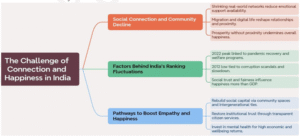
Context: The World Happiness Report 2025 has once again sparked debate by placing Finland at the top for the eighth consecutive year, while India finds itself at 118.
- This raises questions, especially when Pakistan, facing economic and political challenges, ranks higher than India, a rapidly growing economy.
The Mirage of Metrics
The report primarily relies on the Gallup World Poll’s Cantril Ladder, where individuals rate their lives on a scale of 0 to 10. This is then correlated with six key variables:
- GDP per capita: The economic output per person.
 Social support: The feeling of having someone to rely on in times of need.
- Life expectancy: The average number of years a person is expected to live.
- Freedom: The perceived ability to make life choices.
- Generosity: The willingness to donate to charity.
- Corruption perception: The perceived level of corruption in government and business.
However, these perceptions can be subjective and influenced by various factors:
- Low Expectations: Societies with lower expectations may report higher happiness levels because people adapt to their circumstances.
- Rising Aspirations: In democracies like India, rising aspirations and media scrutiny can lead to lower perceived satisfaction, even with improvements in well-being.
- Higher Expectations: Dissatisfaction can reflect higher expectations for governance and living standards, rather than actual misery.
Happiness is not a destination but a pursuit. India’s restlessness, debates, innovations, and demands for better lives may be a sign of well-being. Less satisfaction does not necessarily mean unhappiness; it can signal ambition.
4. Culmination Ceremony of 75th Anniversary of NSS
Context: The Ministry of Statistics and Programme Implementation (MoSPI) marked the 75th Anniversary of the National Sample Survey (NSS) along with World Statistics Day celebrations on 18 November 2025, highlighting the institution’s contribution to India’s evidence-based policymaking over seven decades.
Evolution of the National Sample Survey (NSS)
- Establishment: Initiated in 1950 to bridge gaps in national income statistics.
- Expansion: Evolved into the largest multi-subject socio-economic survey system in India, covering diverse aspects of household welfare and economic activity.
- Institutional Home: Initially conducted by the National Sample Survey Office (NSSO) established in 1970, which has now been merged into the National Statistical Office (NSO) under MoSPI.
Institutional Structure
- Survey Design and Research Division (SDRD) – Kolkata: Responsible for survey design and methodology.
- Field Operations Division (FOD) – Delhi/Faridabad: Carries out field data collection.
- Data Processing Division (DPD) – Kolkata: Handles data processing and validation.
- Survey Coordination Division (SCD) – New Delhi: Oversees administrative coordination and publication.
Survey Methodology and Coverage
- Round Structure:
- Thick rounds:Conducted every five years, covering approximately 1.2 lakh households on broad themes.
- Thin rounds:Focus on specialized or emerging subject areas.
- Geographical Reach: From 1,833 villages (1950–51) to over 14,000 rural villages and urban blocks in recent rounds.
- Scope and Diversity: Over 50 socio-economic themes including consumption, employment, health, education, migration, housing, and agriculture.
- Statistical Representativeness: Generates national and state-level estimates but lacks district-level granularity.
Major Surveys Conducted under NSS/NSO
- Periodic Labour Force Survey (PLFS): Since 2017; key database for employment and labour market trends.
- Annual Survey of Industries (ASI): Monitors the performance of the organized manufacturing sector—employment, output, and productivity.
- Price Surveys: Produce CPI (Rural/Urban), CPI for Agricultural and Rural Labourers, and inputs for WPI, forming the basis for inflation analysis.
- Urban Frame Survey (2022–27): Updates the urban sampling frame for all socio-economic surveys.
- Agricultural and Crop Surveys: Estimate crop yields and improve state-level agricultural statistics.
Significance and Policy Relevance
- Policy Foundation: Supports evidence-based policymaking in MGNREGA, PDS, Ayushman Bharat, rural welfare, and labour reforms.
- Macroeconomic Role: Feeds into GDP estimation, poverty measurement, consumption and inflation analysis.
- Long-Term Research Value: Offers the most comprehensive and consistent household-level longitudinal dataset, enabling the study of structural and social changes over decades.
5. Japan’s Sakurajima Volcano Erupts Twice Midnight, Shoots Ash Nearly 4.5 km High
GS paper I: Geography
Context: Japan’s Sakurajima volcano erupted violently on 16 November 2025, sending ash plumes up to 4.4 kilometers into the atmosphere. This marked its most intense eruption in nearly 13 months, leading to ashfall warnings and flight cancellations in surrounding prefectures.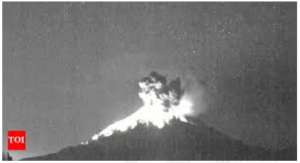
About Sakurajima Volcano
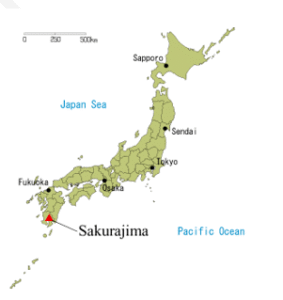
- Location: Situated in Kagoshima Prefecture, Kyushu, on the southern rim of the Aira caldera within Kagoshima Bay.
- Geological Origin: Formed as a post-caldera cone about 13,000 years ago after the Aira caldera’s formation 22,000–29,000 years ago.
- Volcano Type: A classic stratovolcano built from alternating layers of lava and ash; main vents are Minamidake crater and Showa flank crater.
- Physical Characteristics: Height of 1,117 m and about 50 km in circumference; originally an island linked by lava flows to the Osumi Peninsula in 1914.
- Eruption Style: Mostly Strombolian eruptions producing ash, volcanic bombs, and lapilli; historically capable of large Plinian eruptions.
- Historical Activity: Continuous activity since 963 AD, with major eruptions in 1471–76, 1779–82, and the catastrophic 1914 eruption.
- Risk: One of Japan’s most dangerous volcanoes due to high activity, complex magma system linked to the caldera, and proximity to populated areas.
Unique Features
- Near-Continuous Activity: Erupts hundreds of times annually, ranking among the world’s most persistently active volcanoes.
- Caldera System: Its position on the Aira caldera means a complex and deep magma plumbing system fuels eruptions.
- Landform Change: The 1914 eruption converted Sakurajima from an island to a peninsula, an unusual event in volcanology.
Recent Eruption Details (November 2025)
- Eruption plumes up to 4.4 km height, first time in 13 months reaching this altitude.
- Volcanic rocks hurled up to 1.2 km from the crater.
- Multiple eruptions occurred, mainly from the Minamidake crater.
- Alert level maintained at 3/5 by the Japan Meteorological Agency; access restrictions near the crater.
- Caused ashfall warnings and flight cancellations in Kagoshima, Kumamoto, and Miyazaki prefectures.
- No injuries or pyroclastic flows reported but ongoing volcanic activity remains a hazard
6. Sixteenth Finance Commission submits its report for 2026-31 to President Murmu
GS PAPER II-Indian polity
Context: The Sixteenth Finance Commission (16th FC), chaired by Dr. Arvind Panagariya, formally submitted its report to the President of India on 17 November 2025. The report, which will be tabled in Parliament under Article 281, is pivotal for guiding India’s fiscal federal structure and resource distribution for the five-year period starting 1 April 2026.
About the Finance Commission
- Constitutional Basis: Established under Article 280 of the Constitution to define financial relations between the Union and States.
- Appointment: Constituted every five years or earlier by the President.
- Composition: A Chairperson and four members, all appointed by the President, drawn from fields such as public affairs, judiciary, government finance, financial administration, and economics.
Roles and Functions
- Recommends the distribution of Central tax proceeds between Centre and States (vertical devolution).
- Advises on the allocation of each state’s share (horizontal distribution).
- Sets principles for grants-in-aid to States under Article 275.
- Suggests measures to strengthen Panchayats and Municipalities’ financial resources.
- Reviews financing for disaster management and any other matters referred by the President.
Sixteenth Finance Commission Specifics
- Constitution Date: Constituted in November 2024 under Article 280(1).
- Chairperson and Members: Dr. Arvind Panagariya is Chairperson, supported by experts such as Annie George Mathew, Dr. Manoj Panda, T. Rabi Sankar, Dr. Soumyakanti Ghosh, and Secretary Ritvik Pandey.
- Report Timeline: Submitted on 17 November 2025, covering financial recommendations for FY 2026-27 to 2030-31.
- Scope of Work: Includes vertical and horizontal devolution, grants-in-aid, augmenting local government finances, disaster management funding, and other fiscal matters.
- Process: In-depth analysis of Union and State finances, extensive consultations with all stakeholders including central and state governments, local bodies, past finance commissions, and expert institutions.
- Report Structure: Comprised of two volumes – Volume I (recommendations) and Volume II (annexures and analytical data).
The 16th Finance Commission’s recommendations will shape India’s fiscal federalism framework in the coming years, fostering equitable resource sharing and strengthening cooperative governance.
7. Batukeshwar Dutt
GS papar I -history
Context: Batukeshwar Dutt, the revolutionary often overshadowed by Bhagat Singh, is being remembered for his critical yet largely forgotten role in India’s freedom struggle.
- The news highlights Dutt’s birth anniversary (November 18), his courageous participation in the 1929 Delhi Assembly bombing alongside Bhagat Singh, and his lifelong obscurity despite sacrifices.
About Batukeshwar Dutt (1910–1965)
- Early Life: Born in Bengal, educated in Kanpur, joined the Hindustan Socialist Republican Association (HSRA) and Naujawan Bharat Sabha.
- Jail Endurance: Displayed resilience during incarcerations in various colonial jails, including the notorious Andaman Cellular Jail.
- Revolutionary Activities:
- Co-executed the Central Legislative Assembly bombing (April 1929) with Bhagat Singh; intended as a protest, not to inflict harm.
- Used the trial as a platform for political messaging, was sentenced to life imprisonment.
- Led multiple hunger strikes demanding rights for political prisoners.
- Joined the Quit India Movement after his release and was jailed again.
- Post-Independence Life: Settled in Patna, continued activism despite illness, died in 1965; cremated at Hussainiwala beside his comrades Bhagat Singh, Rajguru, and Sukhdev.
- Association with Bhagat Singh: Maintained a lifelong bond and ideological partnership, shared in activism and jail protests, supported Bhagat Singh’s family and fellow revolutionaries through hardship.
Dutt’s story is a testament to courage and sacrifice, and the renewed media focus seeks to restore his rightful place in India’s collective remembrance of the freedom struggle.