
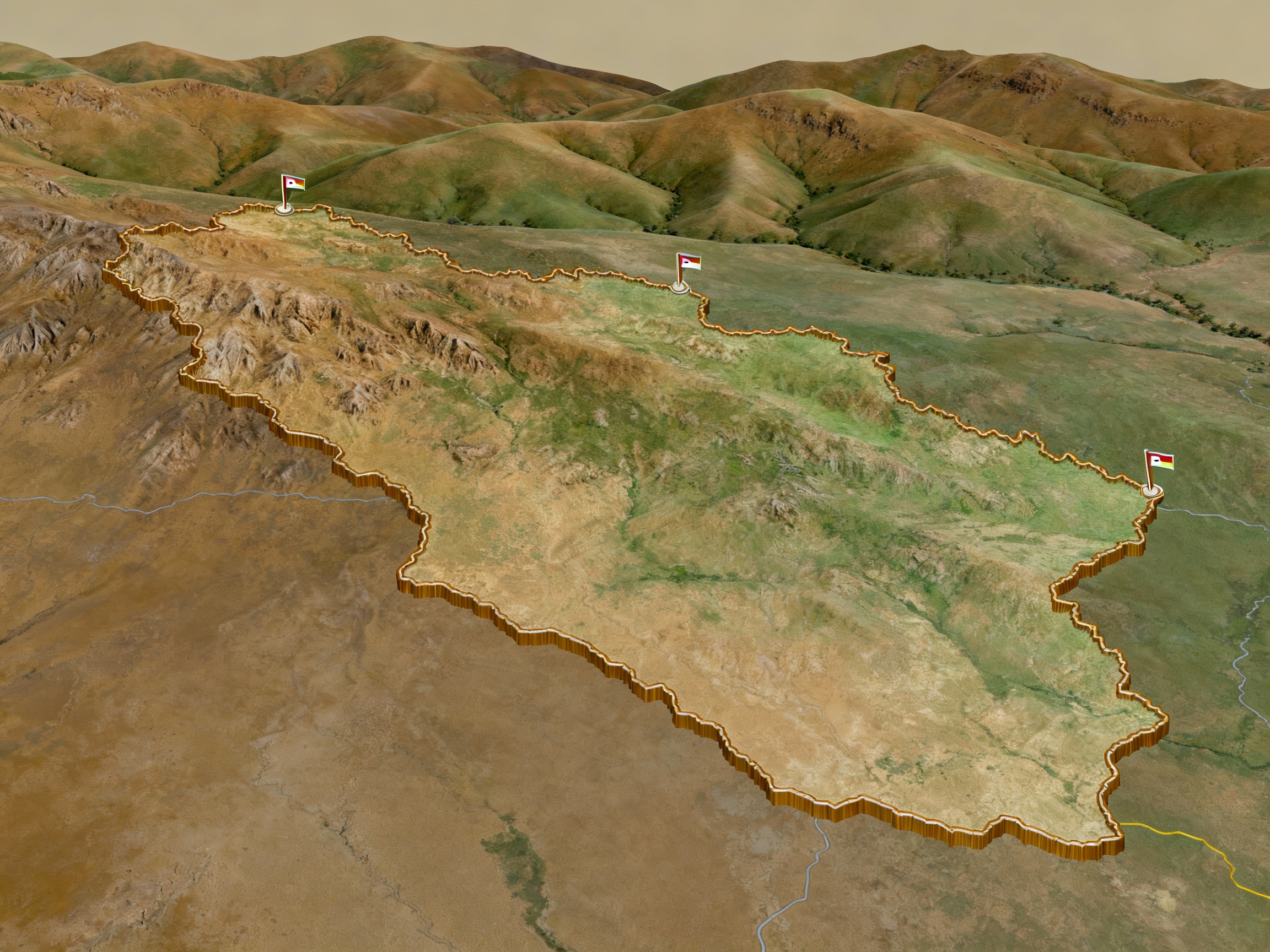
1. Siliguri corridor
General Studies Paper I: Geography, Topic: Geography of India – Strategic Locations and Border Security
Context: The establishment of three new military garrisons by the Indian Army near the Siliguri Corridor represents a proactive enhancement of India’s eastern border security amid escalating geopolitical tensions.
- It underscores India’s shift from reactive to assertive defense posture in the Northeast, directly addressing vulnerabilities that could isolate eight states from the mainland.
- This move not only bolsters immediate operational readiness but also signals to regional adversaries (China, Pakistan, and a transitioning Bangladesh) that India will not tolerate encroachments.
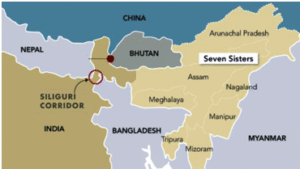 In the broader context, it counters narratives of a “vulnerable Chicken’s Neck” by transforming it into a fortified “spine of steel,” as described by military officials, while promoting local economic benefits like infrastructure development and employment.
Strategic Importance
- India’s “jugular vein” for national integrity.
- Enables rapid mobilization to LAC sectors.
- Handles 80% of NE trade and logistics.
- Vulnerable to blockade or hostile strikes.
New Army Garrisons
- Aim: Plug gaps, enhance surveillance and readiness.
- Locations: Bamuni (Assam), Kishanganj (Bihar), Chopra (WB).
- Integrated under Eastern Command and BSF.
- Equipped with tanks, drones, and multi-tier defenses.
Why Now
- Regional instability and revived multi-front risks.
- Reflects India’s pre-emptive approach to defense.
Bangladesh Political Shift
- Hasina’s ouster (Aug 2024) strained ties.
- Dhaka’s tilt toward China-Pakistan raises threat.
- Garrisons deter provocations amid unrest.
China’s Expanding Role
- $20+ bn BRI projects in Bangladesh.
- Arms, ports, and Teesta projects deepen influence.
- Adds pressure from southern flank near corridor.
Border Demographic Issues
- Massive illegal migration strains NE states.
- Fuels resource stress and extremism risks.
- Garrisons enhance counter-infiltration ops.
PLA Buildup on LAC
- 40,000 PLA troops, new heliports and roads.
- LAC infra buildup raises flashpoint risks.
- Garrisons enable faster convergence of Indian forces.
Strategic Benefits
- Strengthens deterrence against encirclement.
- Integrates eastern forces for rapid response.
- Boosts local economy and infrastructure.
Operational Gains
- Real-time surveillance and troop mobility.
- Better Army-BSF coordination on border.
- Supports sustained winter readiness.
Broader Border Activity
- IAF drills, Vibrant Villages boost NE integration.
- Enhanced air, missile, and troop deployments.
Pakistan Navy Visit: Why It Alarms India
- PNS Saif docked in Chittagong (Nov 2025).
- Signals Pak-Bangla military thaw post-Hasina.
- Fits “Beijing-Islamabad-Dhaka” alignment narrative.
- Garrisons deter encirclement and corridor threats.
2. Birsa Munda’s birth anniversary
GS paper I: Indian history
Context: Birsa Munda’s birth anniversary is being observed nationwide as part of Janjatiya Gaurav Varsh (2021–2024), marking 150 years of tribal icons and movements. This national observance recognizes for the first time the historic role of tribal leaders in India’s freedom struggle and nation-building. The celebration signifies the country’s shift from past marginalization of tribal narratives to formal, institutional acknowledgment through nationwide commemorations and targeted empowerment missions.
Tribal Freedom Struggles and Their Influence on National Consciousness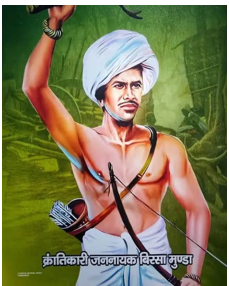
- Historic Resistance: Tribal leaders such as Tilka Manjhi, Sidhu and Kanhu Murmu, Tantia Bhil, Rani Gaidinliu, and Veer Narayan Singh spearheaded revolts against British rule, moneylenders, and exploitative zamindars.
- Collective Assertion: These movements demonstrated unity of purpose and resistance across regions, revealing early grassroots-level political consciousness.
- Cultural Protection: Tribal revolts were as much about defending land and cultural identity as they were about challenging colonial and feudal oppression.
Birsa Munda: The Torchbearer of Janjatiya Identity
- Champion of Tribal Rights: Led the Ulgulan (The Great Tumult), demanding freedom from British interference and restoration of traditional land rights.
- Symbol of Pride: Embodied the struggle for dignity, spiritual assertion, and social reform among tribal communities.
- National Recognition: In 2021, his birth anniversary was declared Janjatiya Gaurav Divas, the first national day dedicated exclusively to tribal heritage.
- Enduring Legacy: The Jharkhand movement and the eventual creation of tribal-dominated states like Jharkhand, Chhattisgarh, and Uttarakhand draw inspiration from his ideals.
Contemporary Government Initiatives for Tribal Empowerment
- PM-JANMAN Mission:
- Focuses on holistic development for 75 Particularly Vulnerable Tribal Groups (PVTGs).
- Ensures delivery of essential infrastructure—housing, health, education, drinking water, and connectivity.
- Dhani Aaba Janjatiya Gaurav Ashram Abhiyan:
- Establishes community-level hubs for socio-economic development.
- Boosts local self-governance and collective identity.
- Expansion of Eklavya Model Residential Schools (EMRS):
- 728 schools sanctioned and 479 operational.
- Narrows the educational gap through high-standard, residential schooling for tribal children.
- Tribal Business and Market Support:
- Organizing business conclaves to promote geotagging and marketing of tribal products.
- Enhancing value-chain linkages and entrepreneurship.
Political and Institutional Support for Janjatiya Reforms
- Enhanced Representation: Consistent focus on tribal welfare through dedicated policies and governance structures.
- Preservation of Heritage: Ten tribal freedom fighter museums sanctioned (four inaugurated) to document and honour tribal contributions.
- Prime Ministerial Outreach: The visit to Ulihatu, Birsa Munda’s birthplace, symbolizes national acknowledgment of tribal heritage and historical significance.
Transition from Isolation to Empowered Inclusion
- Institutional Integration: Establishment of the Ministry of Tribal Affairs formalized tribal governance within national policymaking.
- Economic Progress: Infrastructure and livelihood programs under PM-JANMAN and similar schemes enhance connectivity, education, and local employment.
- Cultural Revival: Nationwide celebration of Janjatiya Gaurav Varsh promotes awareness and pride in tribal history and traditions.
Conclusion
Birsa Munda’s ideals continue to guide India’s commitment to justice, dignity, and equitable development for tribal communities. The celebration of Janjatiya Gaurav Varsh and the strengthening of empowerment missions represent a historic shift—from centuries of neglect to structured state-led inclusion—marking a milestone in India’s democratic transformation.
3. Delhi’s air, a wicked problem in need of bold solutions
GS PAPER III-Environmnent and ecology
Context: Delhi’s severe air pollution crisis has worsened again during winter, prompting alarm and urgent calls for policy action and public health protection.
- The article highlights Delhi’s recurring toxic air problems, sources, health dangers, policy failures, and the need for multifaceted, bold solutions to break the cycle
How Bad is the Situation
- AQI routinely exceeds 400 (severe), peaking at 1,200 in Nov 2025, 10-20x WHO safe limits.
- Delhi world’s most polluted city; PM2.5 at 90 µg/m³ in 2024, causing visibility drop to 100m.
- Schools closed, flights delayed; 30M residents face “gas chamber” conditions annually.
- 1.72M air pollution deaths in India (2022), up 38% since 2010; Delhi claims 17K lives/year.
Health Impacts
- 15-20% rise in respiratory diseases; irreversible lung damage in 2.2M children.
- Cardiovascular risks from PM2.5/NO₂; hypertension, COPD, lung cancer up 30% in polluted areas.
- Disrupts hormones/reproduction: irregular cycles, miscarriages, reduced sperm; eye damage 4x higher in rural NCR.
- Vulnerable groups (kids, elderly, chronic patients) face neurological harm, kidney strain; 3/4 households ill.
Economic Impacts
- Reduces life expectancy by 10+ years; healthcare costs strain families and state budgets.
- Disrupts tourism, flights, construction; $100M pollution control budget underutilized (1% spent in 2024).
- Crop burning halts farming; industries face shutdowns under GRAP, costing billions in lost productivity.
- Widens inequality: low-income groups bear brunt without air purifiers or relocation options.
Why is Delhi’s Pollution a Wicked Problem
- No clear boundaries: Transboundary sources like stubble burning from Punjab/Haryana spill into Delhi.
- Conflicting interests: Farmers need quick residue clearance; urbanites demand clean air; politics favors short-term fixes.
- Evolving dynamics: Urban growth, Diwali fireworks, climate change amplify annual spikes unpredictably.
- Politically fraught: Data tampering, inter-state blame; no single authority for holistic enforcement.
Natural Factors Worsening Delhi Air
- Winter inversion traps pollutants in cold, still air, blocking dispersion over northern plains.
- Low winds and dry conditions post-monsoon prevent natural flushing; temperature drops to 5-10°C exacerbate trapping.
- Himalayan foothills create stagnant air bowl, channeling smog from NCR region.
- Climate variability: Erratic rains reduce dilution; dust storms add PM10 in pre-winter months.
Human-Made Factors
- Vehicular emissions: 40% of PM2.5/NO₂ from traffic; 10M+ vehicles in NCR overload roads.
- Stubble burning: 30% pollution spike from crop residue fires in neighboring states (Oct-Nov).
- Industrial/urban sources: Coal power plants, construction dust, waste burning contribute 25% PM.
- Cultural spikes: Diwali firecrackers add barium nitrate; biomass cooking in slums emits indoors/outdoors.
Why Solutions Have Failed
- Reactive GRAP measures (e.g., odd-even, bans) ignore root causes like agriculture; only temporary relief.
- Implementation gaps: Poor enforcement of PUC checks, vehicle bans; VAHAN database outdated.
- Inter-agency conflicts: State-center blame; low budget utilization (e.g., 1% of $100M in 2024).
- Symbolic fixes: “Green” crackers ineffective in mass use; no sustained farmer incentives for alternatives.
Why 2024-2025 Offers a Unique Opportunity
- Revised GRAP (Sep 2024) adds proactive Stage I measures like dust control, EV mandates from Oct 1.
- Air Pollution Mitigation Plan 2025 (launched Jun 3) targets BS-VI/CNG vehicles, mist drones for hotspots.
- Public momentum: Protests, real-time AQI data empower citizens; Supreme Court pushes accountability.
- Global focus: COP30 climate talks highlight India’s hypocrisy; NCAP targets 40% PM reduction by 2026 feasible now.
Global Examples Delhi Must Learn From
- London (1952 Smog): Coal ban post-4K deaths; shifted to gas/electricity, cut PM by 80% via Clean Air Act.
- Beijing (2013 Peak): 5-year plan closed 2.5K factories, odd-even plates; PM2.5 fell 35% by 2017 via regional controls.
- Mexico City (1980s Crisis): Child health studies built support for fuel switch, public transit; AQI improved 50% with multi-agency plan.
- Los Angeles (1940s Smog): Vehicle emission standards, catalytic converters; reduced ozone 75% through federal-state enforcement.
What Should Delhi Do Now
- Enforce GRAP III fully: Ban BS-III/IV vehicles, construction; hybrid schools up to Class 5.
- Boost public transit: Expand Metro/EVs; congestion pricing like London to cut traffic 30%.
- Farmer incentives: Subsidize machinery for stubble alternatives; regional task force with Punjab.
- Citizen action: School campaigns, real-time data apps; ban waste burning, promote antioxidants/steam inhalation.
4. Astronomer’s spot coronal mass ejection on another star for first time
GS paper III-science and technology
Context: Astronomers have, for the first time, detected a coronal mass ejection (CME) on a star other than the Sun—specifically on red dwarf star stKM 1-1262, 133 light-years away
What are Coronal Mass Ejections?
- CMEs are massive eruptions of plasma and magnetic field from a star’s corona, which can affect satellites, power grids, and cause auroras on planets with a magnetic field.
Why is This Discovery Special?
- It is the first confirmed detection of CME radio signals from another star, solving a major technical challenge in stellar astronomy.
- The detected CME was at least 10,000 times more violent than solar CMEs.
How Was This CME Discovered?
- The discovery used radio signals captured by Europe’s LOFAR telescope network since 2016, and a 2022 data review spotted the event on May 16, 2016.
- Researchers set up a special data processing system to analyze background stellar activity.
Why is This CME Extraordinary?
- The detected explosion lasted only one minute yet was staggeringly powerful—capable of stripping atmospheres from planets.
- Red dwarfs like stKM 1-1262 show much more frequent and violent CME activity compared to the Sun.
Implications for Exoplanet Habitability
- CMEs from red dwarfs may destroy atmospheres of nearby planets, making their habitability unlikely even if the planet is Earth-sized and in the habitable zone.
- This raises major questions about the prospects of life around active stars, as frequent CMEs create hostile environments.
Why Mention Auroras?
- Auroras are visual evidence of CME effects on planets; the article drew an analogy with strong solar storms causing auroras on Earth to explain potential impacts on exoplanets.
Conclusion
- First radio CME detection on another star marks a leap in astrophysics and exoplanet studies.
- Red dwarfs’ violent outbursts challenge the habitability of planets in their orbits, highlighting the need to reassess exoplanet life prospects.
5. Flexible inflation targeting, a good balance
GS PAPER III-Indian economy
Context: The FIT framework is undergoing its second major review since 2016, marking a critical juncture for India’s monetary policy.
- The RBI has released an extensive research paper featuring long-term empirical data on inflation and growth since 1991.
- India’s inflation recently hovered near the upper tolerance limit, prompting discussions on whether the central 4% target should be maintained or adjusted.
- Decisions from this review will influence India’s monetary policy autonomy, fiscal-monetary coordination, and economic growth strategies for the coming decade.
Importance of Inflation Control in Monetary Policy
- Inflation as a Regressive Tax: High inflation disproportionately affects low-income households by eroding purchasing power.
- Avoiding Resource Misallocation: Elevated inflation creates economic uncertainty, leading to volatile investment and inefficient resource use.
- Historical Context: The Chakravarty Committee (1985) recommended a 5% inflation target, but evolving economic contexts necessitate periodic reassessment.
- Institutional Evolution: Since 1994, RBI has gained autonomy, culminating in the FIT framework’s statutory backing for price stability in 2016.
Structure of India’s FIT Framework
- Inflation Target Band: Set at 4% with a ± 2% tolerance, balancing flexibility and anchoring inflation expectations.
- Headline Inflation as the Focus: Prioritizes overall price stability including supply-side shocks (especially food), aligning with global standards.
- Proven Stability: Despite various shocks, inflation has largely stayed within the band, reflecting RBI’s growing policy credibility.
- Adaptive Framework: Institutional mechanisms continue evolving to address the complexity of India’s economy.
Targeting Headline vs. Core Inflation
- Headline inflation captures critical supply shocks like food and fuel price changes that deeply impact households.
- Core inflation, excluding volatile items, helps identify underlying inflation trends but may understate the inflation burden on common citizens.
- Empirical insights show general inflation rises with monetary expansion (liquidity-driven), while relative price changes without liquidity growth do not sustain inflation.
Insights from Long-term Inflation-Growth Data
- A quadratic relationship between inflation and growth (1991-2023) shows growth increases with inflation up to around 4%, but declines beyond that.
- This suggests an optimal inflation target near 4%.
- Inflation beyond this harms growth, especially alongside supply constraints, fiscal pressures, and global economic risks.
Flexibility of the Inflation Band
- The current ± 2% band has allowed India to respond to shocks flexibly.
- However, persistently operating near the upper band risks undermining RBI’s credibility.
- The framework avoids past pitfalls of fiscal dominance and automatic monetization, preserving monetary policy independence.
Factors Defining an Acceptable Inflation Level
- Phillips Curve dynamics suggest higher-income countries tolerate marginally higher inflation.
- RBI’s data supports an inflation target near 4% for India’s middle-income status and vulnerabilities.
- Supply-side shocks, climate impact, and imported inflation require strong expectations management to avoid wage-price spirals.
Conclusion
India’s FIT framework has successfully anchored inflation expectations and preserved RBI’s autonomy. Empirical evidence reaffirms 4% as the optimal target amid evolving economic realities. The upcoming review must ensure the framework continues to balance flexibility with credibility, strengthen monetary-fiscal coordination, and enhance resilience to supply shocks, supporting steady growth over the next decade.
6. Booker prize winners
GS paper I-Awards &Honors -literature, international recognition
Context: David Szalay’s novel “Flesh” won the Booker Prize for 2025, spotlighting post-war/post-socialist European themes and exploring individual lives amid historical change.
About the Winning Novel “Flesh”
- “Flesh” is a literary exploration of returning to roots and confronting lingering legacies of late-socialist urbanism in Central Europe.
- Its protagonist’s journey delves into issues of freedom, migration, and the search for ordinary meaning in contemporary times.
What Is the Booker Prize?
- The Booker Prize (formerly the Man Booker Prize) is one of the most prestigious annual literary awards for full-length English-language novels.
- It recognizes outstanding fiction and carries global influence on literary trends.
Eligibility Criteria for Booker Prize
- Any novel written in English, published in the UK or Ireland in the previous year.
- Open to citizens of any nationality.
- Both established and debut novelists are eligible.
Difference: Booker Prize vs International Booker Prize
| Feature | Booker Prize | International Booker Prize |
| Language | English only | Any language (translated into English) |
| Author’s Nationality | Any nationality | Any nationality |
| Focus | Single novel published in UK/Ireland | Translation (original + translator prize) |
| Prize Money | £50,000 (to author) | £50,000 (split between author & translator) |
| Frequency | Annual | Annual |
Nobel Past Winners – Global
- Nobel Prize in Literature has been awarded to luminaries such as Kazuo Ishiguro (UK), Olga Tokarczuk (Poland), Orhan Pamuk (Turkey), Toni Morrison (USA), Gabriel García Márquez (Colombia), and Svetlana Alexievich (Belarus).
First Woman Winner of Booker Prize
- Bernice Rubens (UK) became the first woman to win the Booker Prize in 1970 for her novel “The Elected Member”.
Indian and Indian-Origin Booker Laureates
- Arundhati Roy (“The God of Small Things,” 1997)
- Kiran Desai (“The Inheritance of Loss,” 2006)
- Aravind Adiga (“The White Tiger,” 2008)
- Salman Rushdie (“Midnight’s Children,” 1981; India-born British author)
- Geetanjali Shree (“Tomb of Sand,” International Booker, 2022; Hindi original)
The Booker and Nobel remain two of the highest honors in global literature, recognizing profound artistic achievement and influencing international cultural discourse.
7. What are Digital Personal Data protection Rules?
GS Paper 2: Links to right to privacy (Article 21), constitutional debates on privacy vs. transparency.
GS Paper 3: Covers IT regulation, cyber security, and global data law comparisons.
Essay/Ethics: Privacy, state surveillance, child protection, and the transparency-accountability trade-off.
Context: DPDP Rules, 2025 notified by MeitY on November 13, 2025, operationalizing the 2023 Act after public consultation.
- Immediate setup of Data Protection Board; staggered compliance for data fiduciaries till May 2027.
About DPDP Rules, 2025
- Framework for personal data handling—consent, security, breach notification, and redressal.
- Applies to all entities processing digital data of Indian residents, in phased manner.
Key Objectives
- Focus on user consent, protection, and prompt breach alerts.
- Data fiduciaries must ensure lawful, transparent processing and erase data after use.
Structure and Features
- Detailed rules for notices, consent managers, penalties, child data, SDFs, and functioning of Data Protection Board.
- Penalties up to ₹250 crore for non-compliance.
Data Protection Board Formation
- Established immediately; 4-member digital-first body, executive-controlled, chaired by Cabinet Secretary.
- Powers: Adjudicates breaches and complaints, imposes penalties, and supervises compliance.
Data Fiduciaries and Principals
- Data Principal: Individual whose data is processed; holds rights over data.
- Data Fiduciary: Decides how and why data is processed; must obtain consent, inform users, ensure security.
- Significant Data Fiduciaries: Identified by data scale/sensitivity; extra compliance required.
Child Privacy Provisions
- Mandatory verifiable parental consent for under-18s; bans tracking, ads, and harmful profiling.
- Consent must be digitally verified via official ID or token.
RTI Act Amendment
- Section 8(1)(j) amended: All “personal information” exempted from disclosure—public interest override removed.
- Raises concerns about transparency and coverage of corruption data.
Civil Society Critique
- Groups like MKSS argue DPDP undermines RTI, advances surveillance, reduces accountability.
- Call for rollback of Section 44(3) to restore transparency.