
1. New species of Pilia Genus -Jumping spider in chikkamagaluru
GS PAPER III: Environment & Ecology
Context: New species of jumping spider (genus Pilia) discovered in Mudigere, Chikkamagaluru, Western Ghats.
- Named “Pilia malenadu” to honour the local region and its biodiversity.
Scientific Significance: Genus and Species Context
- Pilia genus of jumping spiders last had a new species discovered in 1902 (Kerala), making this find significant after over 120 years.
- This is the first time both male and female individuals of a Pilia species have been found and described together.
About the Discovery
- 24 individuals found: 17 males, 3 females, and 4 juveniles, enabling detailed taxonomic work.
- Published in the international journal Zootaxa, marking global validation of the discovery.
Ecological Habitat & Associated Findings
- The spider was found only on two plant species: Memecylon umbellatum and Memecylon malabaricum, showing strong habitat specificity.
- The location is Madhugundi village, at the foothills of Western Ghats, noted for a healthy and rare ecosystem.
Importance of the Discovery
- Indicates a healthy ecosystem in the Western Ghats, with rare and habitat-specific species.
- Reveals that the area supports unique and possibly threatened invertebrates, emphasizing the need for habitat conservation.
- Adds data on biodiversity and endemism for conservation prioritization.
Related Discoveries
- Last year, a new damselfly endemic to the Western Ghats was also discovered in the same area, supporting the region’s ecological value.
- Such discoveries highlight Western Ghats as a biodiversity hotspot, critical for ongoing conservation studies.
2. SC to review surrogacy ban on couples with one child
GS PAPER II: Polity and Governance
Context: Surrogacy law is in the news due to recent Supreme Court hearings and legal challenges involving surrogacy regulations and the rights of intended parents and surrogates in India.
Background: Surrogacy and Law in India
What is Surrogacy?
- Surrogacy is an arrangement where a woman (the surrogate) carries and delivers a child for another person or couple.
- Used when intended parents are unable to conceive or safely carry a pregnancy.
Types of Surrogacy:
- Traditional Surrogacy: Surrogate uses her own egg; is genetically related to the child. Not legal in India due to complexities and potential disputes.
- Gestational Surrogacy: Surrogate only carries the child; embryo is created using the intended parents’ genetic material via IVF. Allowed and most common in India, safer legally and emotionally.
Surrogacy Regulation Act, 2021: Allowed and Prohibited Surrogacy
Allowed Surrogacy
- Only altruistic gestational surrogacy is permitted — no monetary compensation except medical expenses.
- For Indian married couples, widows, divorcees, and some exceptional cases (with medical need).
Prohibited Surrogacy
- Commercial surrogacy (where surrogates are paid), surrogacy by foreign nationals, single men, and certain categories are prohibited.
- Traditional surrogacy is not legal. Only gestational, altruistic arrangements qualify.
Current Status
- Strict regulation under the Surrogacy (Regulation) Act, 2021; only gestational, altruistic arrangements are allowed.
- Legal challenges and petitions are scrutinizing aspects like eligibility, rights, and discrimination.
Petitioner’s Argument (Advocate Mohini Priya)
- Challenges restrictive clauses of the Act.
- Argues for broader eligibility including single parents, LGBTQIA+ individuals, and those not covered under current law.
- States that exclusion violates fundamental rights and reproductive autonomy.
Government Arguments (Centre)
- Defends the limited scope, citing concerns over commercialization, exploitation, and child welfare.
- Emphasizes Act’s intent to ensure ethical surrogacy and safeguard women and children.
Supreme Court Response
- Supreme Court is reviewing constitutional validity, balancing reproductive rights with regulatory protections.
- Seeks clarity on inclusion, exclusion, and safeguards; issued notices seeking detailed responses from the government.
3. HOW BRICS is challenging SWIFT
GS Paper 3 -Economy,
Topic: International Financial Systems, Global Economic Order, Currency and Payment Systems, BRICS and Emerging Economies
Context: BRICS is seeking alternatives to SWIFT amid geopolitical tensions and calls for de-dollarization.
- The bloc is developing “BRICS Pay” to create an independent financial messaging and payment infrastructure.
What is SWIFT?
- SWIFT is the global payment messaging network vital for cross-border transactions.
- It’s controlled by Western institutions and can be weaponized via sanctions, prompting BRICS search for alternatives.
Problem With SWIFT
- High dependence leaves countries vulnerable to sanctions and transaction interruptions.
- SWIFT reinforces dollar dominance, limiting currency diversification.
BRICS Motivation
- Desire for monetary sovereignty, security from Western sanctions, and facilitation of intra-BRICS trade.
- Push for multipolar global financial architecture and reduced dollar dependency.
BRICS Financial Architecture: Building an Alternative
Key Milestones & Development
| Year | Milestone | Purpose |
| 2009 | First BRICS Summit | Initiation of financial cooperation |
| 2014 | New Development Bank (NDB) | Finance infrastructure & reduce dollar use |
| 2015 | Contingent Reserve Arrangement | Strengthen collective financial stability |
| 2022 | BRICS Pay Proposal | Develop payments system alternative |
Purpose of BRICS Pay
- International payments in local currencies outside SWIFT.
- Reduce dollar dependence; ensure transaction security from sanction risks.
BRICS Pay: The Alternative
- “BRICS Pay” is a cross-border payment system for member economies.
- Seeks to link domestic systems and avoid SWIFT’s vulnerability.
Challenges in Building BRICS Pay
- Interoperability: Diverse financial systems and tech across BRICS nations.
- Geopolitical Differences: Political and strategic rifts among members.
- Trust Deficit: Concerns over data sovereignty, unequal advantages.
- Western Pressure: Diplomatic/economic retaliation and sanctions risk.
The Political Dimensions: De-Dollarization
- Reduces US dollar’s power in global settlements.
- Empowers emerging economies, challenges monetary hegemony.
Implications for Global Financial System
Systemic Aspects
| Aspect | Implication |
| Multipolarity | Reduces Western monetary dominance |
| Resilience | Creates alternatives to SWIFT-sanction vulnerabilities |
| Currency Diversification | Promotes trade in local currencies |
| Governance Shift | More inclusive, multipolar financial rules |
BRICS Pay and SWIFT
| Feature | SWIFT | BRICS Pay |
| Control | Western institutions | BRICS member states |
| Currency Dominance | US Dollar | Local currencies |
| Sanction Vulnerability | High | Lower if successful |
| Interoperability | Standardized | Challenged by tech/policy gaps |
| Political Implications | US leverage, exclusion risk | De-dollarization, bloc solidarity |
4. Indias forest hold the future
GS PAPER III -Environment and Ecology
Context: The revised Green India Mission (GIM) blueprint (2025) marks a significant shift in India’s environmental policy, focusing on ecological restoration and community participation to meet climate targets.
Introduction
- India aims to restore 25 million hectares of degraded forest and non-forest land by 2030.
- This contributes to a carbon sink of 3.39 billion tonnes of CO₂ equivalent.
- The key issue: quality and ecological resilience over just tree quantity.
Shift from Quantity to Quality
- IIT Kharagpur study (2025) reports a 12% decline in photosynthetic efficiency due to temperature rise and soil drying.
- Challenges the assumption that more trees equal more carbon storage.
- Despite increasing forest cover (21.16% to 25.17% from 2015 to 2023), degradation persists.
Core Gaps in Afforestation Strategy
| Gap | Explanation | Example |
| Community Participation | Forest Rights Act is underutilized; trust issues | Many plantations bypass local consent |
| Ecological Design | Monocultures (eucalyptus, acacia) harm biodiversity | Vulnerability to drought & pests |
| Financing & Implementation | CAMPA fund underutilized; Delhi used only 23% funds | Delayed & inconsistent spending |
Emerging Successes
| State | Initiative | Outcomes |
| Odisha | Joint Forest Management Committees | Improved planning & revenue sharing |
| Chhattisgarh | Biodiversity-sensitive plantations | Revived cattle shelters & carbon markets |
| Himachal Pradesh | Biochar program | Reduced fire risks & generated carbon credits |
| Tamil Nadu | Mangrove restoration | Nearly doubled mangrove cover |
Financing and Implementation Ways Forward
| Step | Explanation |
| Efficient CAMPA Use | Transparent fund allocation and use dashboards |
| Innovative Tools | Carbon markets, adaptive management, and data monitoring |
| Technical Training | Institutes to train forest staff in ecological restoration |
| Public-Community Linkages | Local monitoring integrated with national reporting |
Future of India’s Forests
- Shift from simple planting to ecological engineering using native species.
- Empower communities for inclusive climate action and forest governance.
- Collaboration among government, civil society, and research institutions to make GIM a national movement.
- Forests are India’s ecological infrastructure critical for climate-resilient growth.
5. A Nationwide SIR
GS PAPER II-POLITY
Context: India’s Election Commission has launched the Special Intensive Revision 2.0 (SIR 2.0) of electoral rolls nationwide starting November 4, 2025. This tech-driven, paperless exercise aims to remove duplicate and multiple voter entries to ensure electoral integrity ahead of upcoming elections.
Introduction
- The voter list is the foundation of democracy; accuracy guarantees the sanctity of the electoral process.
- SIR 2.0 uses digital verification systems to sync voter databases and ensure each vote counts once.
What is SIR and Its Objective
- SIR is a comprehensive revision under the Representation of the People Act (RPA), 1950, aimed at cleaning electoral rolls.
- It authorizes corrections, deletions, and transfers to maintain accurate voter lists.
- Recent legal scrutiny arose due to duplicate EPICs and double voting incidents.
Why Duplicate Entries are Problematic
- Dilute electoral fairness by enabling bogus voting.
- Expose systemic weaknesses from poor inter-state data coordination.
- Increase verification workload and reduce public trust in elections.
How Electoral Rolls are Purified
- Use tech tools like AI-driven duplicate detection and database cross-verification.
- Conduct house-to-house enumeration by Electoral Registration Officers (EROs).
- Incorporate facial recognition and ID match algorithms for high accuracy.
- Voters can rectify records before deletion; legal safeguards ensure fairness.
Role of Technology in Verification
- Employ centralized digital databases with EPIC-Aadhaar linkage.
- Machine learning identifies dupes and discrepancies effectively.
- Paperless processes reduce errors and increase efficiency.
- Real-time dashboards monitor updates and deletions.
Challenges and Gaps
- Administrative lapses and inconsistent update cycles.
- Lack of deterrent action against officials causing errors.
- Digital divide hampers verification in poorly connected areas.
- Ritualistic roll revisions without systemic improvements.
Way Forward
- Enforce accountability through performance audits of EROs.
- Shift to dynamic, continuous roll updates rather than annual revisions.
- Use crowdsourced error reporting via verified portals.
- Extend data integration with Aadhaar, PAN, and DigiLocker.
- Increase transparency with public access to deletion and addition data.
- Amend RPA to empower digital roll management legally.
Conclusion
SIR 2.0 reflects India’s push toward a digitally verified democratic process. Successful implementation demands robust administration alongside technology to maintain accurate electoral rolls and public trust
6. Phool Walon Ki Sair Festival
GS PAPER I -ART &CULTURE
Context: For the first time since its revival in 1962 (except during COVID-19), Delhi’s iconic interfaith festival, Phool Walon Ki Sair, will not be held in 2025 due to a permissions impasse mainly involving the Delhi Development Authority (DDA).
About Phool Walon Ki Sair Festival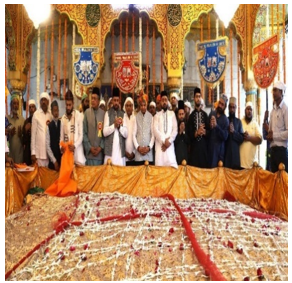
- Held annually after the monsoon (September–November) in Mehrauli, Delhi.
- Name means “Procession of the Florists,” symbolizing deep-rooted communal harmony.
- Originated in 1811 when Mughal Emperor Akbar Shah II’s Begum Mumtaz Mahal offered floral chadars at the Yogmaya Temple and the dargah of Khwaja Bakhtiar Kaki.
Historical Timeline
- Banned by the British in 1942 during the freedom struggle.
- Revived in 1962 by then PM Jawaharlal Nehru promoting secular unity.
- Features floral processions, qawwali, folk dances, and fairs, reflecting Delhi’s syncretic culture.
Cultural Importance
- Represents Ganga–Jamuni Tehzeeb celebrating Indo-Islamic shared heritage.
- Promotes interfaith harmony, peace, and social cohesion.
- Embodies the secular ethos central to Delhi’s cultural identity.
Current Situation
- Festival halted in 2025 due to administrative and clearance issues with DDA.
- Last year’s event was truncated after last-minute withdrawal of permissions.
- Organizers appeal to government for support to preserve this heritage.
This festival exemplifies the spirit of India’s pluralism and religious harmony, making its pause a loss to the city’s communal fabric.
7. Celebrating and conserving languages
GS Paper I -Culture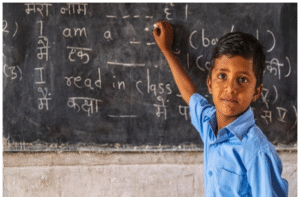
GS Paper II -Polity, Rights
GS Paper III- (Economy, Science & Technology).
Context: Languages are threatened by AI and digitization, needing urgent conservation and promotion efforts to protect linguistic diversity and culture.
Why Languages Matter?
- Cultural Identity: Languages encode histories, myths, and worldviews, preserving collective memory.
- Cognitive Benefits: Multilingualism enhances problem-solving and creativity.
- Social Equity: Ensures access to education and justice for non-dominant groups.
- Global Connectivity: Bridges divides in diplomacy and trade, beyond English dominance.
India’s Linguistic Diversity: A Garden of Languages
- India has over 780 languages and 1,600 dialects, with 22 scheduled languages.
- UNESCO lists 197 languages at risk of extinction, mainly tribal languages.
Classical Languages in India (Post-October 2024)
| Language | Year Declared as Classical |
| Tamil | 2004 |
| Sanskrit | 2005 |
| Telugu | 2008 |
| Kannada | 2008 |
| Malayalam | 2013 |
| Odia | 2014 |
| Marathi | 2024 |
| Pali | 2024 |
| Prakrit | 2024 |
| Assamese | 2024 |
| Bengali | 2024 |
Threats to Languages: Linguicide & Shift
| Threat | Description |
| Lingicide | Deliberate erasure, decline of ancient languages |
| Language Shift | Adoption of dominant languages due to urbanization, migration |
Economics of Language: Key Survival
- Bilinguals earn 10-15% more, boosting employability.
- Regional languages enable local trade, e.g., Tamil exports.
- Linguistic diversity fuels creative industries and innovation.
Implications for India
- Language loss leads to cultural erosion and social divides.
- It hampers soft power, tourism, and inclusive progress.
- Leveraging multilingualism can add $1 trillion to economy by 2030.
Digital Era: Opportunities & Threats
| Aspect | Description |
| Opportunities | Real-time translation, voice tech, digital preservation |
| Threats | Underrepresentation causes digital linguicide, bias in AI systems |
India’s Challenges & Solutions
| Area | Measure | Purpose |
| Digital Inclusion | Develop vernacular AI tools & datasets | Broaden digital participation |
| Education | Mother tongue instruction till Grade 5 | Foundation for language vitality |
| Community Revitalization | Language nests, oral tradition programs | Preserve oral and cultural heritage |
Policy & Institutional Measures
| Provision/Policy | Description |
| Article 29(1) | Protects minorities’ right to conserve language & culture |
| Article 350A | Facilities for primary education in mother tongue |
| Eighth Schedule | Recognizes 22 languages, supports linguistic diversity |
| NEP 2020 | Promotes mother tongue in early education |
| Official Languages Act, 1963 | Ensures use of English alongside Hindi |
8. NITI Aayog Unveils “Reimagining Agriculture: A Roadmap for Frontier Technology Led Transformation”
CONTEXT: NITI Aayog’s Frontier Tech Hub launched a pioneering roadmap on November , 2025, in Gandhinagar to integrate frontier technologies like AI, IoT, drones, climate-resilient seeds, and advanced mechanisation into Indian agriculture. The goal is to enhance productivity, sustainability, and farmer incomes in line with the vision for Viksit Bharat by 2047.
Strategic Vision
- Harness frontier technologies to transform the agricultural landscape.
- Cater to diverse farmer groups: Aspiring (70–80%), Transitioning (15–20%), and Advanced (1–2%) for targeted interventions.
- Promote agricultural resilience, inclusive rural prosperity, and global agri-tech competitiveness.
Context and Significance
- Agriculture is the livelihood for 45.8% of India’s workforce, producing nearly a billion tonnes of food annually.
- Challenges: fragmented landholdings (<1 ha for 86%), low mechanisation, $18 billion post-harvest losses, digital and financial access gaps, climate risks (soil degradation, groundwater decline).
- Requires transformation to sustain food security and rural development objectives.
Key Opportunities in Frontier Tech
- AI-driven predictive analytics improve yield and resource efficiency (example: Telangana’s pilot shows 21% yield rise, 9% input reduction).
- Climate-resilient seeds via gene editing (CRISPR) and biofortification enhance tolerance and nutrition.
- Smart mechanisation with drones, IoT sensors, digital twins optimizes sowing, irrigation, and fertilisation.
- Blockchain ensures transparency in supply chains and data sovereignty for farmers.
- Over 1,000 AgriTech start-ups drive innovations in efficiency, market access, and democratization.
Initiatives Launched So Far
- Digital Agriculture Mission (2021–2025) integrates data ecosystems for informed farming.
- National Mission on Sustainable Agriculture promotes climate-smart practices.
- Kisan Drone Scheme lowers input costs and supports pest/nutrient management.
- Financial inclusion strengthened via PM-Kisan, eNAM digital marketplaces.
- AgriStack digital infrastructure and Agri Accelerator Fund support innovation to scale.
Challenges to Adoption
- Data silos hinder real-time analytics integration.
- Low digital literacy and skepticism cause a trust deficit among smallholders.
- ‘Phygital Divide’: poor rural connectivity and logistics delay tech diffusion.
- Talent shortage in AI-agriculture fusion limits smart farming readiness.
- Funding gaps restrict early-stage and risk-oriented agri innovation.
Key Recommendations by NITI Aayog
- Digital Agriculture Mission 2.0: Create 360° data ecosystems and ensure last-mile digital enablement.
- Translational Research & Development: Cross-disciplinary, mission-oriented to link lab innovations with field needs.
- Agri-Talent Ecosystem: Train AI-savvy farmers and agri-entrepreneurs via skilling and digital literacy.
- Institutional Convergence: Establish Centres of Excellence uniting public policy, academia, and industry.
- Inclusive Financing: Develop AI-enabled credit and insurance models based on alternative data to enhance financial access.
Conclusion
NITI Aayog’s roadmap is a pivotal step toward an Intelligent Agricultural Revolution. By integrating technology, policy coherence, and inclusivity, India aims to transform agriculture to be productive, sustainable, and prosperous by 2047—fulfilling the vision of Viksit Bharat.