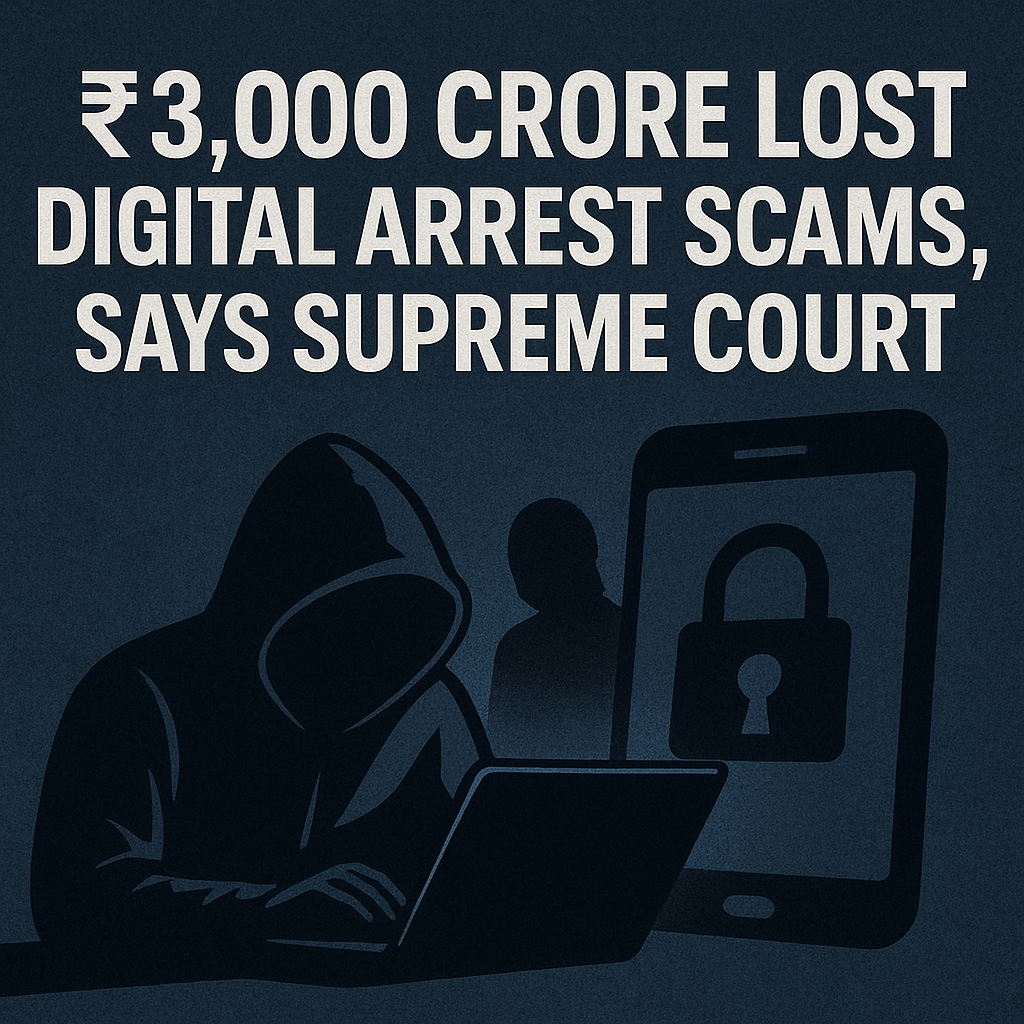
1. ₹3,000 crore lost digital arrest scams, says supreme court
General Studies Paper III: Science and Technology
Context: Supreme Court revealed that over ₹3,000 crore was lost to digital arrest scams in India, with most victims being elderly citizens.
- Court expressed alarm over the scale and sophistication of these scams and promised strict orders to strengthen action against fraudsters.
What is a Digital Arrest?
- A digital arrest is a cyber scam where fraudsters impersonate police, CBI, RBI, or government officials, convincing victims they are implicated in serious crimes.
- Victims are threatened with fake arrest, legal action, or public shaming unless they pay money or share sensitive data.
- There is no legal basis for a “digital arrest” in India.
How Does a Digital Arrest Scam Work?
| Step | Description |
| Initial Contact | Fraudster calls/messages victim, claiming to be law enforcement. |
| False Allegation | Accuse victim of serious crimes (money laundering, trafficking, etc.). |
| Fake Proof | Send forged documents, deepfake videos/screenshots to create legitimacy. |
| Isolation | Tell victim not to inform anyone, often keep on long video/phone call. |
| Threat/Pressure | Threaten arrest, ask for money, sensitive info (PAN, Aadhaar, bank). |
| Payment | Demand payments via UPI, cards, wallets as “bail” or “proof of innocence”. |
| Disappearance | After funds are transferred, scammers cut all contact. |
Supreme Court Findings
| Issue | Supreme Court Explanation |
| Massive Financial Loss | ₹3,000 crore defrauded in India alone. |
| Elderly Vulnerable | Majority of victims were elderly citizens. |
| Scale & Complexity | Scams are more widespread and organized than earlier estimated. |
| Cross-border Control | Scams often originate from abroad, exploited by “money-laundering gangs”. |
| Judiciary Response | Stringent orders promised to support enforcement agencies. |
What are Scam Compounds?
- “Scam compounds” are physical hubs or camps in countries like Myanmar, Laos, Cambodia, etc., where large groups of cybercriminals coordinate mass digital scams targeting Indian and global victims.
- These are well-organized, large-scale criminal enterprises and mimic call center setups.
Understanding Technology Misuse
| Tool/Technology | Used For |
| Deepfake Videos/Voice Cloning | Making false video calls, morphing officials/judges’ faces. |
| Spoofed Caller IDs/Emails | Mimicking official numbers, emails to look credible. |
| Fake Documents & Screenshots | Sending forged notices, warrants, arrest slips, court orders. |
| AI Chatbots and Scripts | Automating conversations to increase scale and consistency. |
| Online Payment Systems | For rapid, hard-to-trace fund transfers (UPI, wallets). |
Impact of Digital Arrest Scams – Dimensions
| Impact Dimension | Description |
| Financial Loss | Victims often lose entire life savings (₹3,000 cr in total). |
| Psychological Trauma | Fear, isolation, and humiliation; major distress especially for elderly. |
| Social | Erodes trust in genuine law enforcement and digital platforms. |
| National Security | Involvement of foreign-based syndicates poses new security challenges. |
Challenges in Tackling Digital Arrest Scams
| Challenge | Description |
| Cross-border Jurisdiction | Scammers often operate from locations outside India. |
| Rapid Tech Advancements | Use of AI, deepfakes, spoofing makes detection hard. |
| Low Digital Literacy | Many victims unaware of such scams and basic cyber hygiene. |
| Legal Framework Gaps | Existing laws lag behind evolving scam techniques. |
| Victim Shaming/Silence | Many cases go unreported due to shame, lack of knowledge. |
Government & Legal Framework
| Institution/Law | Role |
| Information Technology Act, 2000 | Sections 66C (ID theft), 66D (cheating by personation), 72 (privacy). |
| Bhartiya Nyaya Sanhita, 2023 | Section 318 – defines and punishes cheating/fraud. |
| Indian Cyber Crime Coordination Centre (I4C) | Coordinates national cybercrime response & reporting. |
| CBI & State Police (Cyber Cells) | Investigation & enforcement. |
| Public Awareness Campaigns | Government, RBI, Telecom operators spread awareness |
2. Focus from food security to nutrition security: PM
General Studies Paper III (GS-III): Economy and Development.
Context: Prime Minister Narendra Modi, at the inaugural Emerging Science Technology and Innovation Conclave (ESTIC) on Nov 3, 2025, emphasized shifting India’s focus from food security to nutrition security.
- He highlighted the need to develop biofortified crops, genomic biodiversity mapping, clean energy innovations and called for doubling research and development (R&D) efforts.
Background: From Food Security to Nutrition Security
Food Security:
- Defined as availability, access, and affordability of sufficient food to meet caloric needs.
- India achieved improved food security notably since the 1970s Green Revolution.
Problems with Food Security Alone:
- Despite food availability, malnutrition and micronutrient deficiencies persist in large segments of population.
- Food security doesn’t guarantee nutrition adequacy, health, and physical/ cognitive development.
Nutrition Security:
- Focuses on quality of diet and ensuring access to essential nutrients, vitamins, proteins, and minerals.
- Aims to address malnutrition, stunting, wasting, and micronutrient deficiencies for better health outcomes.
Key Highlights from PM’s Address
- Shift focus from just caloric food security to nutrition security.
- Develop biofortified crops to combat malnutrition and micronutrient deficiencies.
- Map India’s genomic biodiversity to help personalized medicine and agriculture.
- Innovate in low-cost fertilisers and new clean battery storage technologies.
- Boost research and development (R&D) funding and make science-backed innovations mainstream.
- Double government expenditure on R&D over the past decade, increase patents and deep-tech startups.
India R&D Indicators:
| Indicator | 2014 | 2024 | Growth/Remarks |
| R&D expenditure | Approx. ₹30,000 cr | ₹60,000 cr (doubling) | Government & private sector growth. |
| Patents Registered | Base figure | 17 times higher | Reflects boost in innovation. |
| Deep-tech startups | Few hundred | ~6,000 | Significant growth in tech entrepreneurship. |
| Anusandhan National Fund | Operationalized | ₹1 lakh crore fund | Supports research in science & technology. |
Why the Shift is Important –Contextual Understanding
- India faces a dual burden of malnutrition and food insecurity — while calories may be available, nutritional quality is insufficient.
- Traditional focus on calories has missed hidden hunger from micronutrient deficiencies (iron, vitamin A, zinc, protein).
- Malnutrition leads to stunted growth, weakened immunity, poor cognitive function — major public health challenge.
- Science-driven innovations like biofortification, genomics, affordable fertilizers can address these deeper nutrition issues.
- Ensures long-term health, productivity, and sustainable development for the population.
India’s Malnutrition Challenge
- High rates of child stunting (approx. 30%) and wasting, anemia, low birth weight.
- Large rural-urban and socio-economic disparities persist despite overall economic growth.
- Government schemes like Poshan Abhiyaan target it, but quality and impact vary.
- Emphasizes need for science and innovation to bring breakthrough solutions.
Key Terms to Remember
| Term | Explanation |
| Food Security | Ensuring availability and access to sufficient, safe, nutritious food for all[FAO Definition]. |
| Nutrition Security | Access to food with adequate macro and micronutrients to maintain health & wellbeing. |
| Biofortification | Breeding crops to increase nutrient content like iron, zinc, vitamin A in staple foods. |
| Genomic Biodiversity | Variability in genetic material of plants, animals, microbes, relevant for personalized medicine. |
| R&D (Research & Development) | Investment in scientific research and technology innovation to find new solutions. |
| Deep-tech Startups | Startups focused on advanced tech like AI, biotech, genomics, clean energy, etc. |
This shift from food security to nutrition security is aimed at tackling the hidden malnutrition epidemic through cutting-edge science and innovation—an essential transformation for India’s public health and sustainable growth
3. Kerala poverty eradication mission now has a helpline
GS PAPER II-Governance and Policy Significance
GS PAPER III-Economic and Development Relevance
CONTEXT: On Kerala Piravi Day (1 November 2025), the Kerala Chief Minister declared the state as free from extreme poverty.
- Kerala became India’s first state to achieve this milestone under the Extreme Poverty Eradication Programme (EPEP) launched in 2021.
What is Extreme Poverty
- As per World Bank (2025 revision), extreme poverty refers to individuals living on less than $3 per day (2021 PPP).
- It indicates the median poverty line of low-income countries, distinct from broader poverty or multidimensional poverty benchmarks.
Kerala’s Definition and Criteria
- Kerala adopted four local indicators to define extreme poverty:
- Food insecurity
- Poor health access
- Lack of housing
- Absence of income
- It focused on human deprivation rather than only income-based measures, differing from World Bank and NITI Aayog’s Multidimensional Poverty Index (MPI).
Methods Used for Eradication
- Comprehensive Identification: Over 4 lakh trained officials and volunteers surveyed households; 1.18 lakh initially identified, verified to 59,000 families.
- Micro-plans for Each Family: Household-level interventions to address gaps in food, housing, health, and education.
- Food and Nutrition Security: 20,600 families ensured regular meals via Kudumbashree community kitchens.
- Housing for the Homeless: 4,005 of 4,677 homeless families given houses under LIFE Mission.
- Avakasam Athivegam (Rights Fast): Campaign to secure civic documents, pensions, electricity, and LPG connections.
4. Heavy metals found in Cauvery fish
GS paper III-Environment and ecology
CONTEXT: A recent study highlights high heavy metal contamination in the Cauvery River fish and sediments, particularly cadmium (Cd), lead (Pb), and zinc (Zn), raising serious health and ecological concerns for millions dependent on the river.
Core Idea
- The study assesses bioaccumulation of heavy metals in tilapia fish and river sediments, identifying anthropogenic pollution as the main source.
- It recommends safe consumption limits and uses risk indices to direct policy on pollution control and health advisories.
- Tilapia serves as an effective bioindicator of river pollution dynamics in tropical aquatic ecosystems.
Background
- Cauvery River spans 800 km across Karnataka and Tamil Nadu, supporting 80 million people, irrigating 40% of agriculture and sustaining fisheries.
- The river faces degradation from urbanization, industrial effluents, agricultural runoff, impacting water quality and ecology.
- Earlier studies (2014, 2009, 2021) reported elevated chromium (Cr), lead, zinc, arsenic, mainly from industrial effluents.
Main Findings
High Heavy Metal Concentration
- Cd, Pb, Zn, Cu levels in fish tissues exceed WHO/FAO safety limits; sediments reveal metal hotspots near industrial zones.
- 80-90% of metals traced to human activities; natural weathering plays a minor role.
Health Risk
- Non-carcinogenic risks include kidney and liver damage from Cd/Pb; carcinogenic risks with chronic exposure.
- Hazard Index (HI) >1 for locals; children and elderly face higher risks due to bioaccumulation.
Safe Consumption Estimate
- Adults: ≤250g fish/week (HI <1); children: <100g/week.
- Occasional intake (1-2 times/month) considered low risk; weekly intake increases hazard 2-5 times.
Scientific Indices
| Index | Full Form | Purpose |
| CF | Contamination Factor | Compares metal concentrations to background levels. CF >6 indicates high pollution. |
| PLI | Pollution Load Index | Assesses multiple metal pollution impact; PLI >1 indicates pollution. |
| THQ | Target Hazard Quotient | Measures health risk from single metal; THQ >1 signals potential adverse effects. |
| HI | Hazard Index | Accumulates non-cancer risk for all metals; HI >1 indicates serious concern. |
| TCR | Total Carcinogenic Risk | Estimates lifetime cancer risk; safe range 10^-6 to 10^-4. |
| ERI | Ecological Risk Index | Measures risk to aquatic ecosystems; ERI >200 indicates high risk. |
Sources of Pollution
| Source Type | Example | Contribution |
| Industrial | Tanneries, battery, distilleries | 50-60%; major Cd, Pb, Cr, Zn discharge. |
| Agricultural | Fertilizer/pesticide runoff | 20-30%; Zn, Cu input via farmlands. |
| Urban | Sewage, household waste | 15-20%; Mn, Ni increases downstream. |
| Natural | Mineral weathering (tributaries) | <10%; baseline Fe, Cr from geology. |
Bioaccumulation vs Biomagnification
| Feature | Bioaccumulation | Biomagnification |
| Scope | Within one organism | Across food chain levels |
| Cause | Intake exceeds elimination | Predators eat contaminated prey |
| Time Scale | Lifetime of organism | Across generations |
| Example | Cd in tilapia liver (15 mg/kg) | Cd in human consumers (50 mg/kg) |
| Index Used | Bioaccumulation Factor (BAF) | Biomagnification Factor (BMF) |
Health Impacts
| Metal | Effects on Humans | Type of Risk |
| Cadmium (Cd) | Kidney damage, bone fragility, hypertension | Mostly non-carcinogenic; also carcinogenic (lung). |
| Lead (Pb) | Neurotoxicity, anemia, cognitive impairment | Non-carcinogenic; carcinogenic (kidney, brain). |
| Zinc (Zn) | Nausea, immune disruption at high doses | Non-carcinogenic (toxic at excess levels). |
| Copper (Cu) | Liver damage, gastrointestinal issues | Non-carcinogenic. |
| Chromium (Cr) | Respiratory problems, skin ulcers | Carcinogenic (lung); also non-carcinogenic. |
Comparison with Other Studies
- Comparable to Noyyal River tilapia contamination; Cauvery shows higher industrial pollution but lower than textile-heavy Noyyal.
- Cr levels in Cauvery exceed Thamirabarani river; similar sediment-fish metal transfer noted.
- Compared to Ganga, Cauvery’s upstream is less polluted; downstream pollution is more anthropogenic.
- Trends show increasing contamination by 20-30% since 2009, comparable to Damodar but less than Buriganga.
Environmental Significance
- Heavy metals disrupt aquatic food webs; reduce fish yields affecting 1M+ fisherfolk.
- Tilapia as bioindicator reflects ecosystem stress and biodiversity decline.
- Contaminants contribute to “hidden hunger” through polluted protein sources for local populations.
Policy & Governance Implications
Gaps Identified:
- Poor effluent monitoring; absence of real-time heavy metal tracking in fisheries.
- Weak coordination between Karnataka and Tamil Nadu for river pollution control.
- Outdated safety standards ignoring bioaccumulation effects.
- Low public awareness; health incidents underreported near river.
Recommendations:
- Enforce stricter effluent discharge norms; install continuous monitoring at pollution hotspots.
- Promote sustainable farming with low-metal fertilizers; encourage community bio-remediation.
- Update consumption advisories with bioaccumulation data; launch longitudinal health impact studies.
5. What are the challenges with the HIGH SEAS TREATY?
GS paper III-environment and ecology
Context: The treaty on Marine Biodiversity Beyond National Jurisdiction (BBNJ) was needed due to gaps and limitations in the 1982 UNCLOS regarding the governance of marine genetic resources and biodiversity in international waters.
Background: The Problem with UNCLOS (1982)
- UNCLOS sets the legal framework for oceans but has ambiguous rules on marine genetic resources (MGRs) beyond national jurisdiction.
- It lacks clear provisions on benefit-sharing, access, and conservation of marine biodiversity in areas beyond EEZs.
- The treaty does not sufficiently address emerging challenges from technological advances and environmental conservation needs.
What the Treaty Does
| Key Provision | Explanation | Importance |
| Access and Benefit-Sharing (ABS) | Defines rules for equitable sharing of benefits from marine genetic resources(MGRs). | Ensures fair use and investment in marine biodiversity studies. |
| Area-based Management Tools (ABMTs) | Allows establishment of marine protected areas in international waters. | Protects vulnerable ecosystems and biodiversity. |
| Environmental Impact Assessments (EIA) | Requires assessments before activities that may harm biodiversity. | Prevents or minimizes ecological damage. |
| Capacity Building and Technology Transfer | Supports developing countries in marine research and resource use. | Promotes equitable scientific access and sustainability. |
Principle of Common Heritage of Humankind (CHH)
Meaning:
- CHH principle means that certain global commons, especially resources beyond national borders, belong to all humanity collectively, not individual states.
Key Elements of CHH Principle:
- Resources in areas beyond national jurisdiction are shared equitably.
- Use must be for the benefit of all, including future generations.
- Activities must be peaceful and sustainable.
- International cooperation and regulation are essential to managing common resources.
Unclear Rules on Marine Genetic Resources (MGRs)
- UNCLOS does not clearly define ownership, access, or benefit-sharing obligations for MGRs found in high seas and deep seabed.
- Lack of clarity on how profits, research data, and innovations from MGRs are shared.
- Challenges in regulating bioprospecting, patenting, and commercial use of such resources.
6. Has cloud seeding been effective?
GS paper III-environment and ecology
Context: Delhi conducted a major cloud seeding trial in 2024 to combat severe air pollution and test precipitation enhancement for urban environment management.
What is Cloud Seeding? Definition
- Cloud seeding is a weather modification technique that disperses substances (silver iodide, dry ice, salts) into clouds to enhance or alter precipitation (rain, snow).
- It stimulates water droplet or ice crystal formation in suitable clouds, promoting increased rainfall or hail suppression. It modifies existing clouds, not creating new ones.
How Cloud Seeding Works & Scientific Principle
| Aspect | Explanation |
| Delivery | Chemicals released via aircraft, rockets, drones, or ground generators into targeted clouds. |
| Cold Clouds | Agents form ice crystals which grow and fall as snow/rain (Bergeron-Findeisen Process). |
| Warm Clouds | Salts attract water vapor forming droplets that collide and fall (Collision-Coalescence). |
| Scientific Principle | Nucleation theory: seeding particles act as nuclei to accelerate natural precipitation processes. |
Purpose of Cloud Seeding
| Objective | Explanation |
| Increase precipitation | Enhance rainfall for water supply, agriculture |
| Hail and fog suppression | Protect crops and visibility in transport |
| Air pollution mitigation | Induce rain to wash pollutants from atmosphere |
| Wildfire and snow enhancement | Control fire spread, increase snowpack for reservoirs |
Historical Background
| Period/Year | Development/Notable Event |
| 1940s | Conceptualized; 1946 Vincent Schaefer’s lab snow experiment |
| 1950s-60s | US, USSR field trials; Project Cirrus hurricane seeding |
| 1970s-80s | Military and commercial expansions; ENMOD Convention bans hostile use |
| 1990s-Present | Global spread; technology advances; drone use |
Cloud Seeding in India
| Year | Event |
| 1952 | First experiment in Kolkata by S.K. Banerji via hydrogen balloon |
| 1957 | Delhi’s first silver iodide monsoon trial |
| 1971-72 | Delhi winter seeding trials showing some rainfall increase |
| 2009-Present | CAIPEEX program by IITM Pune, randomized monsoon trials |
| 2024-25 | Delhi pilot for air pollution control, first urban seeding attempt |
Cloud Aerosol Interaction & Precipitation Enhancement Experiment (CAIPEEX)
| Feature | Description |
| Phases | Four phases: aerosol surveys, randomized trials, microphysics focus |
| Instruments | Aircraft, ground radars, probes monitor cloud and aerosol data |
| Objectives | Quantify aerosol impact on rain, enhance orographic precipitation |
| Findings | Pollution narrows droplet size; seeding enhances rain in specific regions |
Cloud Seeding for Air Pollution Control – Delhi 2024 Case
Context:
- Delhi faces severe air pollution (PM2.5, PM10) during winter; cloud seeding trial conducted to induce rain to wash pollutants.
Aims:
- Induce precipitation to reduce particulate matter in air.
- Test feasibility of seeding in low moisture winter clouds.
- Collect data for scaling operations in worsening pollution periods.
Limitations & Challenges
| Challenge | Explanation |
| Low moisture content | Winter clouds in Delhi too dry; seeding needs >50% humidity |
| Cloud availability | Suitable clouds rare in post-monsoon winter season |
| Variable efficacy | Rain enhancement varies (0-20% globally); results inconclusive |
| Environmental concerns | Silver iodide toxicity; neighboring areas’ rain diversion |
| Cost and logistics | Expensive flights; requires precise weather prediction |
Cloud seeding offers a supplementary, emergency measure to address drought, hail, pollution, or water supply but is constrained by weather conditions, scientific uncertainties, and cost. Delhi’s 2024 urban pollution trial marked a pioneering but scientifically challenging application in a highly polluted megacity.
7. Red Corridor to green shoots
GS-paper III: Internal Security, Topic: Left-Wing Extremism, Issue: Eradicating Naxalism in India
Context: Left Wing Extremism has long exploited governance gaps and local grievances, but its decline shows that effective governance, inclusion, and strong state presence not poverty are key to weakening extremism.
The Paradox of Violence in a Land of Peace:
- India, known for its peaceful philosophies and religious origins, faces a contradiction in the form of the Naxalite movement, which resorts to violence.
- Internal insurgency drains India’s moral and material resources, hindering its progress in a world already fraught with conflicts.
- Naxalism undermines democratic freedoms and erodes public trust through acts of violence, creating fear and suspicion within communities.
Challenging the Poverty Narrative:
- The common explanation that Naxalism is a result of poverty and underdevelopment is insufficient and doesn’t hold up under scrutiny.
- Naxalites often target infrastructure like schools and railway tracks, which are essential for alleviating poverty, contradicting the idea that they are fighting for the marginalized.
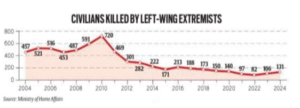
The Real Roots of Naxalism:
- Local governance deficits, historical neglect, poor law enforcement, and political manipulation are significant contributors to Naxalism.
- Extremism struggles to gain traction where the state is visible, accountable, and responsive to the needs of its citizens.
Government’s Recalibrated Strategy: Naxal-Mukt Bharat:
- The Indian government has adopted a collaborative approach, recognizing that insurgency transcends administrative boundaries.
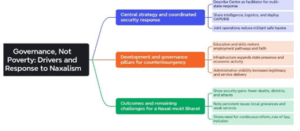
- The central government acts as a facilitator, coordinating intelligence, providing financial and logistical support, and deploying security forces.
India’s strength rests on moral resilience and inclusive development, making a Naxal free nation a moral goal driven by trust, justice, and opportunity not coercion.
8. Restraint has a half-life
GS- paper II: International Relations,
Issue: India’s Nuclear Posture in a Changing World
Context: Since the Cold War, global nuclear testing restraint relied on political and moral consensus, now weakening as major powers reconsider testing. India must reassess its posture to keep deterrence credible and maintain its responsible image.
Global Erosion of Nuclear Testing Restraint: The United States has indicated a willingness to consider resuming nuclear tests.
- Russia and China have increased activity at their test sites and expanded nuclear capabilities.
- Major powers question the sufficiency of computer simulations alone to guarantee weapon reliability.
- This reflects a fragility in the post-Cold War nuclear order and challenges the longstanding voluntary moratorium.
India’s Current Position of Restraint:
- India’s moratorium since 1998 has been a symbol of strategic maturity and moral confidence.
- It has helped India gain diplomatic legitimacy, end sanctions, and engage in civil nuclear cooperation.
- The doctrine of credible minimum deterrence and No First Use (NFU) pledge underpin India’s responsible nuclear posture.
Challenges Facing India’s Nuclear Deterrent:
- India’s tested nuclear designs date back to 1998; technology and delivery systems have evolved.
- New systems like Agni-V (intercontinental range) and submarine-launched missiles require assurance of reliability.
- Emerging technologies like multiple independently targetable reentry vehicles (MIRVs) raise new technical challenges.
Why India Must Re-evaluate, Not Regress:
- Reconsidering restraint doesn’t mean rushing to test again; it means preparing for a world where others might test.
- Testing could be scientific, limited, and focused on validation rather than demonstration or provocation.
Moral and Diplomatic Balance of India’s Nuclear Policy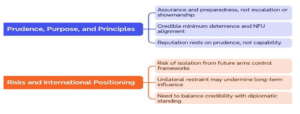
India’s nuclear testing moratorium must adapt to changing global dynamics, balancing credible deterrence and ethics to maintain strategic autonomy and influence the evolving nuclear order.