1. Kerala to be first state free of extreme poverty
GS PAPER I : Indian society Poverty & Development Issues.
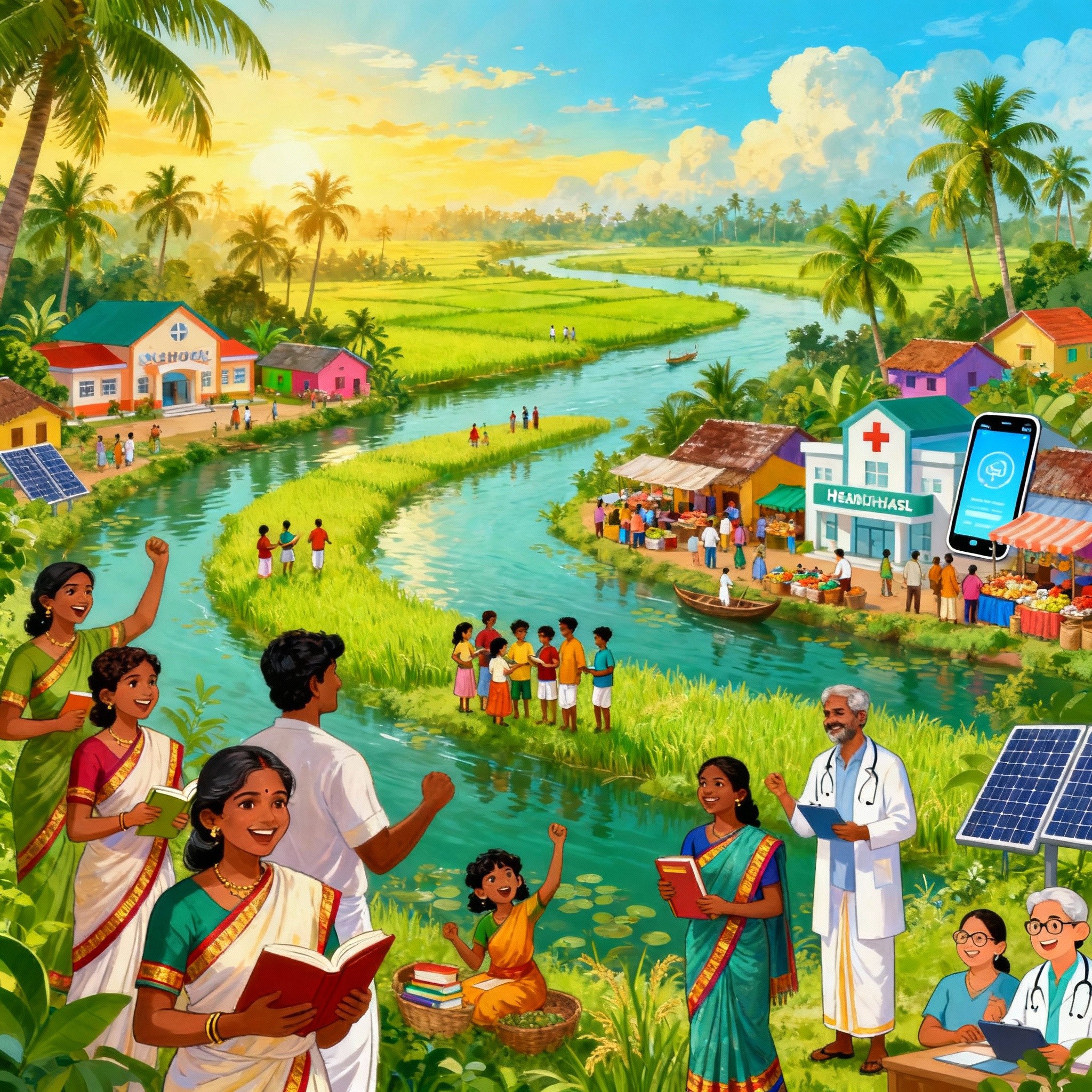
CONTEXT :Kerala will become the first state in India officially declared free from extreme poverty on November 1, 2025, marking a national milestone in poverty eradication efforts.
- The achievement will be announced during Kerala’s State Formation Day, receiving wide attention as a model for targeted social development.
Redefining Extreme Poverty
- Definition: Living on less than $2.15/day (World Bank 2017 PPP); updated to $3/day (PPP 2021) for low-income contexts.
- Nature: Signifies absolute deprivation, not relative inequality; people lack access to food, shelter, health, education, sanitation.
- Measurement: Calculated using Purchasing Power Parity (PPP) and Household Consumption Expenditure Survey (HCES); India’s Multidimensional Poverty Index includes nutrition, housing, sanitation, education, services.
India’s Progress Against Extreme Poverty
- Rapid Reduction: India’s rate fell from 27.1% (2011–12) to 5.3% (2022–23) per World Bank (2025), among the fastest global declines.
- Population Impact: Nearly 270 million lifted above the threshold; lowest poverty now seen in Kerala, Goa, Puducherry (NITI Aayog MPI).
- Rural Transformation: Steepest decline in rural areas, driven by MGNREGA, PM Awas Yojana, NFSA, Ayushman Bharat, DBT expansion.
Kerala’s Achievement: Programme Details
- Milestone: Kerala achieves 0% extreme poverty after a four-year drive starting in 2021 under the LDF government.
- Scale: Of 64,006 families identified as extremely poor (using deprivation indicators), 59,277 families were uplifted with targeted support.
- Interventions: 3,913 homes built; land allotted to 1,338 families; ₹2 lakh repairs for 5,651 homes; ration/Aadhaar documentation for 21,263 individuals.
- Methodology: Micro-plan approach for each family; integrated state schemes, local bodies, and social audits with geo-tag verification.
Broader Significance
- SDG Alignment: Kerala meets UN SDG 1 (“No Poverty”) years ahead of the national deadline (2030).
- Inclusive Governance: Success due to collaboration across political lines, strong local self-government, and last-mile welfare delivery.
- Replicable Model: Kerala’s integrated, multi-sectoral approach sets an example for other states seeking rapid poverty reduction
2. Tri -services to get syatems, platform for ₹79,000 cr:
GS PAPER III-science and technology
Context: The Defence Acquisition Council (DAC) approved ₹79,000 crore procurements on October 23, 2025, marking a key step in India’s military modernization.Chaired by Rajnath Singh, it supports ‘Atmanirbhar Bharat’ amid tensions with China and Pakistan.Enhances lethality, mobility, and surveillance, aligning with the 2025-26 defence budget focus on indigenous manufacturing.
- Timely Context: Precedes the 2026 indigenization roadmap, with 75% under Buy (IDDM) for local production.
- Media Spotlight: Covered by UNI, Economic Times, and Zee Business for boosting operational readiness.
Background
- India’s defence procurement evolved since the 2016 DPP overhaul, cutting import dependency from 70% (2014) to 60% (2025).
- DAC meetings address capability gaps post-2020 Galwan clash; this ₹79,000 crore deal follows a ₹1.05 lakh crore nod in July.
- Reflects accelerated spending within the ₹6.2 lakh crore FY26 defence budget.
- Strategic Imperative: Focuses on two-front threats and Indo-Pacific dynamics with integrated theatre commands.
- Indigenization Drive: Bans 5,000+ import items; DRDO and firms like Tata, L&T lead development.
What is the Acquisition of Defence Council (DAC)?
- Apex body for capital defence procurements in India, established in 2001 under the MoD.
- Chaired by the Raksha Mantri, includes Chief of Defence Staff, service chiefs, and defence secretary.
- Primary Role: Grants Acceptance of Necessity (AoN) for projects above ₹300 crore, prioritizing Buy (IDDM).
- Process: Reviews proposals from Integrated Project Management Teams; fast-tracks tenders within 6-12 months.
- Significance: Reduces delays from 5-7 years (pre-2016) to 2-3 years; cleared ₹4 lakh crore since 2020.
Key Highlights of the 79,000 Crore Acquisition
- Covers 10 proposals under Buy (IDDM), enhancing tri-services capabilities; total value ₹79,000 crore, delivery in 3-5 years.
For the Indian Army – Systems Approved
- Nag Missile System (NAMIS) – Tracked Variant: 293 units (₹1,480 crore) for anti-tank strikes (4-7 km range).
- Ground Based Mobile ELINT System (GEMS): 7 systems (₹2,000 crore) for real-time radar/signal analysis.
- High Mobility Vehicles (HMVs) with Cranes: 1,770 units (₹4,500 crore) for rapid troop deployment in high-altitude areas.
For the Indian Navy – Systems Approved
- Landing Platform Docks (LPDs): 2 units (₹25,000 crore) with 30mm guns for amphibious assaults.
- Advanced Light Weight Torpedoes (ALWTs): 1,000 units (₹3,500 crore) for anti-submarine warfare.
- Electro-Optical Infrared Search-and-Track Systems: For midget submarines, enabling covert surveillance.
- Smart Ammunition: Upgrades 76mm guns for precision fire against drones/ships.
For the Indian Air Force – Systems Approved
- Counter Laser Target Systems/Designator Systems (CLRTS/DS): 8 systems (₹2,500 crore) for precision strikes.
- Related Surveillance and Target Systems: Enhances engagement of enemy assets at standoff distances.
- Autonomous Take-Off and Landing Systems: For UAVs/drones, improving operations in contested airspace.
Strategic and Technological Significance
- Marks a leap in integrated deterrence with DRDO-private sector collaboration for next-gen tech.
- Aligns with theaterisation goals for joint operations across services.
Aspects and Significance
- Lethality Enhancement: NAMIS/ALWTs/CLRTS offer 90% hit rate vs. 60% legacy, countering PLA’s superiority.
- Mobility & Logistics: LPDs/HMVs enable rapid insertions (2,000 troops/ship), cutting response time by 40%.
- Intelligence Gathering: GEMS/EO-IR systems provide real-time EW dominance, boosting awareness by 50%.
- Indigenous Tech Leap: 100% IDDM ensures security; DRDO innovations drive ₹21,000 crore exports in FY25.
- Jointness & Interoperability: Supports CDS’s theater commands, enhancing IOR presence against China’s naval growth.
3. The UN matters, as a symbol of possibility
GS Paper II:International Relations
Context: UN commemorates 80th anniversary in 2025, focusing on reform and global challenges.
- UNGA80 debates highlight relevance, multilateralism, and leadership calls for change.
- Special events on October 24 mark Korean War anniversary and peacekeeping, renewing UN’s security mandate.
- India pushes for UNSC reforms, equity, and stronger Global South representation.
Background
- Founded after WWII, UN Charter signed by 51 nations in 1945 to uphold peace, rights, and development.
- Evolved from confronting war to fostering cooperation globally.
- Membership grew to 193; led 80+ peace agreements and advanced global norms.
UN Evolution: War to Cooperation
- 1945-60s: Prevent wars, expand decolonization, broker key armistices.
- 1970s-80s: Cold War vetoes stalled action, but health/development progress made.
- 1990s-2000s: New interventions, post-Soviet membership, Millennium Goals set.
- 2010s-2025: Multipolar world challenges consensus; Paris Agreement, SDGs boost cooperation.
Changing Global Order: 1945 vs. 2025
| Aspect | 1945 Context | 2025 Context |
| Power Dynamics | Bipolar, West-dominated | Multipolar, Global South rising |
| Membership | 51, mainly Western | 193, Africa/Asia expanded |
| Key Threats | Interstate wars, nukes | Climate, cyber, pandemics |
| Institutions | UN central with Bretton Woods | Fragmented, many power centers |
| Equity Focus | Decolonization nascent | SDGs slow, calls for new finance mechanisms |
Structural Challenges
- UNSC composition frozen; no expansion since 1945, excluding major powers.
- Veto power causes deadlock on Ukraine, Gaza, undermining global faith.
- Budget shortfalls delay key missions; only 60% of dues paid on time.
- Bureaucratic inertia and agency overlap reduce agility for crises.
India’s Perspective & Role
- India leads G4 bid for expanded UNSC with more permanent seats, equity.
- Advocates “multi-alignment,” reform, and stronger South-South ties.
- Largest troop contributor, funds UNRWA, leads climate/SDG efforts.
The UN’s Continuing Relevance
- Humanitarian: $50B+ aid delivered yearly; Sudan famine, Ukraine refugees aided.
- Peacekeeping: 70+ missions since 1948, 70,000 troops in 2025 stabilize crises.
- Norms: SDGs, NPT, AI ethics, reinforce rights and standards.
- Convening Power: Global platform for dialogue, conflict resolution.
The Way Forward
- UNSC reform: Expand permanent seats, limit veto power, consensus by 2030.
- GA powers: More binding roles, digital voting piloted for efficiency.
- Finance: Diversify funding, target $5B liquidity buffer, incentivize dues.
- Modernize: AI analytics, agency streamlining for responsive governance.
- Empower Global South: Ring-fence seats, link reform to climate finance commitments.
- India’s leadership: Drive hybrid forums, tech-inclusive diplomacy, reform summits.
4. Should India take global leadership on climate change?
GS paper III: Enviro & Biodiversity Conservation, Environmental Pollution & Degradation, Eia
CONTEXT: COP30 (UN Climate Summit) is approaching in November 2025, with India seen as a stabilizing force as Western climate leadership wane.
- India’s consistent climate policy, major renewable achievements, and ability to form alliances draw global attention ahead of COP30.
- Focus at COP30 is shifting from new pledges to implementation and finance for climate adaptation, where India is advocating practical, grounded action.
Global Context and India’s Position
- Developed nations are less active in climate leadership, citing economic and energy challenges.
- India maintains cross-party policy continuity and avoids divisive climate politics.
- India forms new partnerships with Europe, Brazil, and the Global South on technology, forests, and climate action.
- COP30 agenda emphasizes executing existing commitments over new targets.
Financing and Implementation Gaps
- Global climate finance needs reach $1.3 trillion a year by 2035, but funding remains insufficient.
- Effective implementation depends on finance, technology access, and building capacity in developing countries.
- India promotes blended finance (public, private, philanthropic) for adaptation sectors like agriculture and water.
- Project pipelines at national/state levels are needed to attract and utilize investment efficiently.
India’s Achievements and Strategic Strengths
- India’s power sector emissions have plateaued as renewables expand.
- Non-fossil fuels now make up about 50% of installed capacity, ahead of Paris targets.
- Decoupling: Energy demand growth is less tied to emissions due to efficiency and structural change.
- Major businesses are investing in green hydrogen, solar, and renewables for future growth.
Adaptation and Dual-Benefit Projects
- Integrated programs like PM-KUSUM use solar power in agriculture, reducing diesel dependence and risks.
- Projects combine adaptation (resilience) with mitigation (emissions reduction) for long-term benefits.
- Innovations: Solar-powered storage, electric buses, national schemes to lower costs and increase climate resilience.
NDCs and Adaptation Policy
- India commits to 50% non-fossil power by 2030, aligned with Paris Agreement.
- Plans to link green hydrogen and industrial decarbonization to future climate pledges.
- States may maintain adaptation “wish lists” under national carbon market mechanisms.
- India’s strategy focuses on high-impact carbon credits (e.g., solar + storage) over single-stream projects.
Should India Lead the Global Climate Agenda?
- India’s low per capita emissions, robust climate policy, and expertise provide credibility for global leadership.
- Strategic leadership enables influence over new finance flows and technology frameworks at COP30.
- India’s operational experience and welfare/renewable schemes add to its global standing.
- Leadership must balance ambition with equitable development and energy access for all.
Conclusion
- India’s climate leadership is practical, focused on equity and implementation, not just symbolic.
- With strong governance, scalable models, and rising private investment, India is positioned to anchor effective global climate action—bridging the gap between commitments and real outcomes at COP30.
5. Great Green Wall project
General Studies Paper III – Environment and Ecology
Context: Andhra Pradesh has launched the Great Green Wall project to transform its entire Bay of Bengal coastline into a natural bio-shield against cyclones, sea-level rise, and environmental degradation. Inspired by Africa’s Great Green Wall initiative, this project aims to bolster climate resilience, uplift coastal communities, and set a benchmark for sustainable development.
Overview of the Great Green Wall of Andhra Pradesh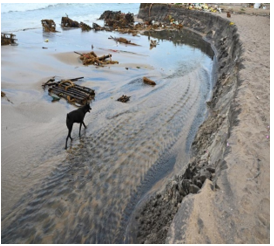
Flagship Climate Project
- Flagship Initiative: Part of the state’s Coastal Green Mission; aligns with SDG 13 (Climate Action) and India’s National Coastal Mission.
- Main Goal: Protect the 1,034 km Bay of Bengal coastline from cyclones, tsunamis, and rising sea levels through afforestation and sustainable ecosystem management.
- Inspired By: Africa’s Great Green Wall, but adapted for India’s eastern coastline.
Key Objectives and Targets
- Green Cover Goals:
- Raise state green cover from 30% in 2025 to 37% by 2029, and up to 50% by 2047.
- Scope:
- Green belt to run from Tirupati to Srikakulam, covering the full length (1,034 km) of the Andhra coast.
- Belt will be up to 5 km wide inland, with a variable width of 50–200 metres.
Core Features
- Species Chosen:
- Plantation includes mangroves, casuarina, palmyra, bamboo, and other shelterbelt trees suited to coastal conditions.
- Inauguration:
- Officially launched at Surya Lanka Beach, Bapatla district, on 11 September 2025.
Community and Stakeholder Involvement
- Stakeholder Participation:
- Self-Help Groups, eco-clubs, MGNREGS workers, fishermen, and local communities play a major role in planting, maintenance, and monitoring.
- Integration:
- Green buffers will be developed around ports, SEZs, industrial corridors, and aquaculture, offering livelihoods alongside protection.
Funding and Support
- Financial Backing:
- Supported by CAMPA (Compensatory Afforestation Fund), MISHTI, Green Credit Programme, MGNREGS, CSR funds, and District Mineral Funds.
Why It Matters for UPSC and Society
- Disaster Resilience:
- Reduces impact of cyclones, storm surges, and shoreline erosion that threaten over 3 million people on the Andhra coast.
- Environmental & Economic Benefits:
- Restores biodiversity, stabilizes coastal habitats, and encourages sustainable fisheries and eco-tourism.
- Coastal Protection Model:
- Serves as an innovative example for other coastal states facing similar climate vulnerabilities.
- Community Empowerment:
- Leverages local knowledge, generates green jobs, and supports inclusive development.
- SDG and National Strategies:
- Advances India’s commitments under the Sustainable Development Goals and national climate adaptation strategies.
6. Stubble burning
General Studies Paper III: Environment and Ecology
Context: Punjab’s stubble burning issue is under focus due to reports indicating a sharp drop in visible farm fires in 2024, while concerns persist about whether the actual area burned and associated emissions have truly reduced. The government claims success in curbing incidents, but advanced monitoring and ground realities reveal contradictions and limitations in satellite-based data.
Background: What is Stubble Burning?
- Definition: Stubble burning is the practice of setting fire to leftover crop residue (mainly paddy stubble) after harvest, usually to quickly clear fields for the next sowing season.
- Practice: Common in Punjab and northern India post-paddy harvest, mainly due to the short window before winter wheat sowing.
- Environmental Impact: Major contributor to severe air pollution, especially in Delhi-NCR during winter.
Current Scenario (2024–2025)
- Paddy harvesting in Punjab slowed due to heavy floods, reducing stubble burning incidents.
- Official fire counts in 2024 are reportedly down 70% compared to 2023.
- Despite fewer fire counts, experts caution that actual burnt area and emissions may remain high due to under-detection.
Government Claim vs. Contradictory Reality
Government Claims
- Significant decline in paddy stubble fire incidents (from ~36,663 in 2023 to ~10,909 in 2024).
- Attributed to stricter policing, subsidized machinery, and awareness campaigns.
Contradictory Realities
- Experts argue the total burnt land remains substantial; some fires are undetected.
- Advanced estimates (satellite and optical techniques) indicate scorched area and emissions may not have fallen as much as claimed.
Why Discrepancy in Data?
Table: Satellite-Based Limitations
| Limitation | Explanation |
| Infrequent Satellite Passes | Satellites like MODIS/VIIRS capture data only a few times a day, missing short/intense fires. |
| Cloud/Haze Interference | Weather blocks thermal signal, leading to missed fire detections. |
| Fragmented/Short-Duration Fires | Many Punjab fires are low-intensity, spread, and brief—hard to detect in short satellite windows. |
| Landholding Pattern | Small farm plots mean scattered burn patches, more likely to be missed. |
Advanced Satellite Techniques
- Thermal Sensors: Detect heat from fires but may miss small or brief burns.
- Optical Sensors (e.g., Sentinel-2): Capture post-fire scars, providing a better estimate of total area burnt.
- Integrated Approaches: Combine thermal and optical data, validated by ground surveys, for accuracy.
Burnt Area and Emission Interpretation
- Lower visible fire count does NOT guarantee lower overall emissions.
- Intensity, frequency, and size of burns impact particulate and gaseous releases.
- Many undocumented burns are low-emission but widespread.
Why Farmers Still Burn Stubble?
Table: Major Reasons for Stubble Burning
| Reason | Explanation |
| Short Sowing Window | Narrow gap between paddy harvest and wheat planting. |
| Cost of Alternatives | Solutions like Happy Seeder, decomposer microbes, or straw balers are costly/less accessible. |
| Speed and Simplicity | Burning is quick, easy, and clears fields efficiently. |
| Labour and Machinery Issues | Shortage of labour/machinery during the harvest peak season. |
Government Measures to Reduce Stubble Burning
Table: Key Government Interventions
| Measure | Details |
| Machinery Subsidies | Providing Happy Seeder, Straw Management Machines on subsidy. |
| Enforcement Actions | Fines and penalties for illegal stubble burning. |
| Awareness Campaigns | Educational drives on pollution and health effects. |
| Alternative Uses | Promotion of paddy straw for bioenergy, composting, packing etc. |
| Crop Diversification | Incentivizing pulses/oilseeds to reduce rice-wheat cycle dependency. |
Way Forward
- Integrate Satellite and Ground Data: Improve monitoring by combining remote sensing with ground validation for accurate assessment.
- Support Alternative Solutions: Scale up affordable access to machinery, decomposers, and alternative uses for stubble.
- Extend Sowing Window: Policy support for crop diversification and flexible sowing timelines.
- Sustained Community Engagement: Continuous farmer training and incentives for sustainable practices.
- Emission Assessment: Track and regulate based on total emissions (intensity, type of fuel, duration) alongside fire counts.
7. WTO hails India’s AEO scheme for bringing more small businesses into global trade
Context: The World Trade Organization (WTO) has commended India’s Authorised Economic Operator (AEO) programme for significantly expanding the participation of Micro, Small and Medium Enterprises (MSMEs) in global trade and making customs compliance more accessible and efficient.
AEO India Scheme: Key Elements
Programme Overview
- Nature: Voluntary certification scheme, started by the Central Board of Indirect Taxes and Customs (CBIC) in 2011 to promote efficient and secure cross-border trade.
- Purpose: Recognizes and accredits trusted traders who maintain high levels of customs compliance and supply chain security, rewarding them with expedited customs processing and other facilitation measures.
Evolution and Alignment
- Pilot and Expansion: The scheme began in 2011, merged with the Accredited Client Programme (ACP) in 2016, and was aligned with the World Customs Organization (WCO) SAFE Framework of Standards for international best practices.
- WCO Harmony: The program is fully harmonized with WCO’s global standards, ensuring mutual recognition and facilitating international trade.
Certification Tiers
- Levels of Accreditation:
- AEO-T1: Entry-level benefits
- AEO-T2: Higher trust, more benefits
- AEO-T3: Maximum trade facilitation
- AEO-LO: For accredited logistics operators
Each level brings enhanced benefits for greater compliance, solvency, and security standards.
Main Advantages
- Facilitation Benefits:
- Faster customs clearances
- Deferred payment of duties
- Direct port delivery and entry
- Fewer inspections
- Priority in dispute resolution
- Dedicated client managers
- Relaxed bank guarantee requirements and easier documentation, especially for MSMEs
About the WCO AEO Framework
Foundation and Purpose
- Initiation: Established by the World Customs Organization through its SAFE Framework (2005) to promote secure global trade chains.
- Core Aim: Ensures trusted operators—businesses meeting stringent security and compliance standards—are provided simplified and expedited customs processes.
Pillars of the Framework
- Customs-to-Customs: International cooperation to streamline border processes.
- Customs-to-Business: Partnership with private sector through AEO certification.
- Customs-to-Other Agencies: Coordination for holistic trade facilitation and security.
Global Spread and Mutual Recognition
- Adoption: More than 90 countries have operational AEO programmes, many with mutual recognition arrangements that extend benefits for exporters/importers internationally.
- India’s Role: India’s model is regarded as one of the most comprehensive among developing economies, and Indian customs authorities have signed MRAs to ensure smooth cross-border procedures and greater global integration.