
1. INDIA-BRAZIL
General Studies Paper II :International Relations (India-Brazil cooperation; bilateral agreements)
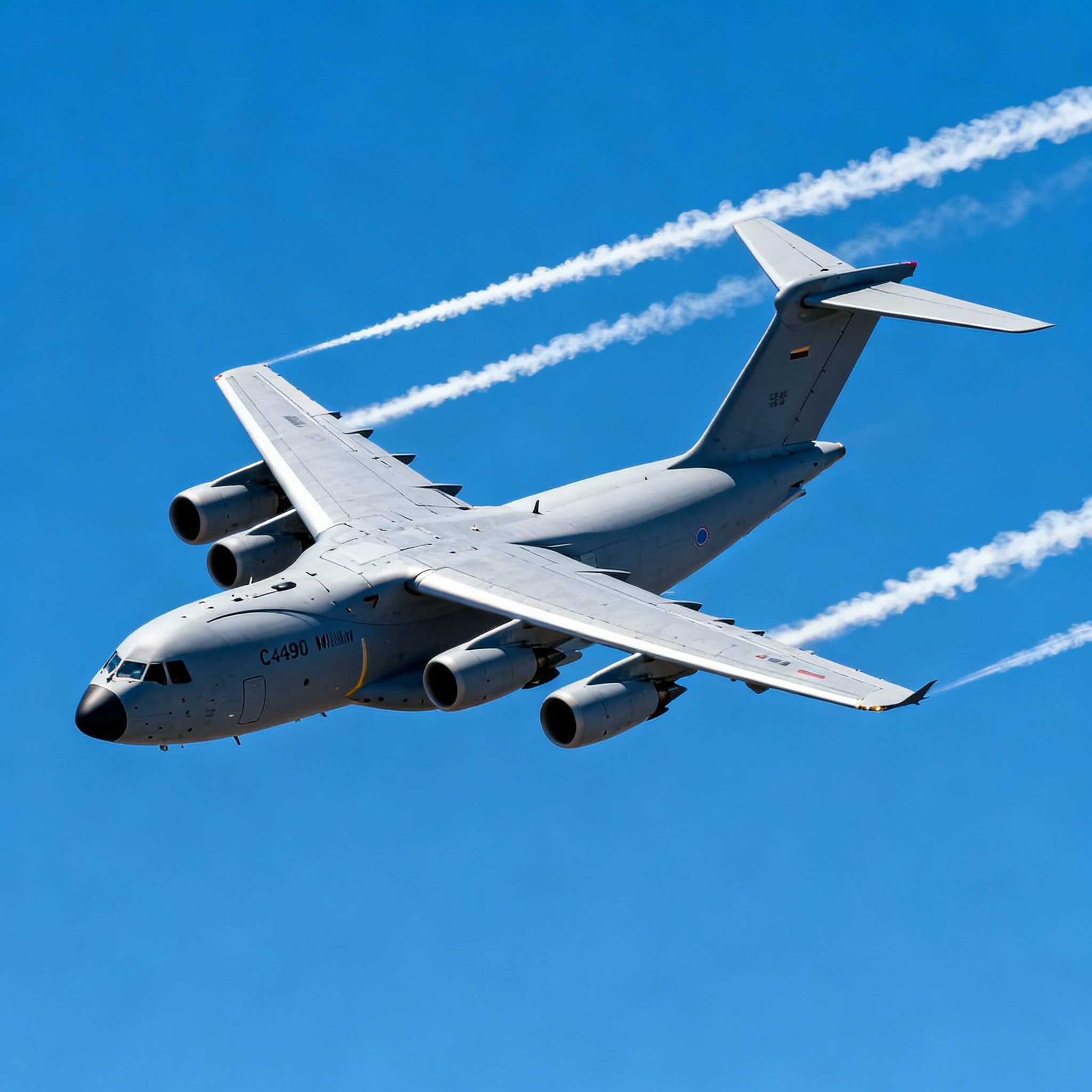
Context: Embraer Defense & Security (Brazil) and Mahindra Group (India) signed a Strategic Cooperation Agreement (SCA) to advance the C-390 Millennium military transport aircraft for the Indian Air Force’s (IAF).
Background – The C-390 Millennium Aircraft
- C-390 Millennium is a modern, versatile military transport developed by Embraer.
- Entered Brazilian Air Force service in 2019; chosen by multiple countries globally.
- Designed to replace older transports like C-130 for varied roles.
- Embraer sees India’s modernization needs as a key opportunity.
What is the C-390 Millennium?
- Twin-engine, medium-lift jet transport with advanced avionics and fly-by-wire.
- Handles troop/cargo transport, medevac, airdrop, refueling, and rescue missions.
- Powered by twin IAE V2500-E5 engines; excels in harsh, “hot and high” conditions.
- Payload up to 26 tons; one of the fastest in its class.
Key Features Table
| Feature | Description |
| Payload Capacity | 26,000 kg cargo; can carry 80 troops or 64 paratroopers |
| Range | 6,130 km ferry; 2,820 km with 23t payload |
| Speed | Max 870 km/h; cruise 850 km/h |
| Dimensions | 35.2m (L) × 35.05m (W) × 11.84m (H) |
| Engines | Two IAE V2500-E5 turbofans, 139.4 kN thrust |
| Avionics | Collins Pro Line Fusion suite, HUD, advanced vision/fly-by-wire |
| Multi-mission | Cargo, refueling, medevac, firefighting, SAR, airdrop |
| Operating Environment | Unpaved/short runways, harsh climates, 1,400m takeoff run@23t |
| Weights | Max TOW: 81,000–87,000 kg, empty: 23,600 kg |
Why It’s Attractive to India
- Modern solution to replace outdated An-32 and Avro fleets.
- Enables ‘Atmanirbhar Bharat’ via local manufacturing and tech transfer.
- More cost-effective than rivals; efficient speed and payload.
- Adaptable for AWACS and special roles in India’s environment.
- Supports ambitions to export aerospace products regionally.
About the Partnership – Embraer & Mahindra Table
| Aspect | Details |
| Agreement Type | Strategic Cooperation Agreement, post-Feb 2024 MoU |
| Objectives | Promote C-390 for IAF; establish India hub for production, MRO, supply chain |
| Scope | Joint marketing, local industrialization, supply ecosystem |
| Key Players | Embraer Defense (Brazil), Mahindra Defence (India) |
| Long-term Vision | Make India a C-390 center for domestic/export markets |
| Policy Alignment | Fulfills Make in India, Atmanirbhar Bharat, with technology transfer |
Strategic & Economic Significance for India
- Boosts IAF airlift and disaster response capabilities.
- Reduces import dependence, builds high-skill aerospace jobs.
- Opens export prospects for Indian aerospace industry.
- Encourages tech transfer, local innovation, and sector growth.
- Helps grow India-Brazil trade, targeting $20B bilateral trade by 2030.
Diplomatic Significance (BRAZIL -INDIA)
Bilateral Cooperation
- Upgrades 2006 strategic partnership with deep defense-aviation ties.
- Highlights prior Indian offers (Akash missile) and Brazilian openness.
- Recent talks show intent for defense co-development and barter.
- Broader ties: civil aviation, AI, fintech, consular/e-visa, multilateral forums.
- Trade on track to hit $15–$20B by 2025–2030; expanded BRICS/G20 linkages.
Challenges
- Faces tough MTA competition: C-130J, A400M, IL-276.
- Defense procurement delays due to process and budget factors.
- Tech transfer/localization demands may complicate negotiations.
- Offsets/barter (Brazil–India trades) can add complexity.
- Local supply chain needs quality workforce and infrastructure.
- Sensitive to geopolitics: US export controls on critical components.
2. Non-Aligned Movement (NAM)
GS Paper II under International Relations – Regional and Global Groupings,
Context: The 19th Non-Aligned Movement (NAM) Mid-Term Ministerial Meeting was held in Kampala, Uganda, to review the progress of decisions taken at the 2024 NAM Summit and to strengthen South-South cooperation amid growing geopolitical challenges.
About the Non-Aligned Movement (NAM)
Overview
- NAM is a coalition of nations that remain independent of major power blocs, established to uphold sovereignty, neutrality, and peace during the Cold War.
Formation
- Founded in 1961 at Belgrade, Yugoslavia, arising from the 1955 Bandung Conference (Indonesia) where the Ten Principles of Bandung were formulated as its foundation.
Founding Leaders
- Jawaharlal Nehru (India)
- Gamal Abdel Nasser (Egypt)
- Josip Broz Tito (Yugoslavia)
- Ahmed Sukarno (Indonesia)
- Kwame Nkrumah (Ghana)
Membership and Composition
- 120 member countries: 53 African, 39 Asian, 26 Latin American & Caribbean, and 2 European states.
- Includes Palestine as a member, plus 17 observer states and 10 partner organizations.
- Represents about 60% of UN members, making it the second-largest global bloc after the UN.
Structure and Functioning
- Operates without a permanent secretariat or charter, depending on rotational leadership and consensus-based decision-making.
Key Outcomes of the Kampala Meeting
- Theme: “Deepening Cooperation for Shared Global Affluence.”
- Focused discussions on global governance reform, climate change, trade, peacebuilding, and technology transfer.
- Uganda, as Chair, called for unity, solidarity, and collective voice of the Global South in international forums.
- Delegates reaffirmed support for Palestine and opposition to unilateral coercive measures that harm developing nations.
- Final declaration emphasized state sovereignty, peaceful conflict resolution, and equitable global development.
India’s Role and Contemporary Approach to NAM
- Advocates reinvigorating NAM as a platform for South-South Cooperation on trade, technology, and sustainable growth.
- Promotes strategic non-alignment — not as anti-West, but as a balanced, multipolar engagement strategy.
- Focus areas include digital equity, global governance reform, and climate resilience in developing nations.
- Reiterates India’s stance for a two-state solution for Palestine and global peace through dialogue, not polarization.
3. Tejas Mk1A and HTT-40 trainer aircraft.
GSpaper III-SCEICNE AND TECHNOLOGY
Context: HAL’s Nashik unit inaugurated with new production lines for Tejas Mk1A and HTT-40 trainer aircraft.
- Minister Rajnath Singh flagged off the first Tejas Mk1A produced at Nashik, highlighting self-reliance in defence.
- HAL can now roll out 24 Tejas jets annually, boosting indigenous fighter output for IAF.
About HAL (Hindustan Aeronautics Limited)
- India’s leading aerospace and defence manufacturer, founded in 1940, under Ministry of Defence.
- Specializes in design, development, production, overhaul, and support of aircraft and aerospace systems.
- Key partner in indigenous platform development: Tejas, HTT-40, LCH, Su-30MKI, and more.
Key Contributions
- Indigenous fighter jets (Tejas, Su-30MKI)
- Trainer aircraft (HTT-40)
- Mission computers, avionics, display systems, R&D for defence and space.
- Support for IAF during operations and upgrades.
About LCA Tejas Mk1A – What is Tejas?
- Tejas is India’s first indigenous supersonic multi-role fighter designed by HAL.
- Features digital fly-by-wire, advanced avionics, and lightweight composite structure.
- Roles: air defence, strike missions, maritime reconnaissance; highly maneuverable and reliable.
Features of Mk1A Variant
- AESA radar (EL/M-2052/Uttam), Unified Electronic Warfare Suite, self-protection jammers.
- 9 hardpoints for diverse weaponry including Astra/Derby missiles.
- Digital fly-by-wire, improved maintainability, high thrust F404-IN20 engine for Mach 1.6 speed.
- Enhanced operational efficiency and turnaround; improved survivability.
Role
- Mainstay of IAF for multirole combat missions, filling critical squadron gaps.
- Upgrades boost IAF’s air dominance and deterrence potential.
About HTT-40 (Hindustan Turbo Trainer-40)
- Fully indigenous basic trainer by HAL for IAF pilot training.
- Tandem-seat, aerobatic, advanced avionics, ejection seats, hot-refueling, pilot-friendly features.
- Used for basic flying, aerobatics, instrument and night navigation training.
- Over 60% in-house parts; model for Atmanirbhar Bharat.
Significance
- Strengthens IAF’s pilot training infrastructure.
- Showcases technological self-reliance, supports Make in India goals.
Rajnath Singh’s Key Highlights
- Proof of Collaboration: Synergy among government, industry, and academia no challenge is too big.
- Rise of Defence Self-Reliance :65% now indigenously manufactured, target: 100%; strategic vulnerability from imports acknowledged.
- Reform and Innovation: Focus on adopting new technology, innovation, encouraging private sector participation for quicker transformation.
- Strategic Autonomy: HAL’s readiness and support proved in Operation Sindoor; indigenization enhances security autonomy.
Operation Sindoor – HAL’s Role
- HAL supported IAF 24/7 with fighter/helicopter readiness, BrahMos missiles on Su-30MKIs used to destroy terrorist hideouts.
Nashik Unit – Production Details
| Category | Details |
| Facility | HAL Nashik (inaugurated 1964; expanded 2025) |
| Aircraft Produced | Tejas Mk1A, HTT-40, Su-30MKI (supports full lifecycle) |
| Tejas Mk1A Line | Third production line; 8 aircraft/year; total HAL output now 24 Tejas/year |
| HTT-40 Line | Second production line for assembly/components |
| Job Creation | ~1,000 jobs; 40+ partner industries in Nashik region |
| Upcoming Expansion | Plan: 10 Tejas/year at Nashik by new Assembly/Pre-Install Jigs |
| Orders | 83 Tejas Mk1A (2021), 97 additional (2025), ramp-up after engine delays resolved |
Significance of Expansion
- a) Strategic: Boosts IAF combat strength, faster squadron filling, and operational readiness.
- Reduces import dependence, secures supply chain, enhances crisis-time capability.
- b) Economic: Job creation, SME development, regional industrial growth, multiplier for component/partner sectors.
- Strengthens India’s global defence industrial competitiveness.
- c) Political & Diplomatic: Demonstrates India’s defence ability, supports Atmanirbhar Bharat and Make in India missions.
- Bolsters confidence of armed forces and strategic allies in Indian platforms.
Challenges and Way Forward
| Challenge | Required Actions |
| Engine/Component Supply Delays | Secure diversified suppliers, develop indigenous engine capacity |
| Squadron Shortfall | Accelerate production, ramp up Nashik/Bengaluru output |
| Technology Upgradation | Continuous R&D, integration of advanced avionics/weapons |
| Infrastructure & Quality Control | Build efficient workflows, invest in QC, skilled workforce |
| Global Competitiveness | Export focus, emphasize value addition and reliability |
| Strategic Partnership Balance | Deepen academia-private sector links for tech transfer |
4. Rotavirus vaccine
General Studies Paper II: Government Policies and Interventions (Universal Immunization Programme, vaccine coverage)
General Studies Paper III: Science & Technology: Biotechnology, Indian innovations, Use of S&T in improving health
Context: A multi-centre study published in The Nature Medicine confirmed the effectiveness of India’s indigenous rotavirus vaccine Rotavac against childhood gastroenteritis, highlighting marked reductions in rotavirus hospitalizations across the country.
About the Study
| Aspect | Details |
| Type | Observational, multi-centre analysis at 31 hospitals in 9 states (2016–2020) |
| Intervention | Rotavac oral vaccine included under Universal Immunization Programme (UIP) |
| Method | Trends and proportions assessed before/after vaccine introduction |
| Sample | Children <5 years of age, vaccine given at 6, 10, 14 weeks |
| Collaboration | Collaborators include Indian Dept of Biotechnology, Bharat Biotech, Stanford, PATH |
Key Findings of the Study
- Effectiveness: Real-world effectiveness of Rotavac in UIP was 54%, matching phase 3 results.
- Sustained Protection: Effectiveness persisted for first two years, when rotavirus risk is highest.
- Reduced Hospitalisation: Proportion of pediatric hospitalizations from rotavirus dropped from 40% to 20% post-vaccine.
- Geographic Coverage: Study covered 31 hospitals in 9 states, demonstrating broad, systemic nationwide impact.
About Rotavac – Indigenous Vaccine
| Feature | Description |
| Type | Live attenuated, oral monovalent vaccine |
| Developed By | Bharat Biotech, India (with DBT, PATH, NIH, CDC, Stanford, Gates Foundation) |
| Strain | 116E strain isolated at AIIMS, New Delhi |
| Dosage | 3 doses: 6, 10, 14 weeks old babies; oral administration |
| Programmatic Use | Part of UIP, free for eligible children |
| Efficacy | ~56% first year, ~49% second year, sustained protection |
| WHO Status | WHO-prequalified in 2018 |
| Temperature Stability | Shelf life: 5 years at -20°C; 6 months at 5°C |
Institutional Collaboration Behind Rotavac
- Department of Biotechnology (India)
- Bharat Biotech
- Society for Applied Studies
- U.S. NIH, CDC
- Stanford University School of Medicine
- PATH
- Bill & Melinda Gates Foundation
- Research Council of Norway
- UK Department for International Development
Why This Is Important for India
Health Impact: Significant reduction in rotavirus deaths and hospitalizations among children under five.
- Improves child survival rates and overall public health.
Scientific Achievements: Represents successful indigenous vaccine development, clinical trial execution, and global collaboration.
- Showcases India’s ability to innovate for large-scale immunization.
Economic & Strategic Benefits
- Reduces import dependence for vaccines, saving foreign exchange.
- Strengthens India’s position as a global vaccine supplier.
- Demonstrates public-private R&D strength and boosts global reputation.
What is Rotavirus Gastroenteritis?
- Rotavirus gastroenteritis is a severe diarrheal disease caused by rotavirus, predominantly affecting children under five.
- Leads to dehydration, hospitalization, and is a major cause of child mortality worldwide.
- Virus infects the small intestine, causing malabsorption and secretory diarrhea; vomiting is common.
- Annually, over 128,500 deaths of children under five are attributed to rotavirus in India.
Conclusion
India’s indigenous rotavirus vaccine Rotavac, tested in real-world settings and implemented nationwide, has substantially reduced severe gastroenteritis and hospitalizations among children under five. This achievement highlights not only health but also scientific and strategic progress, supported by strong institutional collaboration and innovation.
5. Chhattisgarh High Court upholds cancellation of forest rights of villagers in Hasdeo Arand forest where Adani runs coal mines
General Studies Paper II: Governance, Constitution, and Polity (Forest Rights Act, decentralization, Gram Sabha powers)
Context: The Chhattisgarh High Court dismissed a plea challenging the cancellation of Community Forest Rights (CFRs) for Ghatbarra village in the Hasdeo Arand forest, linked to Adani coal mining.
Case Background
- Dispute Origin: District committee revoked CFRs in 2016, citing prior forest diversion for mining with MoEF clearance in 2012.
- Petitioners’ Argument: The villagers, via Hasdeo Arand Bachao Sangharsh Samiti, contended that the Forest Rights Act (FRA) 2006 does not provide for revocation and no fair hearing occurred.
- Court’s Stand: The court called the 2013 CFR grant a “mistake,” making it void from the start and legally cancellable.
Judicial Findings
- Revocation Legality: FRA has no direct revocation clause, but erroneous grants can be corrected.
- Prior Approval Principle: 2012 MoEFCC mine clearance took precedence over later CFR grants.
- Mineral Ownership: FRA does not affect State ownership of subsoil minerals.
- Locus Standi: Petitioners lost standing after withdrawal of the village Forest Rights Committee.
- Fact Suppression: Petitioners didn’t disclose previous (dismissed) land acquisition challenge.
Significance of the Ruling
- This is the first ruling clarifying if FRA forest rights can be revoked when the Act doesn’t list such a provision.
Forest Rights Act (FRA), 2006 – Overview
- Purpose: Aims to reverse historical injustices against forest dwellers excluded from their ancestral rights.
- Main Goal: Promotes tenurial security, livelihoods, and ecological responsibility for forest-dependent people.
- Beneficiaries: Scheduled Tribes (STs) and Other Traditional Forest Dwellers (OTFDs).
Scope and Coverage
- Rights Recognised: Both individual and community entitlements to land, habitation, and minor forest produce.
- Community Rights: Gram Sabhas can protect, regenerate, and manage community forests.
- Habitat Rights: Special safeguards for Particularly Vulnerable Tribal Groups (PVTGs).
- Decision Structure: Multi-tier review—Gram Sabha, Sub-Division Committee, District Committee.
Special Provisions
- Development Diversion: Allows limited forest land diversion for public needs, with Gram Sabha consent.
- Eviction Ban: No eviction until rights claims are fully processed.
- Local Governance: Gram Sabha is the key authority for rights recognition and management.
- Legal Linkage: Strengthens participatory governance via PESA integration.
6. Ensure safeguards for India’s carbon market
General Studies (GS) Paper III: Environment and Ecology
CONTEXT: India’s rapidly expanding carbon market requires strong safeguards to protect local communities, ensure equitable benefit-sharing, and avoid risks seen in other countries.
What is Carbon Credit?
- Definition: A carbon credit is a tradable certificate for one metric ton of CO2 equivalent emission reduced or removed via verifiable projects.
- Purpose: Allows polluters to buy credits from entities cutting emissions, encouraging low-carbon growth.
- Examples: Solar farms or wind turbines, afforestation/reforestation, methane capture in agriculture, and industrial energy upgrades.
India’s Carbon Market – Carbon Credit Trading Scheme (CCTS)
- Launched by:Ministry of Power, after Energy Conservation Act amendment (2022); operational guidelines from 2023.
- Objective:Reduce emissions in energy-intensive sectors, progress Paris commitments, and reach Net Zero by 2070.
- Mechanisms:
Compliance: Mandated sectoral targets; trading for surplus/deficit credits.
Offset: Voluntary projects (e.g. forestry) generate credits for trading.
Phased rollout: Voluntary trading begins 2025, full compliance by 2026, overseen by NSCICM.
Targets: Initial 2–3% cuts, tightening each cycle; integrates PAT scheme.
Agricultural Projects in India
- Verra lists 64 Indian projects; only 4 registered, none issued credits so far.
- Boomitra: Soil carbon sequestration in Punjab/Haryana, sustainable practices.
- IMPCA: Afforestation, 12 million saplings in Madhya Pradesh; Verra-compliant.
- Louis Dreyfus: Regenerative wheat, promoting soil carbon storage.
- Base Carbon: 6.5 million trees for ARR project, Verra validation sought.
Risk When Carbon Markets Become Modern Plantation
- Carbon projects can turn into “modern plantations” where companies focus on profits over community rights, repeating colonial-style land takeovers.
- Problems:
- Land Displacement: Projects limit access to shared lands, harming the livelihoods of small farmers, herders, and indigenous people.
- Lack of Consent: Communities are often excluded from decisions, leading to unfair deals without their agreement.
- Unequal Benefits: Companies earn most profits, leaving locals with little or delayed rewards, worsening poverty.
- Environmental and Social Harm: Strict rules (like banning grazing) damage ecosystems and food supplies without lasting carbon benefits.
- Fake Credits: Some credits may not reflect real emission cuts, weakening climate efforts and market trust.
Case Study: Kenyan Carbon Market Controversies
- a) Northern Kenya Rangelands Carbon Project
- World’s largest soil-carbon offset, but faced suspension and court ruling due to violations of community land rights, flawed consent processes, and calculation irregularities.
- Communities reported exclusion, loss of access, and unfair management.
- b) Lake Turkana Wind Power Project
- Criticized for weak community participation, benefit-sharing conflicts, and bypassing local voices in project enforcement
Lessons for India:
- Prioritize community-led governance, resisting top-down approaches.
- Ensure FPIC and fair benefits for marginalized groups and tribals.
- Create transparent registries, enable local oversight, secure land rights.
- Integrate climate action with social justice, avoiding Kenya-like mistakes.
Structural Problems & Needed Safeguards
- Risks from top-down rules, weak engagement, and volatile markets.
- Monitoring gaps threaten market credibility; marginalized farmers vulnerable.
- Low revenues and legal risks can harm smallholders.
- Safeguards:
Mandate FPIC; require clear, equitable benefit frameworks.
Transparent registries and local dispute mechanisms needed.
Prioritize decentralized, community-driven models for sustainability.
Way Forward – Making Carbon Markets Just and Equitable
- Build robust rules for transparency, benefit-sharing, and rights protection.
- Proactive regulation, audits, and local consultations should address risks early.
- Trust, education, inclusion, and safeguards must ensure smallholders benefit.
- Blend climate ambition with social equity for resilient, effective Indian carbon markets.
7. Project Trinetra
GS Paper II: Governance, transparency, and accountability; e-governance applications.
GS Paper III: Internal security, role of technology in crime prevention, data-driven law enforcement.
Context: Project Trinetra, launched by the Akola Police in Maharashtra, has gained national recognition for its pioneering use of Artificial Intelligence (AI) and data analytics in predictive policing to anticipate and prevent repeat crimes.
What is Project Trinetra?
- Full Form: Targeted Risk-based Insights for Next-crime Estimation & Tactical Resource Allocation.
- India’s first AI-based predictive policing model, initiated under the leadership of SP Archit Chandak with AI support from technopreneur Kishan Panpalia.
- Designed to predict and prevent repeat offences through data-driven decision-making rather than reactive policing.
Aims of Project Trinetra?
- Anticipate and prevent crime by assessing repeat-offender risk probabilities.
- Shift policing from reactive to preventive.
- Improve resource allocation and real-time monitoring using digital analytics.
- Foster ethical, transparent, and citizen-centric law enforcement practices.
Key Features
- Repeat Offender Risk Scoring (RORS):
AI algorithm assigns risk probability scores based on the offender’s past record, type of crime, and location trends. - Granular Dashboard:
Interactive dashboard offers station-wise, zone-wise, and time-based analysis for focused patrolling. - Crime Profiling and Hotspot Mapping:
Identifies patterns, high-risk zones, and frequent offenders through integrated datasets. - Performance Tracking:
Monitors police-station performance and patrol response efficiency in real time.
Ethical and Governance Safeguards
- Focuses only on previous offenders — no caste, religion, or location-based profiling.
- Ensures algorithmic transparency, internal audits, and citizen feedback via Project Raksha.
- Uses a human-in-the-loop model where predictions guide decisions but do not replace human judgment.
Broader Context
- Links with Maharashtra’s MARVEL initiative — a state-level program integrating AI into policing for crime prediction and management.
- Reflects India’s gradual move toward technology-enabled, evidence-based policing while balancing ethics, privacy, and accountability.
8. Military Combat Parachute System (MCPS)
CONTEXT: The Military Combat Parachute System (MCPS), indigenously developed by DRDO, was successfully tested during a combat free-fall from 32,000 feet, marking India’s first homegrown system capable of high-altitude deployment beyond 25,000 feet.
About the Military Combat Parachute System (MCPS)
What It Is
- An advanced high-altitude parachute system designed for combat free-fall operations by paratroopers and special forces under extreme conditions.
- Ensures safe, controlled, and accurate landings during tactical missions and rapid insertions into conflict zones.
Developed By
- Jointly developed by Aerial Delivery Research and Development Establishment (ADRDE), Agra, and Defence Bioengineering and Electromedical Laboratory (DEBEL), Bengaluru.
Objective
- To achieve complete self-reliance in aerial delivery systems and reduce dependence on foreign suppliers for combat parachutes.
- To enhance India’s strategic autonomy in defence operations and special missions.
Key Features
- High-Altitude Endurance:
Operates effectively at altitudes above 25,000 feet, tested successfully at 32,000 feet — the highest for any Indian system. - Enhanced Safety Mechanisms:
Incorporates a low rate of descent and superior steering control, facilitating safer and more precise landings. - Navigation Integration:
Equipped with NaVIC (Navigation with Indian Constellation), offering secure, interference-free navigation independent of foreign satellite systems. - Operational Flexibility:
Allows predefined altitude deployment and precision landing in designated zones under complex combat conditions. - Maintenance Advantage:
Faster turnaround for repairs and longer lifespan compared to imported parachutes, improving wartime availability.
Significance
- Strengthens India’s Atmanirbhar Bharat vision by establishing indigenous capability in aerial deployment tools.
- Enhances operational efficiency, autonomy, and strategic preparedness of the Indian Armed Forces.
- Reduces reliance on foreign equipment, ensuring readiness even during international crises or conflicts.