1. INDIA AND MONGOLIA
General Studies Paper II (GS Paper 2) – International Relations & Diplomacy
General Studies Paper I (GS Paper 1) – World and Physical Geography
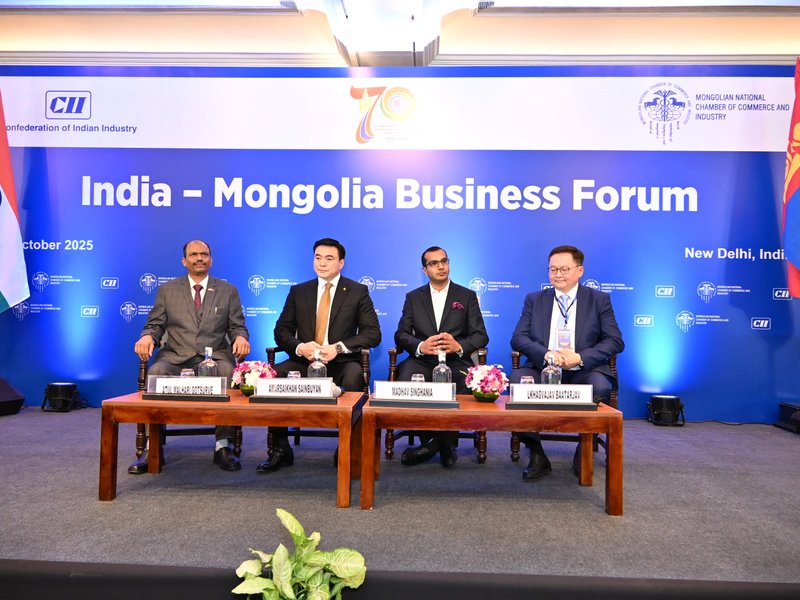
CONTEXT: India will launch a new program to train the border security force of Mongolia.
- Key agreements (10 MoUs) have been signed, spanning immigration, minerals, energy, heritage, and humanitarian aid.
- India will send Buddha relics to Mongolia, emphasizing cultural and religious diplomacy.
India-Mongolia Relations:
| Aspect | Details |
| Strategic Partnership | Declared since 2015; comprehensive cooperation in defence, security, and economy. |
| Diplomatic Ties | Established in 1955; India first non-Eastern bloc country to do so. |
| Defence & Security | Joint exercises, capacity-building programs (e.g., border force training). |
| Cultural Linkage | Centuries-old Buddhist civilizational bonds; Nalanda-Gandan monastery links. |
| Key Agreements (2025) | 10 MoUs signed in 2025; areas include heritage, minerals, humanitarian aid, digital solutions. |
| International Forums | Close cooperation in multilateral forums, support for rules-based Indo-Pacific. |
| Geopolitical Significance | Mongolia as a ‘third neighbor’ policy, India’s engagement to counterbalance regional powers |
Key Announcements by PM Modi
- India to train Mongolia’s border security forces; launches new capacity-building initiative.
- Holy relics of Buddha’s disciples (Sariputra, Maudgalyayana) will be sent to Mongolia in 2026.
- Free e-visas for Mongolian citizens; boosts travel and cultural exchange.
- Defence attaché to be appointed at Indian Embassy in Mongolia for deeper security ties.
- India reaffirmed as steadfast partner in Mongolia’s growth, spanning energy and education.
Defence and Security Cooperation
- Regular India-Mongolia joint military exercises (e.g., Nomadic Elephant).
- Border force training to enhance Mongolia’s border management capacity.
- 2025 defence pacts elevate strategic partnership.
- Cybersecurity and infrastructure protection featured in bilateral talks.
Cultural and Religious Linkages (Buddhist Diplomacy)
- India and Mongolia share deep Buddhist heritage; Mongolia reveres India as Buddhism’s birthplace.
- Buddha relic diplomacy boosts spiritual and people-to-people bonds.
- India promotes yoga; 2025 MoUs include cultural exchanges.
- E-visas and Buddhist tourism encourage Mongolians to visit India’s holy sites.
Geopolitical Significance
- Mongolia’s location aids India’s outreach to Central Asia and balances regional powers.
- Aligns with India’s Act East Policy and Indo-Pacific strategy.
- Partnership on uranium, minerals and the Mongol Refinery project supports energy security.
- Elevates India’s democratic, developmental role in a region dominated by strong powers.
Dimensions and Significance of India-Mongolia Relations
Political: Both countries support each other in global forums; this elevates India’s diplomatic reach and strengthens political trust.
- Engagement boosts India’s presence in Central Asia and enhances Mongolia’s third neighbor policy.
Economic: India gains access to Mongolia’s minerals; this diversification reduces Mongolia’s overdependence on China.
- Indian investment in oil refineries and IT builds stronger economic connectivity and fosters development projects.
Defence: Joint military exercises and new training programs enhance border security and strategic stability.
- Appointment of a defence attaché marks deeper cooperation in security matters.
Cultural: Shared Buddhist heritage enriches soft power and builds goodwill across generations.
- India supports restoration of monasteries and cultural education programs in Mongolia.
Geopolitical: Partnership balances influence of dominant neighbors (Russia, China) and reinforces multi-alignment.
- Advancing rules-based Indo-Pacific vision aligns both with global democratic norms.
Developmental: India’s aid supports infrastructure, capacity-building and education, accelerating Mongolia’s development journey.
- Collaboration on digital and energy projects lifts Mongolia’s long-term growth prospects.
Additional information
Facts about Mongolia
Geographical Overview
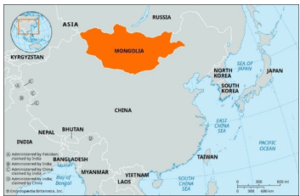
- Situated in north-central Asia; landlocked between Russia (north) and China (south).
- Covers around 1.56 million sq km; among the largest landlocked countries globally.
- Upland steppes dominate 80%; Gobi desert in south, mountains in north and west.
- Experiences extreme continental climate with harsh winters and hot summers; precipitation is low.
- Bordered by Russia and China; longest boundary with China (4,630 km).
Physical Features
- Western region hosts the Altai Mountains (highest: Khüiten Peak, 4,374 m).
- Gobi Desert covers southern Mongolia, characterized by arid, sandy and rocky terrain.
- Vast steppes support nomadic life and herding traditions, making up much of the landscape.
- Major rivers include Selenga and Orkhon; largest lake is Khövsgöl, holding 2% of world’s freshwater.
- Forests are mainly in the north with taiga ecosystems, covering about 11% of land.
2. Reformed multilateralism
General Studies Paper II (GS-II): International Relations — Multilateralism, UN reforms, India’s peacekeeping role.
GS Paper III: Internal Security — Technology in security forces, global peacekeeping cooperation.
Context: India’s Defence Minister called for reformed multilateralism and stronger global rules at the UN Troop Contributing Countries (UNTCC) Chiefs’ Conclave, reflecting India’s global leadership in peacekeeping
What is Multilateralism?
- Multilateralism means countries work together through organizations (UN) to address shared challenges and uphold global rules.
Reformed multilateralism -calls for updating these structures to represent new realities, include developing nations, fight modern threats (terrorism, pandemics, disinformation), and prioritize human welfare.
Rajnath Singh’s Key Messages and Their Meaning
- India stands for rules-based order; warns against nations violating or imposing self-serving norms.
- Urges UN reforms for inclusiveness and relevance in handling new threats.
- Peacekeeping missions need adaptation and innovation, not just bravery, to succeed in volatile crises.
- Advanced nations should contribute more—troops, logistics, and technology.
- India aims for ethical global leadership (‘Vishwa Guru’), rooted in peace and non-violence.
India’s 4C Formula for UN Peacekeeping
| 4C Element | Meaning | Relevance |
| Consultation | Dialogue with all stakeholders | Incorporates field realities |
| Cooperation | Joint efforts among countries and agencies | Builds unity and strength |
| Coordination | Aligning actions, strategies, and resources | Boosts mission effectiveness |
| Capacity Building | Training, tech sharing, resource development | Sustains long-term missions |
Use of Technology in Peacekeeping
- Innovations (UAVs, secure comms, surveillance) make missions safer and adaptable.
- Advanced and cost-effective tech from India enhances preparedness and operational efficiency.
- Technology integration improves training and real-world mission simulations.
India’s Role in UN Peacekeeping
| Aspect | Details |
| Military Contributions | 2,90,000+ personnel deployed in 50+ missions globally |
| Training & Capacity Build | CUNPK in Delhi trains global peacekeepers |
| Women Peacekeepers | Led all-women unit in Liberia and won UN gender awards |
| Medical Efforts | Treated thousands in UN field hospitals |
| Tech Support | Supplies indigenous UAVs, mobility, and communication tech |
| Commitment | Advocates troops, expertise, and reforms for accountable missions |
Why India Demands Reformed Multilateralism
| Problem with Current System | India’s Stand & Solutions |
| Outdated structures, limited inclusion | Advocates representative, inclusive reforms |
| Unilateral actions by powerful nations | Pushes for fair, rules-based global order |
| Inability to address complex crises | Promotes innovation, tech, capacity-building |
| Marginalization of developing nations | Supports voice and role for TCCs, Global South |
UN Chiefs Conclave (UNTCC)
- UNTCC Chiefs’ Conclave is a forum for military leaders from troop-contributing countries to enhance peacekeeping.
- Discusses operational challenges, threats, and tech integration in missions.
- Promotes collaboration, inclusive decision-making, and training.
- 2025 event, hosted by India, had representatives from 32 countries at New Delhi’s Manekshaw Centre.
3. Toyoake’s Screen Time Ordinance
GS Paper III – Science & Technology:
Context: A city guideline introduced in October 2025 in Toyoake, near Nagoya, Japan, advising residents to limit recreational screen use (phones, laptops, tablets, video games) to two hours per day.
- The ordinance is advisory and has no fines or penalties for exceeding the time limit.
Aim
- Promotes mental well-being and reduces digital isolation caused by excessive screen time.
- Encourages face-to-face social interaction and restores community engagement.
- Seeks to improve sleep and family communication, especially among children.
Key Features
- Applies to both adults and children, but excludes work and study screen time.
- Recommends children under 12 stop screen use after 9 p.m. and those under 18 by 10 p.m..
- Approved by a 12–7 city council vote after public debate and consultation.
- Voluntary and non-punitive, relying on self-regulation and community pressure rather than enforcement.
- City council pledges regular reviews based on feedback to assess and adjust the policy as needed.
Community Reaction
- Ordinance has sparked both support and criticism, with some residents concerned about interference in family matters, while others view it as a prompt for positive change.
- City encourages family discussions to set healthy rules on digital device use.
4. Australia -India clean energy partnership
GS Paper II – International Relations
Context: Australia’s Climate Minister’s India visit highlights the Australia–India clean energy partnership and urgent need for resilient renewable energy supply chains.
Clean Energy Push in Both Countries
- India and Australia are accelerating clean energy transitions to meet climate targets and boost energy security.
- India is rapidly scaling solar and green hydrogen for economic growth; Australia uses resource exports and targets domestic net zero.
Country Targets
| Country | 2030 Targets | 2050 Targets |
| India | 500 GW non-fossil capacity (280 GW solar); 5 MT green hydrogen; 45% emissions reduction from 2005 levels | Net zero; full renewables; energy storage |
| Australia | 43% emissions reduction from 2005; 63 GW solar, 50 GW wind; 82% RE in mix | Net zero; 100% RE; critical minerals export |
The Challenges: Energy Transition & Supply Chain Dependence
- China controls >90% rare earth refining, 80% solar module supply; creates market risks and delays for India and Australia.
- Disruptions due to pandemics and trade restrictions highlight need for diversified supply and processing.
- India faces land and regulatory barriers, Australia has mining/environmental hurdles and limited refining.
India-Australia Renewable Energy Partnership (REP)
- Launched November 2024 by PM Modi and PM Albanese at a virtual summit.
- Goals: Mutual investments, supply chain diversification, energy security, net-zero support; focus on private sector, tech, and skills.
Eight Key Areas of Cooperation
- Solar PV tech and supply chains
- Green hydrogen production
- Energy storage/battery solutions
- Critical mineral exploration/processing
- Training/skills (solar academy)
- Two-way investment
- Research & innovation
- Policy alignment for sustainability
Track 1.5 Dialogue
- Forum links government, industry, academia, investors.
- Unlocks research, investment, and tech commercialization; reports via joint working groups.
Climate Vulnerability in Indo-Pacific
- Region faces sea level rise, storms, heatwaves, desertification—threatens 60% global population with displacement.
- Acts as threat multiplier: resource conflict, food insecurity, economic damage.
- Urgent resilience needed for 1.5°C climate goals.
Comparative Strengths: Partnership Basis
- Australia: rich critical minerals, stable regulation, advanced R&D, hydrogen leadership.
- India: large manufacturing, skilled workforce, huge renewables market, investment in green hydrogen.
- Partnership leverages supply and manufacturing scale for mutual benefit; Australia provides minerals to India, India supplies modules.
Strategic Significance
- Reduces China dependence, builds resilient supply chains, fortifies regional energy security.
- Strengthens Indo-Pacific alliances (Quad), global climate leadership.
Recent Developments & Diplomatic Engagements
- Oct 2025: Ministerial REP meeting (Bowen’s India visit), major collaboration focus.
- 2025: Annual Oration, $3.8 million joint research, critical minerals pact in July, trade roadmap in April.
Challenges Ahead
| Challenge | Explanation |
| Supply Chain Vulnerabilities | Heavy China reliance; diversification needed for security |
| Regulatory/Environmental | Strict laws and land/ore issues delay projects |
| Financial/Investment | Large capital needs; subsidies/incentives to attract private sector |
| Tech/Workforce Gaps | Need skills transfer, innovation, logistics for remote resources |
5. How does Gaganyaan’s vital crew escape system work?
GS paper -III –: Science and Technology.
Context: The Gaganyaan Mission, India’s first human spaceflight program, aims to send astronauts into low Earth orbit and ensure their safe return.
Key Points:
- To prioritize crew safety, ISRO developed a Crew Escape System (CES) that can rapidly detach the crew module from the rocket in case of an emergency during launch.
Crew Escape System
- To ensure the Astronauts’ safety, various In-flight Abort Demonstrations of Crew Escape System (CES) have been included.
- Types of Crew Escape Systems
The CES is classified into two main types based on how it extracts the crew module:
- Puller Type: Mechanism: The CES pulls the crew module away from the launch vehicle.
- Example: Used in the Gaganyaan mission.
- Pusher Type: Mechanism: The crew module is pushed away using compact, high-thrust liquid-fuel engines.
- Example: Used in vehicles like SpaceX’s Falcon 9.
Flight Test Vehicle Abort Mission-1 (TV-D1):
- It is the first of the two abort missions to test the safety mechanisms and demonstrates the performance of the Crew Escape System of the Gaganyaan Mission.
- This has also confirmed the functioning of systems for separating the crew module from the rocket in case of a mid-flight emergency (abort and escape mission of the astronauts).
- Hence, it will allow the Gaganyaan crew to leave the spacecraft in an emergency.
Life Support System
- Life Support System to provide an earth like environment to crew in space, crew emergency escape provision and evolving crew management aspects for training, recovery and rehabilitation of crew members.
Significance of CES in the Gaganyaan Programme
- Safety cornerstone: It forms the backbone of ISRO’s human safety framework.
- Boosts confidence: Successful CES tests pave the way for India’s first crewed spaceflight.
- Technological leap: Demonstrates India’s capability in human-rated space systems.
- Foundation for future missions: Critical for upcoming long-duration and lunar missions.
The Crew Escape System (CES) ensures astronaut safety in the Gaganyaan mission and highlights ISRO’s progress in human spaceflight and future deep-space ventures.
6. Union Minister for Commerce and Industry, Shri Piyush Goyal launches LEAPS 2025 to benchmark logistics excellence in India
CONTEXT: LEAPS 2025 launched by Union Minister for Commerce and Industry at Bharat Mandapam, marking 4 years of PM GatiShakti.
What is LEAPS 2025?
- National benchmarking initiative to recognize excellence, innovation, and leadership in India’s logistics sector.
- Developed by DPIIT under Ministry of Commerce & Industry.
- Aims to align logistics performance with National Logistics Policy (2022) and PM GatiShakti vision.
Aim: To benchmark logistics excellence, strengthen global competitiveness, and celebrate sectoral innovation.
- Promotes integrated, sustainable, and resilient logistics infrastructure.
Criteria and Categories
- Applications open under 13 categories: air, rail, road, maritime, multimodal operators, MSMEs, startups, warehousing, institutions, and e-commerce.
- Encourages diversity and innovation across all logistics players.
Key Features
- Emphasizes ESG compliance, sustainability, and green logistics practices.
- Fosters collaboration between government, industry, and academia for better efficiency and transparency.
- National recognition platform for outstanding logistics performance and technology adoption.
- Supports Make in India, Atmanirbhar Bharat, and Viksit Bharat 2047 goals.
- Registrations open on Rashtriya Puraskar Portal till Nov 15, 2025.
Strategic Importance
- Strengthens India’s logistics infrastructure in support of manufacturing, exports, and economic growth.
- Champions modern, future-ready logistics for India’s development vision and global role.
7. Space-tech firm GalaxEye to launch world’s first multi-sensor EO satellite in 2026
GS paper -III –: Science and Technology.
Context: Bengaluru-based space-tech startup GalaxEye Space announced the launch of Mission Drishti, the world’s first multi-sensor Earth Observation (EO) satellite, scheduled for Q1 2026.
What is Mission Drishti?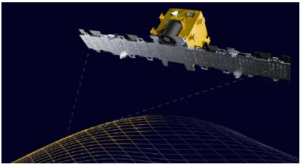
- India’s first privately developed 160 kg multi-sensor EO satellite integrating Synthetic Aperture Radar (SAR) and optical imaging on a single platform.
- Developed by GalaxEye Space, founded by IIT Madras alumni in Bengaluru.
- Capable of 24×7, all-weather Earth monitoring with high spatial precision.
Objectives
- Deliver high-resolution (1.5m) fused imagery combining radar and optical data.
- Enable advanced geospatial intelligence for defense, disaster management, climate monitoring, and infrastructure development.
- Provide AI-based analytics for real-time insights into environmental and structural conditions.
Key Features
- Multi-sensor integration: Uses GalaxEye’s proprietary SyncFused Opto-SAR technology.
- High-resolution imaging: 1.5m imagery clears limitations of cloud cover or darkness.
- Large-scale payload: India’s largest privately built satellite (160 kg).
- AI-ready data: Offers processed, analytics-friendly geospatial data.
- Constellation plan: 8–10 satellites to be launched globally by 2029 for real-time imaging coverage.
Applications
- Border and maritime surveillance.
- Disaster response and infrastructure analytics.
- Agricultural productivity forecasting.
- Utility, insurance, and financial risk modeling.
- Environmental and urban planning studies.
Significance
- Strengthens India’s Atmanirbhar Bharat vision and private space industry leadership.
- Places India at the forefront of global EO satellite technology innovation.
- Enhances national security, disaster resilience, and climate research through continuous satellite coverage.
- Reduces reliance on foreign Earth observation data through indigenous capability.
Organization Details
| Parameter | Details |
| Developer | GalaxEye Space, Bengaluru |
| Founded | 2021 (by IIT Madras alumni) |
| Technology | SyncFused Opto-SAR |
| Imaging Resolution | 1.5 metres |
| Launch Year | 2026 (Q1) |
| Constellation Goal | 8–10 satellites by 2029 |
| Support Tested By | ISRO’s U. R. Rao Satellite Centre |
Broader Impact
- Opens new opportunities in India’s commercial space ecosystem.
- Boosts private participation in Earth observation, complementing ISRO’s missions.
- Strengthens India’s global footprint in space-based intelligence and climate tech.
8. Unified Markets Interface (UMI)
GS Paper III (Mains): Indian Economy — Financial Markets, Banking, Digital Currency, Blockchain Technology, Fintech Innovation.
Context: RBI Governor has unveiled the Unified Markets Interface (UMI), a next-generation financial market infrastructure to tokenize financial assets, enhancing market efficiency and transparency.
What is Unified Markets Interface (UMI)?
- UMI is RBI’s innovative digital platform for financial markets, designed to enable blockchain-based asset transactions and settlements via wholesale Central Bank Digital Currency (CBDC).
- It integrates banks, investors, and financial intermediaries for seamless, single-window digital operations.
Key Features of UMI
- CBDC Settlement: High-value asset trades settled instantly and securely using wholesale CBDC.
- Asset Tokenization: Real-world assets (bonds, securities) are converted into digital tokens, allowing fractional ownership and global trade.
- Unified Infrastructure: Provides an interoperable digital ecosystem among financial market participants.
- Smart Contracts: Automates compliance, clearing, and settlements via programmable contracts.
- Transparency: Blockchain records offer immutable transaction history and traceability.
Back2Basics: Asset Tokenization
- Definition: Turning real-world assets (bonds, real estate) into secure, tradeable digital tokens using blockchain.
- Mechanism: Tokens represent fractional ownership, enabling small investors to access high-value assets.
- Technology Base: Relies on blockchain and smart contracts for transparent, automated transactions.
- RBI’s Approach: All settlement under UMI occurs via wholesale CBDC for real-time, tamper-proof, and traceable outcomes.