
1. 2025 Noble prize in physics
Gs paper III- Science and Technology: “Achievements of Indians in Science & Technology;
Context :2025 Nobel Prize in Physics announced on October 7, 2025, focuses on quantum mechanics’ practical power.
- Recognizes pivotal breakthroughs in bringing quantum effects to real devices.
- Reflects surging investments in global quantum tech—industry exceeds $30 billion.
- Relevant as India, US, EU, China, expand quantum research and ecosystems like India’s National Quantum Mission.
Who Won and Why?
- Winners: John Clarke, Michel H. Devoret, John M. Martinis.
- Awarded for 1980s experiments showing quantum mechanics applies to large electrical circuits.
- Proved quantum tunneling and energy quantization in superconductors at macroscopic scale.
- Enabled practical quantum tech, strengthening trust in foundational quantum laws.
What is Quantum Tunnelling?
- Phenomenon: Particles cross barriers even without enough classical energy.
- Quantum behavior: Particles as waves have a chance to “phase through” obstacles.
- Classical physics: Movement stops at barriers; quantum physics allows “leakage”.
- Analogy: Like a prisoner probabilistically passing through a prison wall without breaking it.
What Did the Nobel Trio Do?
Their 1980s experiments at UC Berkeley and Yale used superconducting circuits to observe and control quantum tunneling at observable scales, confirming it wasn’t noise but a genuine quantum effect. They isolated effects from stray microwave radiation, revealing discrete energy levels and collective electron behavior as a single quantum variable.
Key Components
Superconductor:
- What It Is: Materials (e.g., niobium) that conduct electricity with zero resistance at near-absolute-zero temperatures, allowing “supercurrents” via paired electrons (Cooper pairs).
- Why Important Here: Enables coherent quantum states by eliminating energy loss; without it, tunneling would decohere instantly due to thermal noise.
- Role in Setup: Forms the circuit backbone, paired with Josephson junctions to trap and release currents via tunneling.
- Josephson Junction: Thin insulating barrier (e.g., aluminum oxide) between two superconductors, acting as a tunable “quantum switch.”
Allows precise voltage/current control to trigger tunneling, producing measurable effects like oscillating supercurrents.
- Cryogenic Isolation: Ultra-low temperatures (~millikelvin) to suppress environmental interference, preserving fragile quantum coherence.
- Measurement Techniques: Used team microwave shielding and precision detectors to distinguish quantum signals from classical artifacts, confirming phase differences in trillions of electrons behaving as one.
Quoted Significance
- Nobel Committee: “Quantum mechanics continually offers surprises and is the base of new technologies”.
- Editorial: Laureates’ work enables applied quantum engineering and tech for global scientific prestige.
- Broader: Their foundational research now underpins global tech leadership and innovation.
2. Sri Lanka is a natural barrier protecting south -eastern coast from ocean fury: study
GS-2 (Governance & International Relations): India’s cooperation with Sri Lanka on maritime security and climate resilience (e.g., SAARC initiatives).
GS-1 (Geography): Physical geography of the Indian Ocean region and its impact on coastal states, aligning with “Salient features of world’s physical geography.”
CONTEXT: May 2025 research paper by INCOIS scientists, published in the Journal of Earth System Science, highlights Sri Lanka’s role as a natural shield against destructive ocean swells, gaining renewed attention amid rising climate concerns.
Basic Understanding
- Sri Lanka blocks long-period swell waves from the Southern Ocean, protecting India’s southeast coast.
- Island’s mass diverts energy, reducing flooding and erosion risks along Tamil Nadu and Andhra Pradesh.
Study Details
- INCOIS modelled how Sri Lanka’s land intercepts, dissipates, and reroutes swell energy.
- Found Sri Lanka’s barrier effect overrides bathymetry and other factors.
What are Swell Waves?
- Long-period waves (10–25s), formed by faraway storms, travel thousands of km.
- Carry major energy, cause erosion, flooding, and damage when hitting shore.
- 2018–19 Kerala floods, 2004 tsunami show their destructive potential.
Sri Lanka’s Protection Mechanism
- Landmass refracts and diffracts swells, dissipating 96%+ energy before east coast arrival.
- Shields region from Kollam up to mid-Andhra Pradesh from severe swell impacts.
- Without Sri Lanka, simulations show major erosion and flooding eastward.
How INCOIS Proved the Shield
- Buoys recorded high swell energy on west coast, minimal on east coast (<4%).
- WAVEWATCH III model simulations proved Sri Lanka’s >96% attenuation role.
Findings
- Over 96% of swells blocked or redirected; east coasts remain “shadow zones”.
- West coast, especially Kerala, faces remaining impacts.
- Removing Sri Lanka in models exposes new hazard-prone zones northward.
Why It Matters?
Climate Change & Sea Level
- Global warming raises Southern Ocean storms; Sri Lanka’s buffer limits destructive swell effects.
- Future swells may intensify; natural shields critical for low-lying Indian coasts.
Coastal Hazard Management
- Informs improved tsunami/swell warnings and targeted infrastructure planning.
- Geographic features must be integrated into India’s hazard maps.
Blue Economy & Coastal Resilience
- Safeguards east coast ports, fisheries, and tourism, supporting $100+ billion sector.
- Encourages investment in “nature-based solutions” and aligns with CRZ policies.
3. Why Indian Capital Needs to Invest Domestically?
GS paper III- Indian Economy
Context: India confronts a complex policy challenge: harnessing the gains of global trade while mitigating unemployment, wage stagnation, and growing inequality. Achieving sustainable growth demands a reorientation of Indian capitalism to prioritize inclusivity, mass welfare, and public interest alongside private profits.
Evolution of Indian Capitalism
- Protected Growth Era: Indian businesses flourished under state protection before 1991, using tariffs and central planning to secure high profits in a closed domestic market.
- Global Expansion Phase: Economic liberalization enabled Indian firms to acquire foreign assets and forge international connections, resulting in the emergence of a few dominant conglomerates.
- Shift to Public-Interest Capitalism: As global trade slows and protectionism rises, these conglomerates must redefine themselves as partners in nation-building rather than mere beneficiaries of state support.
Risks from Global Trade Disruptions
- Shift in Demand Dynamics: Economic history shows that expanding wage-labour classes, productivity growth, and rising incomes drive demand.
- Neglect of Aggregate Demand: Many policies assume supply creates its own demand, underestimating the necessity of boosting domestic consumption for sustained growth.
- External Vulnerabilities: Recent trade disruptions, tariff wars, and supply-chain issues have underscored the dangers of relying heavily on exports.
The Role of Domestic Capital
Reviving Private Investment
- Investment Trends: Despite robust profits, private sector investment in India has stagnated. The government, meanwhile, ramped up public spending from ₹3.4 lakh crore in FY20 to ₹10.2 lakh crore in FY25, focusing on infrastructure.
- Outward FDI Outpaces Domestic Capex: Indian firms have prioritized outward foreign direct investment over domestic expansion, with outward FDI rising 12.6% annually (2019–2024).
- Strategic Redirection: A policy shift is needed to channel more private investment domestically, strengthening internal capacity and industrial diversity.
Ensuring Moderately Growing Wages
- Profit–Wage Divide: The Economic Survey 2024–25 notes record corporate profits but stagnant real wages, amplifying inequality.
- Falling Real Incomes: Real wage growth is projected to dip slightly, undermining mass purchasing power.
- Labour Market Precarity: Trends toward contractualization and reduced collective bargaining power have worsened income disparities.
- Wage-Led Growth Imperative: Balanced, wage-linked growth is essential for expanding and sustaining domestic demand.
Expanding R&D and Innovation
- India’s R&D Shortfall: At just 0.64% of GDP, India’s R&D intensity lags behind global leaders; private sector contribution remains limited to 36% compared to over 70% in advanced countries.
- Concentration in Few Sectors: Innovation is clustered in pharma, IT, defence, and biotech, restricting overall gains.
- Long-Term Competitiveness: Indian industry must elevate basic and applied research spending to compete globally and support long-term economic robustness.
Aligning Private Capital with Public Purpose
- Policy–Business Coordination: Escalating global economic uncertainties require tight coordination between the state and business for resilient, inclusive growth.
- Government Initiatives: Fiscal support, regulatory streamlining, infrastructure upgrades, and credit facilitation form a supportive environment that must be matched by private sector engagement.
- Corporate Reorientation:
- Treat economic stability as a shared national objective.
- Reinvest profits into domestic projects to boost employment and demand.
- Foster wage-led growth for equitable prosperity.
- Make R&D and innovation central to industrial strategy.
Conclusion
A new partnership model — with the state providing policy frameworks and domestic capital driving innovation-led, equitable growth — is crucial for India’s economic resilience and social legitimacy as globalization wanes.
4. A path to progress that is paved with gold
GS Paper III : Indian Economy
Why in the News: India has around 25,000 tonnes of idle gold—worth $2.4 trillion—while high-cost foreign borrowing continues; a trust-based, digital Gold Monetization Scheme (GMS) can unlock this wealth for domestic investment, cut imports, and drive self-reliant growth, echoing India’s success in food and IT sectors
- Highlights gold as a financial self-reliance tool under Atmanirbhar Bharat.
Atmanirbhar Bharat: Past Context
Atmanirbhar Bharat, started in 2020, focuses on using local strengths to handle global challenges, learning from past recoveries.
Past Problems
- 1991 Money Crisis: Low forex reserves ($1 billion) led to pledging gold for loans.
- COVID-19 (2020): Supply issues, 6.6% GDP drop, and job losses hit hard.
- Trade Issues (2010s): Protectionism (e.g., US-China trade war) exposed weaknesses in food and tech imports.
India’s Self-Reliance Moves
- 1991 Changes: Opened industries, attracted FDI, and boosted exports for manufacturing.
- Green Revolution (1960s–70s): Used local seeds and tech to ensure food supply.
- Digital India (2010s–20s): Built Aadhaar, UPI, and IT exports to lead globally.
Results
| Past Problem | Self-Reliance Move | Key Results |
| 1991 Money Crisis | Economic reforms; FDI boost | GDP up from 1% to 8%+; forex >$600 billion; $1 trillion+ FDI. |
| COVID-19 | ₹20 lakh crore aid; local vaccines | 8.2% growth in 2021–22; MSME support; less import reliance. |
| Trade Weaknesses (Food/IT) | Green Revolution; Digital exports | Food surplus; IT adds 8% to GDP, $250 billion exports. |
New Challenges: Funding Growth
Global Situation
- Trade Shifts: Post-COVID supply changes and wars (e.g., Russia-Ukraine) raise loan rates and delay global funds.
- India’s Needs: FDI over $1 trillion since 2000, but 2024 saw 27% drop in external funds; needs $1.5–2 trillion yearly for growth.
Effects
- High Loan Costs: Borrowing at home adds 4.5–6.5% to rates, limiting welfare funds.
- Trade Gaps: Gold imports hurt deficits (a third in 2010–13); unused gold adds pressure.
- Missed Chance: Idle gold (55% of FY26 credit) could fund projects but doesn’t.
Why Gold? India’s Hidden Resource
Gold Reserves
- Amount: Households hold 25,000 tonnes, worth $2.4 trillion (over half of FY26 credit).
- Cultural Value: Gold is a symbol of safety, with 800–900 tonnes demanded yearly (70% jewelry).
Problem: Unused vs. Debt: Gold sits idle while India pays 7–10% on $600 billion foreign loans.
Fix: Use Gold: GMS can turn idle gold into loans, reducing imports (87% from abroad) and creating a local “gold bank.”
What is the Gold Monetisation Scheme (GMS)?
How GMS Works
Types of Gold Deposits Under GMS
Why GMS important for India?
|
Revitalised Gold Monetisation Scheme (GMS) – New Plan
The 2025 op-ed suggests a simpler GMS 2.0 to fix low use (due to trust issues) with better tech and setup.
Key Pillars
1) Infrastructure
- Purity Checks: Add BIS centers from 400+ to reach smaller cities.
- Safe Storage: Build public-private vaults to cut costs.
2) Logistics
- Easy Collection: Partner with India Post for rural pickups and returns.
- Export Links: Send gold directly to exporters, reducing 87% foreign need.
3) Digitization
- Simple Deposits: Use UPI and blockchain for tracking and trust.
- Clear Gains: Show interest live, making every home a “gold account.”
Economic Benefits
- Lower Costs: Reduces loan rates by 4.5–6.5%, aiding $1 trillion infra plans.
- Jobs: Boosts jewellery sector (5 million jobs) and draws FDI.
- Wealth Use: Unlocks $2.4 trillion for local loans, beating foreign funds.
The Bigger Goal – Financial Independence
- Full Self-Reliance: Moves from food/IT to money security with gold.
- World Role: Makes India a gold recycling leader, aiding trade deals.
- Future Strength: Shields growth from global issues, promoting inclusive progress.
Conclusion
Revitalizing the Gold Monetisation Scheme can transform India’s vast idle gold into a powerhouse for infrastructure finance, economic stability, and self-reliance, reducing costly imports and positioning India for inclusive growth on its own terms.
5. India-UK ties: much to build on
GS- paper II, – International Relations-: India – UK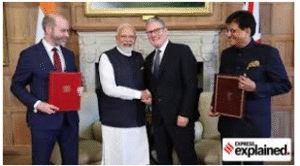 Cooperation
Context: The visit of British PM Keir Starmer to India underscores the strengthening India–UK partnership, rooted in mutual respect and cooperation.
Key Highlights
- Key agreements like the Free Trade Agreement (FTA), the Comprehensive Economic and trade agreement (CETA), and Defenses Industrial Roadmap under the Vision 2035 framework aim to boost trade, investment, and strategic collaboration, reflecting stable, long-term, and bipartisan support for deeper ties.
Key Pillars of India-UK Vision 2035: The India-UK Vision 2035 encompasses several key pillars:
- Growth and Jobs: Fostering economic growth and creating employment opportunities in both countries.
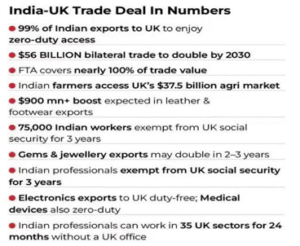
- Education and Skills Partnership: Nurturing the next generation of global talent through collaboration in education and skills development.
- Developing Cutting-Edge Technology: Promoting innovation and technological advancements through joint research and development initiatives.
- Strengthening Defence and Security Cooperation: Enhancing defense and security cooperation to address shared challenges.
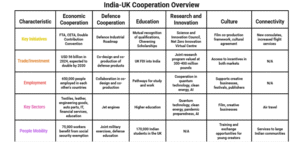
India-UK ties are strengthened by Vision 2035, fostering trade, defence, education, innovation, and culture. This durable partnership offers mutual benefits and strategic growth amid global uncertainties.
6. PM-SETU Scheme
CONTEXT: (Pradhan Mantri Skilling and Employability Transformation through Upgraded ITIs (PM-SETU) Scheme was launched to modernize India’s ITIs, making them industry-ready centers of excellence.
Scheme Overview
- Centrally Sponsored by the Ministry of Skill Development & Entrepreneurship (MSDE).
- Aims to upgrade 1,000 Government ITIs to meet global skill demands.
- Supported by World Bank, ADB, Centre, States, and Industry.
Implementation Structure
- Hub-and-Spoke Model:
- 200 hub ITIs act as Centres of Excellence.
- 800 spoke ITIs expand outreach and training.
Objectives and Targets
- Equip 20 lakh youth with modern skills over five years.
- Focus on demand-driven, industry-aligned curriculum; options for diplomas, short modules, executive training.
Key Features
- Industry Partnership: Managed by SPVs and Anchor Industry Partners for employment-focused training.
- Advanced Infrastructure: Hubs feature modern machinery, incubation centers, innovation labs, and placement services.
- NCOEs: Five National Skill Training Institutes upgraded to international standards—for example, in Bhubaneswar, Chennai, Hyderabad, Kanpur, and Ludhiana.
- Pilot Launch: Patna and Darbhanga (Bihar) are first upgraded hubs.
Youth Empowerment
- Skilling linked with innovation, startups, MSMEs, and self-employment.
- Strengthens India’s human-capital and supports industry needs.
7. Paramparagat Krishi Vikas Yojana (PKVY) 10 years
CONTEXT: PKVY (2015–2025) grew from a pilot to a national program for organic farming’s training, certification, and market access.
About Paramparagat Krishi Vikas Yojana (PKVY)
- Launched: 2015, Ministry of Agriculture, under NMSA to promote organic, chemical-free farming.
- Cluster Model: Farmers form 20+ ha groups for collective adoption, resource-sharing, and easier certification.
- Eligibility: For farmers/institutions up to 2 ha; routed via Regional Councils and DBT.
- Financial Support: ₹31,500/ha over 3 years for inputs, training, certification, marketing.
Certification Systems
- NPOP: Third-party for exports/formal markets.
- PGS-India: Peer-reviewed certification for domestic trade.
- LAC: Large Area Certification (since 2020) speeds up organic certification in chemical-free areas.
Digital Integration
- Jaivik Kheti portal connects farmers, buyers, suppliers for transparent organic trade.
Achievements (as of January 2025)
- 15 lakh ha under organic farming, 52,289 clusters, 25.3 lakh farmers.
- ₹2,265.86 crore released; Sikkim fully organic, LAC expansion in Lakshadweep, Dantewada, Nicobar, Ladakh.
- 9,268 FPOs, robust digital presence (6.23 lakh farmers, 19,016 groups on Jaivik Kheti portal).
Ecological Gains
- Reduced chemical use, better soil health, strengthened local inputs.
Challenges
- Yield Dip: Small farmers face losses during transition.
- Certification Costs: Still high, including for residue checks.
- Market Gaps: Uneven premium, weak buyer network.
- Cluster Success: Dependent on local leadership.
- Sustainability: Funding continuity and technical support often uncertain.
8. World’s Highest Motorable Road constructed at Mig La Pass in Ladakh
GS paper I: Geography- Geographical Features & Their Location
CONTEXT: The Border Roads Organisation (BRO) has accomplished a significant feat by constructing the world’s highest motorable road at Mig La Pass, at 19,400 feet in Ladakh.
Recent Development: Mig La Road Achievement
- The BRO set a new global record by building a motorable road at 19,400 feet above sea level at Mig La Pass, surpassing the earlier highest at Umling La (19,024 ft).
- This project strengthens India’s border infrastructure and marks a breakthrough in high-altitude engineering.
Project Himank: Backbone of Ladakh Roads
- Project Himank is a flagship BRO initiative launched in December 1985 to build and sustain critical roads in the extreme altitudes of Ladakh.
- The project is responsible for completed links such as Umling La Road, Chisumle–Demchok, Darbuk–Shyok–DBO, Kargil–Zanskar, and now Mig La Road.
- These roads face extreme conditions, like permafrost and sub-zero temperatures, yet remain functional year-round.
Strategic Importance and Connectivity
- Mig La Pass lies on the Changthang Plateau in eastern Ladakh, close to the Line of Actual Control (LAC) with China.
- The road forms a third critical route linking Hanle to Fukche, boosting strategic mobility along the Likaru–Mig La–Fukche corridor.
- It ensures efficient access to remote villages—Hanle, Rongo, Kuyul, and Demchok—and improves delivery of essential services and communications.
Geography and Historical Background
- Mig La is part of the high-altitude Changthang cold desert, characterized by thin air and regularly freezing temperatures, making construction technically demanding.
- The road partly traces ancient Indo-Tibetan trade paths, underlining Ladakh’s continued relevance in trans-Himalayan connectivity and Silk Route exchanges.
Broader Strategic and Social Impact
- The Mig La Road drastically enhances India’s preparedness for rapid troop deployment, logistics, and surveillance near sensitive border points.
- It also opens avenues for eco-tourism and uplifts trade by integrating previously isolated villages with the national road network.