
1. One time H-1B fee for new application :U.S
General Studies (GS) Paper II :Topic: International Relations
Context: The U.S. government sharply increased the H-1B visa fee to $100,000, from the previous range of $2,000–$5,000, with immediate effect.
What is H-1B Visa?
- H-1B is a non-immigrant U.S. visa for foreign skilled workers in specialty occupations.
- Initiated under the Immigration Act of 1990 to fill skill shortages in sectors like IT, engineering, and finance.
- Sponsored by a U.S. employer who files the worker’s petition.
- Allows temporary workforce mobility and acts as a pathway to permanent residency.
Specialty Occupation Criteria
- Job must require at least a bachelor’s degree in a specific field (e.g. engineering, CS, medicine).
- Duties should need specialized, complex knowledge above associate level.
- Employer must show degree need aligns with industry standards and job complexity.
- Wages must meet or exceed the area’s prevailing wage; ensures no adverse effect for U.S. workers.
Eligibility for H-1B Visa
- Worker: Bachelor’s degree (or equivalent experience), relevant field, no age bar.
- Employer: Must be a U.S. organization with a legitimate job offer and certified Labor Condition Application (LCA).
- LCA certifies fair pay and working conditions.
- Clean background, intent of temporary stay (though dual intent allowed).
H-1B Visa Features
Cap / Quota
- Annual cap is 85,000 (65,000 regular + 20,000 for U.S. master’s holders).
- No per-country cap; high Indian demand creates backlog.
- Random lottery held if applications exceed cap.
Cap Exemption: Universities, some non-profits, government research bodies are cap-exempt.
- Extensions during green card process are often cap-exempt.
Selection Process: Electronic registration in March; lottery if oversubscribed.
- Petition filing and visa interview follow if selected.
Validity
- Granted for 3 years, extendable to 6 years total.
- Extensions possible if green card application is pending.
- Family (H-4) can join; spouses may get work rights.
Multiple Applications
- Multiple employers can file for same worker; only one selected for cap count.
- Dual intent allowed: can seek green card during stay.
Green Card Pathway
- H-1B leads to U.S. permanent residency (EB-2/EB-3 route).
- Labor certification, I-140 and I-485 adjust status (can take 10+ years for Indians).
- AC21 rule allows job change after I-140 approval.
Job Change (Portability)
- H-1B holders can switch employers with new petition.
- Can work while change is pending if new petition is filed in time.
- Must remain in specialty occupation; substantial changes require USCIS notification.
Importance for India
- India is the largest beneficiary of H-1B visas.
- IT Sector Reliance: Indian firms like TCS, Infosys, and Wipro, plus U.S. giants, employ over 400,000 Indians on H-1B (71% of total approvals in FY2024).
- Remittances and Skills: Fuels $10+ billion in annual IT exports; enables reverse brain drain via knowledge transfer.
- Recent Fee Hike Implications: The $100,000 fee could deter new hires, disrupt family reunions, and strain U.S.-India relations. MEA’s response focuses on humanitarian aid, but critics urge stronger advocacy.
- Broader Context: Aligns with U.S. “America First” policies, echoing 2017-2021 restrictions; India must balance via trade talks (e.g., iCET initiative).
Conclusion: H-1B enables merit-driven skilled migration and strengthens Indo-U.S. ties. Recent changes (e.g. fee hike) highlight global labor vulnerabilities and require policy agility.
2. Uranium unrest
GS II (Governance, Federalism, Social Justice) and III (Environment, Resources), plus Ethics (decision-making dilemmas).
Context: A recent Union Environment Ministry OM (Sept 2025) exempts uranium mining from public consultation, reigniting protests in Meghalaya.
- Khasi tribal opposition dates back to the 1980s, rooted in health and ecological fears around Domiasiat and Wahkyn.
- The move followed failed talks with state leaders, prompting protests and wider debate.
- The issue highlights patterns of central dominance in tribal and mineral-rich regions, with echoes in Jharkhand operations.
- Media and civil society have labelled this shift a major lapse in India’s mining governance.
Key Issues
Erosion of Consent
- The OM circumvents FPIC, ignoring tribal and community rights under FRA and global standards.
- Officials proceeded despite local leaders’ firm refusals, evoking coerced participation.
- Villagers cite significant livelihood and health concerns, drawing on negative precedents from Jharkhand.
Use of Office Memoranda (OMs)
- OMs act as administrative bypasses, erasing checks under the EIA and MMDR Act.
- Past court verdicts (e.g. Niyamgiri) question such executive shortcuts.
- Exemptions apply only to uranium and strategic minerals, causing resentment over selective rulemaking.
Tribal Rights
- Centre’s action challenges Sixth Schedule protections ensuring tribals’ autonomy in Meghalaya.
- Khasi groups warn this neglects indigenous self-governance and revives historic distrust.
- The precedent threatens statutory protections for other scheduled and tribal areas.
Environmental Concerns
- Uranium extraction poses high risks of contamination and landscape alteration.
- The OM removes key environmental clearance checks, risking fragile hill ecosystems.
- Past mining expansions in similar ecologically sensitive zones have faced major protests.
Democracy and Governance
- The directive curtails Centre-State and community participation, raising federalism concerns.
- Central authority is perceived as overriding democratic forums and procedural fairness.
- Public trust erodes as resource policies ignore grassroots voices.
Way Forward
- Immediate withdrawal of the OM and reinstatement of public hearings is advised.
- Tripartite approval boards featuring locals, scientific experts, and policymakers should vet mining projects.
- Stronger judicial and legislative oversight is urged to uphold FRA, PESA, and EIA norms in tribal zones.
- Technical and energy diversification should reduce over-reliance on uranium mining.
- Structured diplomatic engagement with communities is essential to restore faith and federal balance.
3.Mohanlal to receive Dadasaheb Phalke Award
(General Studies Paper I) –Art & Culture: National film awards and honours.
Context: Mohanlal has been selected for the Dadasaheb Phalke Award 2023, announced by the Ministry of Information and Broadcasting on September 21, 2025.
- President Murmu will present the award at the 71st National Film Awards ceremony on September 23, 2025, New Delhi.
Background
- The Dadasaheb Phalke Award was instituted in 1969 to honor the birth centenary of Dhundiraj Govind Phalke, the pioneer of Indian cinema.
- Phalke’s groundbreaking film “Raja Harishchandra” (1913) set the foundation for India’s film industry under colonial rule.
- Award is managed by the Directorate of Film Festivals under the Ministry, annually presented for lifetime achievement at the National Film Awards.
What is Dadasaheb Phalke Award?
- It is India’s highest lifetime honor for outstanding contribution to cinema, recognizing artists, technicians, and industry icons.
- Recipients are nominated by eminent film personalities and selected by a government-appointed committee.
- Official and distinct from privately organized festivals bearing the Phalke name.
- Lauded as the “Indian Oscar” for its historic prestige and national recognition.
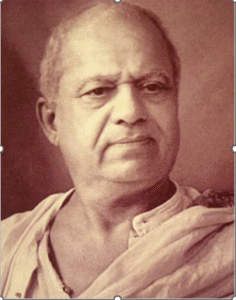
About Dadasaheb Phalke
- Born in 1870, Phalke is known as the “Father of Indian Cinema” for launching and shaping Indian filmmaking.
- He studied arts and photography, combining Western techniques and Indian stories.
- Phalke produced “Raja Harishchandra” (1913), the nation’s first full-length feature, and founded Phalke Films Company.
- He made over 95 films and 27 shorts, championed swadeshi cinema, and left a legacy of cultural nationalism.
Features of the Award
- Includes a Swarna Kamal (Golden Lotus) medallion, a shawl, and a cash prize of ₹10 lakh.
- Announced for lifetime achievement by a Ministry committee; presented by the President annually.
- Open to Indian citizens, rewarding lifetime impact, not just a single work.
- Typically one awardee per year since 1969, enhancing recipient’s national stature.
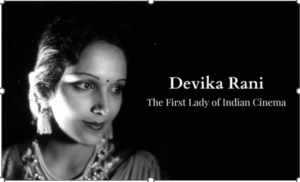
First Recipient: Devika Rani received the inaugural award in 1969 for pioneering Hindi film work and founding Bombay Talkies Studio.
Her recognition set a precedent for gender inclusivity and studio-era excellence.
Recent Award: 2023: Mohanlal, celebrated Malayalam actor-producer, selected for his prolific career of more than 400 films, Padma honors, and global influence.
- He is praised for inspiring generations and representing South Indian cinema’s growth on the national stage.
4. How different are supercomputers to normal computers?
General Studies (GS) Paper III :Topic: Science and Technology
Context: Supercomputers are in news due to advances in India’s supercomputing efforts and their applications in national fields like weather forecasting and scientific research.
What is a Supercomputer?
- A supercomputer is a highly advanced computing system built to complete trillions to quintillions of calculations per second, far beyond standard computers.
- These systems focus on complex, data-intensive tasks using immense processing power.
Key Features of Supercomputers
- Parallel Computing: Operate with thousands to millions of processors working at once, unlike ordinary computers with only a few processors.
- Main Applications: Used in climate prediction, nuclear simulations, astronomical studies, drug discovery, and artificial intelligence research.
- Performance Metric: Measured in FLOPs (floating-point operations per second); modern supercomputers have reached exaflop levels .
How Supercomputers Differ from Regular Computers
- Speed: While regular laptops process billions of FLOPs, supercomputers handle quintillions.
- Processor Count: PCs may have one or several processors; supercomputers use thousands to millions of cores.
- Structure: Comprised of interconnected nodes (processor plus memory units), all linked by high-speed networks.
- Storage: Capable of managing petabytes of data, compared to the gigabyte/terabyte capacities of regular devices.
- Cooling and Power: Require sophisticated cooling (such as water or immersion systems) and use as much electricity as small towns.
- Mode of Use: Supercomputers run scheduled, large-scale computational jobs for research, rather than routine interactive use like PCs.
India’s Supercomputing Journey
- Early Beginnings: The PARAM 8000, launched in 1991 by C-DAC, marked India’s entry into supercomputing after import bans from Western nations.
- National Supercomputing Mission (NSM): Launched in 2015 as a partnership between DST and the Ministry of Electronics and IT.
- Goal: Set up over 70 supercomputing systems nationwide, implemented by C-DAC and IISc.
- Major Indian Supercomputers (2025)
- AIRAWAT-PSAI (C-DAC, Pune): India’s fastest with 8.5 petaflops; global rank 136.
- PARAM Siddhi-AI: A leader in AI computation.
- Pratyush (IITM, Pune): Specializes in weather and climate modeling (3.76 PF).
- Mihir (NCMRWF, Noida): For medium-range weather forecasting (2.57 PF).
- PARAM Pravega (IISc, Bengaluru): For academic research, >3.3 PF.
Indigenous Innovation: PARAM Rudra (2024): Developed using Indian-made servers and software, reflecting self-sufficiency in high-performance computing.
- Applications in India: Used for monsoon and disaster forecasting, Himalayan research, defence, AI, drug design, and materials science.
- Current and Future Capacity
- India currently operates more than 34 supercomputers with a combined capacity of about 35 petaflops.
- Plans are in progress to build exascale supercomputers for even higher computational capabilities.
5. Kurmis in Jharkhand demanding ST status
GS Paper I (Society): Indian society’s structure and dynamics.
GS Paper II (Governance, Social Justice): Policies and interventions for vulnerable groups (Scheduled Tribes, OBCs, caste movements).
Context: Kurmi community held a rail blockade protest in Jharkhand on September 20, 2025, seeking ST status and Kurmali language recognition.
- The agitation disrupted travel on 46+ trains across Jharkhand, West Bengal, and Odisha, including key express routes.
- Protests defied Section 144 restrictions; most blockades lifted after Centre promised dialogue, with some stations still affected.
- Tribal organizations strongly opposed the ST demand, highlighting reservation politics and historic quota movements.
Who are the Kurmis?
- Kurmis are a farming caste in north and eastern India, well-known as land tillers and cultivators.
- Their roots trace to Aryan migrants, some subgroups claiming indigenous status particularly in the Chotanagpur region.
- The group is mostly Hindu, with internal endogamous divisions and prominent sub-castes, notably Kurmi Mahato.
- They combine agricultural livelihoods with growing urban presence, often as small landowners.
Geographical Distribution
- Largest numbers found in Bihar, eastern UP, Jharkhand, and West Bengal; smaller groups in Odisha, Assam, and MP.
- Urban migration has led to significant populations in Kolkata and Delhi; census estimates surpass 10 million nationwide.
History and Social Status
- Kurmis historically participated in freedom struggles and anti-zamindari peasant movements, notably the Chuar Rebellion and 1857 Revolt.
- Initially listed as tribal (Adivasi) in 1931, their status changed to OBC/general in 1950, sparking ongoing demands for ST restoration.
- The community has fostered strong internal networks, like the Kurmi Mahasabha, maintaining upward mobility in politics and society.
Language and Culture
- Kurmis speak Kurmali, an Indo-Aryan dialect with Dravidian influence, seeking official recognition under the Eighth Schedule of the Constitution.
- Their festivals include Karma and Sohrai; cultural life blends Hindu, folk, and animist traditions.
- Family structure emphasizes patrilineal joint households, with education and rural landholding central to their values.
Current Status in Reservation
- Currently recognized as OBCs in Bihar, UP, Jharkhand (14% quota), except some subgroups in Odisha with ST status.
- ST status demand is challenged by tribal groups wary of quota dilution; past commissions and Supreme Court cautioned on exceeding reservation caps.
- Protests cite loss of tribal benefits and historic classification to legitimize their claim.
Recent Protest
- The Rail Roko-Dahar Chheka campaign featured blockades at 50+ stations, with active participation by women leaders and senior citizens.
- Travel disruptions affected both passenger and express trains; economic fallout hit traders and daily commuters.
- Agitation lifted briefly after Centre assured discussions, but underlying unrest persists with opposition from tribal outfits fearing ST quota dilution.
- The issue is poised to influence upcoming elections and reservation policy debates.
6. Is it feasible to blend isobutanol and diesel?
General Studies Paper III (GS-III): Science and Technology – Developments and their Applications and Effects in Everyday Life
Context: Union Transport Minister announced a pilot study by ARAI on feasibility of isobutanol–diesel blending after ethanol–diesel blending failed.
- The pilot project is expected to take about 18 months to complete.
About Isobutanol
- Chemical Nature: A four-carbon alcohol (C₄H₁₀O), clear, flammable; commonly used as a solvent in paints, coatings, and chemical industries.
- Production: Manufactured via petrochemical processes or fermentation of sugarcane, molasses, and grains using engineered microbes.
Fuel Properties of Isobutanol
- Higher Energy Density: Closer to diesel, higher than ethanol, leading to better fuel efficiency.
- Lower Hygroscopicity: Absorbs less water compared to ethanol, thus reducing risk of rust/corrosion in engines and pipelines.
- Higher Flash Point: Safer for transport and storage due to lower volatility.
Isobutanol–Diesel Blending and Benefits
- Blending Compatibility: Blends well with diesel without extra chemicals, unlike ethanol.
- Adaptability: Can be produced in existing ethanol infrastructure with minor modifications.
- Agricultural Support: Increases demand for sugarcane by-products, supports farmers, and addresses sugar surplus.
- Energy Security: Reduces dependence on imported fuels, saving foreign exchange.
- Global First: Successful pilot could make India the first country to commercialize isobutanol-diesel blends.
Challenges and Risks
- Combustion Quality: Lower cetane number than diesel may result in poor combustion and reduced fuel quality.
- Engine Impact: Risk of ‘diesel knock’—uneven combustion, reduced power, and potential engine harm.
- Blending Limitations: Blending challenges exist; homogeneous mix may require addition of biodiesel.
- Cost Factors: Need for cetane-boosting additives raises overall production costs.
- Recommended Blend Limit: Blending above 10% can harm engine; experts suggest ≤10%.
- Market and Policy Issues: Surplus sugarcane production and pricing policies impact feedstock availability.
- Pilot Phase: Practical testing and studies expected to last around 18 months before large-scale rollout.
7. 28th NATIONAL CONFERENCE ON e-GOVERNANCE BEGINS IN VISHAKHAPATNAM FROM 22ND SEPTEMBER
Context: 28th NCeG started in Visakhapatnam from 22–23 September 2025, jointly organized by DARPG and MeitY in collaboration with Andhra Pradesh government.
- High-Level Participation: Inaugurated by Andhra Pradesh CM N. Chandrababu Naidu and Union Minister Dr. Jitendra Singh; attended by key state ministers and secretaries.
- Strategic Theme: Theme for 2025 is “Viksit Bharat: Civil Service and Digital Transformation,” focusing on futuristic e-governance and public service reforms.
What is the NCeG Conference?
- Annual Forum: A leading national platform for sharing best practices and discussing advances in e-governance among states, UTs, and stakeholders.
- Deliberation Platform: 70+ speakers, 6 plenary and 6 breakout sessions on e-governance technology and innovation.
- Participants: Delegates from all 28 States and 8 UTs, government officials, industry experts, academics.
Key Features
- National Awards for e-Governance 2025:
- 19 initiatives awarded (10 gold, 6 silver, 3 jury) across six categories—includes Central, State, District, Gram Panchayat, and Academia.
- Recognizes excellence, innovation, and best practices in e-governance.
- Major Discussion Sub-Themes:
- Vizag as an IT hub
- AI for Viksit Bharat: Scalable, inclusive solutions
- Cybersecurity, digital sovereignty, and infrastructure
- Benchmarking and advancement of e-service delivery
- Agri Stack—digital solutions for agriculture
- Innovations at grassroots and Gram Panchayat level
- Role of subsea cables and data centres in e-governance
- Exhibition & Wall of Fame:
- Showcases India’s e-governance achievements, photo exhibition celebrating past winners and transformative projects.
- Visakhapatnam Declaration:
- To be presented as a key takeaway of the conference, outlining future priorities in digital transformation and e-governance for Viksit Bharat.