1. Pamba River
GS Paper-I (Geography, Art & Culture) and GS Paper-III (Environment)
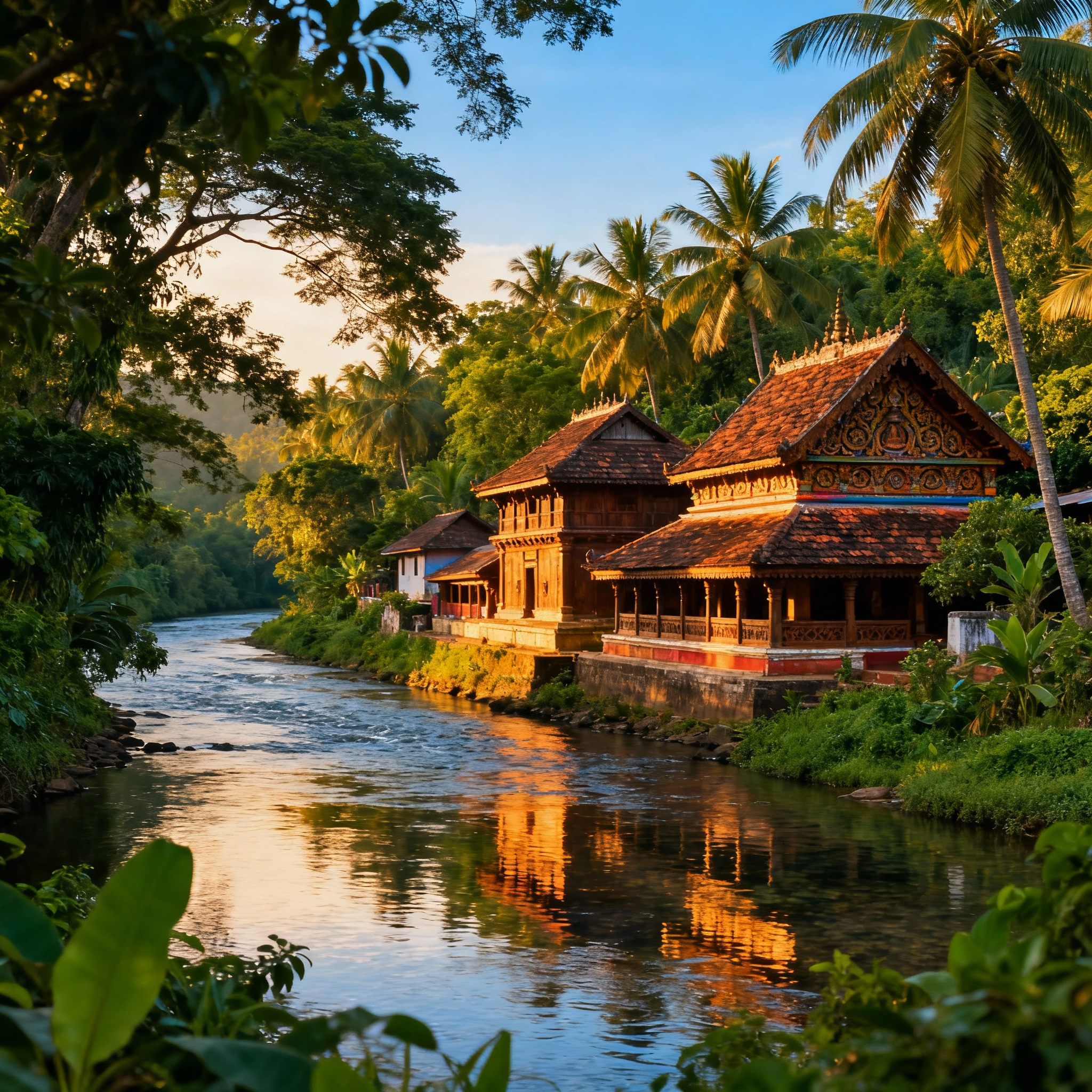
Context: The Champions Boat League (CBL) Season 5 began with its opening event at Kainakary on the Pambariver, featuring competitive snake boat races.
- This annual event is a prestigious water sport festival in Kerala, attracting local communities, tourists, and national attention.
About the Festival
- The Champions Boat League is a professional snake boat race league that spans multiple venues in Kerala, providing continuous sport events post-Onam.
- The festival involves spectacular Chundan Vallam boat races, combining athleticism, tradition, music, and local celebration.
- It enhances Kerala’s tourism and showcases its rich backwater culture. Winners receive significant cash prizes and recognition.
About the Pamba River
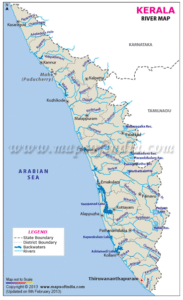
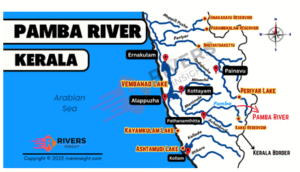
- The Pamba is Kerala’s third-longest river, originating from Pulachimalai Hill in the Peerumedu plateau of the Western Ghats in Idukki district, and flowing 176 km before joining the Arabian Sea.
- It traverses districts like Pathanamthitta, Alappuzha, and Kottayam, nourishing agricultural heartlands such as Kuttanad—the rice bowl of Kerala.
- The river’s basin covers an area of 2,235 sq km, entirely within Kerala.
Geography
- The Pamba River basin is divided into three zones: lowland near the coast (swampy, flood-prone), midland (plains and valleys), and highland towards the Western Ghats (dense forests, ravines).
- The river supports an ecologically rich wetland and marsh system and is important for hydrological balance in the region.
- Kuttanad, in the river delta, is historically and agriculturally vital for paddy production and is among the lowest points in India where farming occurs below sea level.
Cultural Significance
- The Pamba holds deep spiritual value, especially for Hindus, as it is closely linked with the Sabarimala pilgrimage, where ritual bath in its waters is essential before proceeding to the temple.
- Known as “Dakshina Bhageerathi” or “Ganga of the South,” revered akin to the Ganges.
- Venues along the river host major religious festivals/events like Maramon Convention (biggest Christian gathering in Asia), Cherukolpuzha Convention, and Parthasarathy temple rituals.
- The boat races like Vallam Kali are intertwined with the river’s identity, celebrating Kerala’s syncretic culture, music, and local collaboration.
Economic Significance
- Provides water for irrigation, drinking, and sustains agriculture, especially the extensive paddy fields of Kuttanad.
- Local fishing, tourism, and hydroelectric projects (like Sabarigiri Hydroelectric Project) rely on the river.
- The CBL event boosts tourism, local livelihoods, and the economy by attracting large audiences and media coverage.
- The river also supports biodiversity and medicinal plant habitats in the uplands.
2. SC Cites preamble to reject plea
GS paper II: Indian Constitution – historical underpinnings, evolution, features, amendments, significant provisions and basic structure
Context: The Supreme Court rejected a petition challenging the Karnataka government’s invite to Booker Prize winner Banu Mushtaq, a Muslim dignitary, to inaugurate Mysuru Dasara festivities at the Chamundeshwari temple.
- The plea argued that only a Hindu should perform the inaugural religious rituals, claiming protection under Article 25 (religious freedom).
- The issue raised national debate on secularism, religious practices, and State functions.
Supreme Court Observation
- The Court cited the Preamble of the Constitution, emphasizing the “secular” nature of the State which “maintains no religion of its own”.
- It clarified that government events, especially ribbon-cutting/inaugurations, are secular acts, and the State cannot discriminate based on religion.
- The Bench stressed that India is a secular country where equality, liberty, fraternity, and freedom of faith are fundamental ideals—enshrined in the Preamble.
- Quoting past precedents, the Court reaffirmed that neutral State attitude to all religions does not prevent intervention to eliminate discriminatory practices.

About the Preamble
- The Preamble is the introductory statement of the Indian Constitution, expressing its guiding principles: sovereign, socialist, secular, democratic, republic.
- It encapsulates the nation’s ideals: justice (social, economic, political), liberty, equality, and fraternity.
- It draws from Nehru’s Objective Resolution and is described as the “Identity Card” or “Political Horoscope” of the Constitution.
- The Preamble is not enforceable in a court of law but acts as an interpretive key in constitutional matters.
Amendment of the Preamble
- The Preamble can be amended under Article 368, but only in a way that does not disturb the basic structure of the Constitution.
- The 42nd Constitutional Amendment (1976) added “socialist”, “secular”, and “integrity” to the Preamble.
- The Supreme Court has consistently upheld these changes, reiterating that the essence or “basic structure” (sovereignty, democracy, secularism, justice, liberty, equality) cannot be altered.
Key Judicial Pronouncements
- Berubari Union Case (1960): Initially, the SC held that the Preamble is not part of the Constitution and is not a source of power or restriction.
- Kesavananda Bharati Case (1973): Landmark ruling—SC declared the Preamble a part of the Constitution and crucial for interpreting ambiguous provisions. However, it is not the source of substantive power; its core values are part of the “basic structure” doctrine and remain inviolable.
- 42nd Amendment Challenges: SC repeatedly dismissed pleas challenging insertion of “socialist” and “secular,” noting their acceptance and core significance.
- S.R. Bommai Case (1994): SC reaffirmed secularism as a basic feature of the Constitution, rooted in the Preamble.
3. Patrol ship adamya commissioned at Odisha’s Paradip Port
Context: The Indian Coast Guard (ICG) commissioned its first Adamya-class Fast Patrol Vessel (FPV), ICGS Adamya, at Paradip Port in Odisha on September 19, 2025.
- This marks the launch of eight indigenously built vessels, boosting India’s coastal defence and maritime surveillance.
- Senior officials, including Joint Secretary (Defence Policy) Satyajit Mohanty and Inspector General Yoginder Dhaka, attended the event, highlighting India’s focus on self-reliant shipbuilding under “Make in India” and “Atmanirbhar Bharat”.
About ICGS Adamya
- ICGS Adamya is a 51-meter-long patrol ship built in India by Goa Shipyard Limited, with over 60% indigenous components.
- It reaches speeds up to 28 knots and can patrol 1,500 nautical miles without refueling.
- The vessel is equipped for maritime patrol, law enforcement, anti-smuggling, and rescue operations.
- Stationed at Paradip Port, Odisha, it helps guard the coast, busy ports, and fishing zones.
- Adamya features advanced technology, including indigenous controllable pitch propellers and gearboxes, giving it excellent maneuverability and operational flexibility.
Detailed Analysis
Key Technical Features
- Displacement & Dimensions :320 tonnes, 51 meters long, enables agile movement in coastal waters.
- Propulsion & Endurance: Powered by two 3,000 KW diesel engines with maximum speed of 28 knots.
- Endurance: 1,500 nautical miles at economic speed (around 15 knots).
- Indigenous Innovation: Over 60% local content; first ICG ship with indigenously made controllable pitch propellers (CPP) and gearboxes, improving maneuverability and fuel efficiency.
- Weapons & Electronics: Armed with a 30 mm CRN-91 gun and two 12.7 mm stabilized remote-controlled machine guns, with advanced fire-control systems.
- Integrated Bridge System (IBS), Integrated Platform Management System (IPMS), and Automated Power Management System (APMS) for high automation and operational efficiency.
- Crew & Operations: Crew: 5 officers and 34 personnel.
Includes two RHIBs (rigid-hull inflatable boats) for quick boarding, search, and rescue missions.
Strategic Importance
- Maritime Security “
- Patrols Odisha’s 480-km coastline, surveilling India’s eastern seaboard and protecting mineral, trade, and fishing interests at Paradip—the largest mineral-handling port in India.
- Supports security roles like anti-smuggling, anti-poaching, pollution response, and search-and-rescue (SAR), securing India’s Exclusive Economic Zone (EEZ) and sea lanes for trade.
- Make in India & Atmanirbhar Bharat:
- Over 60% indigenous content exemplifies India’s push to reduce dependence on foreign equipment, build domestic MSMEs, and advance defence R&D.
- Goa Shipyard Limited’s success reflects India’s transition from buyer to builder, supporting local jobs and a growing shipbuilding ecosystem.
- Force Multiplier:
- Adamya’s automation and weaponry allow a small crew to execute complex missions, freeing up larger vessels for offshore duties, and providing quicker, efficient coastal responses.
- Integration with aerial and sea assets improves overall maritime deterrence and rapid defence.
- Geopolitical Angle:
- Paradip’s strategic location near the Bay of Bengal, close to the Malacca Strait, bolsters India’s maritime readiness amid greater Chinese activity and security threats in the Indo-Pacific.
- Adamya’s induction strengthens India’s role in the Quad (India, US, Japan, Australia) and BIMSTEC for a stable, secure maritime order.
- Supports India’s regional leadership as a ‘net security provider’ in the Indian Ocean, countering strategic encirclement (China’s “String of Pearls”) and safeguarding international trade routes.
Conclusion: ICGS Adamya represents a turning point in India’s maritime security—melding indigenous engineering with strategic foresight. It upholds the Atmanirbhar Bharat vision by strengthening homegrown capabilities, expands India’s defence ecosystem, and ensures safe, secure seas for economic growth and geopolitical stability. As the first of its class, Adamya sets high standards for future patrol vessels, ensuring India’s blue economy and national interests remain protected.
4. The Saudi -Pakistan pact is a dodgy insurance policy
General Studies Paper II (GS-II): International Relations
Context: On September 17, 2025, Saudi Arabia and Pakistan signed the Strategic Mutual Defence Agreement (SMDA) in Riyadh following rising regional tensions, including Israeli and Iranian strikes and Houthi attacks on Saudi assets.
Why It Is Important?
- SMDA marks a shift—strengthening the Saudi-Pakistan security axis, challenging Iran, and lessening reliance on the US as West Asia’s security guarantor.
- Involving nuclear-armed Pakistan, it stirs international concerns about nuclear proliferation and changes strategic calculations in the region.
- Unlocks large-scale Saudi investments (over $5 billion), stabilizing Pakistan’s economy and deepening mutually beneficial energy and trade ties.
Why It’s Called a “Dodgy Insurance Policy”
- The pact has vague commitments, lacking clear “automatic” mutual intervention—a symbolic assurance rather than enforceable military help.
- For Pakistan, risks entanglement in Saudi conflicts; for Saudi Arabia, relies on a partner hampered by economic stress and internal instability.
- Past similar agreements failed to deliver, so SMDA appears as a cautious, low-cost hedge against unreliable US support, but risks escalation without robust guarantees.
Detailed Understanding
Background
|
Recent Developments Leading to SMDA
- The June 2025 Pakistani “umbrella” offer to Riyadh followed Iranian and Israeli strikes, escalating regional risk and Pakistan’s importance to Saudi security.
- U.S. reliability waned, prompting Saudi Arabia to seek alternatives, while Pakistan’s economy was stabilized by Saudi financial aid, paving the way for SMDA.
Saudi Calculation
- Seeks non-U.S. security leverage via Pakistan’s nuclear and conventional military assets, as a hedge against regional threats.
- SMDA signals deterrence to Iran and demonstrates Saudi Arabia’s push for tech/self-reliance beyond its traditional oil base, echoing India’s SAGAR approach.
Limitations
- No binding automatic military support; vague pact language restricts actions to consultation, intelligence sharing, or joint drills.
- Pakistan faces economic challenges and militancy, limiting credible deterrence; U.S. non-proliferation rules likely bar transfer of nuclear tech.
Pakistan Calculation
- Expects major Saudi investment and economic lifelines, bolstering domestic strength and global diplomatic leverage.
- Positioning as a “security provider” to Gulf states; uses pact for domestic popularity without committing to full-scale conflict.
Likely Reality of SMDA
- Pact likely remains largely symbolic, focused on economic and diplomatic optics rather than full military deployments.
- Risks of escalation exist, but Pakistan remains cautious about direct involvement in regional conflicts without ironclad Saudi guarantees.
Implications for India
- India will closely monitor for nuclear proliferation and shifts in regional security, maintaining robust diplomatic ties with Saudi Arabia.
- Bilateral trade and energy partnerships must be strengthened; alternate channels like IMEC and energy diversification are increasingly vital.
- India’s “multi-alignment” strategy and calibrated responses will remain key, balancing interests amid shifting alliances.
Conclusion: SMDA is a cautious hedge—more for diplomatic leverage than for actual military assurance; unlikely to reshape alliances overnight but demands proactive Indian diplomacy.
- India should deepen Saudi engagement, diversify its energy, and maintain a watchful, balanced approach within an evolving multipolar region.
5. Turmoil, tragedy, and tenacity in Nepal
General Studies Paper II (GS-II): International Relations
What Happened in Nepal?
- In September 2025, Nepal saw its biggest youth-led protests since abolishing monarchy in 2008.
- Online-organised peaceful protests quickly turned violent, leaving 73 dead and government buildings in flames.
- The crisis forced the resignation of Prime Minister Oli and led to Sushila Karki becoming interim PM.
Key Dates in the Protest Timeline
- 4 Sept: Government bans 26 social media platforms, sparking outrage.
- Early Sept: Weeks of online planning, viral hashtags highlight elite corruption.
- 8 Sept: Peaceful protest at Maitighar Mandala; clashes and first deaths.
- 9 Sept: Violence spreads—major government buildings attacked and burned.
- 10–12 Sept: Army deployed, Home Minister and PM resign, talks with youth begin.
- 12–14 Sept: Sushila Karki named interim PM, Parliament dissolved, elections set for March 2026.
Why Did the Social Media Ban Trigger Mass Protests?
- The ban blocked Gen-Z’s main tools for organizing, expressing views, and earning online.
- Shutdown led to anger spreading from online to coordinated street protests.
- Youth used apps like Discord and TikTok for planning, bypassing bans.
What Made the Protests So Intense?
- Young protesters targeted corruption, nepotism, and elite privilege, amplified by social media campaigns.
- Viral videos showed inequalities between politicians’ children and ordinary youth.
- Transparency International ranked Nepal 107/180 for corruption, highlighting deep frustration.
Why Did Peaceful Protests Turn Violent?
- Authorities dispersed crowds with tear gas and live ammunition.
- Protesters retaliated by attacking legislative and judiciary buildings.
- Official death toll reached around 73, mostly youths aged 19–24.
What Happened Politically After the Protests?
- Immediate resignations by top officials under pressure.
- Sushila Karki, former Chief Justice, became interim PM—tasked with leading Nepal till elections.
- Interim leadership pledged accountability and rapid investigation of abuses.
How Did Digital Media Shape the Movement?
- Apps and hashtags helped rally youth, spread memes, and keep the protests dynamic.
- Creative tactics, including anime flags and viral videos, energized crowds.
- Fake news and AI-generated images sometimes fueled confusion and panic.
What Are the Main Challenges for Nepal Now?
- Interim rulers face doubts about their legitimacy from old political parties and royalist groups.
- Must balance youth demands for jobs and justice with need for elite cooperation.
- Ensuring fair elections and restoring trust is the top priority.
Implications for Nepal: Domestic Effects
- Traditional parties face pressure to reform or risk future cycles of unrest.
- Demands for transparent investigations into protest violence and arson are high.
- High youth unemployment, migration, and inequality remain urgent problems.
Implications for South Asia: Regional Impact
- Nepal’s Gen-Z revolt reflects a growing trend of youth movements (seen recently in Sri Lanka and Bangladesh).
- Political instability could affect migration, remittances, and cross-border relations.
- Regional governments may reconsider policies on youth engagement and digital platform regulation.
Conclusion: What Nepal’s Uprising Means
- Nepal’s youth protests show the power of digital mobilization and the risks of ignoring young people’s demands.
- The next months will test whether Nepal achieves true reform or faces more instability.
- The events link to broader UPSC themes like constitutional transition, democracy, and youth politics.
6. Gaganyaan Analog Experiments (Gyanex)
Why in the News?
- ISRO, in partnership with ICMR and Institute of Aerospace Medicine Bengaluru, is conducting Gyanex (Gaganyaan Analog Experiments) to prepare Indian astronauts for the 2027 Gaganyaan human spaceflight mission.
What are Gaganyaan Analog Experiments (Gyanex)?
- Purpose: India’s first systematic effort in space medicine and astronaut psychology, developing protocols for Gaganyaan and future space missions.
- Setup: Experiments take place at Institute of Aerospace Medicine, Bengaluru, with support from ICMR; astronauts live in mock spacecraft simulators and consume DRDO-developed space food.
- Activities: Crew follows space-like routines, manages limited resources, conducts scheduled scientific experiments, and simulates communication delays.
- Gyanex-1: Group Captain Angad Pratap and two others were confined for 10 days, completing 11 experiments in psychology, biomedicine, and communications.
- Microgravity Simulation: Real weightless conditions can’t be replicated on Earth; instead, bed-confinement with head tilt mimics microgravity effects.
Other Indian Analog Missions
- Ladakh Human Analog Mission (Nov 2024): Simulates survival in interplanetary cold, barren terrain.
- HOPE Habitat at Tso Kar (Aug 2025): Tested Mars-like habitat in extreme cold, low pressure, and high UV.
About the Gaganyaan Mission
- Overview: India’s first human spaceflight, launching 3 astronauts into Low Earth Orbit (400 km) for 3 days, splashdown in Arabian Sea.
- Rocket: HLVM3 (Human-Rated LVM3), adapted from GSLV Mk3, certified in 2025.
- Significance: Makes India the 4th nation (after US, Russia, China) capable of launching crewed space missions.
Latest Timeline (September 2025)
- Dec 2025: First uncrewed mission (G1) launches humanoid Vyommitra.
- 2026: More uncrewed tests for avionics, life-support, and escape systems.
- Early 2027: Planned first crewed mission, with 3 astronauts in orbit for 3 days.
Progress So Far
- Development: 80–85% complete, including avionics, parachutes, and crew safety systems.
- Tests: Successful Integrated Air Drop Test and multiple crew escape system validations.
- Recovery: Splashdown rehearsals with Indian Navy and Australian Space Agency.
- Astronauts: Four IAF test pilots shortlisted—Shubhanshu Shukla, Prasanth Balakrishnan Nair, Angad Pratap, Ajit Krishnan—all trained in Russia and advanced Indian modules; final 3 will be chosen for the maiden flight.