1. Are new neurons born in the adult human brain?
General Studies Paper III: Science and Technology: Biotechnology and Neuroscience
Context: A recent study in Science reports evidence of neural progenitor cells and young neurons in the adult human hippocampus, reopening the long-standing debate on neurogenesis (new neuron formation) in adults.
Background
|
What is Neurogenesis?
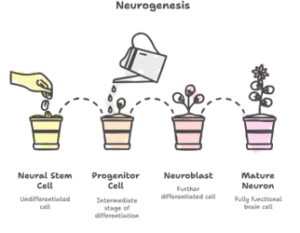
- Neurogenesis is the formation of new neurons from neural stem cells through intermediate stages like progenitor cells and neuroblasts.
Key Findings of the Study
- Researchers used single nucleus RNA sequencing and machine-learning on hippocampal samples from individuals aged below 1 to 78 years.
- They identified neural stem cells, progenitors, and neuroblasts, confirming neurogenesis across the human lifespan.
- The study combined transcriptomics with spatial techniques to localize these cells in the dentate gyrus region of the hippocampus.
- RNA markers found in human progenitors closely resemble those in rodents, indicating evolutionary conservation.
Why Findings are Important
- Support the idea that adult hippocampal neurogenesis supports memory, learning, and stress resilience.
- Offer hope for stimulating the brain’s innate regenerative ability, possibly improving cognitive decline in aging and dementia.
- Enable focus on less invasive therapies by activating resident progenitor cells rather than stem cell transplants.
Government and Scientific Role
- Encouragement of multidisciplinary research using advanced transcriptomic and imaging methods.
- Development of standardized protocols and collaborative frameworks for reproducible adult neurogenesis detection.
- Funding research towards understanding adult neurogenesis to explore future clinical applications.
Challenges in Adult Neurogenesis Research
- Sample Limitations: Studies rely heavily on postmortem brain samples, which often vary in quality and processing methods, leading to inconsistent results.
- Methodological Discrepancies: Debate persists on detecting neurogenesis via RNA marker presence versus direct protein expression; both approaches have limitations.
- Controversy Over Existence: Evidence in humans contrasts with animals; some studies suggest neurogenesis ceases after infancy, fueling debate about its functional role in adults.
- Ethical and Practical Constraints: Direct experimental manipulation to prove neurogenesis in humans is not possible due to ethical concerns, complicating study designs and linking neurogenesis to mental disorders.
- Age and Disease Impact: Neurogenesis reduces progressively with aging, stress, and neurodegenerative diseases, with underlying molecular processes difficult to observe.
- Spatial and Individual Variability: Neurogenesis is confined to specific brain zones like the hippocampus, and significant variability between individuals adds complexity to findings and interpretations.
Measures to Enhance Neurogenesis
- Lifestyle Interventions: Activities like aerobic exercise, engaging environments, and mental challenges boost the growth of neural progenitor cells and increase hippocampus size.
- Diet and Nutrition: Practices such as calorie restriction, fasting, and intake of vitamins B9 and E, omega-3 fatty acids, and plant-based compounds support neurogenesis and enhance brain connections.
- Pharmacological Approaches: Certain medicines like antidepressants, AMPA receptor enhancers, and L-lactate can promote neuron growth; genetic studies in animals help understand these effects.
- Environmental Factors: New experiences and reducing stress elevate neurogenesis, especially in specific parts of the hippocampus.
- Research Techniques: Methods like stereology help count newly formed neurons, while manipulating the cell cycle can increase neuron production.
Conclusion: This recent study provides compelling evidence supporting adult human hippocampal neurogenesis, renewing possibilities for understanding brain plasticity and designing regenerative treatments, while highlighting ongoing methodological debates and research challenges.
2. Iran and India, ancient civilisations and new horizons
General Studies Paper II: International Relations, Topic: India and its Neighborhood – Relations
Bilateral Relations with Iran
Context:The global order is shifting as Western dominance, particularly by the U.S., weakens amid violations of international law, environmental crises, and geopolitical instability.
- India and Iran, two ancient civilisations, are redefining their roles to contribute to a just, multipolar world order.
Background
- India and Iran share millennia-old civilisational values emphasizing peace, respect for diversity, spiritual growth, and the triumph of good over evil.
- Both resisted colonial and Western domination: India through anti-colonialism and Non-Aligned leadership; Iran through nationalisation of oil and the Islamic Revolution.
- Their cultural influence historically reshaped conquerors through governance, philosophy, arts, and literature.
India-Iran Relations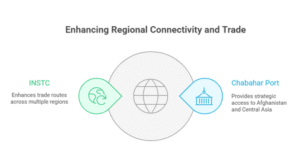
- Strategic partnership strengthened by shared interests in regional stability, economic connectivity, and global cooperation frameworks (BRICS, SCO).
- Key infrastructure initiatives:
- Chabahar Port — operational since 2024, gives India strategic access to Afghanistan and Central Asia bypassing Pakistan.
- International North-South Transport Corridor (INSTC) — enhancing trade routes linking India, Iran, Central Asia, Eurasia, and Africa.
- Energy cooperation critical: Iran supplies oil, gas, and other resources aiding India’s energy security.
- Both countries work together on counterterrorism, regional security, and inclusive political solutions in Afghanistan.
- Multilateral collaboration in international arenas offsets Western influence and sanctions.
The Global South on a New Path
- Countries in the Global South are rejecting domination, adopting indigenous models in technology, economy, and defence.
- India and Iran represent this resurgence, emphasizing sovereignty, justice, and environmental stewardship.
The Palestine Issue
- The Palestinian struggle is symbolic of Global South resistance to Western occupation and racism.
- Iran defends the right to peaceful nuclear energy and development, asserting equitable international norms.
- Iran champions international law and genuine diplomacy against Western double standards.
The U.S.’s Interventions
- U.S. policies have destabilized West Asia via proxy wars, support to regimes, and fostering terrorism under various guises.
- These actions threaten West Asian sovereignty, regional peace, and contribute to conflicts spilling over into South Asia.
Economic Connectivity and Security
- India’s investment in the Chabahar Port and INSTC corridor aims to enhance regional trade, diversify access routes, and counterbalance China’s regional infrastructure projects.
- These initiatives advance India’s “extended neighbourhood” policy and contribute to regional stability.
- Both nations face external sanctions but continue to deepen economic and strategic ties.
Future Goals
- Deepen South-South cooperation and participation in BRICS and SCO for a multipolar, democratic global order.
- Expand strategic, energy, and trade partnerships, including advancing Chabahar and INSTC for regional connectivity.
- Promote regional peace, counterterrorism, and inclusive political solutions.
- Uphold human dignity, environmental values, and cultural heritage as global guiding principles.
Conclusion: India and Iran, through their long-standing civilisational wisdom and strategic independence, are poised to lead the Global South toward a new world order based on equality, justice, and mutual respect. Their partnership exemplifies the shift from domination to cooperation, offering models for peaceful, sustainable global governance.
3. The ‘domestic sphere’ in a new India
GS Paper I (Society/Gender), GS Paper II (Governance/Social Justice)
Context: Issues regarding women’s roles in the domestic sphere are often overlooked amid socio-political challenges.
- The ruling regime uses the concept of “nari shakti” to project “women-led development” while maintaining regressive attitudes toward women’s autonomy and safety at home.
Violence Against Women
- An average of 7,000 women die annually from dowry-related violence (2017-2022), totaling 35,000 deaths.
- National Family Health Survey-5 (NFHS-5) reports that 30% of women experienced intimate partner violence, but only 14% reported it to police.
- Domestic violence accounts for one-third of total registered crimes against women.
- Political leaders remain silent on domestic violence while actively criticizing consensual inter-community relationships.
- Efforts persist to dilute domestic violence laws; marital rape is not criminalized due to cultural and institutional resistance.
Women’s Work Burden
- According to the Time Use Survey (TUS) 2024:
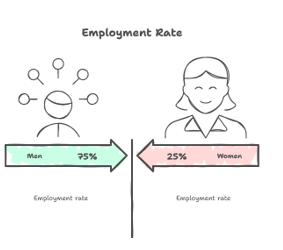
- Only 25% of women (15-59 years) engage in paid employment, working 5 hours/day on average, versus 75% men working 8 hours.
- 23% of women work in family enterprises, putting in under 2 hours daily; 14% of men work 2 hours in family businesses.
- About 93% of women perform unpaid domestic work (7 hours/day), and 41% provide unpaid caregiving (2.5 hours/day), while 70% of men do no domestic work.
- Women’s combined work hours exceed men’s with less time for rest and leisure.
Government’s Narrative vs Reality
- The government’s press releases laud care-giving roles of women as culturally embedded, minimizing the unequal burden.
- Millions of women working as ASHA workers, Anganwadi staff etc. are treated as “volunteers” receiving only small honoraria, not fair wages or formal employment benefits.
Economic Value of Unpaid Work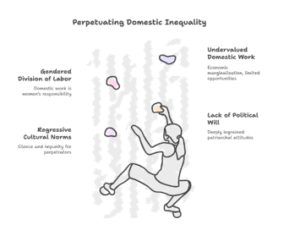
- State Bank of India (2023) estimates that monetizing women’s unpaid domestic work would add over 7% of India’s GDP (~₹22.5 lakh crore) annually.
- This unpaid labor subsidizes low wages and cost of living for working-class families.
Challenges
- Persistent regressive cultural norms stress women’s “adjustment” in violent homes and silence abuse.
- Public and political unwillingness to confront domestic violence firmly.
- Gendered division of labor remains stark with little male participation in domestic work.
- Undervaluation and invisibilization of women’s unpaid domestic and care work in policy and wages.
Measures Recommended
- Strengthen legal, cultural, and social initiatives to prevent and address domestic violence.
- Promote equal employment rights and fair wages for women.
- Ensure accessible, universal childcare and eldercare facilities.
- Encourage shared domestic responsibilities between men and women.
- Fair compensation and government recognition for all care workers.
4. India, Qatar likely to Finalise terms of reference for FTA
General Studies Paper II: International Relations, Topic: Bilateral, Regional, and Global Groupings and Agreements Involving India
Sub-topic: Bilateral Relations with Qatar and Free Trade Agreements (FTAs):
Context: India is expected to finalize the terms of reference (ToR) for a Free Trade Agreement (FTA) with Qatar in early October 2025.
- Commerce Minister Piyush Goyal may visit Qatar on October 6 to finalize the agreement framework.
- The Comprehensive Economic Partnership Agreement (CEPA) with Qatar was first proposed in February 2025 during the Qatari Emir’s visit to India.
- The goal is to double bilateral trade from current levels to $28 billion by 2030.
Background
|
What is a Free Trade Agreement (FTA)?
- An FTA is a formal agreement between countries to reduce or eliminate trade barriers such as tariffs, quotas, and subsidies, facilitating free exchange of goods, services, and investments.
- FTAs include provisions on tariff reductions, rules of origin (to prevent trade diversion), intellectual property protections, dispute settlement, and can evolve into broader Comprehensive Economic Partnership Agreements (CEPA).
- Benefits include increased exports, lower consumer prices, job creation, and economic diversification.
- The India-Qatar FTA aims to balance trade by boosting Indian exports and securing stable energy supplies.
India-Qatar Relations:
Political and Diplomatic Relations :Elevated to a Bilateral Strategic Partnership in February 2025 focusing on security and regional stability.
- Frequent high-level visits, including Emir Sheikh Tamim bin Hamad Al-Thani’s 2025 visit to India and PM Narendra Modi’s earlier trips.
- Cooperation in multilaterals like UN, G20, and OPEC+; reciprocal support in United Nations Security Council (UNSC) bids and Gulf mediation.
Economic and Trade Relations: Bilateral trade estimated at approximately $14.15 billion in FY 2024-25, forming about 1.22% of India’s total trade.
- India exports goods worth around $1.68 billion—mainly gems, jewelry, and textiles—to Qatar, while importing about $12.47 billion, largely liquefied natural gas (LNG), LPG, chemicals, petrochemicals, and aluminum.
- Indian investments in Qatar exceed $350 million; Qatar’s investments in India surpass $10 billion in infrastructure, real estate, renewables, and ports.
- Qatar is India’s top LNG supplier, accounting for 20% of its needs, with long-term supply deals and green energy cooperation underway.
- Comprehensive Economic Partnership Agreement (CEPA) and Double Taxation Avoidance Agreement (DTAA) signed in 2025 aim to deepen cooperation.
Defense and Security Relations
- Regular defense MoUs, joint military exercises, intelligence sharing, and counter-terrorism cooperation.
- Indian naval visits to Qatar and mutual efforts enhancing regional security amid Gulf tensions.
Cultural and People-to-People Ties
- Over 750,000 Indians reside in Qatar, contributing significantly to labor and business sectors; remittances approximate $2-3 billion yearly.
- Cultural exchanges include festivals, yoga promotion, educational scholarships, and the popularity of Bollywood and cricket.
- Labor welfare agreements ensure protections for Indian migrant workers, spotlighted during the 2022 FIFA World Cup hosted by Qatar.
Other Cooperation Areas
- Joint initiatives on sustainable development, clean energy, and post-COVID healthcare programs.
- Educational and technology collaborations, including partnerships between Indian and Qatari universities and fintech innovation.
Targets of India-Qatar Trade Relations
- Trade Bilateral Growth: Double trade to $28 billion by 2030 from current levels (~$14 billion).
- Diversification: Reduce India’s hydrocarbon import dependency (~80%) and increase exports in sectors like food, pharmaceuticals, IT, and textiles.
- Investment: Attract an additional $5-10 billion in Qatari Foreign Direct Investment (FDI) in infrastructure and renewables; promote Indian investments in Qatar’s non-oil sectors such as tourism and logistics.
- Strategic Objectives: Secure energy supplies, create jobs for the large Indian diaspora, and enhance strategic autonomy amid external trade pressures.
- Aligns with India’s broader ambition to achieve $2 trillion in exports by 2030.
India-Qatar cooperation reflects a strong multi-dimensional partnership combining trade, investment, energy security, culture, and strategic collaboration, reinforced through upcoming FTA negotiations.
5. Hilsa Fish
General Studies Paper III: Environment and Ecology, topic: Biodiversity and Aquatic Ecosystems:
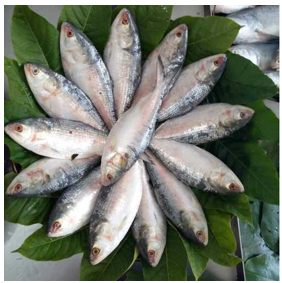
Context: Bangladesh is in the news for its decision to send 1,200 tonnes of hilsa fish to India ahead of Durga Puja as a goodwill gesture, reviving a tradition important to both economies and cultures, especially in Bengal and neighboring states. Hilsa is celebrated for its taste, unique migration habits, and deep significance during religious and social occasions in eastern India and Bangladesh.
- The export is less than previous years (3,000 tonnes in 2024), raising concerns about possible shortages and higher prices in India.
- The fish will be priced at $12.5 (around ₹1,100) per kg, lower than Indian market rates.
Introduction to Hilsa Fish
- Hilsa (Tenualosa ilisha), commonly referred to as ilish or hilsa shad, belongs to the Clupeidae family and is highly esteemed for its rich, oily flavor.
Cultural Symbolism
- Recognized as the national fish of Bangladesh and the state fish of West Bengal, India.
- Deeply woven into the cuisine, traditions, and heritage of both regions, featuring prominently in festivals, rituals, and special occasions.
Anadromous Nature
- Migratory Behavior: Hilsa undertakes long migrations between the sea (marine environments) and inland rivers (freshwater) for breeding purposes, a trait called “anadromy”.
- This makes it a uniquely adapted and ecologically important fish within South Asian River and coastal ecosystems.
Habitat and Geographical Distribution
Habitats
- Hilsa thrive in marine, estuarine, and riverine environments, adapting to changes in salinity and water types throughout their life stages.
- They flourish particularly well in tropical and subtropical waters of the Indo-Pacific region.
Geographical Range
- The species’ natural distribution extends from the Persian Gulf and Arabian Sea to the South China Sea, including waters of the Red Sea and Bay of Bengal.
- This wide range covers important ecological corridors relevant for their migratory behavior.
Key Regions
- Bangladesh: Highest populations, especially in the Padma-Meghna and associated deltaic rivers.
- India: Notably in the Ganges-Brahmaputra River systems and the Hooghly River.
- Other Countries: Myanmar, Pakistan, Kuwait, coastal Iraq, and as far east as Sumatra, Indonesia.
Life Cycle Distribution
- Adults: Reside predominantly in coastal marine waters.
- Juveniles: Grow in estuarine zones, where river meets sea.
- Spawning: Occurs in the freshwater reaches of large river systems, with upstream migrations during the breeding season.
Anadromous Migration
- Hilsa spend most of their lives in the sea but migrate upstream into freshwater rivers to spawn, much like salmon.
- Migration peaks during the southwest monsoon from July to October and a secondary migration happens between January and March, triggered by floods, changes in salinity, and water temperature.
- The fish travel long distances, often hundreds of kilometers, for example, migrating through the Padma-Meghna River system in Bangladesh for spawning.
- Hilsa is a transboundary species crossing waters of up to 16 countries, making it a shared regional resource.
Breeding and Ecology
- Spawning occurs in shallow freshwater areas of rivers during the monsoon, with females releasing eggs that hatch into larvae.
- Larvae drift downstream to estuaries where they grow and feed on plankton before moving out to the sea as juveniles.
- Hilsa is a planktivore, relying mainly on phytoplankton in the Bay of Bengal and associated estuarine environments for food.
- Artificial breeding efforts through hatcheries have been ongoing in India and Bangladesh since the 1900s to replenish wild stocks.
- Hilsa migration and breeding are highly sensitive to environmental disturbances such as pollution, dams, and climate change, which affect their life cycle.
Cultural and Economic Importance
- Known as the “king of fish,” hilsa is central to Bengali cuisine and Durga Puja celebrations, symbolizing prosperity and cultural heritage.
- In Bangladesh, hilsa contributes about 12% of the country’s fish production, generates over $3 billion annually, and supports around 2.5 million jobs in fishing, processing, and trade.
- Hilsa accounts for approximately 1% of Bangladesh’s GDP and is a key fish export to India.
- In India, hilsa is vital to the economy of coastal West Bengal, where it is both an economic driver and a festival staple.
Conservation Status
- The IUCN lists hilsa as Least Concern globally, but populations are declining locally due to overfishing, habitat degradation, and climate impacts.
- Bangladesh implements seasonal fishing bans, sanctuary creation, and payment for ecosystem service (PES) programs compensating fishers to aid recovery of hilsa stocks.
- India and Myanmar also work on fishery management for hilsa, though challenges in effective enforcement persist.
- Sustainable conservation of hilsa requires multinational cooperation given the species’ extensive transboundary migratory range.
6. Kerala’s maternal mortality ratio rises steeply from 18 to 30
General Studies Paper I: Society ,topic: Women’s Issues and Health:
Context: Kerala’s maternal mortality ratio (MMR) has sharply increased from 18 to 30 per 100,000 live births as per the Sample Registration System (SRS) bulletin for 2021-2023.
- The rise is linked to COVID-19 related maternal deaths recorded in 2021 and the steady decline in live births in the state.
- Kerala and Andhra Pradesh still share the distinction of having the lowest MMR among Indian states despite the increase.
Definition of Maternal Death
- Maternal death is defined as the death of a woman while pregnant or within 42 days after pregnancy termination, due to causes related to or worsened by the pregnancy or its management, excluding accidental deaths.
What is Maternal Mortality Ratio (MMR)?
- MMR is the number of maternal deaths per 100,000 live births in a specific time period, used as a key indicator of maternal health.
Global Trends in Maternal Mortality
- Global MMR declined 40% from 328 (2000) to 197 (2023) per 100,000 live births. Progress stalled since 2016, with 260,000 maternal deaths in 2023 mostly in low-income countries (92%).
- Sub-Saharan Africa bears the highest burden (~454 MMR in 2023), contributing 70% of global maternal deaths despite a 40% decline since 2000.
- Oceania varies: Australia and New Zealand have very low MMR (~3), whereas Pacific Islands face high rates (200-300).
- Central and Southern Asia show steady declines (~100-150 MMR), accounting for 17% of deaths, with rural disparities.
- Developed countries have low MMR (<10), e.g., Australia/New Zealand ~3, Europe/USA 10-20 (USA higher due to racial disparities).
India Trends and Achievements
- India’s MMR dropped from 570 (early 1990s) to 93 (2019-21), an 86% decline outpacing the global 48% reduction.
- Annual maternal deaths fell from 33,800 (2016) to ~25,000 (2020).
- Institutional deliveries rose to 89%, with states like Kerala maintaining low MMR (~30).
- India accounts for 17% of global reductions and leads South Asia toward SDG targets.
Policy Measures and Government Initiatives
- National Health Mission (2005): Primary program improving maternal care, skilled birth attendance, emergency obstetric care.
- Janani Suraksha Yojana (2005): Cash incentives boosting institutional deliveries from 39% (2005) to 79% (2015), reducing MMR.
- Janani Shishu Suraksha Karyakram (2011): Free delivery and transport services reducing costs for poor women.
- Pradhan Mantri Surakshit Matritva Abhiyan (2016): Free monthly specialized antenatal check-ups screening millions for high-risk pregnancies.
- LaQshya (2019): Quality improvements in labor rooms and maternity facilities.
Challenges and Concerns
- Kerala’s MMR increase is mainly due to a falling number of live births, not a rise in maternal deaths.
- The state’s total fertility rate (TFR) has dropped to 1.46, below the replacement level of 2.1.
- Societal changes like delayed marriage and childbirth pose challenges with advanced maternal age increasing pregnancy risks.
- Accurate maternal death data varies due to differences between SRS sampling and full district-level line listings.
- Major causes: postpartum hemorrhage, infections, hypertension, sepsis, unsafe abortions (5%).
- Healthcare access gaps in rural and tribal areas with low doctor-patient ratios persist.
- Data discrepancies and emerging demographic issues like declining births create new challenges.
Way Forward
- Address demographic shifts with supportive reproductive health policies and social awareness.
- Promote maternal health services tailored to older mothers and high-risk pregnancies.
- Improve data accuracy and integrate district-level maternal health reporting with national systems.
- Strengthen inter-sectoral approaches linking health, education, and social welfare.
- Encourage continued investment in maternal healthcare infrastructure and programs to sustain Kerala’s low MMR achievements.
- Prioritize prevention, family planning, women’s education, and continuum of care.
Kerala’s MMR rise reflects demographic changes rather than care deterioration, while India continues to achieve major progress in maternal health through sustained policy efforts and innovations.