
Going beyond the metaphor young at heart
GS Paper II: Health policy and governance
GS Paper III: Health as an economic determinant
Context: World Heart Day (September 29, 2025) spotlights rising CVDs in Indian youth, urging preventive action.
- Apollo Hospitals’ 2023-2025 data shows 50% heart attack patients under 40, shifting from older ages.
- Global Burden of Disease 2023 reports India’s CVD mortality at 272/100,000, exceeding global average.
The Trend
- 50% of 2020-2023 heart attack cases in India involve adults under 40.
- CVD onset in Indians is 10 years earlier than Westerners; 45% of 40-69 deaths from heart attacks.
- 25% attacks in under-40s; 46% asymptomatic show atherosclerosis, 2.5% have blockages.
- NCDs cause 65% deaths, 40% hospital stays; 30% urban youth under-40 have hypertension.
Causes Identified by Experts
- Sedentary lifestyles: Prolonged sitting, screen time; 50% adults inactive.
- Unhealthy diets: High carbs, fried foods; obesity up 13.4% males, 11.4% females (2005-2021).
- Stress: Job/academic pressure raises BP, inflammation.
- Tobacco/alcohol: Smoking, binge drinking harden arteries.
- Genetic: South Asians prone to low HDL, diabetes (73M), hypertension.
- Environmental: Air pollution (31.1% DALYs), sleep loss worsen risks.
Warning Signs (Red Flags)
- Chest discomfort: Squeezing, pressure lasting >few minutes.
- Shortness of breath: With/without pain, during rest/exertion.
- Pain in arms/neck/jaw/back: Radiates from chest, sudden onset.
- Nausea, sweats: With fatigue, often mistaken for anxiety.
- Unexplained fatigue: Extreme tiredness, panic-like anxiety.
Solutions & Preventive Measures
Individual Level
- Balanced diet: Cut processed foods; eat fruits, veggies.
- Exercise: 150 min/week moderate activity.
- Quit habits: Stop tobacco/alcohol; use yoga for stress.
- Screenings: Annual BP, lipid checks from age 18-40.
- Sleep/weight: 7-9 hrs sleep; maintain BMI <25.
Government Efforts
- NPCDCS: Early CVD detection via Ayushman Bharat.
- PM-JAY: Funds treatment, integrates screenings.
- National NLED: Prioritizes diagnostics, enforces COTPA.
- Community: BHU’s DHADKAN educates youth.
- AI tools: 90% accurate risk scores for prevention.
Awareness Gap
- Symptom ignorance: 25% youth miss risks; see CVD as elderly issue.
- Delayed action: Limited early sign knowledge; urban-rural access gap.
- Low screening: 30% under-40 checked; stigma on stress.
- Youth trends: Rising drinking/tobacco use needs peer campaigns.
- Gender bias: Women under-screened; 18% female CVD deaths.
Significance for India
- Health Burden: CVDs cause 27% NCD deaths (63% total); 52% <70 deaths strain workforce.
- Economic Impact: 54.5M prevalence; $1T GDP loss by 2030 from NCDs.
- Social Consequences: Hits 30-69 age group; 326% >60 pop rise by 2050.
- Policy Relevance: Ties to SDG 3.4; tests Ayushman Bharat efficacy.
- Demographic Risk: Youth epidemic threatens human capital for Viksit Bharat
2. Astrosat ,india’s first space observatory ,completes a decade among the stars
General Studies Paper III (GS-3): Science & Technology section.
Context: AstroSat completed 10 years since launch on September 28, 2025, doubling its planned 5-year mission life.
- Its data contributed to over 100 scientific publications and is used by 3,400+ researchers in 57 countries.
- The observatory’s growing global impact includes significant usage by US-based scientists.
What is AstroSat?
- India’s first multi-wavelength space telescope, launched via PSLV-XL from Sriharikota.
- Functions in low-Earth orbit, observing from UV to hard X-rays simultaneously.
- Supports studies from Solar System bodies to distant galaxies, including rapid timing of variable sources.
Why is it Important?
- Fills the gap for multi-wavelength observations that ground telescopes can’t achieve due to atmospheric limits.
- Advances studies of black holes, neutron stars, and galaxy clusters with simultaneous data across bands.
- Publicly accessible archival data enables global collaboration, making astronomy research more open.
Major Achievements
- Detected a gamma-ray burst and distinguished it from gravitational waves (2017).
- Captured a flare on Proxima Centauri with NASA telescopes (2017).
- Measured X-ray polarization from Crab Pulsar (published in Nature Astronomy, 2017).
- Imaged distant galaxy cluster Abell 2256 (2018).
- Observed an ultraluminous X-ray pulsar in RX J0209.6-7427 (2019).
- Detected extreme UV light from a 9.3 billion light-years distant galaxy (2020)
- Recently studied black hole flickering in GRS 1915+105, improving accretion models (2025).
Five Payloads (Instruments)
- UVIT: Ultra Violet Imaging Telescope; three bands (FUV, NUV, visible), 28′ field, up to 2.5″ resolution.
- LAXPC: Large Area X-ray Proportional Counter; 3–80 keV range, 6,000 cm² area, good for bright X-ray sources.
- CZTI: Cadmium Zinc Telluride Imager; hard X-rays (10–150 keV), coded-mask, up to 300 keV, sensitive to polarization.
- SXT: Soft X-ray Telescope; 0.3–8.0 keV, 120 cm² area, for imaging extended X-ray sources.
- SSM: Scanning Sky Monitor; three counters, coded masks, scans 2–30 keV for transient X-ray events.
Collaboration Efforts
- Led by ISRO with partners like TIFR, IUCAA, Raman Research Institute, others across India.
- Contributions from UK (Photek) and Canadian/UK universities in payload and detector development.
- ISRO’s AstroSat Support Cell at IUCAA helps researchers worldwide with proposal and data processing.
Conclusion: AstroSat’s extended life, diverse payloads, and global collaboration make it a landmark in space astronomy. Its discoveries, open-data approach, and multi-wavelength coverage inspire new missions and astronomers worldwide.
3. Motok community stages massive torchlight rally in Assam demanding ST status
General Studies Paper II (GS-2): Indian Polity and Governance.
Context: On September 28, 2025, thousands of Motok community members held a torchlight rally in Sadia, Tinsukia, demanding ST status.
- The rally, organized by AAMYCS, saw 30,000 participants with banners, citing unfulfilled 2014 BJP promises.
- It’s part of escalating agitations in September 2025, reflecting frustration over a decade-long delay.
What is AAMYCS?
Purpose and Activities
Recent Involvement
|
Who Are the Motok?
- The Motok (Matak) are an indigenous group in southern Assam with ancient Mongoloid origins.
- They were part of the 17th-18th century Moamoria sect, rebelling against Ahom rule.
- They formed the short-lived Matak Rajya under Ahom governance in the early 19th century.
- Similar to Moran and Barahi, they are aboriginal to Assam, tied to land and agriculture.
What Are They Demanding?
- Scheduled Tribes (ST) Status
- Recognition under the Constitution for reservations in education, jobs, and politics.
- Aims to affirm identity and protect against land loss and cultural erosion.
- Sixth Schedule Inclusion
- Upgrades the Motok Autonomous Council to the Sixth Schedule for greater autonomy.
- Seeks to safeguard lands, customs, and governance from external interference.
Wider Context (Six Communities in Assam)
- Motok’s demands align with six Assam communities seeking ST status, promised by BJP in 2014.
- Moran: Ancient tribe seeking ST to preserve heritage amid economic issues.
- Matak (Motok): Focused on historical autonomy and land rights.
- Chutia: Seeks recognition for Kachari roots and reservations.
- Tai-Ahom: Largest group, pushing ST to counter demographic changes.
- Koch-Rajbongshi: Plains tribe demanding inclusion based on indigenous claims.
- Tea Tribes (Adivasi): Over 70 lakh, seeking ST for socio-economic upliftment.
- A 2023 GoM report is due in the August 2025 Assembly session, opposed by existing STs.
- Issue is politically sensitive, tied to BJP’s Northeast strategy and recent agitations.
Conclusion: The rally highlights the urgent need for safeguards amid unkept promises risking tensions. Balancing new ST inclusions with existing tribe protections is key for equity. Swift action could turn protests into milestones for tribal empowerment in Assam.
4. What is NSA, under which Sonam Wangchuk was detained
GS- paper III: Internal Security
Context: The detention of climate activist Sonam Wangchuk under the National Security Act (NSA), 1980, has once again sparked debate about one of India’s most stringent preventive detention laws.
- The NSA empowers governments to detain individuals preemptively to prevent potential threats to national security, public order, or essential supplies.
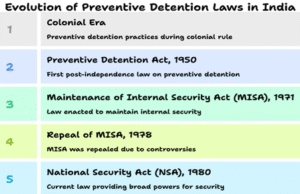
About National Security Act, 1980
- About: The National Security Act was passed by the Parliament in 1980 and has been amended several times since then.
- NSA “empowers the state to detain a person without a formal charge and without trial”.
- Need of NSA: Under the Act, a person is taken into custody to prevent them from acting in any manner prejudicial to “the security of the state” or for “maintenance of the public order”.
- Administrative order of District Magistrate: It is an administrative order passed either by the Divisional Commissioner or the District Magistrate (DM) and not detention ordered by police based on specific allegations or for a specific violation of the law.
- Duration: Under NSA, individual can be detained without charges for 12 months, with state government informed.
- A person detained under the National Security Act can be held for 10 days without being told the charges against them.
- Appeal: The detained person can appeal before a high court advisory board but they are not allowed a lawyer during the trial.
Protection available under the Act
- Representation before an independent advisory board: The Indian Cons
 titution allows both preventive detention and the right of protection against arrest and detention in certain cases, enshrined under Article 22 of the Constitution.
 - However, Article 22(3) provides that the rights available to an arrested person will not be applicable in case of preventive detention, thus an exception is carved out.
5. End of an era: Latin America’s only giant panda on its last lap
General Studies Paper III (GS-3): Environment, Ecology, and Biodiversity.
Why in the News?
- Xin Xin, Mexico City’s last panda, turned 35 in 2025, marking the end of a 50-year hosting era.
- With no new loans from China ($1M/year fee) and relatives like Tohui gone, the program may close.
- Signals declining panda diplomacy in Latin America since 1975’s Pe Pe and Ying Ying arrival.
What is Panda Diplomacy?
- China’s practice since the 1950s of loaning/gifting pandas to boost goodwill and ties.
- Shifted from gifts (e.g., USSR 1957) to paid loans post-1984, funding conservation.
- Represents friendship, enhancing China’s image via “panda huggers.”
How It Works Today? (2025)
- 10-year renewable zoo loans; cubs return to China at 2-4 years.
- Fees ~$1M/year, ≥50% for conservation; strict welfare/breeding rules apply.
- Resurged post-2024 with pandas to US (e.g., DC Zoo), Japan, Europe, targeting allies.
- China controls breeding; repatriations (e.g., Japan 2025) reflect relations.
Significance of Panda Diplomacy
- Boosts tourism ($10B for US zoos since 1970s) and China’s soft power.
- Funds conservation ($500M+), growing wild pandas from 1,100 to ~1,900.
- Reflects geopolitics (e.g., US 2025 return) and global wildlife collaboration.
- Acts as a cultural bridge, showcasing China’s environmental leadership.
Giant Panda Species Profile
- Taxonomy: Scientific name: Ailuropoda melanoleuca (“black-and-white cat-foot”).
Family: Ursidae (bears); Order: Carnivora; endemic to China, no subspecies.
- Appearance: Black-and-white fur with eye patches, ears, limbs for camouflage.
1.2-1.8 m long, 100-115 kg; round face, “pseudo-thumb” for bamboo.
- Cultural Value: Symbolizes peace and yin-yang in China; gifted to royalty historically.
National treasure, featured in folklore as gentle protectors.
- Symbol: Global conservation icon (WWF logo since 1961); hope for endangered species.
China’s emblem on stamps, currency; tool for panda diplomacy.
Habitat and Diet
- Habitat: Central China’s temperate forests (1,200-3,400 m), needs 3-7 km² bamboo.
- Diet: 99% bamboo (20-40 stems/day), plus fruits, rodents; eats 12-15 hrs.
Behavior Traits: Solitary, communicates via scent; mothers raise cubs 18 months.
- Climbs well, crepuscular, sleeps 10-16 hrs; seasonal breeders (Mar-May).
Threats: Habitat loss from logging, roads; bamboo die-offs every 50-100 years.
- Climate change threatens 37-100% habitat by 2100; low fertility persists.
Conservation Status
- IUCN: Vulnerable (2016); wild pop. ~1,864 adults, total ~2,060, rising.
- CITES Appendix I; China Class I; >60 reserves cover 67% habitat.
- Success with ~700 in captivity, ongoing reintroductions.
6. Indian Ports Act, 2025
Why in the News
- The Indian Ports Act, 2025 has been enacted, repealing the outdated Indian Ports Act of 1908 to update India’s maritime legal framework.
About Indian Ports Act, 2025
Overview
- Enacted in August 2025, it modernizes governance of India’s port sector, consolidating law, tariffs, safety, and State-Centre cooperation.
- Targets transparency, sustainability, and efficient regulation for global competitiveness.
Aim
- Integrates port-related laws, sets standards for safety and environment, and promotes State-Centre coordination through a single comprehensive framework.
- Seeks alignment with maritime reforms and positions India’s port sector globally.
Vision
- Supports the government’s broader reforms (Merchant Shipping Act, Carriage of Goods by Sea Act).
- Focuses on transparency, sustainability, digitalization, and effective regulation for inclusive development.
Key Features
Maritime State Development Council (MSDC)
- Statutory consultative body; coordinates Centre-State planning, tariff transparency, data sharing, and connectivity.
State Maritime Boards
- Mandatory for each coastal state; regulate non-major ports, manage licensing, tariffs, infrastructure, safety, and environmental compliance.
Tariff Setting
- Major ports: Tariffs set by Port Authority Boards/Directors.
- Non-major ports: Set by State Maritime Boards/concessionaires; all tariffs published online for transparency.
Dispute Resolution
- Dispute Resolution Committees for non-major port issues; appeals go to High Courts, with arbitration/ADR options.
Environmental Norms
- Mandates waste management, pollution control, disaster preparedness, ballast water restrictions, and penalties.
- Aligns with global standards like MARPOL, covers all existing/future ports except those for defence/customs.
The Act represents a transformative approach, unifying and modernizing port governance while empowering States for sustainable, transparent, and globally-aligned maritime development.
7. UN reimposes arms embargo, other sanctions on Iran over n-programme
GS-II paper: International Relations
Context: The United Nations has reimposed an arms embargo and a series of nuclear-related sanctions on Iran following violations of the 2015 nuclear deal, known as the Joint Comprehensive Plan of Action (JCPOA).
JCPOA
- The Iran nuclear agreement (formally known as JCPOA), signed in July 2015 between Iran and the P5+1 (China, France, Russia, UK, US, Germany).
- It required Iran to dismantle much of its nuclear program and allow extensive international inspections in exchange for sanctions relief.
- The U.S. withdrew from the JCPOA in May 2018 under President Trump, despite Iran’s compliance with the agreement.
- The Trump administration’s ‘maximum pressure’ policy aimed to force Iran into renegotiating the deal, a request Iran rejected.
Reactions, Challenges, and Consequences of Sanctions Reimposition on Iran
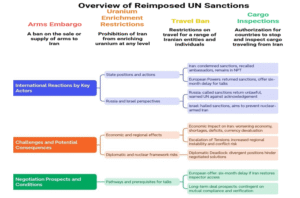
The UN’s renewed sanctions on Iran highlight global divisions over its nuclear programme. They seek to enforce non-proliferation and regional security but risk worsening Iran’s economic crisis and escalating tensions. Diplomacy remains possible, though difficult.
8. Who was Rani Rashmoni (1793-1861)
GS paper I: Modern Indian History
Context: The Prime Minister recently paid tribute to Rani Rashmoni on her birth anniversary, 28th September.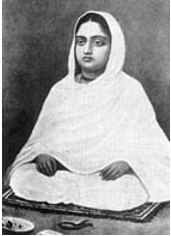
Who was Rani Rashmoni?
- Prominent zamindar, businesswoman, and philanthropist of 19th-century Bengal.
- Born on 28 September 1793 in Halisahar, Bengal.
- Married Raja Raj Chandra Das at age 11, later managed the estate after his death in 1836.
- Revered as “Lokmata” for her courage, public service, and administration.
Key Contributions
Patronage and Religion
- Built the iconic Dakshineswar Kali Temple (1847–1855) on the banks of Hooghly.
- Appointed Sri Ramakrishna Paramahamsa as chief priest, defying caste barriers.
Social Reforms
- Opposed polygamy and child marriage; advocated widow remarriage.
- Submitted a draft anti-polygamy bill to the British administration.
Public Welfare & Infrastructure
- Constructed major ghats (Babughat, Ahiritola Ghat, Nimtala Ghat) on the Ganga for pilgrims and bathers.
- Funded roads, reservoirs, and pilgrim facilities (e.g., road from Subarnarekha to Puri).
Resistance to British Rule
- Fought fishing taxes on Hooghly, blocking river traffic and forcing tax abolition.
- Defied British curbs on Durga Puja processions, preserving cultural traditions.
Support for Education & Culture
- Donated to the Imperial Library (now National Library of India) and Hindu College (now Presidency University).
- Established schools and facilities for women and marginalized groups.
Rani Rashmoni remains an icon for social reform, women’s empowerment, and Indian heritage.