“Not in footnotes, but in fire — Bengal’s daughters who bled for India”
India’s independence movement is often celebrated through grand political narratives, iconic male leaders, and well-known
national movements. But beyond this popular narrative lies a fiercely resilient, yet forgotten legacy — the Bengali women
revolutionaries who dared to fight the British Empire not with petitions, but with pistols, pamphlets, and pedagogy.
In Bengal — a crucible of revolutionary nationalism from the early 1900s — these women not only resisted colonialism but
also defied patriarchal social codes that restricted them to domesticity. They fought armed battles, ran underground
networks, educated girls, and embraced martyrdom without recognition. These are not just stories of resistance — they are
stories of reclamation, of fire, of freedom earned the hard way.
HISTORICAL CONTEXT: WHY BENGAL BECAME THE EPICENTRE
✓ Partition of Bengal (1905): Sparked Swadeshi and revolutionary sentiment.
✓ Anushilan Samiti and Jugantar: Secret societies that attracted educated youth, including women.
✓ Chittagong Armoury Raid (1930): A turning point that brought women like Kalpana Datta into armed resistance.
✓ Gandhian vs Militant Nationalism: While Gandhi inspired mass movements, Bengal fostered direct action.
KEY REVOLUTIONARIES: UNSUNG BUT UNBROKEN
1. Pritilata Waddedar (1911–1932)
“Death I shall face laughing.”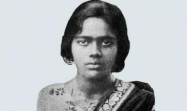
✓ Educated, influenced by revolutionary leaders like Surya Sen.
✓ Led the attack on Pahartali European Club, a symbol of British racial arrogance.
✓ Disguised as a man; attacked with bombs and pistols.
✓ Swallowed cyanide to avoid arrest.
✓ Legacy: First Bengali woman martyr; inspiration for future female revolutionaries.
2. Kalpana Datta (1913–1995)
“We were taught not just to use the revolver but to overcome fear.”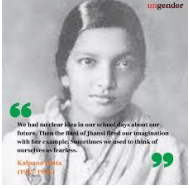
✓ Member of Chittagong Armoury Raid group.
✓ Participated in attempted jailbreaking operations and raids.
✓ Arrested and imprisoned; later turned chronicler of the movement.
✓ Joined the Communist Party of India, later married P.C. Joshi.
✓ Legacy: Bridged violent rebellion with political activism and feminist
historiography.
3. Begum Rokeya Sakhawat Hossain (1880–1932)
“The power of the pen is mightier than the sword if it awakens the conscience”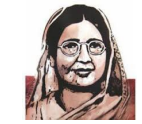
✓ A Muslim feminist reformer who emphasized education as resistance.
✓ Founded Sakhawat Memorial Girls’ School in Kolkata (1911).
✓ Authored Sultana’s Dream – a feminist sci-fi imagining a matriarchal utopia.
✓ Fought colonial and religious patriarchy simultaneously.
✓ Legacy: A pioneer of intersectional feminism in colonial India.
4. Suniti Choudhury (1917–1988)
“If men can fight for freedom, why can’t women?” 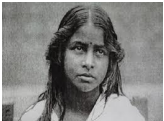
✓ At 16, assassinated District Magistrate Charles Stevens with Santi Ghose.
✓ Used a hidden pistol in a courtroom — a highly symbolic act.
✓ Imprisoned for 7 years; later released.
✓ Legacy: The embodiment of teenage rebellion and fearlessness in the freedom struggle.
5. Labanya Prabha Ghosh
✓ Not involved in combat, but ran underground printing presses for pamphlets, manifestos. 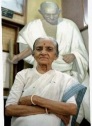
✓ Provided logistical and intellectual fuel for revolutionary activities.
✓ Worked in covert networks, enabling real-time communication and inspiration.
✓ Legacy: A reminder that revolutions also need quiet hands behind the curtain.
6. Lalitha Nag
✓ Participated in the Salt Satyagraha in Bengal.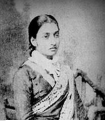
✓ Arrested and tortured during colonial crackdowns.
✓ Despite non-violence, she was met with brutality.
✓ Legacy: Represents the invisible suffering of countless women who never made headlines.
7. Sucheta Kripalani (1908–1974)
✓ Involved in Quit India Movement; worked underground.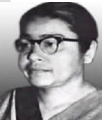
✓ Later joined the Constituent Assembly, contributed to the Constitution.
✓ Became India’s first woman Chief Minister (UP).
✓ Legacy: Seamlessly transitioned from revolutionary to stateswoman — a rare path.
MODES OF RESISTANCE: A SPECTRUM
✓ Armed rebellion: Pritilata, Kalpana, Suniti.
✓ Underground logistics: Labanya Prabha Ghosh.
✓ Educational & social reform: Rokeya, Sucheta.
✓ Civil disobedience: Lalitha Nag.
✓ Political institution-building: Sucheta Kripalani post-1947.
Their strategies reflect that revolution is not one-size-fits-all. Each mode was essential.
THEMES FOR CRITICAL ANALYSIS
1. Twin Oppression: Empire and Patriarchy
✓ They resisted not just the Raj, but also societal expectations of passivity and obedience.
✓ Many had to operate in secret, disguising identities, hiding weapons, or working from underground spaces.
2. Sacrifice and Silence
✓ Most faced arrest, torture, exile, or death — yet were erased from textbooks, monuments, and memory.
✓ They lived and died for a nation that forgot to remember them.
3. Class, Caste, and Religious Intersection
✓ Rokeya fought as a Muslim woman in a highly orthodox society.
✓ Kalpana and Pritilata were middle-class Hindus; Suniti was a schoolgirl — showing a wide social spectrum of fighters.
4. Legacy Building and Political Afterlife
✓ Only Sucheta Kripalani transitioned into post-independence politics.
✓ Others faded into obscurity due to ideological differences or systemic neglect.
WHY THEY WERE FORGOTTEN
1. Male-dominated historiography sidelined female contributions.
2. Post-independence preference for Gandhian non-violence ignored violent resistance.
3. Political marginalisation: Many were leftists or non-Congress — thus excluded from official state memory.
4. Lack of documentation: Their underground lives meant fewer preserved records.
5. Social taboos: Families avoided publicizing daughters involved in violence, jail, or rebellion.
6. Absence in educational curricula ensured generational amnesia.
WHAT SHOULD BE DONE
1. Curricular reforms: Include their stories in NCERT, UPSC, and university syllabi.
2. Public memorials: Statues, dedicated museums, and plaques at historic sites.
3. Posthumous recognition: Padma awards, Shaheed Divas in their names.
4. Rename public spaces: Schools, stations, and buildings after them.
5. Promote research: Government grants for PhD work, books, and documentaries.
6. Mass media revival: Biopics, OTT series, novels to capture public imagination.
7. Oral history projects: Capture family and local narratives before they vanish.
CONTEMPORARY RELEVANCE
✓ As India debates women’s rights, education, representation — these stories offer powerful templates of resistance.
✓ They break the myth that women were merely supporters, showcasing them as planners, leaders, and martyrs.
✓ In times of rising historical revisionism, these women challenge us to reclaim a truer, deeper national memory.
CONCLUSION
The Bengali women revolutionaries did not ask to be remembered — but they deserve to be. Their bravery was not just against
an empire, but against an entire system that defined what a woman could or could not do. In telling their stories, we do more
than honor the past — we reshape the future.
Their stories remind us that freedom was not just won in Delhi’s corridors, but also in Bengal’s battlefields, prisons,
printing presses, and classrooms — by women whose names we were never taught to say.